







What’s in here7 sections
Two sheet sets sit on the same shelf. One is four hundred dollars and says organic on the front of the box; the other is a third of that and carries a real GOTS certificate on the hangtag, and shoppers who have bought both keep reporting the same thing: in the hand, they feel the same.
So is organic bedding worth it? The seal certifies what went into the field and what went through the mill, and it is genuinely strict about both. It has nothing at all to say about staple length, ply or weave density, which are the three things that decide whether a sheet still feels good in March.
This is what the certificate covers, what it leaves untouched, what the premium honestly buys, and the two numbers to check before the money moves.
Quick Answer
Organic bedding is worth it for the farming and the finishing chemistry, verified by looking up the GOTS or OEKO-TEX certificate number. It is not worth it as a shortcut to a better sheet: the seal grades no weave, no staple, no durability. It can buy a good sheet or a cleaner-grown ordinary one.
What the Organic Seal Actually Certifies
The premium is real and so is the certificate. The question worth thirty seconds is what the certificate is a certificate of, and the answer is narrower than the price on the package suggests. GOTS is not a quality mark. It is a farming and processing standard that happens to end up printed on something you sleep on.

Start with the part almost nobody reads. The Global Organic Textile Standard, which is what GOTS stands for, has two label grades and they are not the same sentence written twice. Organic means at least 95% certified organic fiber. Made with Organic Materials means at least 70%, which leaves up to 30% of that set as conventional or synthetic fiber, legally and openly.
GOTS’s own key-features page spells out the 70/95 percent split. Both grades are honest labels; they are describing two different fabrics.
The second thing the seal covers is the chain of custody. Fiber to spinning to weaving to finishing to labelling: every company along that route has to be certified itself, and one uncertified link, a sewing facility nobody thought about, voids the claim for the finished sheet. It is a paper trail more than a material test, which is why it is worth understanding what OEKO-TEX and GOTS actually certify before deciding what a logo on a box is telling you.
A compliant tag carries four things: the logo, the grade, the Certification Body, and a Certification Number. A logo on its own is not a complete claim, it is a picture.
And it is not the only logo competing for that space on the package: USDA organic certifies agricultural production rather than finished textiles, OEKO-TEX Made in Green adds a facility and supply-chain layer on top of Standard 100, MADE SAFE certified screens ingredients against its own hazard list, and Fair Trade certified speaks to labor conditions and says nothing about fiber at all. Four different questions, four different answers, one crowded hangtag. What the standard restricts is specific and checkable: synthetic pesticides, herbicides, fertilizers and GMO seed at the farm, plus a list of chemical inputs through processing that includes the formaldehyde-based resins used to make conventional cotton wrinkle-free.
The communities built around this kind of purchase do not treat the words as interchangeable either. In the granola-leaning subreddits, “organic” and “non-toxic” are two separate asks, and plenty of the people posting want the second without insisting on the first. Anything sold as chemical-free, meanwhile, is making no certified claim at all: there is no standard behind the phrase. Certification is one route to a low-chemical set rather than the only one, which is closer to correct than most of the marketing.
Photograph the hangtag in the aisle, not the box. The logo photographs fine from a foot away; the grade line and the certification number are printed smaller than everything around them, and they are the half that changes what you are buying. Get close enough that the phone actually focuses on the small type.
What It Does Not Certify, and That Is the Whole Problem
Everything in the section above is about how the cotton was grown and handled. Which leaves the entire question of how the sheet was built untouched, and that is the half you feel at two in the morning.
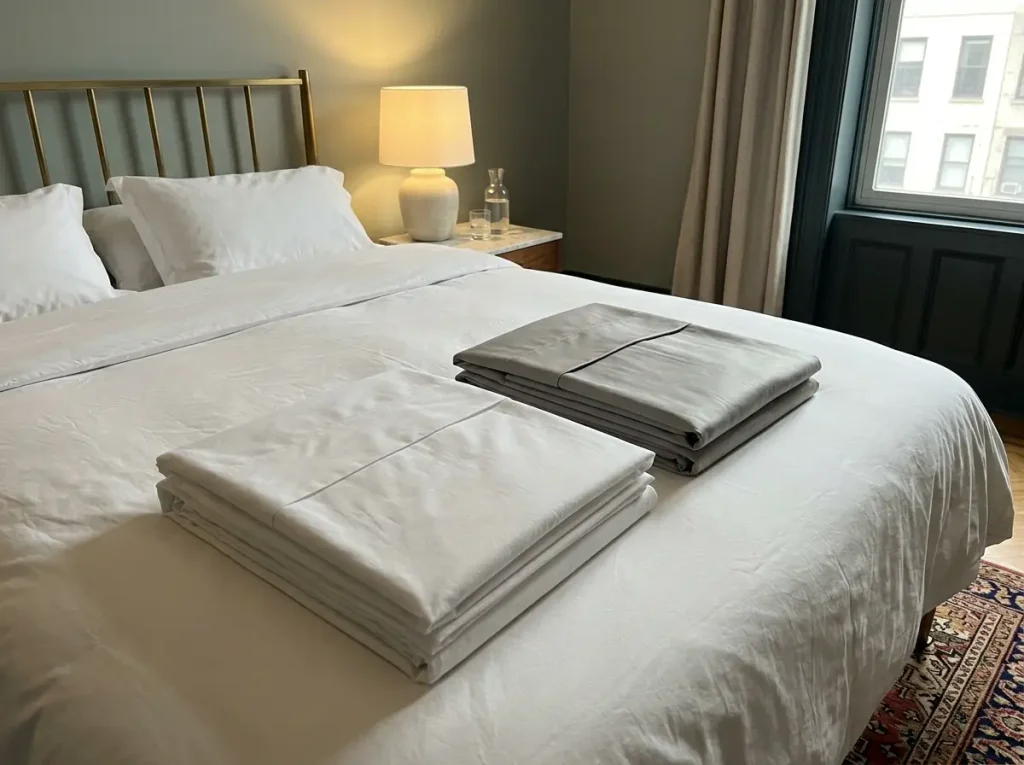
Nothing in the GOTS scope grades staple length, ply, weave density or GSM. Those four decide feel, breathability, how a hot sleeper experiences the same set, and when it starts to pill, and not one of them is a certification input. If you want the long version of how those signals behave, the sibling piece covers the four construction signals that actually predict how a sheet ages; the point here is simply that the certificate never looks at any of them.
So a 100% organic, short-staple, low-GSM percale can pill by the second month and feel rougher than a conventional long-staple set at the same money. Nothing went wrong. The certificate did exactly what it promised. It just never promised that.
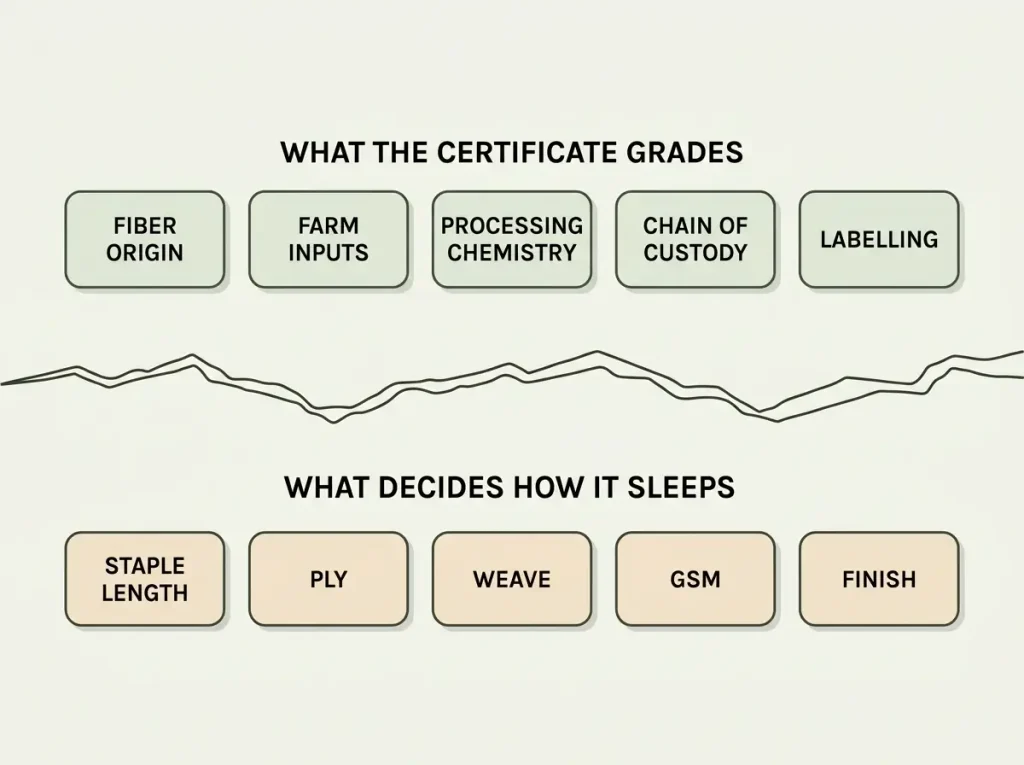
There is a detail here that catches even careful shoppers. GOTS itself rules out the phrase brands lean on hardest: “GOTS cotton” and “GOTS-certified organic cotton” are not permitted claims by the standard’s own rules, because GOTS certifies the processing of goods made with organic fiber, not the raw cotton. The organic certification for the fiber comes from a separate body before the GOTS chain even starts. GOTS’s labelling guidance is explicit about which claims aren’t allowed, and once you have read it you start seeing the incorrect version on half the listings you open.
Thread count sits on the same fault line. A 500-count organic sateen and a 200-count organic percale are both fully certified, and they are not remotely the same sheet: different weave, different weight, different night. The Weave cluster takes apart what a thread count is really counting, and the short version is that the number stopped being a measure of fineness once mills started twisting two thin threads together and counting both.
Some shoppers report that organic cotton “gets incredibly soft after three or four washes” while conventional sets “get rougher and start pilling”. That claim circulates widely and it comes from retail content rather than a controlled comparison, so take it as what it is.
Pilling is predicted by staple length and ply. Short fibers work their way out of the yarn under friction and roll up; long fibers hold. An organic label does not touch either variable, so it cannot predict pilling in the direction the claim assumes, or in any direction at all.
The free version of this check costs nothing and takes ten seconds in the store. Run a thumbnail across the weave of a certified set. If the surface catches slightly and the yarn looks fuzzy when you hold it against the light, that is short staple, and no certificate on the package changes what that will look like after a summer of washes.
Which leaves the reader in an odd position, and it is worth naming. The usual advice is to buy the certified set and stop worrying.
But the certificate answers a question about a field in a country you will never visit, and the sheet answers a question about your Tuesday night, and those two answers arrive on the same hangtag pretending to be one recommendation. They are not. You can accept the first completely, verify it in ten seconds, and still have made no progress at all on the second.
What the Premium Genuinely Buys
Pull the construction question out and a smaller claim is left standing. It is worth being precise about it, because it is real, and the sloppiness around it has made people cynical about a benefit that genuinely exists.

The skin-level case first. Formaldehyde-based finishing resins are the wrinkle-resistant finish that makes a conventional cotton sheet easy-care, and repeated skin exposure to them is associated with allergic contact dermatitis. GOTS prohibits formaldehyde in certified processing. That is a concrete, bounded claim about chemical residue sitting against your skin for eight hours a night, and it is the strongest argument the premium has.
It is worth being exact about the size of it: removing a known irritant is not the same as a set being hypoallergenic or skin-safe, and eczema that persists is a question for a doctor rather than for a sheet.
It is also where the honest version stops. Several of the brand blogs ranking for this question stretch the same chemistry into neurological and developmental outcomes in the sleeper. Nothing in any certification supports that, and it is not repeated here.
Bedding is fiber, weave, fill and temperature. Anything that hurts is a question for a doctor, not for a sheet.
Then the farming case, also real and also narrower than the marketing. Organic cotton leans heavily on rain-fed cultivation against an irrigation-heavy conventional crop, with no synthetic pesticide or fertilizer inputs going into the soil, which is why the case is usually argued on water usage, soil health and biodiversity rather than on anything you can feel.
The same logic runs through organic linen and organic wool, and regenerative cotton pushes it further by grading what the soil gains rather than only what it is spared. That is a genuine environmental difference, and it happens entirely before the cloth exists, so it never shows up on the bed. You are buying it for the field, not for the night. Which is also why the sustainability case is argued in water and carbon footprint rather than in comfort: those are the units the difference actually shows up in.
Organic reaches past cotton, and the claim changes shape when it does. A closed-loop process starts with organic input material, dissolves the fiber in a solvent, spins it back out, and recaptures the solvent instead of discharging it. That is a process claim rather than a farm-scheme claim.
The ettitude 100% Lyocell from Organic Bamboo Sheet Set is that case made concrete: lyocell from organic bamboo, sateen weave, a 17-inch pocket, and OEKO-TEX Standard 100 Class 1 on the finished cloth. Its flaw is the confusion it invites. Class 1 certifies the chemistry of the finished fabric, not that the bamboo was grown organically under a GOTS-style farm scheme. Two different seals, and a buyer who conflates them pays for one while picturing the other.
Which brings up the seal that gets ignored in every organic article. Bed linens sit in OEKO-TEX Product Class 2, the tier for direct, extended skin contact, tested against a restricted-substance list of more than a thousand chemicals and re-issued every year. OEKO-TEX puts bed linens in Product Class 2, its direct-skin-contact tier, which is how a sheet that is not organic at all can still carry a real chemical-safety guarantee. OEKO-TEX and organic are not the same claim, and paying for the wrong one is the most common expensive mistake in this aisle.
One more thing about that resin, since it is the whole skin argument. A wrinkle-free conventional set smells faintly of nothing-in-particular out of the package, and by wash three that smell is gone. The finish is going somewhere, and for the first few weeks part of where it goes is your skin.
If the resin finish is your reason for going organic, wash the new set twice before it goes on the bed regardless of what you bought. It will not strip a permanent-press treatment, but it takes the loose surface chemistry off, and it is free. Then judge the fabric with the finish out of the way.
Paying Twice, and How to Not
So the premium buys something real and narrow. That leaves the practical question, which is how to pay for the farming without also paying a second, invisible premium for nothing.
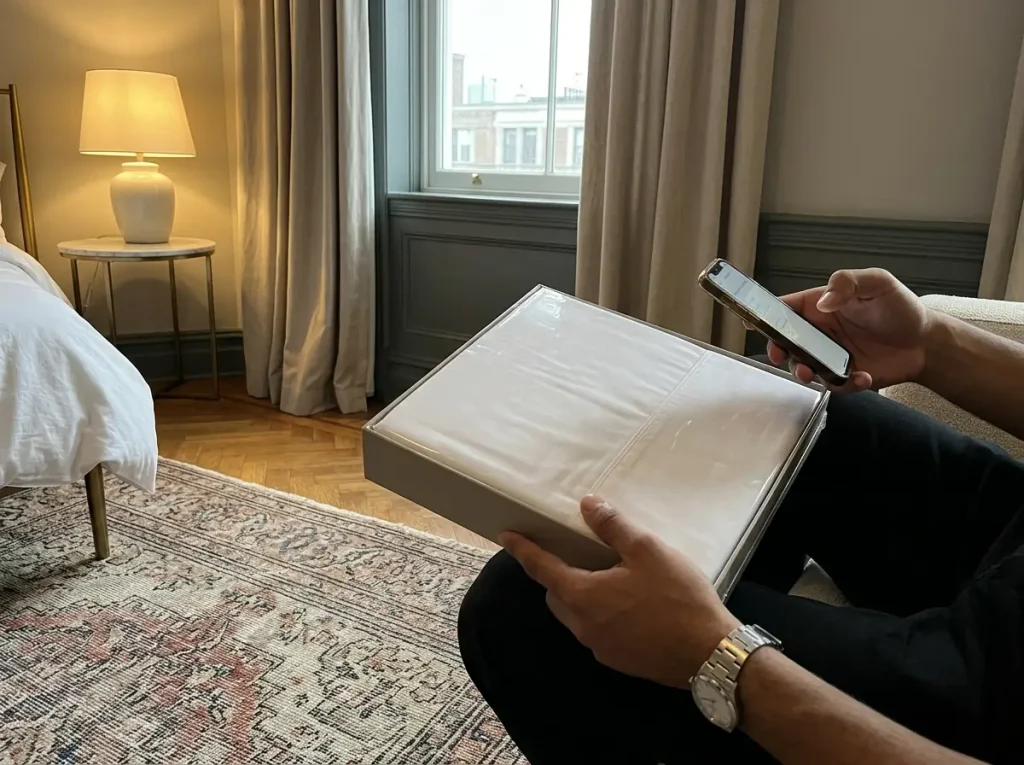
The free fix comes first, and it is two checks, in this order. Check one: find the number. Look for the certification number and the Certification Body on the listing or the hangtag, then look it up, in the GOTS public database for a GOTS claim or the OEKO-TEX Label Check for a Standard 100 number. That certification lookup is free, public and takes about as long as reading the ingredients on a cereal box.
Check two: read the construction spec in the same listing. Staple, ply, weave, pocket depth. A set that passes check one and says nothing on check two is precisely where the second premium hides.
Because if construction quality is independent of the label, then the organic premium can be charged on top of a low-count, short-staple sheet, and the front of the box gives the buyer no way to tell. That is the trap in one sentence. It is the same fault line the cotton aisle runs on, where the Egyptian cotton claim runs on exactly the same fault line: a place-name doing the work that staple length should be doing, and a price attached to the word rather than to the fiber.
This is what the four-hundred-dollar set and the hundred-and-fifty-dollar set were about. Both certificates were genuine. Both sets were what they said they were.
The gap between them tracked the marketing budget, not the cotton, and the shoppers who reported the two feeling identical in the hand were not wrong or unlucky. They had bought two honest labels and one of them was attached to a much bigger story.
A brand that names its certifier on the listing has made check one possible in ten seconds. A brand that shows a logo and no number has made it impossible, and has usually done that on purpose. The Whisper Organics 100% Organic Cotton Sheet Set is the first kind: 100% organic cotton at the GOTS 95% grade, Fairtrade, and Control Union named as the certifying body right on the listing, which is the ten-second-verifiable case this section is asking you to look for.
Its flaw is a 500-count sateen. That feels smooth on night one, and a sateen is exactly where pilling shows if the yarn is not long-staple, because the weave floats long lengths of thread across the surface where friction can get at them. The certificate says nothing about that. Only wash twenty answers it.
And the counter-case belongs on the table rather than in a footnote, because a conventional set with a real certificate and honest construction is a legitimate answer to this question, not a consolation prize.
The Linen Home 100% Cotton Percale Sheet Set is 100% cotton, 200-count percale, a 15-inch pocket, OEKO-TEX Standard 100 certified and not organic at any point in its life. Its flaw is stated in its own spec: 200 threads of percale is correct, not exceptional. It buys certified chemistry and a sound one-over-one weave, not a superior hand. A denser percale in long-staple cotton feels crisper and costs more, and that is a construction decision, made on the spec line, entirely separate from the seal.
That is the whole trick. Two numbers, thirty seconds, and it is the only way to tell a price premium that buys something from one that buys a story. Value here is not the lower number; it is the number you can account for.
The certificate number is almost never in a listing’s bullet points. It is in the seventh or eighth photo, the one that is just a picture of the hangtag, and you have to pinch to read it. Brands that intend you to check put it there. Brands that do not, do not have a seventh photo.
Wash Twenty, and What the Certificate Cannot Tell You by Then
Every verdict in the search results for this question is written in the first week, which is the week that lies about bedding. Almost everything feels good after the first wash. Softness at wash three is not evidence of anything, and it is most of what the competing pages are measuring.
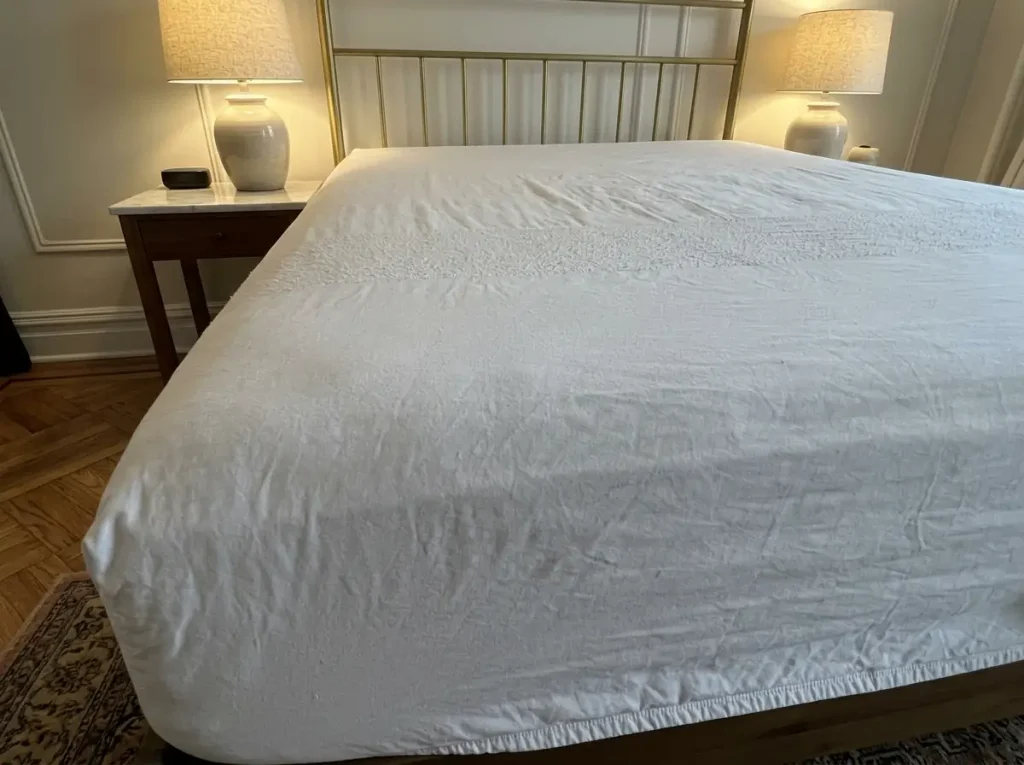
By wash twenty, three things have answered the question and none of them appear on a certificate. Pilling on the sleeping surface goes first. Then the fitted sheet’s elastic, which either still grips the corners or has gone slack and rolls.
Then the hem, which either lies flat or has started to cup and twist. The organic seal predicts none of the three, and it was never asked to.
What the certificate does still hold at wash twenty is the finishing chemistry, and this is the part people forget when they get cynical about the premium. There was never a resin to wash out in the first place, so that claim survives the season intact. The comfort claim degrades because it was never made.
How you launder it decides how fast that happens, and none of it is certified either. A cold wash on a gentle cycle, a bleach-free and eco-friendly detergent, and either a line dry or a tumble dry low all slow the surface wear that produces pilling, on an organic set and a conventional one alike. The care label is the authority on any given set; the general direction is that heat and agitation are what age a sheet, not the field its cotton grew in.
The reason this question never settles inside the communities that keep asking it, a thread five years ago, another three years ago, another three months back, is that the two halves of the answer keep getting argued as if they were one. Pilling, for instance, shows up first as a band across the middle third of the fitted sheet, where a sleeper’s hips and shoulders work against the weave night after night. It is visible under a raking lamp weeks before a hand can feel it, and it says nothing whatsoever about how the cotton was grown.
The One-Season Check
Keep the packaging photo with the certificate number in it. Note the month the set went on the bed, on your phone, in one line. At the end of the season, pull the fitted sheet flat and look at that middle band with a lamp low and to the side.
If the weave is intact, the premium bought you clean farming and a good sheet, and you should buy that set again. If it has pilled, the certificate was still honest. You just paid it on the wrong sheet, and the next set gets bought on staple and ply.
The Verdict, in Three Lines
The organic seal certifies the field and the mill. It does not grade staple, ply or weave, and those are what decide how the sheet feels in March.
The premium genuinely buys the absence of the finishing chemistry against your skin, plus a lighter farming footprint. Stated at that size, without the neurological fan fiction, it is a fair thing to pay for.
Two checks before the money moves: look the certificate number up, then read the construction spec. A set that passes the first and stays silent on the second is charging you twice.
At the end of the season, look at the middle band of the fitted sheet under a raking lamp. Pilling there is a verdict on the staple, never on the certificate.
And before you buy anything at all, go and find the certificate number on the set you already own. Ten seconds in the GOTS database or the OEKO-TEX Label Check tells you what you actually paid for last time, which is the cheapest possible way to decide what to pay for next.
Frequently Asked Questions
01Is organic cotton bedding worth the extra money?
Yes for the farming inputs and the absence of formaldehyde finishing resin against your skin. No as a shortcut to a better-feeling sheet, which is decided by staple length, ply and weave. Both things are true of the same set at the same time.
02What is the difference between GOTS and OEKO-TEX?
GOTS certifies organic fiber content and the whole processing chain; OEKO-TEX Standard 100 tests the finished cloth for restricted chemicals whatever the fiber is. One is about how it was grown, the other about what is left in it. The gap between the two seals is where most of the confusion lives.
03Does organic cotton last longer than regular cotton?
No. Durability comes from staple length, ply and weave density, and the organic certification grades none of the three. A conventional long-staple set can comfortably outlast a certified short-staple one at the same price.
04How do I know if organic bedding is really certified?
A compliant label carries four things: the logo, the label grade, the Certification Body and a certification number. Look that number up in the GOTS public database, or use the OEKO-TEX Label Check for a Standard 100 number. A logo on its own is not a complete claim.
05Is organic bedding better for sensitive skin?
It removes one specific thing: the formaldehyde-based easy-care resin associated with contact dermatitis. That is a real and narrow benefit. Skin trouble that persists after the bedding changes is a question for a doctor, not for a sheet.





Tried it on your own bed?
No comments yet. Tell us what you changed, and what the sheet did after a few washes.