Cooling Sheets by Weave and Weight, Not Thread Count
"Cool for ten minutes, then it heats up" is a coating leaving, not a sheet wearing out. What OEKO-TEX certifies, and what nobody certifies.
 Alfredo Ramses Textile engineer · 2 September 2026 · 20 min read
What’s in here 8 sections
- What “Cooling” Actually Means on a Package
- The Weave Decides More Than the Fiber
- What the Fiber Actually Changes
- Grammage, the Number Nobody Prints
- What the Certification Tag Does and Does Not Promise
- Wash Twenty, and When the Sheet Is Not the Problem
- What to Do With All of This
- Frequently Asked Questions
The complaint repeats in almost the same words every time it comes up in the hot-sleeper threads: the sheets feel cool for the first ten minutes, and then they heat up. Sometimes the version is longer, and it is a month instead of ten minutes, but it is the same story on a different clock. That is not a sheet wearing out. That is a coating leaving.
Nobody certifies the word “cooling” on a package. There is no body that tests it the way OEKO-TEX tests a fabric for harmful substances, so the word gets attached to whatever combination of fiber, weave, weight and finish happens to feel cool in a store, and only one of those four ever makes it onto the label. This article sorts out which of the four is doing the work on your bed, and which one is the part that washes off.
Quick Answer
Cooling sheets work when the cooling comes from the fabric itself, and stop working when it comes from a finish. A loose-weave cotton percale, linen, or a light bamboo viscose moves air and moisture structurally. A chemical cool-touch treatment on polyester feels cool in the store and washes off.
What “Cooling” Actually Means on a Package
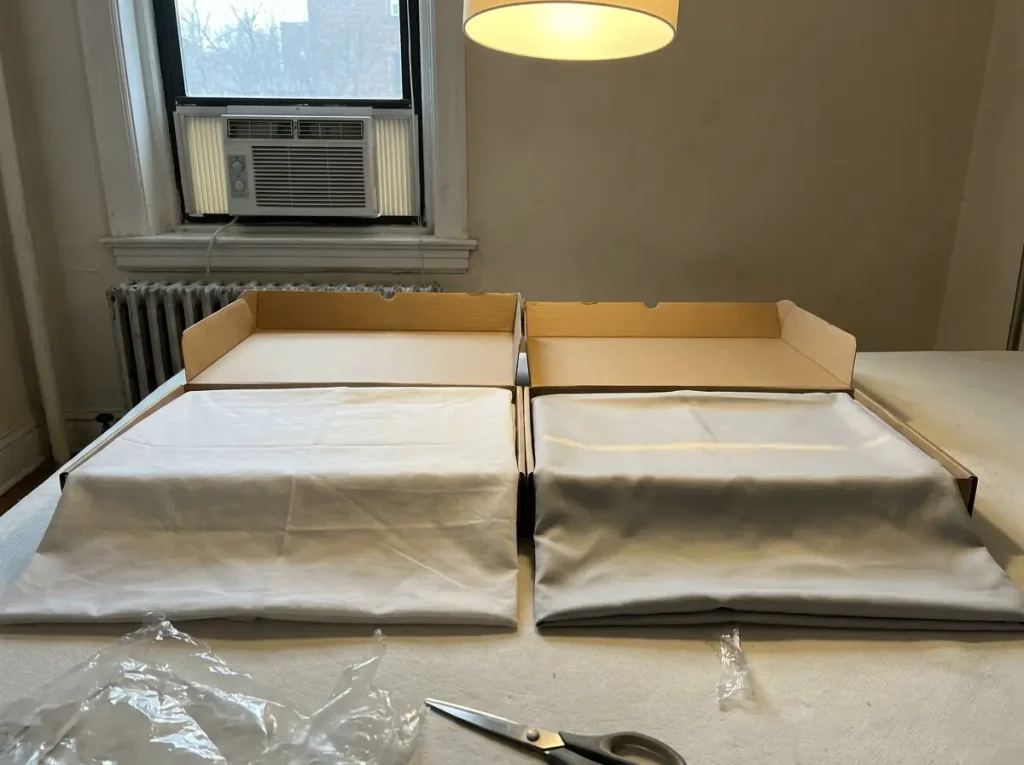
Two sets on the same shelf, both with the word on the front, one costing triple the other, and nothing on either box tells you why. That is not a failure of your shopping. The word is doing exactly the job it was chosen for, which is to sell without committing to anything a returns department could be held to.
There is no certifying body for cooling. Nobody measures it, nobody publishes a threshold, and no institute puts a number on a tag. What makes that worth saying out loud is that certification does exist in this industry. It just certifies something else, which is where most of the confusion starts and where we will come back in a moment.
Underneath the single word sit several different pieces of engineering. The National Sleep Foundation lists five different mechanisms sold as cooling: moisture-wicking fabrics, cool-touch fabrics that pull thermal energy away on first contact, thermoregulating fabrics, phase-change materials, and active systems that circulate water or air through the bed. Five mechanisms, one word on five very different boxes.
Only two of those five can possibly be what is in a sheet set. A sheet can wick moisture and a sheet can feel cool when your leg first touches it. The other three are a machine, a gel, or a claim.
Phase-change materials in particular get sold as though they remove heat, and they do not. They absorb and release it, which buffers a spike and delays it. Useful, and not the same thing as cooler.
That distinction matters more than it sounds, because it sets the ceiling for what any sheet can do. Falling asleep depends on your core body temperature dropping a degree or two, and a bed that holds heat against you works against that drop. But heat dissipation is mostly the room’s job, not the cloth’s. The most-cited comfortable range for a bedroom is 65 to 68 degrees, and above about 75 no fabric rescues the night.
A sheet cannot take heat out of a room. It can move moisture away from skin and it can feel cool on contact for a while. Everything past that point is a device rather than a textile, which is why so many people who genuinely like their cooling sheets also bought a fan, or a topper, or an active unit, and mention the second purchase in the same breath as the first.
The two failure descriptions that come up over and over in the threads are opposites, and both were sold under the same word. One is the sauna: a set that traps everything, and the sleeper wakes up soaked. The other is the slip-n-slide: a high-thread-count sateen so slick that the sleeper spends the night sliding around on it and still overheats.
Nobody in either group bought a defective product. They bought the wrong construction for the problem they had, because the fabric decides this, not the label.
The Weave Decides More Than the Fiber
Two cotton sheets. Both 300 thread count. Both from brands with real reputations. One sleeps cool and the other sleeps like a jacket, and the listings for the two of them can be nearly identical if you only read the headline number.
Percale is a plain weave: one thread over, one under, in a strict grid. That geometry cannot help but leave gaps between the threads, and gaps move air. Long-staple cotton is what makes that grid possible without the yarn going fuzzy, which is why staple length shows up on the better listings. It is why percale feels crisp and matte rather than slick, and why it is the weave most hotels use on the beds you remember as cool. When somebody says breathable sheets and means something by it, this grid is what they mean: air circulation through the cloth itself.
Sateen floats roughly four threads over one before the crossing point. The surface ends up denser and smoother because there are fewer interruptions in it, and that same smoothness is a closed surface with less room for air to pass through. Same cotton, same count, opposite result on a July night.
The thread-count ranges follow the construction rather than the quality. Percale commonly runs 200 to 400; sateen commonly runs 300 to 600, because the floating weave needs more threads packed in to hold its structure.
So the sheet with the bigger number on the box is very often the warmer one. It is not a better sheet with a higher score. It is a different machine setting.
This is also the real explanation for the complaint that bamboo sheets sleep hot despite bamboo’s reputation, and we will get to it properly in the next section: most bamboo sets are built as sateen.
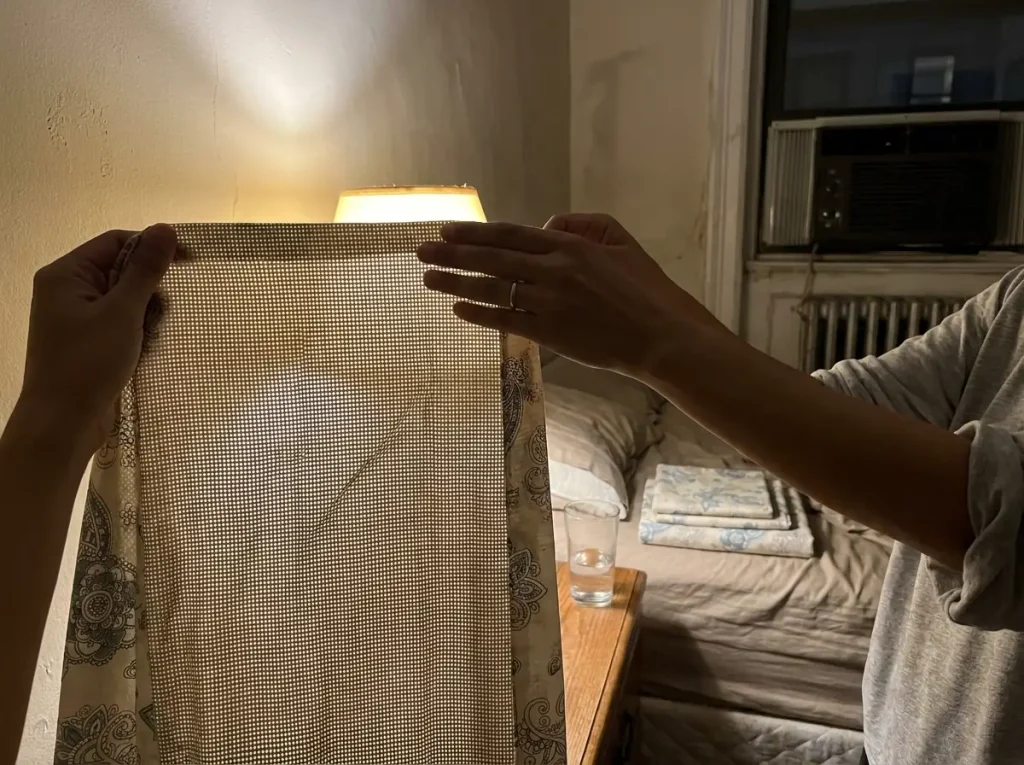
Hold the fabric up against a lamp. A percale shows you a grid: actual pinpoints of light coming through the gaps between threads. A sateen gives you a sheen instead, because there are no gaps to see through. That is the whole mechanism, visible in about four seconds, and it is the one photograph no listing will ever show you.
What that means in practice is that the useful listing is the one that tells you its construction. Here is what that looks like on a set that does.
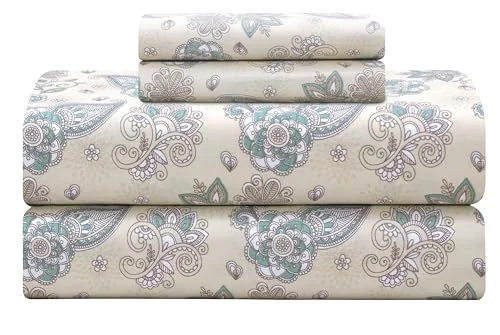
The same transparency shows up further up the range: the Brooklinen Percale 4-Pc Sheet Set for Hot Sleepers puts long-staple cotton, percale and 270 threads in the same sentence instead of making you infer any of them, and at 270 it sits just under the count that reads premium in percale, so coming off a high-count sateen the first few washes will feel rougher than what you are used to. Both of those listings are doing the thing that actually helps a shopper, which is telling you the construction instead of the feeling. If you want the full head-to-head, percale and sateen deserve their own comparison.
What the Fiber Actually Changes
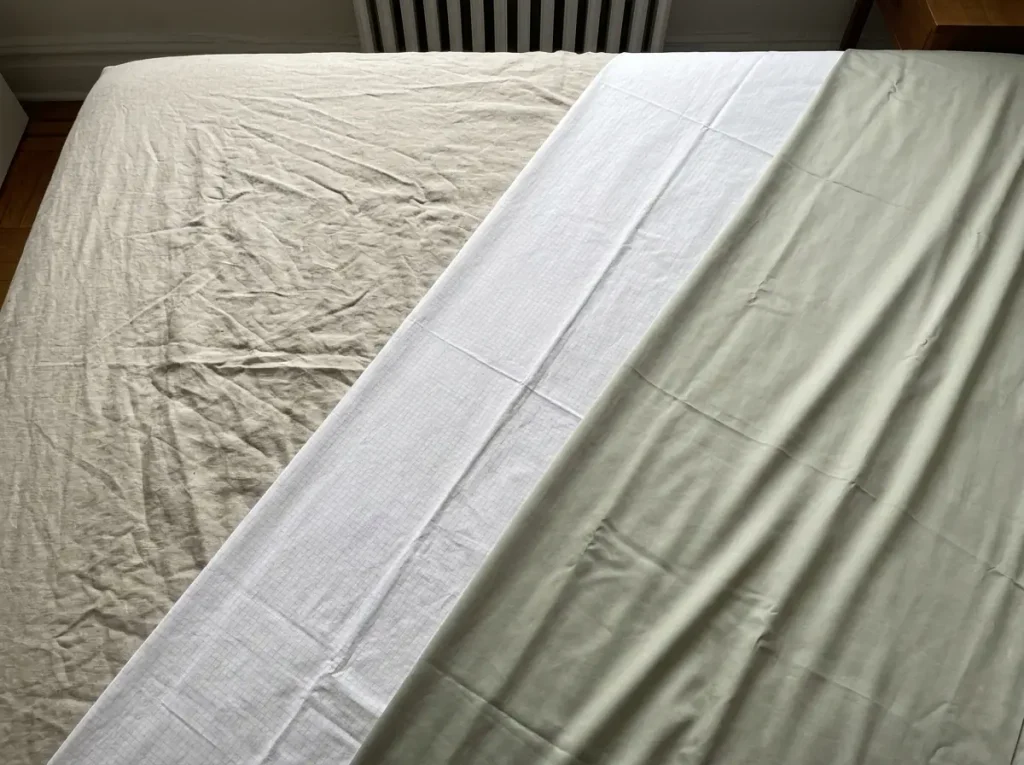
Everyone shops fiber first, because fiber is the word printed largest on the front of the package. It does matter. It matters less than the weave, though, and for a reason almost nobody states: what a fiber changes is what happens to your sweat, not what happens to the heat.
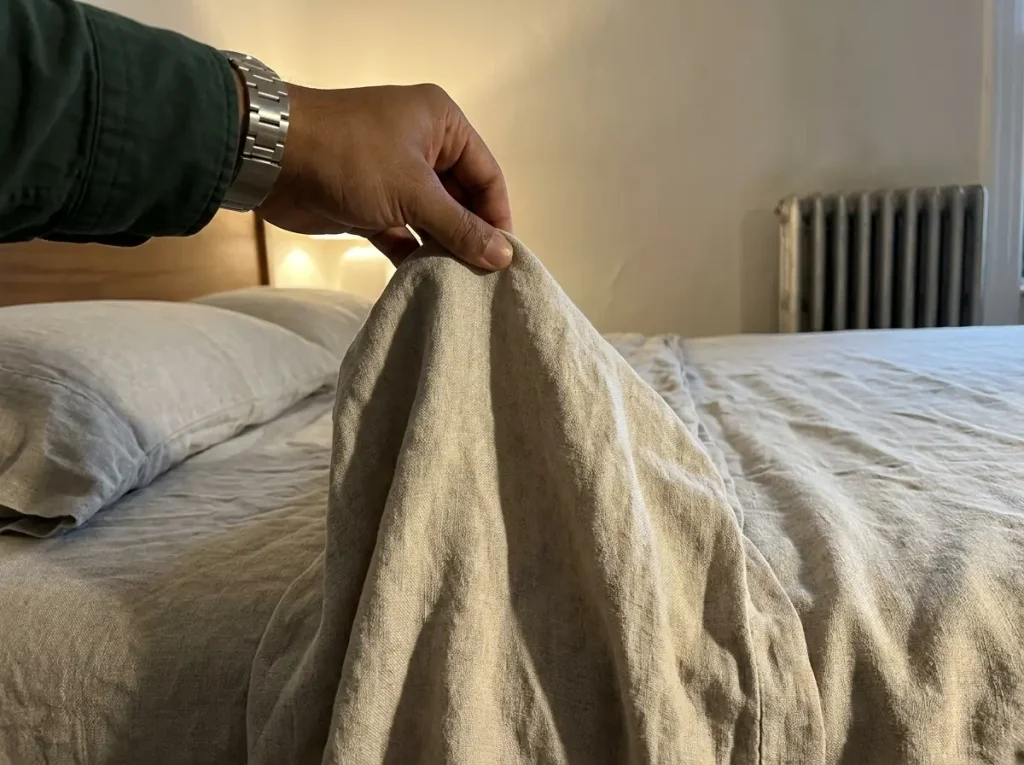
Linen is the clearest case. Flax fiber can take on a great deal of moisture before it starts to feel wet against skin — the figures that get quoted put linen’s moisture regain up around 20 percent of the fiber’s own weight against roughly 7 to 8 percent for cotton, which are directional numbers rather than certified ones, but the ratio holds across every source that publishes them. Call it two to three times as much sweat absorbed before the fabric announces itself. That, and not a slogan about breathing, is the mechanism behind “linen sleeps cooler.”
And it has a shape over the night. Cotton feels cooler for the first hour; linen feels cooler the longer the night goes on, because it is still taking moisture in when the cotton has reached its limit.
That curve is the reason linen reviews split so violently between people who judged the set on night one and people who judged it in August. Both were right about what they felt. They were measuring at different points on the same line. Whether the price is justified is a separate argument, and it is worth reading up on whether linen is worth what it costs before committing.
Bamboo is where the label does the most work. Bamboo names the pulp, not the fabric. Bamboo sheets are near-universally viscose or rayon, sold as bamboo rayon as often as bamboo viscose, cellulose that has been chemically dissolved and extruded back out as a fiber, and the properties you get belong to the process, not to the plant on the packaging. More to the point here: most bamboo sets are built as a sateen. The TOSMO Luxury Cooling Sheet Set in 100% viscose from bamboo is a fair, OEKO-TEX-certified example with an 18-inch pocket, and it proves the point rather than contradicting it: being a sateen under the word cooling, it sleeps warmer than an equivalent percale, because the silky hand the listing is selling you is precisely the closed surface that lets the least air through. That is the trap in one product. For the verdict on whether bamboo cooling sheets actually work, the node article does the full accounting.
Polyester deserves one sentence, and it is the sentence that sets up the end of this article: polyester’s cooling is almost never a property of the fiber, it is a finish applied to the fiber. That covers microfiber sets, most gel-infused claims, and anything sold as a synthetic performance fabric. Hold that thought.
What is quietly encouraging is that the communities are already doing this arithmetic without the vocabulary. In the hot-sleeper threads people rank by fiber and by budget in the same breath, putting a linen or lyocell blend at the top and naming specific cheaper sets as the sensible fallback, rather than assuming the most expensive box with the word on it wins. That is a more sophisticated purchase than most of the roundups they are reading.
Grammage, the Number Nobody Prints
You have been trained your whole shopping life to compare thread counts. Thread count counts threads per square inch. It says nothing whatsoever about how much fabric is actually there, and how much fabric is there is what decides whether air can get through it.
GSM, grams per square meter, is the fabric’s weight. It is the fourth lever, it is the one that gets left out of every buying guide, and it is the most physically direct of the four: more grams in the same square means less empty space in that square, and empty space is what air moves through. A lighter fabric at the same construction has more gap per square inch, full stop. That part is not a preference or a trend. It is arithmetic.
The important thing is that thread count and GSM move independently. You can raise the count and keep the weight flat by using finer yarns. You can raise the weight and keep the count flat by using thicker ones. So a low thread count does not automatically mean a light, airy fabric, and a high one does not automatically mean a heavy one, which is exactly why comparing two sets by count alone tells you so little.
For rough orientation, the range most listings and mills cite puts cotton percale somewhere around 100 to 180 GSM at 200 to 400 threads, and linen around 110 to 170 GSM at a much lower count of 80 to 150. Treat those as directional. No standards body publishes a consumer GSM table for bedding, so anyone presenting these as certified figures is dressing up an aggregate. What they are good for is seeing the shape of the thing: linen delivering comparable weight at half the thread count, which tells you the two numbers are describing different properties of the same cloth.
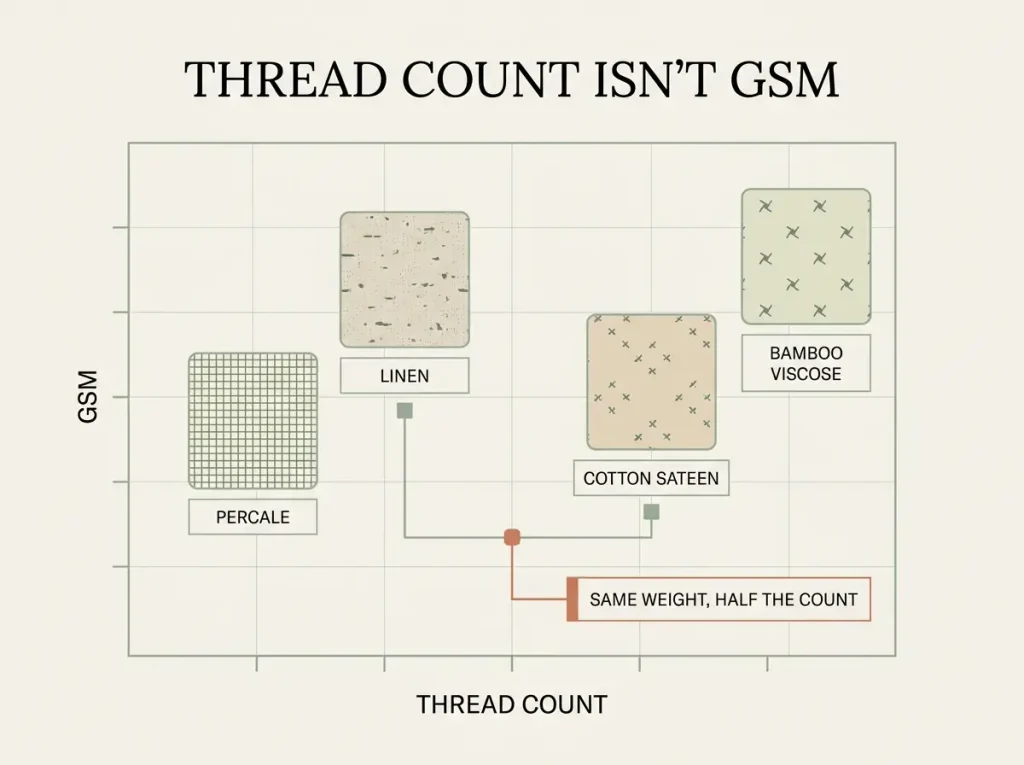
Almost nobody prints the number. That absence is itself information: when a listing does put a GSM figure in front of you, you are looking at a seller who expects you to know what to do with it, and that is a different kind of seller from one selling you an adjective.
When the number is missing, use two fingers. Pinch the fabric through the packaging window and rub it. A heavy fabric has body. It resists you and stays where you put it. A light percale collapses to nothing between your fingers and springs straight back open. You are reading grams per square meter directly, with no number involved.
This is also where the standard advice quietly fails. “Just buy a higher thread count” works fine up to about 400. Past that, the count is usually climbing because the mill is twisting two or three thin plies together and counting each ply as a thread, so an 800-count sheet can be two 400s stacked in the arithmetic rather than anything finer. Denser fabric, more grams per square meter, less air.
The number went up and the sheet got warmer. Whether the extra money buys anything real is the whole subject of whether the premium is worth paying, and it deserves the longer answer that article gives it.
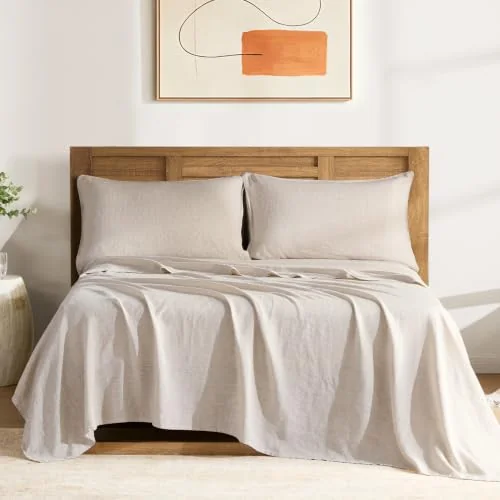
Meanwhile, here is the rare listing that prints the number on the box.
What the Certification Tag Does and Does Not Promise
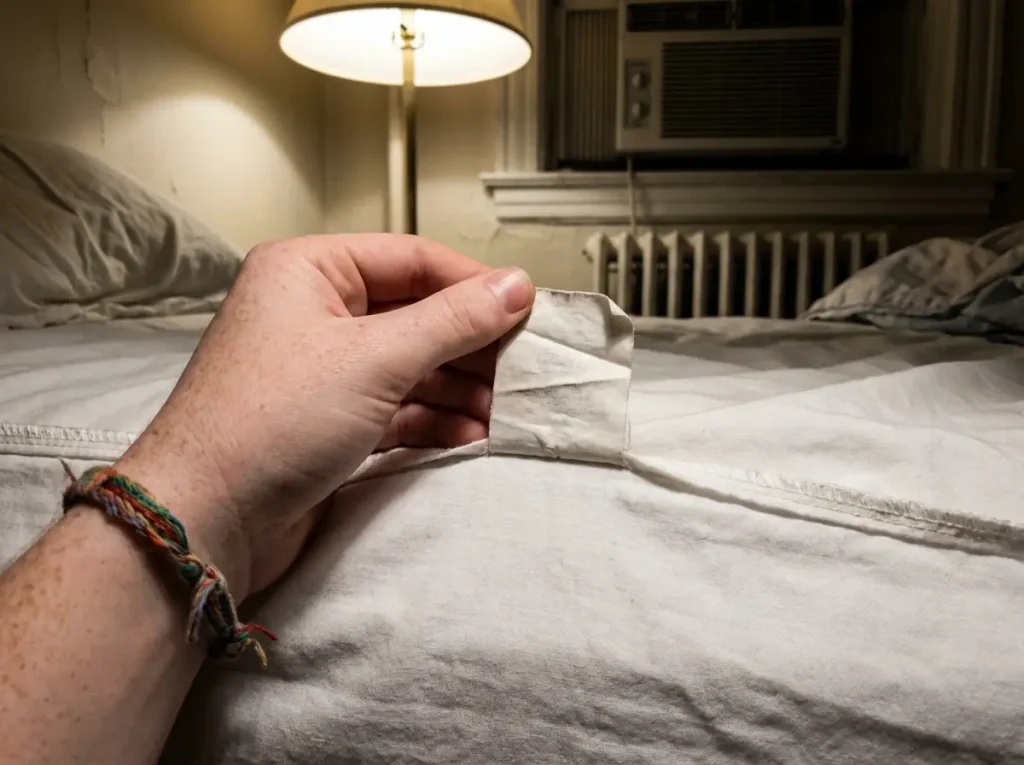
A certification tag feels like proof. It is printed, it has a number on it, and it is sitting an inch away from the word “cooling” on the same package. The question worth asking is: proof of what, exactly? Almost nobody reads the standard, and the standard is unusually clear about its own limits.
OEKO-TEX STANDARD 100 tests the finished textile against more than a thousand potentially harmful substances. It is a chemical-safety certification for a fabric that will spend eight hours a night against skin, and on those terms it is worth having.
What it does not do is test thermal performance. It has no opinion on breathability, no opinion on durability, no opinion on fiber quality. OEKO-TEX’s own STANDARD 100 page is explicit that the test covers harmful substances, not thermal performance, which means a fully certified sheet set can sleep like a plastic bag and remain fully certified, because it was never the question being asked.
There is a real detail underneath, and it is the part worth carrying: bed linens fall under Product Class 2, the direct-skin-contact class, which carries stricter limits than the class covering things like curtains. So a certified sheet has cleared a harder chemical bar than a certified drape with the same logo on it. That is a genuine piece of information, and it is a completely different piece of information from how the sheet handles a hot August night.
One label worth separating from this: GOTS certified, which covers organic cotton and its processing, is answering a different question again, and neither it nor OEKO-TEX has an opinion on how a sheet sleeps.
The certificate number is also checkable.
It resolves to the issuing institute and to the product class.
It takes under a minute. Almost nobody checks. Sellers who print a real number and sellers who print a plausible-looking graphic are both counting on that, which is its own reason to spend the minute. If you want the full treatment of what the certification labels actually certify, that pillar goes through them one by one. The practical read for a shopper standing in an aisle stays simple: a listing that names its fiber, its weave and its weight is telling you more about how the sheet will sleep than any certificate on the front of it.
Wash Twenty, and When the Sheet Is Not the Problem
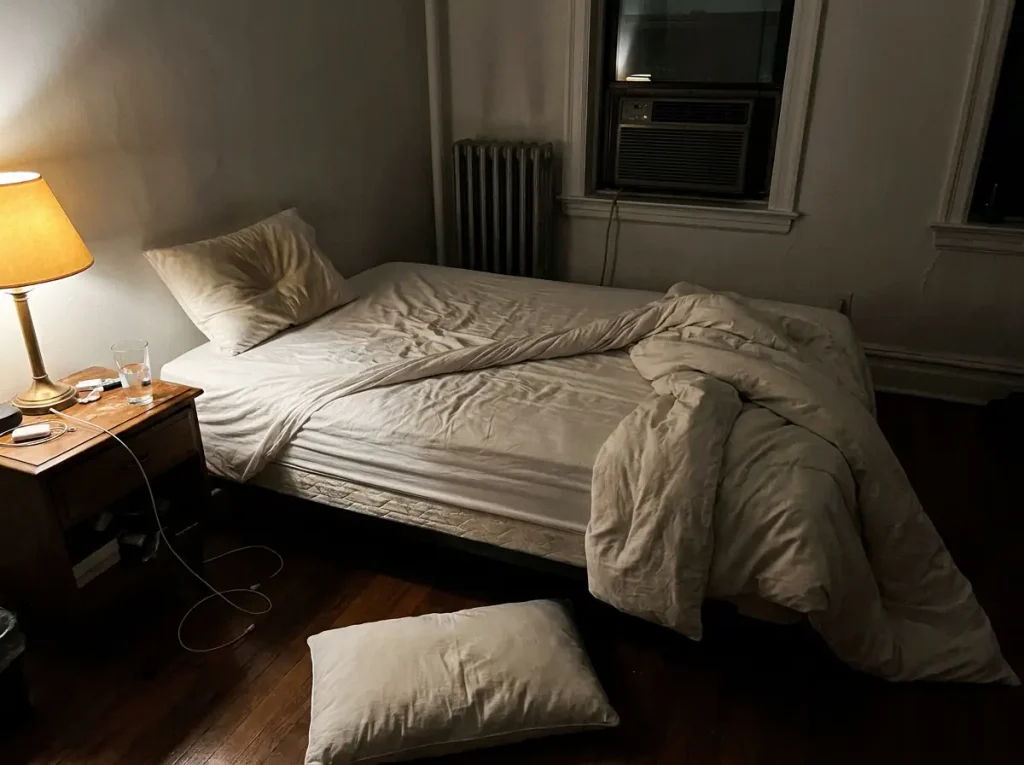
Here is the complaint the whole article has been circling. It worked, and then it stopped.
The phrase on the package is usually cool to the touch, and a cooling finish of that kind is a surface treatment: a chemical applied to the cloth after it is woven, most often to polyester, and repeated laundering takes it off. Nothing is defective when that happens.
The coating is doing precisely what a coating does, which is sit on top of something until enough hot water and detergent has gone past it. Cooling that comes from the fiber and the weave cannot leave, because it is not on the fabric, it is the geometry of the fabric. You would have to unweave it.
So “cool for the first ten minutes” and “it worked for about a month” are the same phenomenon reported at two different time scales. In the first, accumulated heat outruns a thin surface effect within one night. In the second, twenty or so washes outrun it permanently. Same physics, different stopwatch.
Which gives you a buying test you can run before spending anything: does the listing give you a reason, or only the word? A fiber, a weave, a weight. Any one of the three is a mechanism, and a mechanism cannot wash out. A listing that offers the word “cooling” and nothing that could be checked is, more often than not, selling you a finish. The exceptions exist, but that is the way to bet.
The wash-twenty tell is not softness. It is sound. A percale that has kept its structure still rustles faintly when you pull it flat across the mattress. A sheet that has gone silent, literally quiet under your hands, has lost the surface it was sold on, and the cool-touch went with it.
Before any of this becomes a purchase, three things are free. Drop the room: 65 to 68°F is the range most often cited as optimal for sleep, and a room at 78 fights every layer on the bed no matter what those layers cost. Take the top sheet off and sleep under the duvet cover alone for a week. For a lot of hot sleepers that single change does more than a fabric swap will.
Then look underneath, at everything between you and the bed frame. While you are down there, check that the fitted sheet still grips: a deep pocket that has gone slack, or corner straps doing the work the elastic gave up on, changes how the whole bed sleeps. A dense foam mattress holds heat by design and gives it back all night, and no sheet on top of it wins that argument on its own. A mattress protector with a solid plastic face is a raincoat, and it cancels everything the sheet above it is doing; damp mornings trace back to that layer more often than anyone expects, and it is the layer nobody thinks to check.
If you do need waterproofing, the Nestl Premium Cotton Terry Mattress Protector puts a cotton terry face against you instead of vinyl, though its flaw is structural and worth knowing: the TPU backing breathes better than old-style vinyl but it is still a plastic layer, and in real heat it will read slightly warmer than no protector at all. That is what waterproofing costs. The longer answer on which protectors actually breathe is a whole article of its own.
One more free fix, and it is the one nobody writes about because it is not a product: two people in one bed cannot be solved at the sheet.
Two sleepers at different temperatures is a genuine engineering problem, not a compatibility one: one of you is sleeping hot while the other is sleeping cool under the identical layer, so the sheet is wrong for both of you in opposite directions, and no fabric fixes a disagreement. The Scandinavian method, two separate twin duvets of different weights on the one bed, solves at the top layer what the bottom layer never could, and the National Sleep Foundation names dual-zone control specifically for shared beds. Half of Europe sorted this out decades ago. The same logic sends you up or down a layer rather than sideways: a cooling comforter or a cooling mattress topper changes more for some sleepers than any sheet will, and which one does more is its own comparison.
For the crisp, hotel-style end of the percale range, L.L.Bean’s 280-thread-count Pima cotton percale gets named by hot sleepers in the community threads often enough to be worth knowing about by name.
When It Is Not the Bedding
If the room is cool, the protector breathes, the weave is right and the nights are still soaking, that is past what any sheet can do and worth raising with a doctor. On the bedding side of that line, keeping the bed dry is a different problem from keeping it cool, and it is handled with different layers.
What to Do With All of This
Read the weave before the thread count. Percale moves air and sateen does not, and that one word predicts more about your July than any number on the box.
If the listing gives you “cooling” with no fiber, no weave and no weight attached to it, assume it is selling a finish, and a finish leaves on a schedule set by your washing machine.
The room does more than the sheet ever will. Fix 68°F before you fix the bedding, because a hot room beats a good sheet every single night.
The wash-twenty check: after a season of laundering, pull the sheet flat and listen. If it still rustles and still feels cool for the first minute, you bought a fabric. If both went quiet at the same time, you bought a coating, and the next set needs to name its weave on the label.
Tonight, take the top sheet off and drop the thermostat two degrees. Sleep on that for a week. If you are still hot at three in the morning, then the fabric is genuinely worth spending money on, and you now know the three words to look for before you do.
Frequently Asked Questions
01Are there any drawbacks to cooling sheets?
Yes. The weaves that move air best also wrinkle most and feel crisper rather than smooth, linen never looks pressed, and any set cooled by a chemical finish stops working after enough washes. The trade-off is comfort texture against airflow.
02What are the best sheets to keep you cool?
A light, loosely woven natural fiber: cotton percale or linen. Percale’s one-over-one weave leaves air gaps, and linen holds far more moisture before it feels wet. Which specific set wins depends on budget and softness tolerance.
03Are there cooling sheets that actually work?
Yes, when the cooling comes from the weave and the fiber rather than a coating. The test is one question: does the listing name a mechanism (a fiber, a weave, a weight), or does it only give you the word?
04Do cooling sheets work for night sweats?
They can help the bed handle moisture, but they only change the bedding. On the bed, swap to a breathable protector, lighten the top layer and drop the room. If the nights stay soaked with all of that done, raise it with a doctor.
05What are cooling sheets made of?
Most commonly cotton percale, linen, bamboo viscose or treated polyester. The first three cool structurally through fiber and weave, so it cannot wash out. The last usually cools through an applied finish, which can and does.
Leave a comment
Slept on something we got wrong, or found a set that held up? Say so here. Your email stays private.