

What’s in here9 sections
- The Set That Felt Like Silk in the Bag
- Microfiber Is a Thickness, Not a Fabric
- Why It Sleeps Hot, and It Is Not the Polyester’s Fault
- The 1800 on the Box Means Nothing
- What the Wash Does to It, and It Is Free
- Wash Twenty, and Nobody Has Counted
- Where Microfiber Earns Its Place
- The Short Version
- Frequently Asked Questions
A cheap microfiber set can feel like silk in the bag and like a plastic bag by month three, and that is a story that keeps coming back. Nobody in those threads is lying about either end of it. Microfiber is not a material at all. It is a thickness, a number, and any synthetic filament spun under one denier gets to print the word on the front of a package.
Which is why a set that costs pocket change and a set that costs several times as much can both call themselves the same thing, and why the two numbers that would actually tell them apart are never on the front. The wrinkle resistance and the quick drying are real, by the way, and they are most of why the fabric sells. Here is what the word means, what the fineness does to heat, what the four-digit number on the box is worth, and where this fabric genuinely earns a place on a bed.
Quick Answer
Microfiber sheets are good sheets for the wrong reasons people buy them. They are polyester spun fine enough to feel soft on night one, they resist wrinkling and dry fast, but the closed weave traps heat and they pill and hold odor sooner than a mid-range cotton. Right for a guest room, a kid’s bed or a cold sleeper on a budget. Wrong for anyone who sleeps hot.
The Set That Felt Like Silk in the Bag
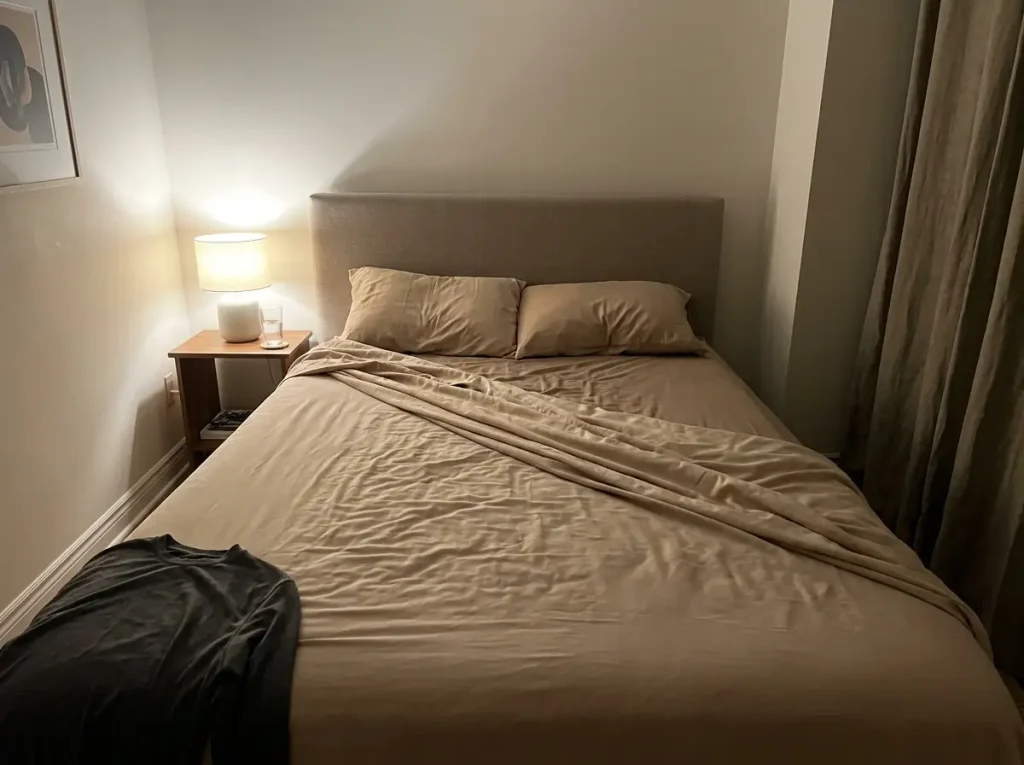
Everybody who has bought a cheap microfiber set knows the arc, and the threads keep rediscovering it: silk in the box, plastic by month three. What nobody explains is that night one is not the lie. The fabric really is that soft when you open it, and understanding why is what turns “are these any good” into a question with an actual answer.
Why Night One Is Honest
That softness is not a finish sitting on top of the cloth waiting to rinse away. It is two things, and both of them are structural. The first is the fiber diameter itself: filaments this fine have almost no stiffness to push back against your skin. The second is a mechanical brushing of the base cloth, which raises a nap on the surface, and the “double-brushed” claim on a listing is describing that step, done on both faces.
This matters because the standard advice for a new set does not apply here. On a percale you are told to wait until wash five, when the starch has gone and only the weave is left. Nothing is going to wash out of a microfiber sheet and reveal a different sheet underneath. What you feel in the store is what the fabric is.
The flip side is that a bad one gives itself away immediately too. The community has a phrase for a low-GSM, unbrushed set straight out of the package: slippery and plastic looking. That is not a fabric that will improve.
What Actually Changes by Month Three
So if the softness is not leaving, what breaks? The surface does. The raised nap flattens and then starts to break up into pills, and that is a completely different failure from a finish wearing off. Different cause, different fix, different timeline.
And it does not happen evenly. The side of the bed that gets slept on goes first, because the nap flattens under a shoulder before it flattens anywhere else. Your set can look perfectly fine from the doorway and feel wrong the moment you sit down on it.
Judge a microfiber set by dragging the back of your hand across it, not by pressing your palm into it. Pressing tells you about the nap, which is soft on every set including the bad ones. Dragging tells you whether the surface catches — and catching is the first sign of the pilling that shows up months later.
Microfiber Is a Thickness, Not a Fabric
Before anything useful can be said about how one of these sheets behaves, the word has to be pinned down. And microfiber is the only fabric name on a bedding shelf that describes a measurement instead of a material.
The Number That Defines It
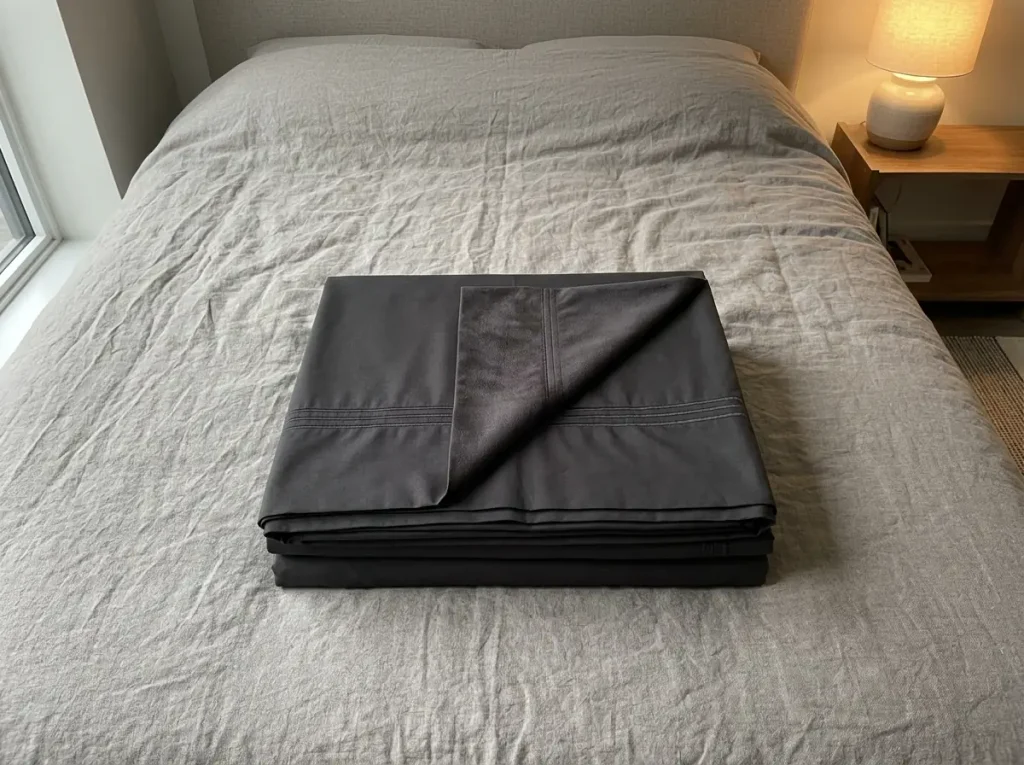
The threshold is denier, the unit for how heavy a filament is over a given length, and by definition, a fiber only counts as microfiber below one denier. Sheet yarns commonly run around 0.5 to 0.6 denier. There is no minimum quality attached to that, no required weave, no weight, no fiber family. Cross the line on fineness and you may print the word.
For scale: a human hair is roughly twenty deniers. A microfiber filament is a small fraction of one. That is the whole definition.
Why Two Sets Can Both Say Microfiber
Which means a set built to be thrown away and a set built to last both qualify, legally and accurately, and the numbers that separate them are never printed where you can read them in a store. This is the reason “is microfiber good” cannot be answered as asked. The fiber is a thickness. The sheet is a thickness plus a weave plus a weight plus a finish, and three of those four are doing more work than the one on the label.
There is a second reason two sets from the same brand can arrive different, and it is not a scandal so much as how the category works: the base cloth is usually bought, not woven by the brand whose name goes on the bag. Nothing in the definition of microfiber stops a marketplace label from sourcing one roll this quarter and a different one next quarter. It is a large part of why reviews on a single listing split so hard between people who love the set and people who describe a completely different product.
What It Is Made of Underneath
Chemically, almost all bedding microfiber is polyester, occasionally a polyester and nylon blend. Microfiber is polyester spun below a diameter, which is a comparison worth having on its own terms, and how that compares with ordinary polyester sheets is a longer conversation than this page has room for. What matters here is that “microfiber” and “polyester” are not two competing options you choose between. One is a subset of the other.
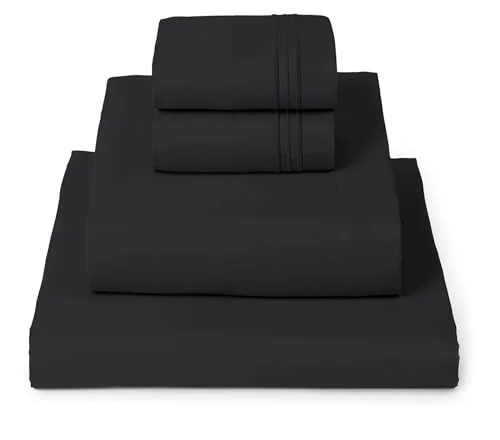
So the argument of this whole section is that the word tells you nothing and the specs tell you everything. The set below is here because it is the rare one in this category that has been through repeated independent hands-on coverage rather than pure marketing copy, and because it names what it is.
Why It Sleeps Hot, and It Is Not the Polyester’s Fault
Everyone agrees microfiber sleeps warm. Almost everyone blames the fact that it is synthetic, and that is the wrong culprit. The mechanism is geometric, not chemical, and the difference changes which sets are worth your attention.
What Closes the Gaps
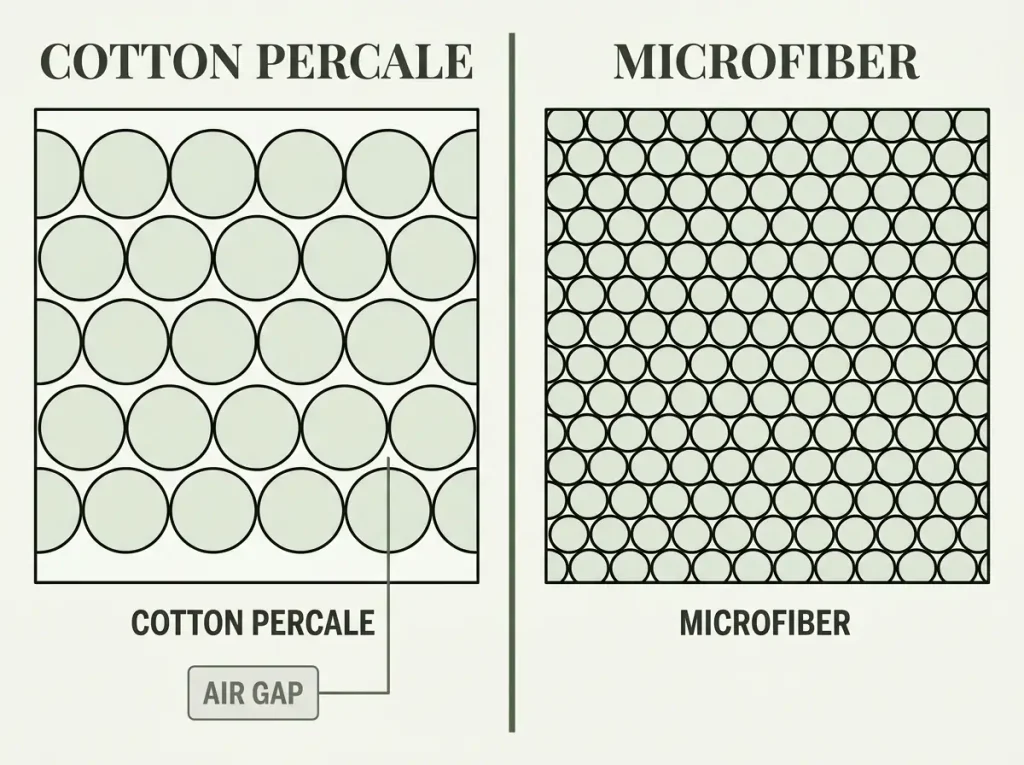
Filaments under one denier pack far more strands into the same square inch than cotton can manage, because each strand takes up so little room. All that extra thread has to go somewhere, and where it goes is into the space between the yarns, into the air gaps a weave normally leaves open. Heat leaves a bed through those gaps. Close them and it stays.
The Lamp Test
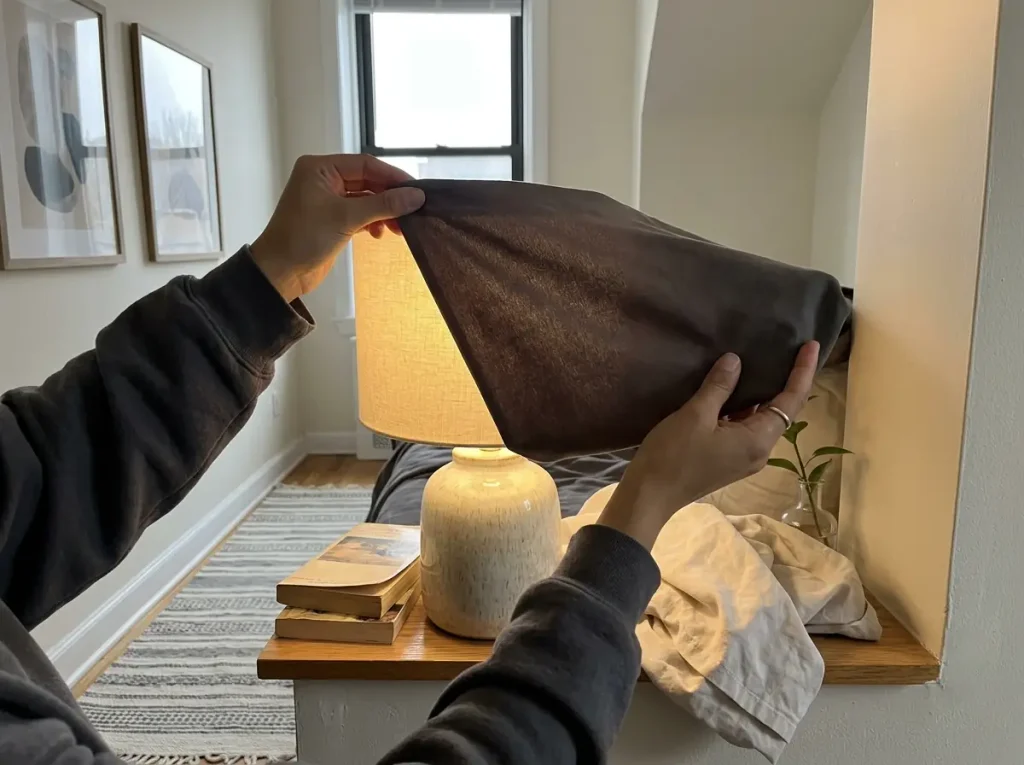
You do not have to take that on faith. Hold a microfiber sheet up to a lit lamp, then hold any percale in the house up to the same lamp. Less light comes through the microfiber. That missing light is missing space, and that missing space is where your body heat used to vent.
Ten seconds, no purchase required, and it works on any two sheets you own.
Why a Lighter One Really Is Cooler
So the rule is not “synthetic equals hot.” It is “closed equals hot,” which is the same reason a high-count sateen sleeps warmer than a low-count percale, and the weave is doing most of the work here, on every fiber, not just this one.
That leads somewhere nobody seems willing to say out loud: a lighter, lower-GSM microfiber genuinely does sleep cooler than a heavy one. Breathability is not a property the fiber has or lacks; it is how much open space the construction left, and heat retention follows that space down. Same fiber, same chemistry, same everything the label mentions. The geometry changed, and the geometry is what was trapping the heat.
One more thing the label likes to claim: moisture-wicking. Polyester is hydrophobic, so it does not pull moisture in and release it the way cotton’s structure does.
What a “moisture-wicking” microfiber is usually doing is moving sweat sideways along the brushed surface, or relying on a finish to do it. Sweat absorption into the fiber itself, the thing cotton does, is not on the table with a synthetic fiber. Useful in a gym shirt. Less impressive under a duvet.
And the friction complaint actually arrives before the heat complaint. What people describe is static buildup, and it comes from the same closed surface. The fabric sticks to a t-shirt every time you roll over, enough that some sleepers have to rearrange their shirt each time they turn. That is the same closed surface doing it, and a sheet is only one layer of the rest of a hot sleeper’s bed.
The 1800 on the Box Means Nothing
Everything the last section says is checkable is exactly what the packaging refuses to print. What it prints instead is the biggest tell in the category, and it is the same four digits on nearly every set on the shelf.

Why It Is Not a Thread Count
Start with cotton, where the equivalent trick at least has a method. Thread count above roughly 400 is single-versus-multi-ply arithmetic: two thin threads twisted together, both counted. Denser, not finer. It is an inflatable convention, but it is a convention, and people can argue about it because there is something to argue about.
1800 on a microfiber package is a number shaped like a thread count, implying everything a thread count implies, with no agreed counting method behind it at all. It means whatever the brand decided it meant. Two sets both saying 1800 can be identical or worlds apart, which is why the community treats the figure as decoration and reads the reviews instead.
The giveaway is uniformity. When a spec is real, competitors disagree about it. They measure differently, they round differently, they argue. A number that comes out identical across brands that share nothing else is not being measured.
The Number Worth Reading Instead
GSM, grams per square meter, is the fabric’s grammage, and it tracks what you actually want to know: weight and density. Sheet-weight microfiber commonly runs 90 to 160 GSM, and roughly 90 to 120 is the practical range for a set you want to sleep cool under. Above 130 you are into heavier, warmer cloth. It is one number, it means one thing, and it connects directly to the lamp test, because heavier usually means more closed.
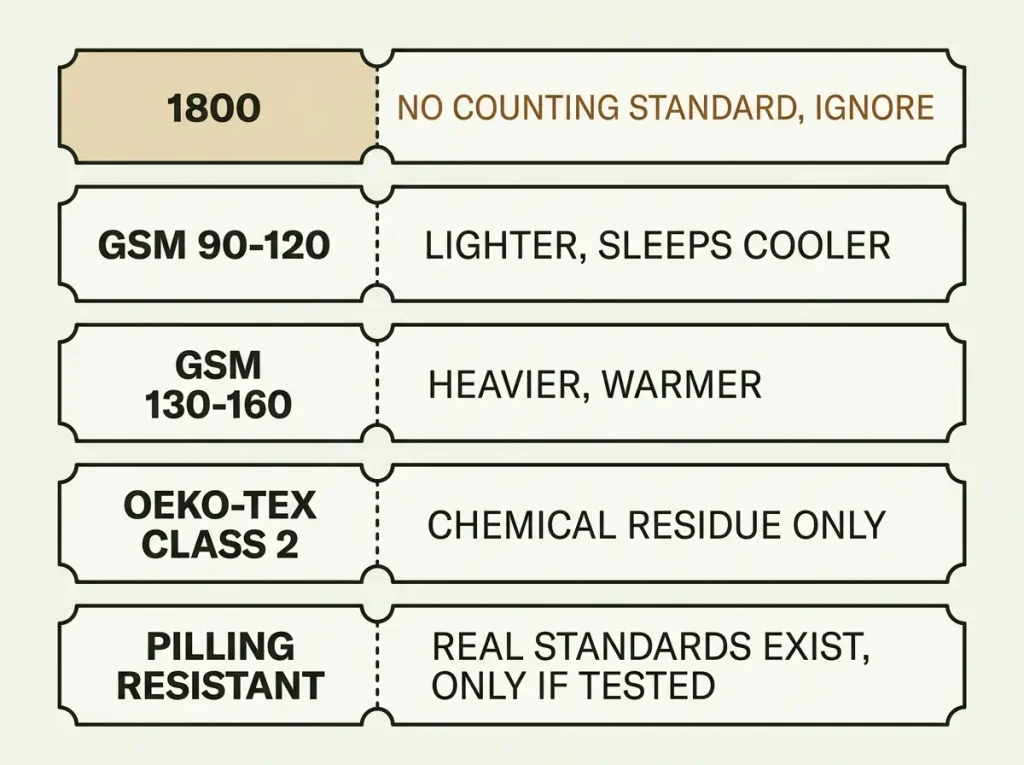
Now, “pilling resistant.” That phrase has real standards behind it on textiles that get lab-tested: ASTM D3512 for random tumble pilling, AATCC 124 for smoothness after repeated home laundering, a commercial anti-pilling target of grade 4 or better under ISO 12945-2. Most budget microfiber is never tested against any of them. The claim is not false so much as unattached to anything, which puts it in the same drawer as the 1800.
What the Certification Tag Covers
The OEKO-TEX tag answers a different question again, and it answers it well. It is just not the question you were asking. Bed linens sit in OEKO-TEX’s Product Class 2, one step stricter than everyday clothing, the class for products with direct skin contact.
It grades chemical residue on the finished cloth. It does not grade how the fabric is woven, how fine the fiber is, or whether the surface will pill by spring. If you want the full scope, what Standard 100 actually certifies is its own subject.
Three numbers on one package, then: one that means nothing, one that means weight, and one that means a chemistry test passed. Read the middle one.
If a microfiber listing does not publish a GSM figure anywhere, weigh the answer yourself once it arrives: a queen flat sheet at around 90 to 100 GSM lands near a pound and a half on a kitchen scale, and one at 150 GSM is noticeably heavier in the hand than that. Brands that print the 1800 and hide the GSM are hiding the number that would have told you something.
What the Wash Does to It, and It Is Free
The single biggest variable in how a microfiber set ages is not the set. It is the heat you put it through, and that is worth settling before any purchase is worth discussing.
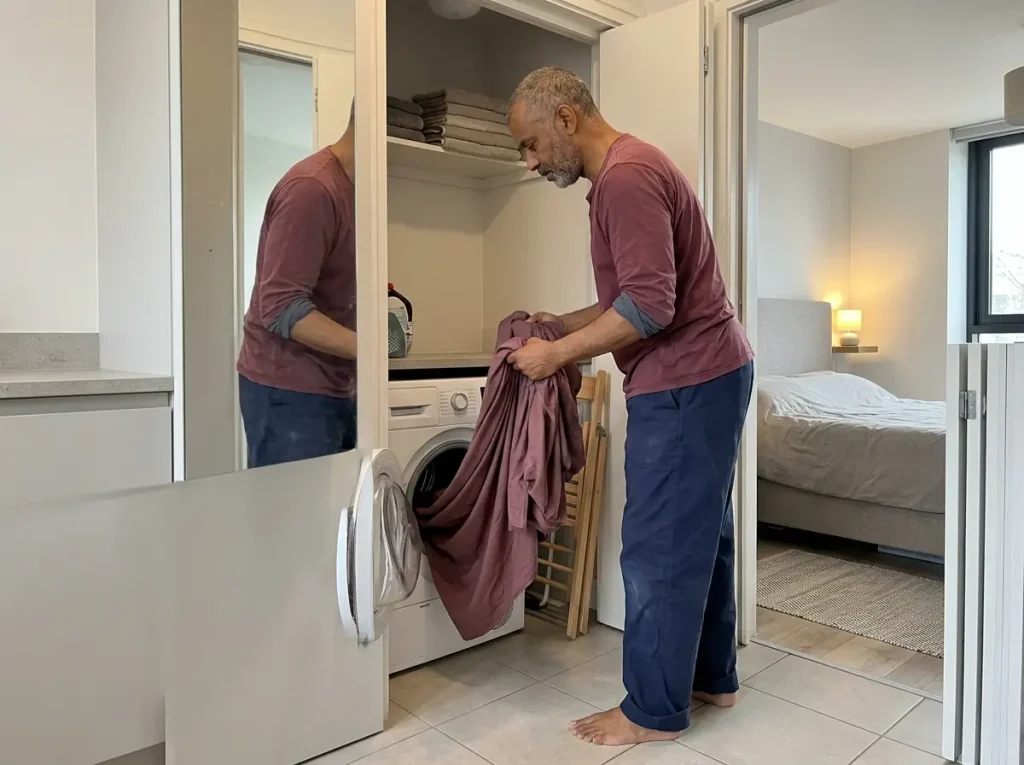
Cold, Low, and Out While Damp
Look at the split in the reviews on any best-selling microfiber set. Some buyers report years with no pilling. Others report pilling within a handful of washes. Same product, same listing, sometimes the same size and color.
And the variable those buyers themselves keep naming is not the sheet. It is the wash and the dryer.
Here is why heat specifically. Polyester softens as it warms, and a filament under one denier has almost nothing to it in the first place.
Put that through a hot tumble and the abrasion raises fuzz off the surface; the fuzz tangles; the tangle is a pill. The set did not fail. It got cooked and then rubbed.
So: wash cold, tumble dry on low, and take it out while it is still slightly damp. The care label will usually tell you the same thing, and on this fabric it is worth reading rather than guessing at. That costs nothing, it is the highest-leverage thing in this entire article, and it applies to the cheap set you already own as much as to anything you might buy.
The Softener Trade
Fabric softener and dryer sheets sit in a genuinely awkward spot here. They do cut the static cling people complain about, and the static is a real annoyance. But they work by depositing a residue on the surface, and on a fabric whose entire selling point is a brushed nap, coating that nap is a bad trade.
The usual advice is to use softener on synthetics because they cling. Honestly, after reading enough threads where the same people describe both the static and the flattened, greasy-feeling surface a few months later, I would skip it. The static fades with washing on its own, and the nap does not come back.
One more habit worth adjusting. Polyester holds body oils that cotton lets go of in the wash, so a microfiber set starts smelling like its sleeper sooner between washes. The bed smells of the detergent for two washes and of the sleeper from the third, and on microfiber that third wash comes round faster.
That odor retention is a property of the fiber, not a sign the set is dirty. The fix is washing it more often, not washing it hotter, because hotter is the thing that pills it. If the lifespan question is what brought you here, how long a microfiber set actually lasts gets the full verdict.
Wash Twenty, and Nobody Has Counted
Now the honest limit of what anybody can tell you about this fabric, including this page unless it says so plainly: almost everything written about microfiber stops at the unboxing.
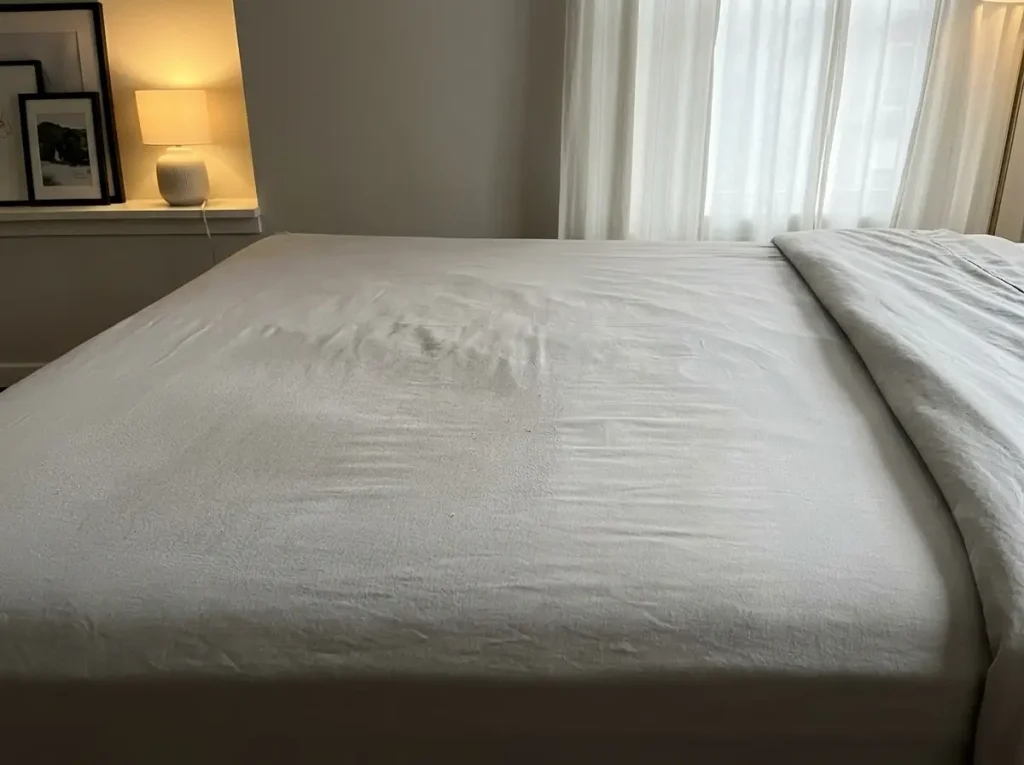
What a Season Actually Changes
Nobody counts the months. The reviews are unboxings, the shopping blogs are rewritten listings, and the one genuinely tested roundup in the search results is still a snapshot of a season rather than a curve. Week one lies about every fabric, and on microfiber it lies hardest, because the softness that sells it is present from the first minute and is not a finish that will wash away and show you the truth.
At the multi-month mark, the results split by brand tier, not by microfiber as a category. A double-brushed, higher-GSM set holds up for years for a lot of buyers. Unbranded ultra-cheap microfiber goes plastic within weeks, by the threads’ own description.
That is not the fiber behaving differently in two houses. It is two different constructions wearing the same word on the bag.
Which is where a recognizable brand is worth a sentence, and only a sentence. The MALOUF Double Brushed Microfiber Super Soft Bed Sheet Set is a double-brushed 100 percent microfiber set from a mattress-accessory brand rather than a marketplace-only label, which mostly buys you consistency between one order and the next, which is the thing the bought-base-cloth problem takes away. Its flaws, both worth stating: it usually ships in two to three days rather than arriving tomorrow, and being a real brand does not exempt it from the fiber’s physics. The heat and the static are exactly the same.
What to Look at at Wash Twenty
Three places, and they tell you different things. The nap on the sleeping side, which flattens first. The corner where you sit to put your shoes on. And whether the surface still slides cleanly against a t-shirt or has started to catch.
The catch is the one that matters, because pilling shows up first where a shoulder or a heel works against the same patch of cloth every night. That is why the fitted sheet goes before the flat sheet does. People blame the wash when the pattern is telling them it was friction, and friction is a thing you can move around by rotating the set end to end.
The evidence on this is thinner than anyone would like, and it is worth being straight about that. Independent testing of one of the best-selling brushed-microfiber sets found pilling reports were inconsistent even within the same product line, which is a finding about the variable rather than a finding about the sheet.
Which leaves the honest framing. A set that costs a fraction of a cotton one and lasts a third as long is not a scam. It is a different kind of purchase, and it is only a bad one if you were expecting the other thing.
Rotate a microfiber fitted sheet end to end every fourth or fifth wash, so the corner that lived under your shoulder spends the next month under your feet. Pilling on this fiber is driven by friction against the same patch, and moving the patch buys you months at no cost. It is the one trick that works on the cheap sets too.
Where Microfiber Earns Its Place
The honest answer to “are microfiber sheets good” is that the sheet was never the variable. The bed it goes on is.
The Four Beds It Suits
A guest-room set that gets used four nights a year never has to survive wash twenty. That is not a compromise, it is a correctly matched purchase, and it covers more beds than people admit:
- The guest room, where the set spends most of the year folded in a closet
- A kid’s bed, where budget sheets are the sensible call because kids sheets get outgrown or ruined long before the fabric gives out
- A cold sleeper, for whom the closed weave is a feature rather than the complaint
- A spare set for the week the good ones are in the wash, or an RV, or a bunk
The usual pitch for this purchase is crazy-affordable and no-regrets, and the regret only shows up when somebody buys it for a bed it was never suited to. The full buy-or-skip reasoning, when microfiber is the right call, goes deeper on each of those beds than this page can.
A tell worth knowing: the guest-room set gives itself away at the corner. It is the one that still looks new, because nobody has slept on the same eight inches of it four hundred times.
The Two It Does Not
Anyone who sleeps hot, for every reason in the heat section above. And anyone who wants one set to last years rather than seasons, which is a different budget conversation than it looks like from the shelf.
Then the case almost nobody separates: a shared bed where one of you runs warm and the other runs cold. No single set is right there. It is wrong for both of you in opposite directions.
The answer is two sets: the cold sleeper’s microfiber on one side, something open and cotton on the other. And if that sounds fussy, it is considerably less fussy than the two of you fighting over the duvet at three in the morning.
Before You Buy Anything
If the bed is warm, do the free thing first. Take the top sheet off and sleep under the duvet cover alone for a week. It costs nothing, it changes the layer that actually gets thrown off at two a.m., and for a lot of hot sleepers it does more than any fabric swap will.
Then, if you still want the entry-level set for one of the four beds above, the Utopia Bedding Full Sheet Set in Soft Microfiber is a brushed microfiber four-piece with a 15-inch pocket depth stated on the listing, which is more than most unbranded competitors will tell you. Its flaw is the category’s: it is the entry point and not a long-term set, and the community treats it as the disposable, no-regrets buy rather than a bed investment. Match it to the guest room, not to your own bed.
One boundary, and then back to the cloth. Skin that reacts, or breathing that changes, on a specific fabric is a conversation with a doctor rather than a fabric verdict, and that is not a question a weave chart can settle. And the separate question of what microfiber is and is not made of gets its full answer in its own place, not in a sheet overview.
Last, the budget floor, and it is a floor of quality rather than a number. Below a certain construction (no stated GSM, no brushing, the four-digit number doing all the talking) you are buying the word and not the cloth. At that point a percale costs about the same and gives you an open weave for the money.
The Short Version
Three things to carry out of here.
- Microfiber is a thickness, not a fabric. Read the GSM and ignore the four-digit number on the front.
- It sleeps hot because the weave is closed, not because it is synthetic, and a lighter set of the same fiber genuinely does sleep cooler.
- Cold wash, low tumble, no softener. That one habit separates the buyers reporting years of use from the ones reporting pills in a fortnight.
The wash-twenty check: at twenty washes, look at the sleeping side of the fitted sheet and at the corner where you sit to put your shoes on. If the nap has flattened and started to catch on a t-shirt there while the flat sheet is still smooth, that is friction rather than the wash, and it tells you what the set has left in it.
Pull the sheet you have off the bed tonight and hold it up to a lit lamp next to any cotton sheet in the house. Whatever the package said, the light will tell you which one has room for your heat to get out.
Frequently Asked Questions
01What are the downsides of microfiber sheets?
It traps heat because the weave is closed, it clings to skin and sleepwear with static, and the surface pills sooner than a mid-range cotton does. How fast it pills depends on wash and dryer heat more than on which set you bought.
02Is 100% microfiber good for bed sheets?
Yes for a guest room, a kid’s bed or a cold sleeper on a budget. No for a hot sleeper, or anyone who wants one set to last years. The GSM on the label decides far more than the word microfiber does.
03What is the difference between microfiber and polyester sheets?
Microfiber is polyester, spun below one denier. The difference is fiber diameter, not chemistry, which is why microfiber feels finer and softer than ordinary polyester sheeting. The fuller comparison covers what that fineness changes in practice.
04Do microfiber sheets pill?
Yes, and fastest on the side that gets slept on, where a shoulder works against the same patch every night. Cold washing and a low tumble delay it more than the brand name does, and buyers of the same set report wildly different results.
05What GSM should microfiber sheets be?
Roughly 90 to 120 GSM for a set meant to sleep cool, and 130 to 160 for a heavier, warmer one. It is the one number on a microfiber label worth reading, and plenty of listings quietly leave it off.




Tried it on your own bed?
No comments yet. Tell us what you changed, and what the sheet did after a few washes.