

What’s in here7 sections
For years, the same question about bamboo sheets has come up in slightly different words, and the titles tell you everything about the mood: whether bamboo is rayon at all, and warnings about one specific brand. Nobody in those discussions is complaining about how the sheet feels. They are asking what the word on the box is hiding. What it is hiding is a process, not a poison.
Bamboo cannot be spun into thread the way cotton can, because it is a hard, woody stem that has to be dissolved and reformed first, and there are three completely different ways to do that. The Federal Trade Commission has required the words “rayon (or viscose) made from bamboo” on the label since 2010 and has fined major retailers more than $1.5 million for skipping them, which is the tidiest proof available that there is no textile fiber called bamboo. Here is what the word legally means, what each of the three processes leaves behind, how to check a listing in ninety seconds, what an OEKO-TEX number does and does not promise, and whether any of that answer changes by wash twenty.
Quick Answer
Bamboo sheets are safe to sleep on. The open question is the process behind the word, not the fiber: lyocell is a closed loop that leaves nothing concerning in the cloth, while viscose, which is most of the market, uses carbon disulfide, and an OEKO-TEX Standard 100 certificate on the finished fabric is what confirms the residues sit below safe thresholds. Uncertified viscose is the one case for caution.
What “Bamboo” Legally Means on a Sheet Package
The question people actually type is whether bamboo sheets are safe, and the honest first move is to point out that “bamboo sheets” is not one thing. It is a word the Federal Trade Commission has been policing since 2010, and what it stands for on any given package is a manufacturing decision nobody bothered to print on the front of the box.
Under the Textile Fiber Products Identification Act, a textile can only be sold as bamboo if it was made directly from bamboo fiber. Anything made from dissolved bamboo pulp, which is very nearly the entire market, has to be labeled rayon made from bamboo or viscose made from bamboo, and the FTC’s own bamboo-textiles guidance spells out the required wording. This is settled enforcement rather than a theory. Between 2009 and 2010 the agency went after Macy’s, Target, Sears and Kohl’s over precisely this, and the penalties across those cases ran past $1.5 million.
So the word on the front is a loophole, not a safety claim, and the FTC bamboo labeling rule exists precisely because the gap between the two was being worked. A package that says only “bamboo,” with the process named nowhere, has already told you something useful: it did not want to say bamboo rayon. That is greenwashing in its plainest form, which is not a lie so much as a true word standing in front of a truer one.
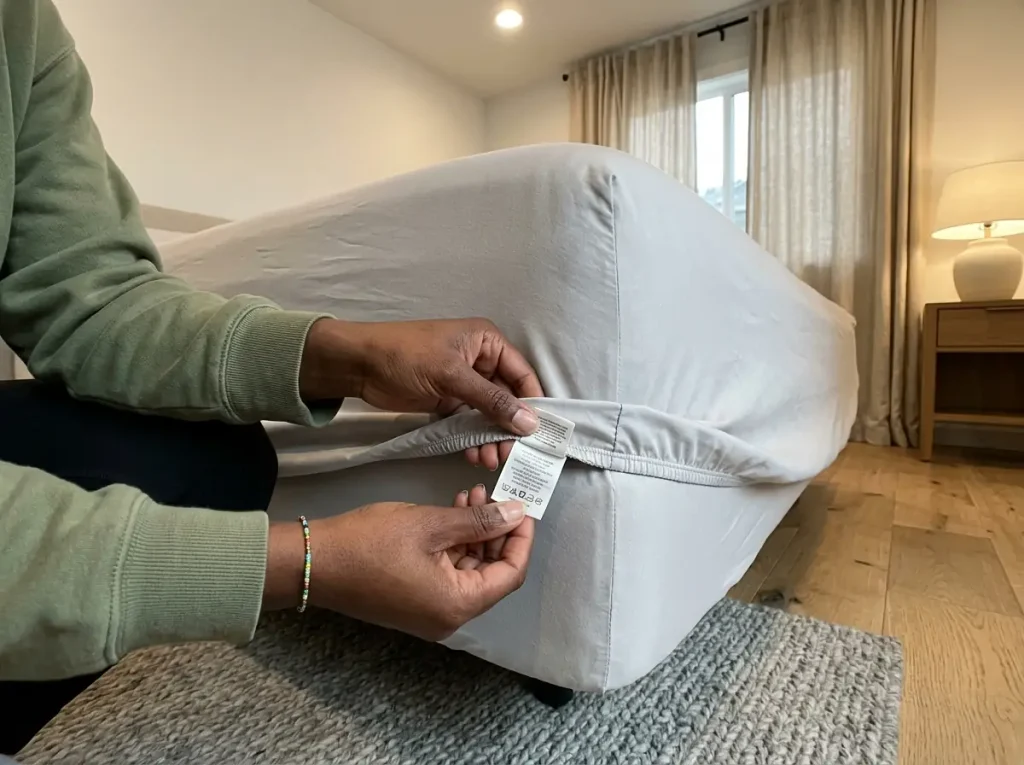
And there is a second document in the box that had no such freedom. The tag sewn into the fitted sheet has to satisfy the federal rule; the marketing copy does not. Where the two disagree, the product label sewn into the seam is the one that was checked by somebody with the authority to fine.
Once you know that, the compliant listings and the evasive ones start reading differently, and you do not need any chemistry to see it. A compliant one names its process in the spec block, in the same list as the pocket depth and the weave, because to that seller it is simply a fact about the product. An evasive one keeps “bamboo” alive in the headline and the bullet points and then never repeats it where the specifications live. The question that keeps coming back, whether bamboo is rayon, is that whole gap in one line, and it keeps returning because nothing on the package resolves it.
None of which makes the fiber a bad choice. It makes it a category, and bamboo covers five different constructions once you get past the word. Stop asking whether bamboo is safe. Start asking which process made the one in front of you.
Read the product page in the wrong order on purpose. Skip the headline and the bullet points, scroll straight to the specifications block, and only then go back up. If the word “bamboo” appears fourteen times in the copy and zero times in the specs, you have learned which of the two the seller was willing to put in writing.
Three Ways to Turn a Plant Into a Sheet
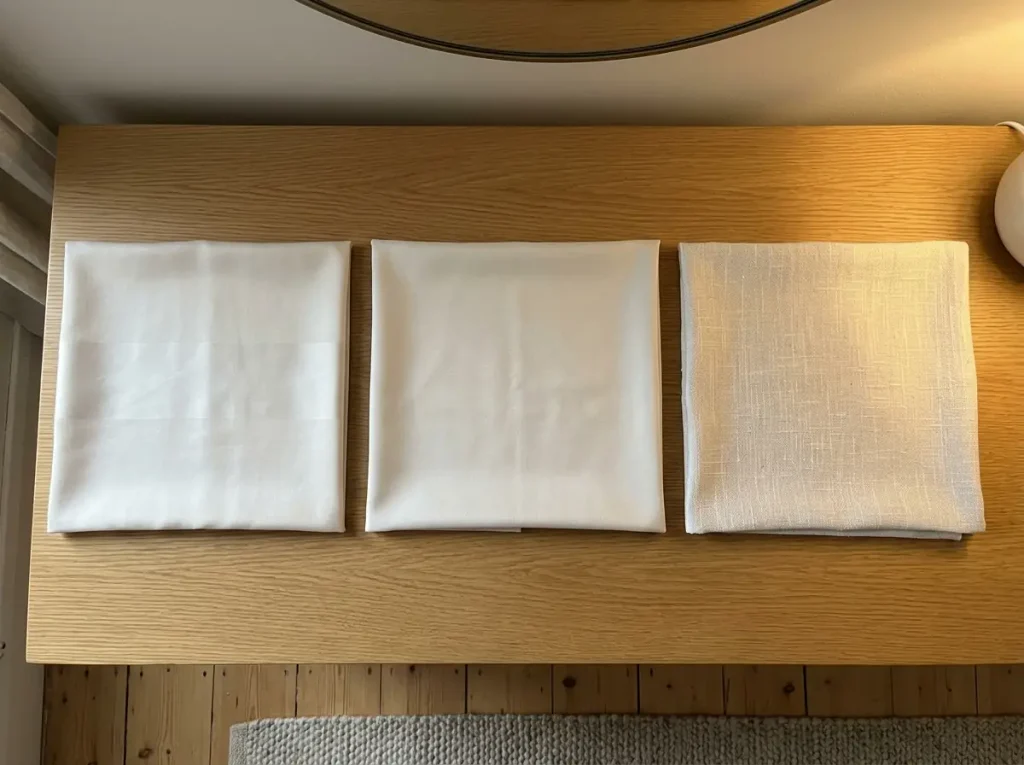
Bamboo does not arrive as thread. It arrives as a hard, woody stem that has to be broken down and reformed before anything can be woven from it, and the three ways the industry does that are not variations on a theme. They use different chemistry, they leave different things behind, and they put the risk in completely different places.
Viscose, the Open Process — and Where the Risk Actually Sits
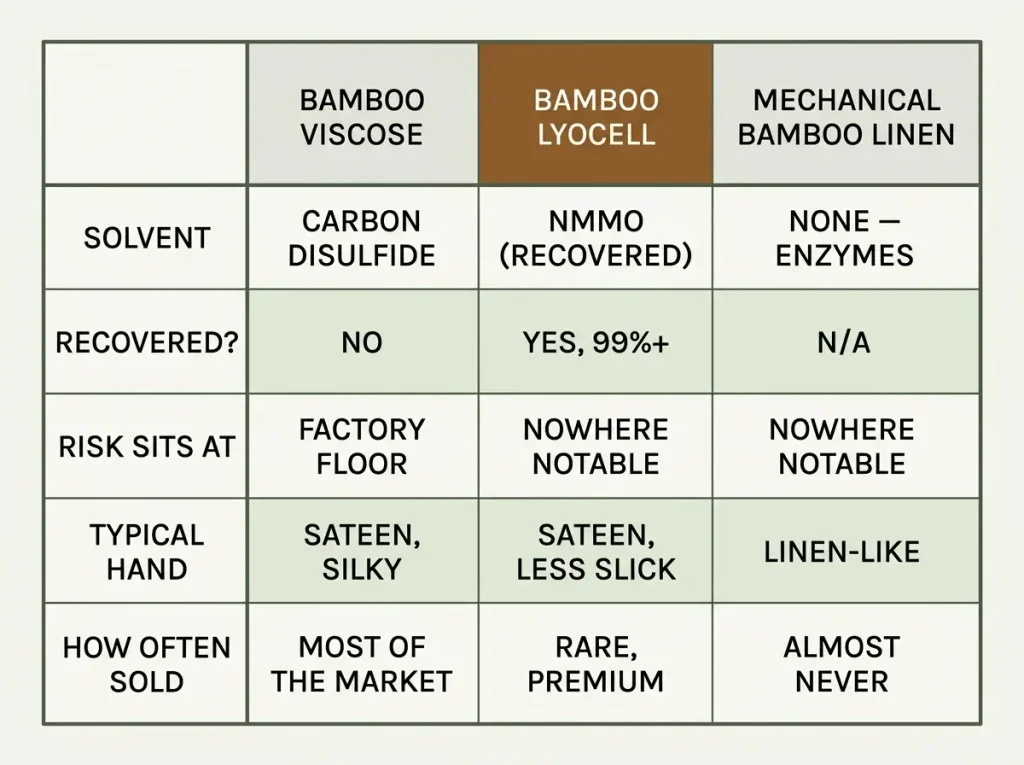
Bamboo viscose, which the label may also call rayon, starts with cellulose pulp dissolved in sodium hydroxide and carbon disulfide, then extruded through spinnerets into a sulfuric acid bath that hardens the stream back into filament. Carbon disulfide is not a trivial substance: the EPA classifies it as a hazardous air pollutant, and it is a neurotoxin. That is where the discussion usually stops, and stopping there is what turns a manufacturing question into a scare.
Here is the part that usually gets read backwards. The documented harm from decades of viscose production is concentrated in worker exposure at poorly controlled factories, which is what an open chemical process means in practice: the solvent is not recovered, so it has to go somewhere, and where it goes is the air of the plant.
It is a factory-floor problem, not a bedroom one. The concentration in the cloth itself drops sharply through the manufacturer’s own washing and finishing stages, long before the set is folded into a bag and put on a shelf. The people who have been hurt by this process were standing next to the vat, not sleeping on the output.
Which is why the caution that follows is narrow rather than general. Uncertified viscose is the case to be careful with, and the reason is almost boring: nobody tested the finished cloth, so nobody can tell you what those washing stages actually removed. The chemistry is not the problem. The absence of a measurement is.
Lyocell, the Closed Loop
Bamboo lyocell dissolves the same pulp in NMMO, an organic solvent that is captured and reused at rates above 99 percent. That closed-loop solvent recovery is the difference: almost nothing leaves as wastewater, and nothing comparable to the viscose case is left in the finished cloth. The environmental impact of the two routes is not a close call. The loop is the whole argument, and it is an argument about the factory and the river as much as about the bed.
It is also the same process behind Tencel, which is why a bamboo lyocell set and a Tencel set are cousins wearing different marketing. If that is the part you care about, the branded version of the same closed-loop process is worth reading before you shop by the word “bamboo” at all.
Mechanical Bamboo Linen, the One You Will Almost Never Find
The third route uses crushed stems and enzymes, no strong solvents at all, and produces a fabric closer to linen in the hand than to sateen. It is genuinely rare in bedding and priced accordingly. Worth naming so you recognize it if it walks past. Not worth going hunting for.
It is also the only one of the three that can realistically reach GOTS certification, because GOTS requires organically grown fiber and the chemical dissolution step disqualifies the other two outright. That produces a useful piece of shelf-reading: a bamboo sheet set advertising GOTS is far more likely to be a cotton blend, or to be stretching the claim, than to be genuine mechanical bamboo linen.
Now the claim that is printed on nearly every one of these packages. Bamboo’s own antibacterial compound exists in the standing plant, and it does not survive being dissolved and reconstituted — multiple studies have found no inherent antibacterial activity in bamboo viscose unless a separate antimicrobial finish was applied afterward, and the same guidance also addresses the antibacterial claims. So “naturally antibacterial” on a viscose package is borrowed from a plant that is no longer really in the room.
What is real is mechanical, and it is more interesting than the marketing. The filament comes out unusually smooth, round and tightly packed compared with cotton’s irregular twisted staple. That smoothness is what makes the cloth genuinely dust mite resistant and what reduces friction against skin, and it is the only defensible thing behind the word hypoallergenic on these packages. It is also why the fabric suits sensitive skin better than a rougher staple yarn does.
A verifiable property of the thread’s shape, sold as a magic property of the plant. The honest version is the better sales pitch, and nobody uses it.
If a bamboo listing leads with “naturally antibacterial” and never names its process, treat the two facts as one signal. A seller who knows the plant compound does not survive dissolution also knows which process they used, and a seller who does not know the first thing is unlikely to be careful about the second.
How to Read a Listing in Ninety Seconds
Everything so far is background until you are looking at an actual product page, and the good news is that the check takes less time than reading the reviews. There are exactly two things to find, and one of them is usually missing on purpose.
Test One — Does the Listing Name the Process?
Look for bamboo lyocell, bamboo viscose, or rayon made from bamboo, and note that the process line matters more than the thread count printed above it: thread count says how many yarns crossed a square inch, not what those yarns are. Any of the three is a pass, because the seller committed in writing to a specific manufacturing route and can be held to it. You do not have to prefer one of them yet. You only have to find one of them.
If an Amazon listing says only “bamboo,” and no process appears anywhere in the specifications, treat it as uncertified bamboo and assume viscose. That is not cynicism. Given a federal rule that requires the alternative wording, the omission has a most-likely explanation, and it is that one.
Then check the tag sewn into the hem when the set arrives. This is the free fix and it works on the sheets already on your bed tonight: the tag has to carry the fiber content, so the question you came here with about the set you already own costs one minute and nothing else. Do that before you spend anything. A surprising number of people find they already own certified lyocell and were worrying about a package that oversold itself.
Test Two — Is There a Certificate Number, Not Just a Logo?
An OEKO-TEX Standard 100 badge is a picture, and pictures are easy. A certificate number is a document, and documents can be looked up. That distinction is the whole of test two, and it is worth understanding what a Standard 100 certificate number actually covers before you weigh it against anything else on the page.
A worked example beats a rule here. The ettitude 100% Lyocell from Organic Bamboo Sheet Set names its closed-loop lyocell process in plain words on its own listing, prints the Standard 100 Class 1 certificate number SH065 176027 alongside it, and gives a 17-inch pocket, which is both tests passed on one page, though stock on it runs thin, often a handful of sets at a time, and if you find it gone the certified viscose set in the next section is the same two tests passed at a lower price rather than a reason to go hunting for something that names neither.
One more wrinkle, and it is the kind you only notice after reading a lot of these pages. A listing that names the process but shows only a logo is a weaker pass than one that names neither and then produces a real certificate number in the Q&A section. That happens more often than you would expect, because the certificate is genuine and the copywriter simply did not realize it was the selling point.
When a listing shows the badge but no number, ask in the Q&A rather than emailing support: “What is your OEKO-TEX Standard 100 certificate number and which institute issued it?” A seller who has one answers in a line. A seller who does not either goes quiet or replies about how soft the sheets are, and both of those are answers.
What the Certificate Settles, and What It Leaves Open
A certificate number turns the safety question from an argument into a document, which is genuinely the end of it for the sheet on your bed. But it answers a narrower question than the badge implies, and knowing where its edges are is what keeps you from paying for a promise it never made.

What It Does Settle
Standard 100 tests every component of the finished textile, the cloth and the sewing thread and the trims and the label itself, against a list of more than a thousand regulated and unregulated substances known to be harmful to people. What it is measuring is chemical residues in the cloth, and what it is certifying is that the finished textile is skin-safe at those thresholds. That list is reviewed and updated at least once a year, which matters more than it sounds: it means the certificate is not frozen at whatever chemistry people worried about in 2011.
The key structural point is that it is applied to the finished fabric, which is precisely the thing you are going to sleep on. That is why it resolves the viscose question without anybody needing to know a thing about the factory. Whatever the process used, however open it was, the cloth was tested afterward and the number is the receipt.
It also tests against skin-contact thresholds, which is what makes it the right thing to look for if your skin is reactive, and a genuine reaction that does not settle down is a dermatologist’s question, not another re-read of the label.
What It Does Not Settle
It says nothing about how the bamboo was grown. No pesticide claim, no organic claim, nothing about the field at all, because certified and organic are two different claims, and half the arguments about bamboo come from people each correctly defending one of them.
It says nothing about labor or worker safety either, which is exactly where the viscose process’s real, documented harm has always been concentrated. A certified viscose sheet is safe on your bed and tells you nothing about the air somebody else was breathing.
And it does not tell you which of the three processes was used. That has to come off the listing, which is precisely why the check in the last section is two tests rather than one.
Put those two halves together and the budget move falls out on its own, and it is not the one people expect. The honest move is not to buy the cheaper uncertified set; it is to buy the cheaper process and keep the certificate. A certified bamboo viscose set runs roughly half what a certified bamboo lyocell one does, and what you gave up is the closed loop, which is an environmental and factory-floor argument and a real one, not a difference in what is sitting in the cloth against your skin. The TOSMO Luxury Cooling Sheet Set is the version of that trade with the receipt attached: 100 percent viscose from bamboo, an 18-inch deep pocket, and a TESTEX-issued Standard 100 certificate number, SHHO 098044, that you can go and look up, but it is viscose and not lyocell, so it carries none of the closed-loop argument the ettitude set does, and if that specific point is what you are buying, you pay the difference for it.
That is the whole exception, and it is worth saying plainly: this article’s caution was never about viscose. It was about untested cloth.
Does Anything Change by Wash Twenty?
Every other question about a sheet set gets a different answer after a season of washes, so it is fair to ask whether this one does too: whether something is building up, wearing off, or slowly coming out of the cloth as the months go by.
Nothing accumulates. The one thing that genuinely does leave a fabric over time is an applied finish rather than the fiber itself: a wrinkle-resistant finish is usually a formaldehyde finish, and a stain-repellent one is often a PFAS coating, and both are things Standard 100 tests for and both are why a new set can have a faint smell for a night or two. That off-gassing is the finish, not the bamboo.
On a certified set the safety question was settled the day the finished fabric was tested; the risk window closed at the factory, and a bed at home is not adding anything to it. There is no mechanism by which sleeping on a sheet puts carbon disulfide back into it.
Washing does not undo the certification either, and this is where the care label gets misread. Warm water and fabric softener will shorten the set’s life and dull the finish that moves moisture off you, and softener in particular coats the filament and takes away the smoothness that was the point of buying bamboo. But durability and safety are two separate questions here, and it is worth saying so out loud, because those care instructions get quoted as though they were a warning label. They are a longevity instruction.
Cold water on a gentle cycle, mild detergent, tumble dry low or line dry, no bleach, no softener, same line for lyocell and for viscose. That’s it.
Now the part most pages would leave out. No independent long-term retest of finished bamboo fabric after ten or twenty washes turned up in anything readable while putting this together. The mechanism says nothing should change, and the manufacturer’s own washing and finishing stages already did the heavy lifting before the cloth was ever tested.
But nobody has published the twentieth-wash number, and pretending otherwise would be exactly the move this article exists to argue against. The honest position is that the reasoning is sound and the measurement is missing.
The questions about this have run for years and escalate steadily, from plain labeling confusion at one end to brand-specific warnings at the other. That escalation is a pattern worth naming and worth walking straight past, because a single unverified accusation repeated by a stranger is not evidence about your sheets, and the certificate number is.
What genuinely changes by wash twenty is the hand, not the chemistry. A sateen-woven viscose gives up some of its slip and picks up a faint fuzz, and it shows on the pillowcases first, where skin and hair work at the same square foot every night for a season. That is a wear story rather than a safety one, and it shows up on a matching duvet cover a season later than on the pillowcases, because a cover is worked at by a duvet rather than by skin. It is the one that decides whether you buy the set again, and it is the same durability question that decides how bamboo holds up against the cheap synthetic it usually loses to on price.
Conclusion
Stop asking whether bamboo is safe and start asking which process made the one in front of you. The word on the box is a legal category the FTC has been enforcing since 2010; the process is the actual answer, and it is either printed on the listing or it is conspicuously absent.
Run the two tests on anything you are about to buy. Does the listing name the process, and is there a certificate number rather than a logo. A page that says only “bamboo” has told you exactly what it did not want to say, and a badge without a number is a picture of a promise.
Certified lyocell and certified viscose are both fine to sleep on. Uncertified viscose is the narrow case for caution, and a certificate is what closes it, not the price, not the brand, and not how many times the listing says “natural.” After a season of washes, look at the pillowcases before anything else: bamboo sateen gives up its slip there first, and if it is still smooth at wash twenty the set earned what it cost.
Go pull back the corner of the fitted sheet on your own bed and read the tag sewn into the hem. It costs nothing, it takes a minute, and it answers the question you came here with about the set you already own.
Frequently Asked Questions
01What is the downside to bamboo sheets?
The real downsides are cost, shrinkage on the first wash, and a care routine with no margin in it: cold water, no bleach, no softener. Safety is not on that list. The genuinely frustrating part is the labeling, which hides the process behind one vague word.
02Is it healthy to sleep on bamboo sheets?
Yes, on a certified set. The filament comes out smooth and round rather than twisted like cotton staple, which gives dust mites less to grip and creates less friction. The qualifier matters: certification is what turns that into a statement rather than a hope.
03What is healthier, cotton or bamboo sheets?
Neither is inherently healthier. A certified set of either has been tested against the same thresholds on the finished cloth. The one real difference is upstream: organic cotton can carry GOTS, and bamboo viscose essentially cannot, because dissolving the pulp disqualifies it.
04What is the healthiest sheet to sleep on?
The one with a checkable certificate number on the finished fabric, whatever the fiber is. Cotton, linen, lyocell and viscose all pass or fail on the same test. The fiber matters far less than whether anybody actually measured the cloth.
05Is bamboo viscose the same as rayon?
Yes. Viscose and rayon are two names for the same process, and the FTC requires one of those words on a bamboo label. Lyocell is the exception worth knowing: same raw pulp, different solvent, recovered and reused in a closed loop.


Tried it on your own bed?
No comments yet. Tell us what you changed, and what the sheet did after a few washes.