







What’s in here7 sections
Three of the five pages that rank for this question are written by shops that sell silk, and all five answer it as though there were one buyer standing there. There isn’t. Silk sheets are a good purchase for a fairly narrow kind of sleeper and a slow, expensive mistake for several others, and the number printed next to the price is the thing that tells you which one you are. That number is momme, and it is a weight: the pounds a fixed piece of silk weighs, which makes a higher momme weight a denser weave rather than a better one.
Below: what momme changes, which cool sleeper silk actually suits, who should keep the money, and what a season of washing does to a set nobody on this search result has bothered to wash.
Quick Answer
Silk sheets are worth it for a cool-to-neutral sleeper who wants the hand-feel and the lower friction against hair and skin, and who will hand-wash or mesh-bag them. They are not worth it for a hot sleeper or a wash-and-forget household. Buy 19 to 25 momme, 100% mulberry, OEKO-TEX Standard 100 on the label.
What Momme Actually Measures
The intro promised that the number on the box is a weight and not a grade, so here is what that weight physically changes, because every other decision in this article rests on it. Momme is the weight in pounds of a piece of silk cut to 45 inches by 100 yards. Work it back to a unit anybody can picture and one momme is about 4.34 grams per square meter. It is the silk version of GSM, and it has nothing at all to do with thread count.
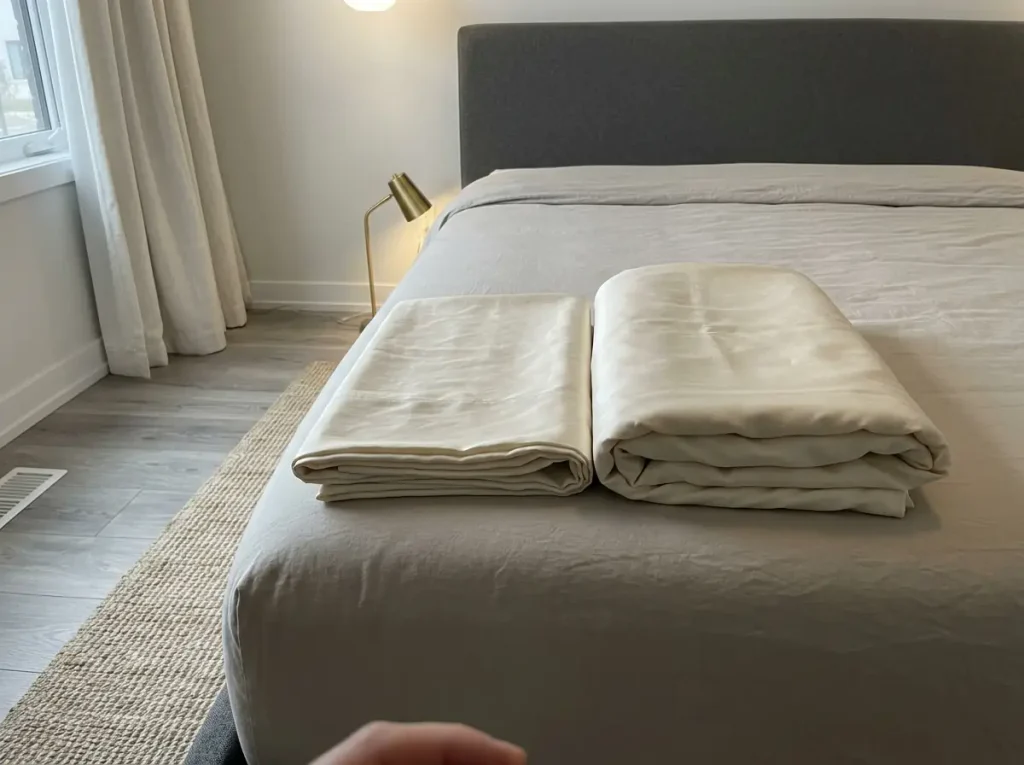
The number is a weight, not a grade
That distinction matters because it changes what the number can promise. A 30-momme sheet is not a finer silk than a 19-momme sheet; it is more of the same silk packed into the same square inch. Denser, heavier, and (this is the part the listings leave out) warmer.
Momme buys durability. It does not buy airflow, and it can cost you some.
This is the same trap thread count sets once it climbs past 400: a number that describes construction gets sold as a quality ranking, and the moment a buyer treats it as a score, the label has done its job. Silk at least has the decency to use an honest unit. Nobody twists two thin filaments together and counts them twice to inflate momme.
19, 22, 30: What Each One Is Actually For
Bedding-grade silk lives between 19 and 30 momme, and the three common stops mean three different things. 19 momme is the lightest tier, the way in, the one makers themselves position for a first-time buyer. 22 momme is the middle weight, dense enough to be a set you keep rather than a set you try. 25 to 30 momme is the heavy end, the most durable and the most expensive, and it is where a sheet starts to sleep noticeably warm.
Here is the sentence that should decide your purchase, and no listing will write it for you: the two numbers on a silk page point in opposite directions for a warm bed. The momme that makes the sheet last is the momme that makes it sleep hotter. You do not get both.
If a silk listing prints the momme but not the grade, or the grade but not the momme, it is showing you the half of the spec that flatters it. Both numbers exist for every set. A seller who has both and shows one has made a choice, and it was not for your benefit.
What Grade 6A adds, and what it doesn’t
Grade 6A is the other number, and it measures something else entirely: the length and the uniformity of the raw filament. Long, even filaments make a smoother, stronger yarn with fewer weak points along it. So a grade 6A silk tells you about the fiber going in, and momme tells you about how much of it ended up in the cloth.
They are separate axes. A 6A silk woven at 19 momme is excellent fiber in a light cloth; a lower-grade silk at 30 momme is a lot of mediocre fiber. Neither number rescues the other, which is why you want to see both before deciding anything. And while you are reading the label, look for an OEKO-TEX Standard 100 certificate tested against more than 1,000 regulated substances, which is a third axis again and gets its own section further down.
Real buyers, for what it is worth, do not shop any of these numbers first. In one r/Bedding thread a shopper pricing a king set moves away from “sateen weave high thread count” toward silk specifically for “that satin super smooth slippery surface.” Feel is what gets bought. Momme is just how feel is priced.
Who Silk Sheets Are Actually For
Momme tells you what you are buying. It does not tell you whether you should. This is the line the roundups skip: one sleeper for whom silk is a genuinely good purchase, and four for whom it is money that would do more elsewhere.

The sleeper silk is genuinely for
Silk works for someone who sleeps cool to neutral, who wants the hand-feel and the low friction against hair and skin, and who has looked at the care routine and shrugged. All three conditions, not two. The friction case is the strongest one silk has, since a smooth protein filament drags less across hair and skin over eight hours than a cotton weave does, and the hand-feel is not something a cheaper fabric imitates convincingly.
The care condition is the one people skip past and then regret. No dryer. No enzyme detergent, and no fabric softener either. A mesh laundry bag every time, or hands and cool water with a mild detergent.
That is not a one-time cost like the purchase; it is a small recurring tax on every wash for as long as you own the set. Dry cleaning is an option and a standing expense of its own. If reading that made you tired, you already have your answer.
One more thing about the first week, because it makes people return perfectly good sets. Silk feels wrong at first to almost everybody. A poster in r/Bedding described night one as “almost too smooth and kind of slippery,” then noted that by night three they had stopped noticing.
That is adjustment, not a defect. The buyer who packs the set back up on night two never finds out which it was.
Give a new silk set five nights before you judge the slip. Sleep on it four nights in a row rather than one night a week, because the adjustment is your nervous system getting bored of a new surface, and it needs consecutive nights to do that. Judge it on night five with the tags already in the bin.
Here is where the middle momme earns its keep, and where the purchase turns from an experiment into an investment. If you have just recognized yourself in that profile and you want a set that stays rather than a set that proves a point, 22 momme is the weight to buy.
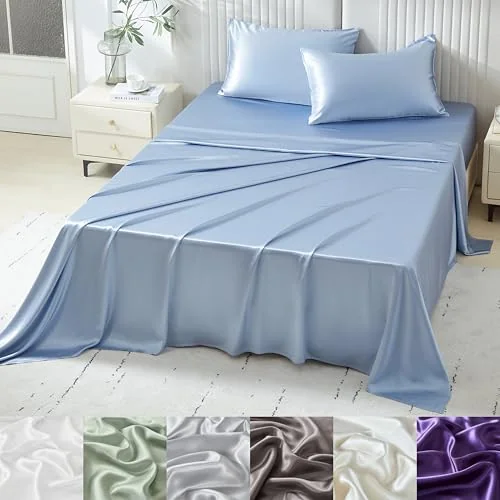
If 22 is more commitment than you want to make to a fabric you have never slept on, the same maker’s 19-momme Grade 6A set is the entry line — real mulberry silk with the same OEKO-TEX certification and the same 16-inch pocket, just a lighter weave, which is the honest way to try silk without dropping to a blend that only looks like it. Its flaw is written into that lightness: the thinnest weave in the range is the first to show pilling if it ever meets a dryer or an enzyme detergent, so this is the set that punishes a careless wash fastest.
The four who should keep their money
The hot sleeper. Silk feels cold the second your leg touches it, because a dense protein filament conducts heat away from skin quickly. Then it has nowhere to send the moisture, and the closed charmeuse weave gives evaporation no path out. Silk cools on contact and then stops, and the full mechanism is worked through on that article rather than repeated here. If you already know you run hot, temperature regulation is a whole-bed problem rather than a sheet problem, and the useful next step is sorting the four layers of a hot bed, the duvet cover included, before you shop for any fabric at all.
The wash-weekly household. Silk cannot go in the dryer, cannot meet an enzyme detergent, and wants a mesh bag on a cold delicate cycle at minimum. On a bed that gets stripped every Sunday, that is roughly fifty-two small acts of care a year, and every one is an opportunity to forget.
The shared bed where the two of you disagree about temperature. This one gets argued from the fabric rather than from a story, because there is no good sourced anecdote for it and inventing one would be worse than saying so. Silk is a single-thermal-profile fabric. A sheet has no per-side accommodation to give: one weave, one weight, stretched flat across both of you. If one of you is throwing the top layer off at two in the morning and the other is pulling it back at three, buying a more expensive version of the same single surface changes nothing about the disagreement.
The buyer who actually wants satin. More on that in a second, because it deserves its own heading.
“Satin” is a weave, not a fiber
A satin weave describes how the threads are floated over one another to make a shiny, slippery face. It says nothing about what those threads are made of. Polyester satin sheets have the shine, have the slip, and have none of the protein structure, which means none of the moisture behavior, none of the friction profile, and a very different feel by the third month.
Plenty of people who think they want silk want satin, and that is fine. It is a cheaper, machine-washable answer to a real preference. It just is not this purchase, and a listing that says “satin silk sheets” without the word mulberry anywhere is selling fake silk to somebody who is counting on the label to be honest.
The Free Check Before You Spend Anything
Before any of the above matters, two things cost nothing and settle whether silk is even the right question. One is a measurement. The other is a night’s attention.
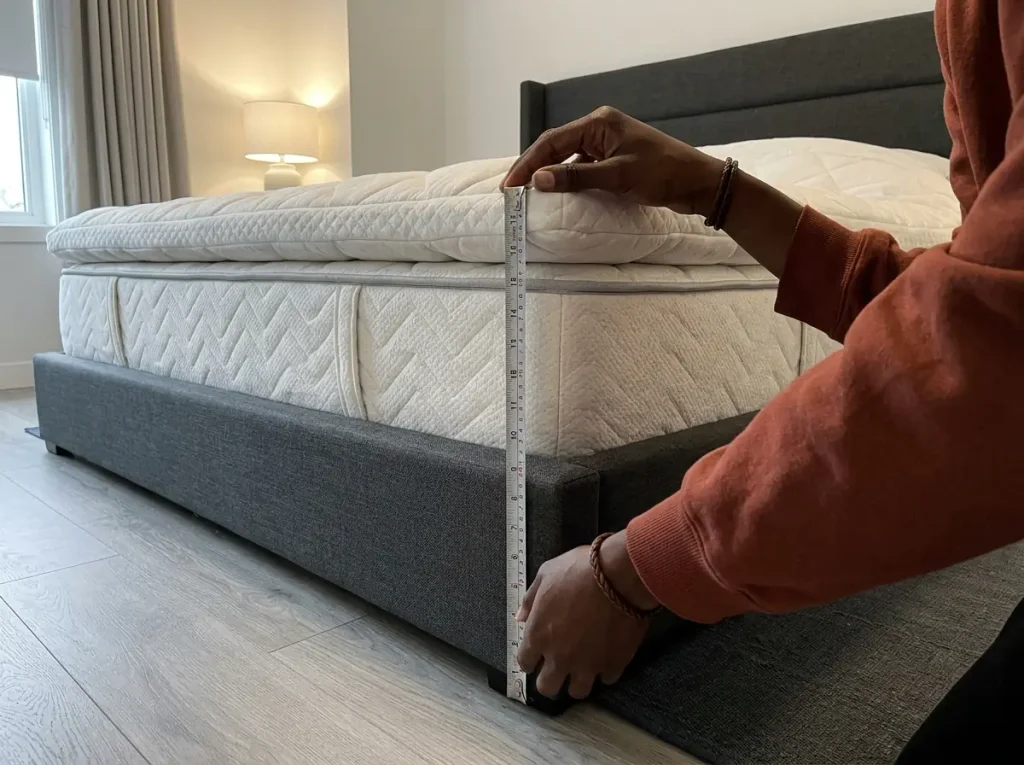
Measure the mattress with the topper on
Silk sets cluster at 16 to 17 inches of pocket depth. That sounds generous until you remember that the number on the box describes how far the elastic will reach, not where it will stay. Measure the mattress with the topper already on it, then add two inches.
If that total is over 16, a standard silk fitted sheet will pop at a corner, on silk exactly the way it does on percale. You will find out the first morning you wake with the corner bunched under your shoulder — sooner, if there are two sleepers pulling it from both sides.
If the problem is heat, this is the wrong aisle
Spend one night paying attention to what actually wakes you. If the answer is that you are damp, no momme count fixes it. The lever is somewhere else: a foam mattress that stores heat all night, a polyester protector under the sheet acting as a raincoat, a room that never drops below the low seventies. Changing the fabric on top of any of those is the most expensive way to not solve a problem.
Check the bottle before you wash silk for the first time. The enzyme detergent recommended everywhere for mite control on cotton is exactly wrong here: enzymes are designed to break down protein, and silk is protein. A pH-neutral, enzyme-free liquid is not a nicety on silk, it is the difference between a set that lasts and a set that thins at the fold lines.
That contradiction is worth saying out loud, because the same site that tells you to run enzymes on your cotton bedding is telling you to keep them away from your silk, and both pieces of advice are correct. The fiber decides. Cellulose does not care about a protease; a protein filament very much does.
Buy the pillowcase before you buy the set
Here is the cheapest honest way to find out whether any of this is for you. The pillowcase is the one piece where the hair friction argument actually applies: it is against hair and face for the whole night, while the fitted sheet is mostly against a mattress. A Cuddledown mulberry silk pillowcase at 22 momme and Grade 6A puts the real fabric on the one surface that makes the case for it, at a fraction of a full set. Its flaw is what it does not do: it changes nothing about the heat of the bed, and it still needs the mesh bag and the gentle detergent the rest of your wash does not.
Real buyers are already ahead of the roundups on this. In one r/Bedding thread, somebody working with a four-figure king budget deliberately paired a heavier 30-momme pillowcase with a lighter 22-momme fitted sheet, spending weight where the face touches and saving it where it doesn’t. Not one page on this search result mentions mixing momme by piece. It is the most sensible thing in the whole discussion.
And if the two profiles ruled out above describe you, hot sleeper or a bed that gets stripped weekly, the honest recommendation is a different fiber altogether. A TOSMO bamboo viscose set is 100% viscose with the same OEKO-TEX Standard 100 certification and it goes in the machine without a ceremony. Its flaw, stated plainly: it will not give you the slip or the sheen of real silk. It is the right pick for washing without thinking, not for the feel you came here for.
Worth knowing before you shop that aisle, though — the words on those packages are their own puzzle, and what a lyocell label is really telling you is not what most shoppers assume.
What Twenty Washes Do to Silk
Every page on this question says silk “lasts for years.” Not one of them shows a set that has been washed. So this section says what is actually known, what is not, and how to tell early which way yours is heading.
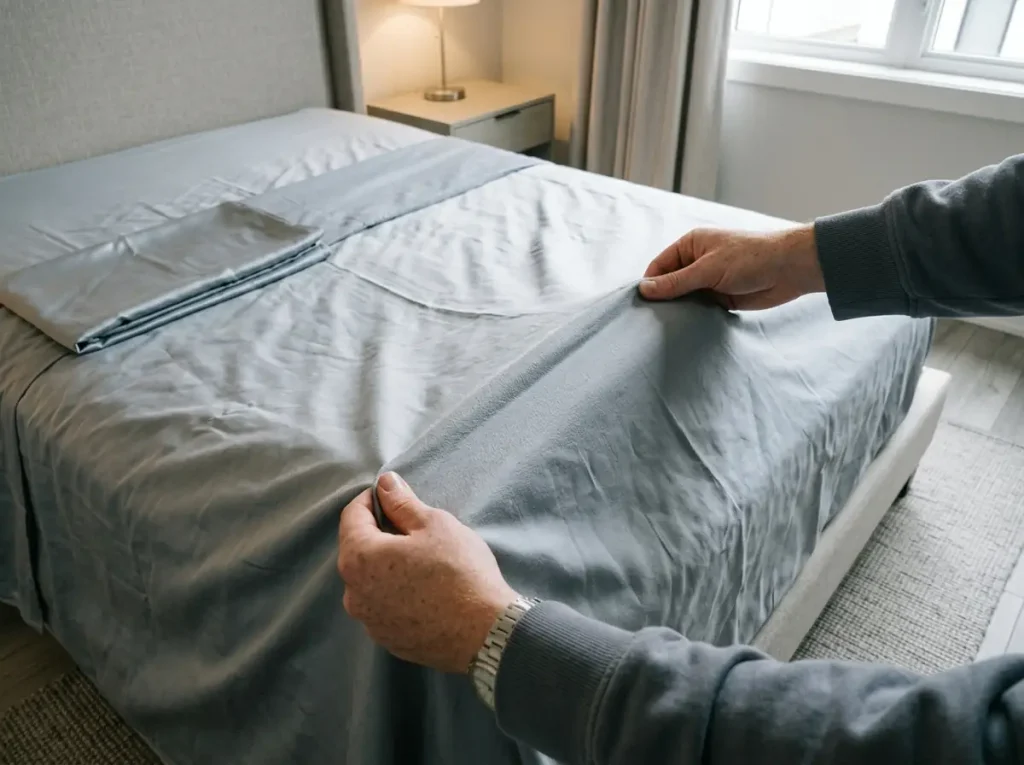
Nobody has counted, and that is worth saying
There is no tracked wash-count report for a silk sheet set anywhere in the sources that rank for this question. Not a good one, not a bad one. None. Nobody has taken a set to wash twenty and written down what happened.
The single durability data point across the entire search result is one Amazon review, quoted inside a con paragraph, reporting “pilling after only a short period of use.” That is it. And even a national silk-sheet roundup buries its one pilling complaint in a single review rather than building its durability picture around it.
That sentence is worth more than an invented number would be. A made-up “still going strong at wash forty” would read better and would be worth nothing. What can be given instead is the mechanism, which is the part that actually predicts your outcome.
What actually ends a silk set
Two things, and both are in your laundry room. Heat breaks down the protein filament, and a tumble dryer is the fastest route to a thin, dull silk sheet, and it does its damage in a handful of cycles rather than over years. Enzymes do the same job more slowly and more quietly, because a standard “free and clear” detergent usually contains protease, and protease exists to digest protein. Your sheet is protein.
Neither failure announces itself. There is no moment where the sheet tears. What happens is that the hand goes flat, the surface starts to fuzz at the points where it rubs, and one day you notice the set feels like a nice polyester. By then it has been happening for two months.
Where the pilling shows up first
Look at the fold lines. Pilling on silk starts where the fabric creases and then rubs against itself under pressure: the tuck under the mattress on the side you sit to put your shoes on, and the folded top edge where the sheet turns back over the duvet. Those two places go before anything in the open field of the sheet does.
The entry momme is the first to show it, which is quietly what “most affordable, perfect for anyone new to silk” is telling you when a maker prints it about their own lightest line. That is not a warning against buying the 19; it is a warning against buying the 19 and washing it like a t-shirt.
One thing not to mistake for damage. A silk sheet washed correctly does not stay looking new. It loses a little of its factory shine and settles into a softer, less glassy surface, and that is the finish leaving and the fabric arriving. The reader who reads that as failure returns a set that was fine.
And the “by night three I stopped noticing it” report going around is adjustment data, not durability data — the difference between those two is basically this entire section.
What the Certification Covers, and What It Doesn’t
Two labels do most of the reassuring on a silk listing: the certification stamp and the word hypoallergenic. They are not the same kind of claim. One has been tested by somebody. The other is a description of a surface.
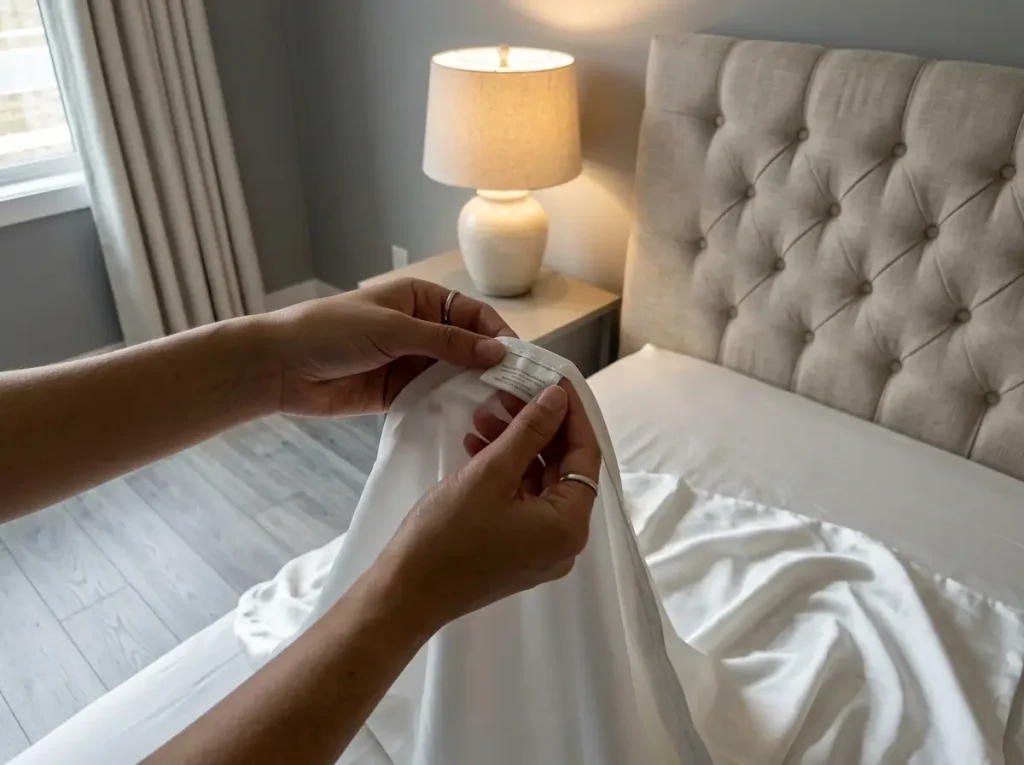
What OEKO-TEX Standard 100 actually tests
Standard 100 tests every component of the finished textile, the yarn, the sewing thread and the trims, against more than a thousand regulated and unregulated substances, and the list gets reviewed against new science and new regulation at least once a year. Bed linens sit in Product Class 2, the direct-skin-contact tier, which is stricter than the classes applied to curtains and upholstery. That is a real thing to have.
Why “hypoallergenic” is a description of a surface
What the certificate does not do is say the sheet sleeps cool, lasts longer, or performs at all. It is a safety label, not a performance one. Which is exactly why it is worth having on a set and not worth paying extra for: it should be table stakes, not a feature. The same certificate does exactly the same limited job on a bamboo label, where buyers make the same mistake of reading a chemistry test as a quality ranking.
Then there is hypoallergenic, which every competitor on this question repeats without qualifying it. The honest version is a mechanism, not a property. Silk is a protein fiber with a smooth, tightly woven, low-moisture surface, and that gives dust mites and dander less to grip and settle into than a brushed or fluffier weave does. That is a structural fact about the cloth.
It is not a treatment, it does not prevent a reaction, and the fabric is not doing anything to anybody’s immune system.
The scale explains why the word gets printed at all: dust mite allergy affects an estimated 20 million people in the U.S., according to the Asthma and Allergy Foundation of America, and mites do concentrate in humid fabric, bedding included. A large problem attracts a lot of confident labeling. The size of the problem is not evidence that a sheet solves it.
A certificate number you cannot look up is decoration. OEKO-TEX publishes a public check for exactly this reason, and a listing that shows the logo without a number beside it is showing you a picture of a certificate rather than a certificate. Thirty seconds, and it separates the sets that were tested from the sets that bought a graphic.
The friction number, and where it came from
The friction claim is the one worth handling carefully, because it is the argument that sells most silk vs satin comparisons. Lab testing does report silk creating meaningfully less friction than cotton against a hair-like surface in the same test protocol, and the mechanism behind that is sound, since a smooth continuous filament drags less than a spun, fuzzy staple yarn. Dermatology treats fabric friction as one of the modifiable things about a night’s sleep, which is a reasonable place to leave it.
But the specific “43% less breakage” figure you will see quoted in a dozen listings traces back to brand-funded testing, not a published human trial. So: the mechanism is real and the number is marketing. I would buy silk for how it feels against hair and skin. I would not buy it because of a percentage that nobody outside the industry has ever reproduced.
Conclusion
Silk sheets are worth it for the cool-to-neutral sleeper who wants the feel and will actually do the wash routine. They are the wrong purchase for a hot sleeper, for a household that strips the bed weekly, and for a bed where two people disagree about temperature, that last one because a sheet has no way to be two different things at once.
Read momme as a weight, not a grade. Nineteen to trial, 22 for a set meant to stay, and remember that the heavier weave is the warmer one, so more money buys you a sheet that lasts longer and sleeps hotter. And whatever weight you land on, buy the pillowcase before the set and measure the mattress with the topper on before either. If your verdict here turns out to be “not silk,” a percale or a sateen is a legitimate answer, and there is a whole frame for how bamboo and silk actually compare once you sort them by construction rather than by fiber name.
The wash-twenty check: after a season, look along the tuck line and the folded top edge. That is where pilling shows first, and a slight loss of factory shine in those spots is the fabric settling rather than the set failing.
Sleep a week on the pillowcase alone before you spend anything else. If the slip still bothers you on night seven, silk was never the answer, and no momme count would have changed that.
Frequently Asked Questions
01What are the downsides of silk sheets?
The care routine is the real downside: no dryer, no enzyme detergent, mesh bag or hand wash every time. The purchase is one cost; the washing is a recurring one. A heavier momme also sleeps warmer, so the durable weave is the wrong one for a warm bed.
02How long do silk bedsheets last?
No tracked wash-count report exists for a silk set, so any specific number you read was invented. The mechanism is what predicts it: heat and enzyme detergents break down the protein filament and end a set early, while cool water, a pH-neutral detergent and air drying keep one going for years.
03Do bed bugs like silk sheets?
No fabric repels bed bugs, silk included. They live in the seams of the mattress, the box spring and the frame, not in the sheet, so the surface you sleep on is not what decides whether they are there.
04What is the healthiest sheet to sleep on?
The checkable version of that question is chemistry and fit: a certified fiber whose dye and finish have been tested, such as OEKO-TEX Standard 100, in a weave that matches how you sleep. Silk, cotton percale and lyocell all pass that test. Health is not a fabric property.





Tried it on your own bed?
No comments yet. Tell us what you changed, and what the sheet did after a few washes.