

What’s in here10 sections
- What “100% Cotton” Actually Guarantees
- Staple Length — the Number Nobody Prints
- Thread Count Is Arithmetic, Not Quality
- Percale or Sateen — the Structure Under Your Hand
- Egyptian, Supima, Pima — Reading an Origin Claim
- Organic Cotton and What GOTS Does Not Certify
- Fit, Shrinkage, and the Pocket Depth That Lies
- Wash Twenty — What Survives and What Gives Out First
- What to Do With This
- Frequently Asked Questions
Two sheet sets sit on the same shelf, both stamped 100% cotton, and one costs four times the other. By the second month they will not behave like the same material at all. One will still be crisp and flat; the other will have a haze of little balls across the side you sleep on. Nothing on either package told you which was which, and the word doing the least work of all was the word you were reading.
Here is what the packages were not saying.
A plain weave puts one thread over and one under, which leaves gaps, and gaps move air. That is a percale. A sateen floats four threads over one, which closes those gaps and is exactly why it slides under your hand and holds heat against you. Same cotton, two different beds. Three things decide a cotton sheet, in this order: how long the fiber is, how it is woven, and what was done to it afterward. Thread count is fourth at best, and it is frequently arithmetic rather than quality.
Quick Answer
“100% cotton” guarantees almost nothing on its own. Three things decide the sheet, in this order: staple length, weave, and finish. Thread count comes fourth, and any number above about 400 is usually twisted plies counted twice rather than a finer fabric.
What “100% Cotton” Actually Guarantees
The label is telling the truth and still telling you nothing. “100% cotton” is a fiber content statement, and fiber content is the one variable that does the least to how a sheet sleeps. It is a floor, not a grade.
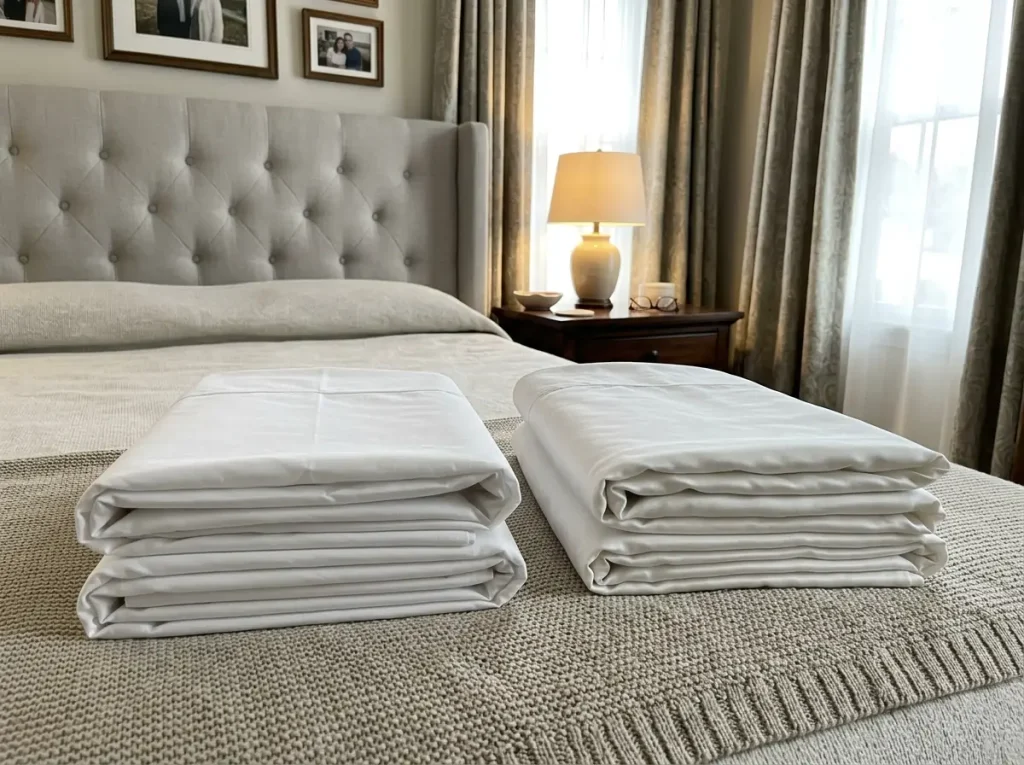
What it does promise is real and worth having.
It excludes polyester blends, it excludes microfiber, and it excludes the poly-cotton percale that so many hotel-supply sets actually are. That exclusion is the reason the phrase exists at all, and the reason cotton-rich is a separate label word. Cotton-rich means a blend, and “100% cotton” is defending against it. So the phrase earns its place. It just stops there.
Past that floor, everything that decides your next two years with the set is unstated. Staple length decides whether the fiber pills. Weave decides whether the sheet breathes or traps. Finish decides how much of what you feel in the shop is still there by spring. Those three, in that order, and none of them are printed in the way the fiber content is.
Notice where thread count sits in that list. It is fourth, and it is not really an input at all: it is a consequence of choices made further upstream, which is why the article gets to it third and treats it as evidence rather than as a grade. A high number is a result of something, and the interesting question is always what.
There is a practical trap underneath all this that catches experienced buyers more than beginners. The same complaint comes up about brands people once trusted, such as LL Bean, Parachute or a hotel-collection name, which are no longer as good. Noticing it is not imagining it, and nobody was fooled. A brand name is a promise about sourcing, and sourcing changes underneath a name without the name changing. The same label can move staple source between production runs and print exactly the same package. Two sets of “the same” sheets bought two years apart genuinely are not the same sheets, and there is no way to tell from the front of the box.
Which leaves the three variables as the only durable way to read a package. Take them in order, starting with the one nobody prints, and remember that the weave is a decision of its own, independent of which cotton went into it.
Staple Length — the Number Nobody Prints
If only one of the three variables could be checked before buying, it would be this one. It is also the one no package states directly, which is a problem worth solving rather than a reason to give up.
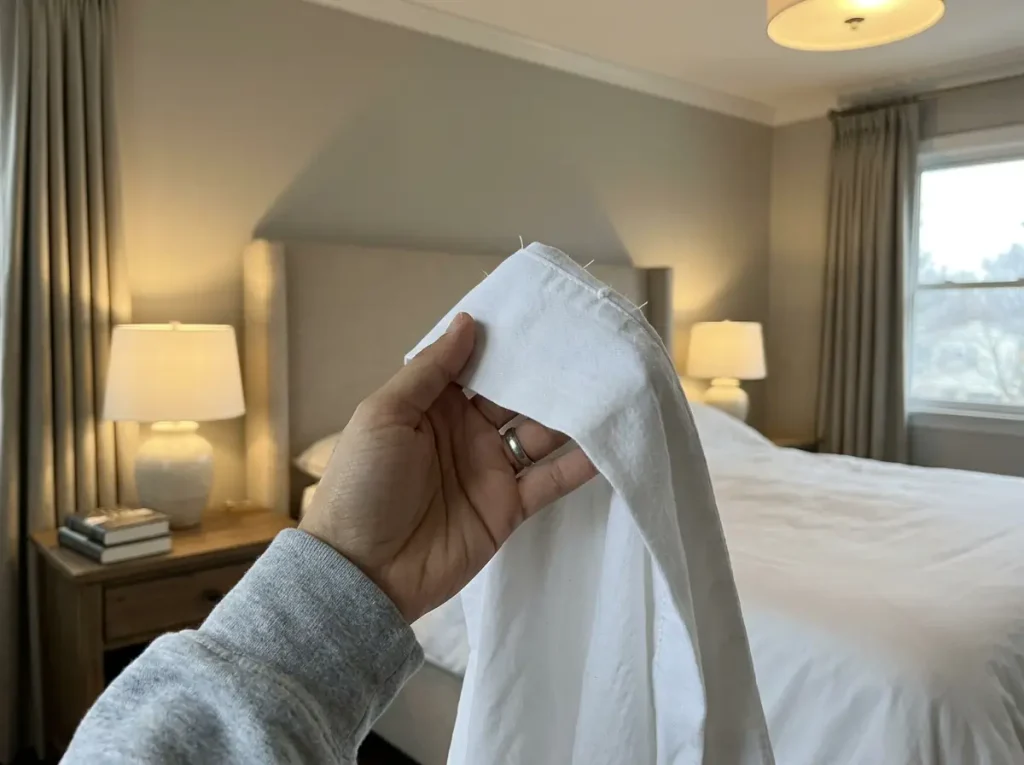
Staple length is simply how long an individual cotton fiber is before it gets spun into yarn. The industry sorts it into three classes: short-staple, which is Upland cotton, up to about 1⅛ inches; long-staple, from 1⅛ to about 1‑5/16 inches; and extra-long-staple (Pima, Supima, Egyptian) at 1⅜ inches and longer. Those are the staple-length classes that actually separate one cotton from another, and they are measured, not marketed.
The mechanism is worth having in your head, because it explains a failure you have probably already lived through. Longer fibers give more surface area for cohesion during spinning, so they grip each other along their length. The yarn comes out stronger and, this being the part that matters on a bed, with far fewer fiber ends sticking out of it.
Short fibers have more ends per inch of yarn by definition. Those ends work loose under friction, and loose ends roll into balls.
So pilling is a staple-length problem before it is a weave problem. Every wash routine, every mesh bag, every “wash inside out” tip on the internet is working against a decision that was made in the field. It can slow the process down. It cannot put a short fiber back into the yarn.
An unnamed cotton is Upland. Nobody pays to grow extra-long-staple cotton and then declines to say so on the package, so when the label names no variety at all, that silence is your answer. It is not a missing spec. It is the spec.
There are two other words that show up in this neighborhood and mean something specific. Combed cotton has been mechanically combed before spinning to pull out the shortest fibers, which is a real improvement and a cheaper one than buying better cotton in the first place. Mercerization is a caustic soda treatment that swells the fiber, adding strength and a slight luster; it is permanent, unlike a softening finish. Neither tells you the staple length. Both are worth more than the thread count printed beside them.
That is why the variety names are the working proxy. Upland is the world’s default cotton, roughly nine tenths of the global crop, and it is almost never named on a package because there is nothing to gain by naming it. Pima, Supima and Egyptian get named precisely because they are staple-length claims in disguise, and a claim only gets printed when somebody thinks it will sell. If you want the fuller version of what Supima and Pima actually name, the two names split apart in ways that matter more than the packaging suggests.
The community version of this is quieter and more useful than any spec sheet. A cotton set can soften exactly as advertised and then start pilling anyway. That sequence is the whole lesson. A finish can deliver the softening. Nothing but the fiber can deliver the not-pilling. The set kept its first promise and broke the one nobody printed.
Thread Count Is Arithmetic, Not Quality
Staple length is invisible on the package. Thread count is the number printed largest on it. Those two facts are related, and not by accident: the big number is frequently doing the job of hiding the small one.
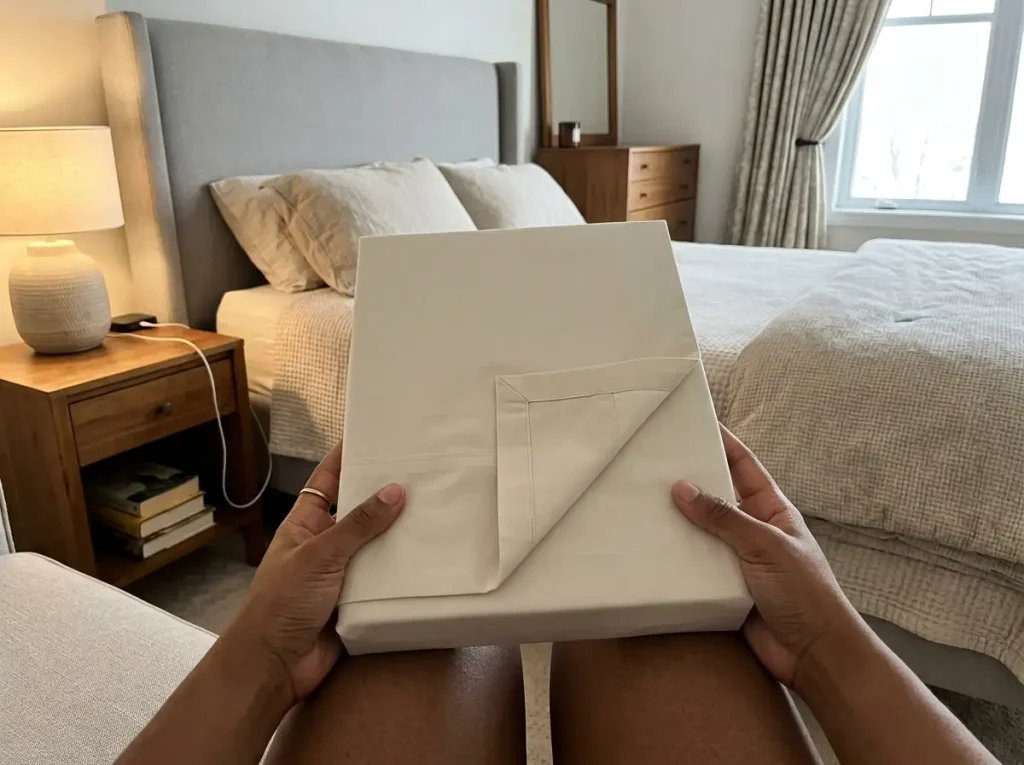
Start with what thread count is supposed to mean.
Count the threads crossing one square inch of fabric, warp plus weft, and that is your number. A denser weave, more threads, a finer cloth. Fine. Now here is what actually happens in a mill.
Yarn can be spun as a single strand, called single-ply, or as two or three thin strands twisted together, called two-ply or three-ply. When the counting happens, each strand inside a twisted yarn can be counted separately. So a fabric woven with 200 thread positions per square inch, spun in two-ply yarn, is labeled 400 thread count, and that is legal and industry-standard. A genuine 300-count fabric spun in three-ply becomes “900.”
Nothing about the cloth changed. Only the counting did.
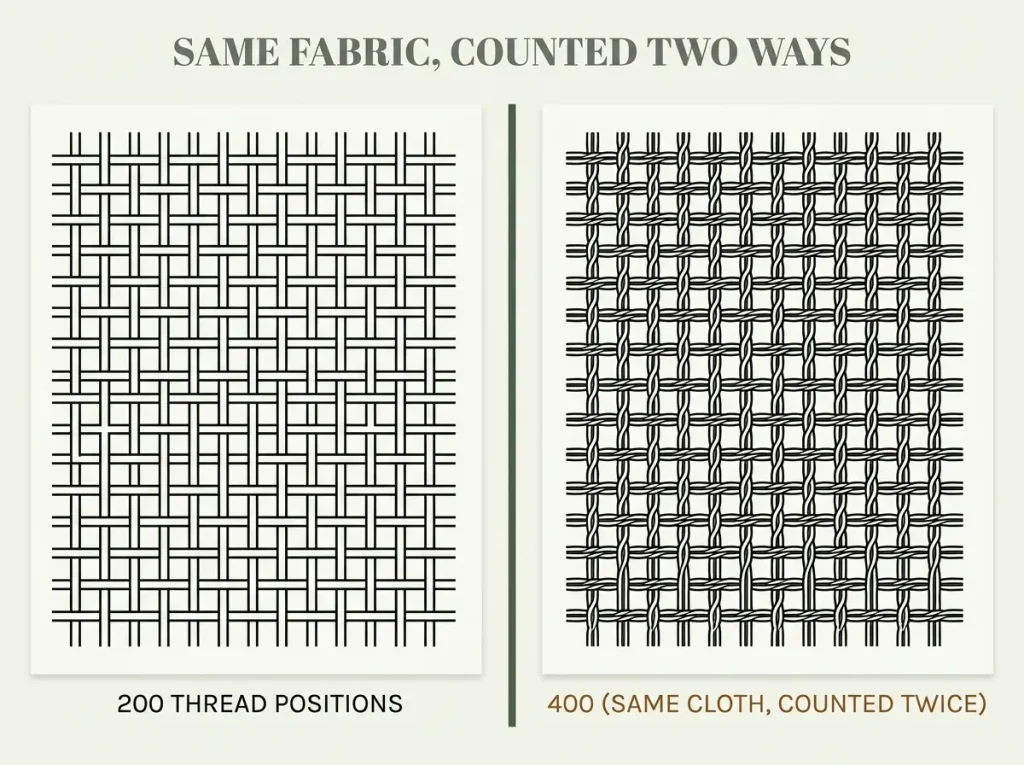
Now the part that should change how you shop, because the arithmetic is not neutral. To hit those inflated numbers, a mill needs a lot of thin threads twisted together, and twisted multi-ply yarns make a denser, heavier fabric that restricts airflow. So the inflated number does not just fail to indicate quality. It correlates with worse breathability, because the way you reached the big number was by packing more material into the same square inch. The 800-thread-count set that everyone assumed was the upgrade sleeps hotter than the 300, and it does so for a completely mechanical reason.
Single-ply yarn spun from long-staple cotton runs the other way: lighter, more air through it, and more durable, because you needed fewer and better fibers to get there. Which is how a 300 single-ply percale outlasts an 800 two-ply sateen, a durability claim you can check against Consumer Reports’ own 20-wash shrinkage protocol rather than take on faith.
Manufacturers almost never print ply, so infer it. A very high thread count on an inexpensive set is two-ply or three-ply arithmetic, because there is no other way to get there at that cost. A modest number, stated plainly by a brand that could easily have inflated it, is telling you something about what is underneath.
That inference rule has a consequence most buying guides never state out loud: the honest brands are the ones whose numbers look unimpressive. 270. 300. Those figures come from counting woven positions once, and a company that could have printed “900” and printed 300 instead has told you what its yarn is. The low number is the tell.
Thread count alone does not decide much: what matters most is good cotton and something that breathes. Buyers who have stopped reading the biggest number on the box are on the right track.
Here is that rule sitting on a real listing.
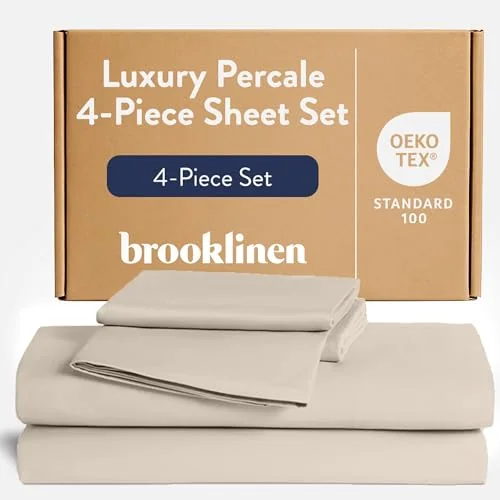
Its flaw, in writing: 270 sounds modest next to the 800-thread-count sets sitting on the same shelf, and it takes an entire section of explanation to show why that is the point rather than a shortfall. If you want the number to impress a guest who reads the package, this one will not do it. For the whole mechanism laid out slowly, with the full arithmetic, worked through, the dedicated breakdown goes further than this summary can.
Percale or Sateen — the Structure Under Your Hand
Two sheets can be cut from the same extra-long-staple cotton and behave like different fabrics, because how the threads cross does more to how a bed sleeps than what the threads are made of.
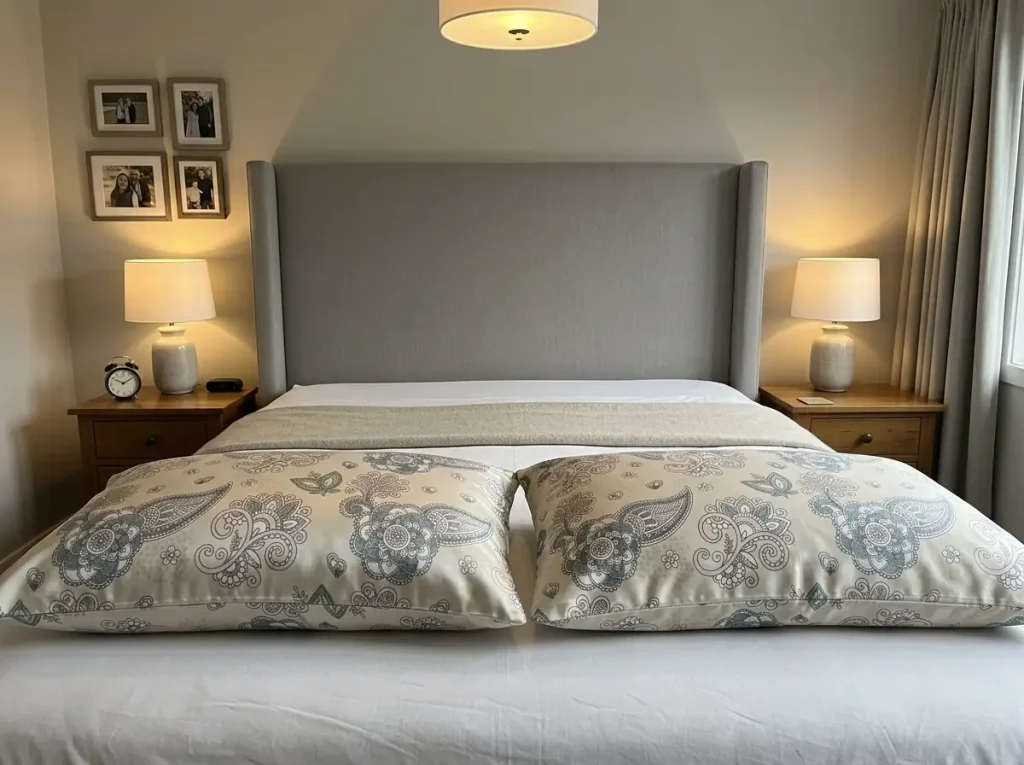
Percale is the plain weave, defined: one thread over, one thread under, typically 180 thread count or higher, tightly woven, matte, no gloss at all. It has a faint crackle when you shake it out. It grips rather than slides.
And because the over-under structure leaves regular gaps in the cloth, air moves through it rather than around it.
Sateen is a satin-style weave, most often four threads floating over one. Those floats are long unbroken runs of yarn lying on the surface, which is where every characteristic of the fabric comes from at once: the sheen, because light reflects off an uninterrupted surface; the slide, because there is nothing crossing to catch on; and the warmth, because floats closed the gaps that percale left open. It also changes the weave density: floats pack more yarn into the same square inch than a plain weave does, which is the same reason a sateen pillowcase feels heavier in the hand than a percale one cut from identical cotton.
You cannot have the first two without the third. They are the same structural fact seen from different angles.
Which means this is a structural decision, not a fiber decision, and that distinction is where most shopping goes wrong. Egyptian cotton in a sateen weave still sleeps like a sateen. The premium name on the tag does not reach down and reopen the gaps.
| Weave | Structure | Under your hand | Airflow | Where it fails first | Who it suits |
|---|---|---|---|---|---|
| Percale | Plain, one over one | Matte, crisp, grips the mattress | Gaps in the weave move air | Softens then plateaus; wears thin at the hem before it pills | Anyone who sleeps hot, or wakes up damp |
| Sateen | Satin-style, four floating over one | Sheen, slides, heavier drape | Floats close the gaps and hold heat | The floats abrade and pill on the sleeping side | Anyone who wants the drape and can accept the warmth |
Frame the choice as your own constraint rather than as a verdict, because there is not a better weave here, only a weave that matches your night. Sleep hot, or share a bed with someone who does? Percale, and stop reading. Want the drape and the shine, and sleep cold enough that the extra warmth is a feature? Sateen, knowingly.
The mistake is not picking sateen. The mistake is picking sateen while expecting it to breathe.
A Premium Smooth Supima Cotton Sateen set can feel thin and slippery, like polyester, and heat up very quickly. Supima on the tag and extra-long-staple fiber underneath still do not settle it, because the weave wins the argument. If you want the same weave with an origin claim stapled to it, the SOHO 100% Egyptian Cotton Sateen Stripe Sheet Set is a 500 thread count sateen carrying the Egyptian name on the same label as the four-over-one structure, and its flaw is exactly the point of this section, because that sateen weave traps more heat than a percale regardless of the fiber being Egyptian, and the prestige name does not change the structure that decides whether you sleep hot. The same framework applied to the temperature complaint explains why a cotton sheet can still sleep hot when everyone told you cotton breathes.
There is a level-3 detail hiding in those floats that nobody mentions at purchase time. The floats are also what pills first. Long threads riding on the surface are the threads exposed to abrasion: your shoulder, your heel, the corner you sit on to put shoes on. So the same structure that makes a sateen feel wonderful in week one is the structure that fails visibly by month six, and it fails in the most visible place possible: the middle of the bed.
So here is the percale side of that decision, on a listing that prints what it is instead of hiding it.
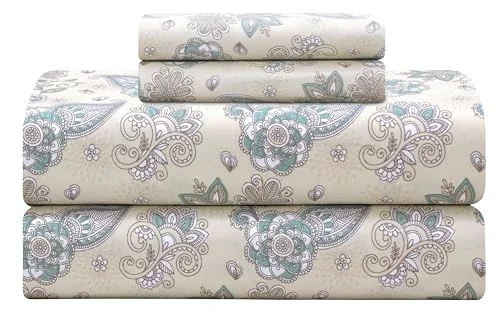
Its flaw, in writing: it will never have sateen’s drape or shine. If what you want is the hotel-suite slide, this will read closer to a well-kept guest room, and no number of washes will move it in that direction. That is the trade you are making, and it is worth making on purpose rather than discovering on night one.
Egyptian, Supima, Pima — Reading an Origin Claim
Three words on a package are doing the job that staple length should be doing, and one of them has been proven false in court.
Start with what each one actually is, because they are not three points on a single ladder. Pima is a cotton variety, an extra-long-staple type grown in several countries. Supima is a trademark, applied to American-grown Pima and licensed by an organization that exists to police the name. Egyptian is a geographic claim: extra-long-staple cotton grown in Egypt, in the Nile delta, where the growing conditions historically produced very long fibers.
Now the honest reframe, which is more useful than the ladder version. All three are staple-length claims wearing different clothes. They exist because “1⅜ inches or longer” does not fit on a package and does not sell anything, so the industry attached the property to a place and a name instead. American Supima at the right staple length does the same job on your bed as good Egyptian, and it does it for the same physical reason. If you want them set against each other properly, American against Egyptian, side by side separates the marketing from the measurement.
Then there is the documented case, and it matters more than any consumer warning could. In 2016, Walmart pulled sheets labeled “100% Egyptian Cotton” that had been manufactured by Welspun, after finding that the product was not Egyptian cotton, and Walmart had internally questioned the fiber content as early as 2008. That is not a rumor about the industry. That is a retailer of that size discovering the claim on its own shelves was wrong, eight years after first wondering.
What that case establishes is narrow and useful: the claim is verifiable, and it has been wrong. Checking it is not paranoia, and treating “Egyptian” as self-evidently premium is not caution. The step-by-step version of how to check an Egyptian cotton claim yourself is a deeper dive than this section is going to attempt, and it is the right place to go if you already own a set you are now suspicious of.
Which leaves the asymmetry that decides how much weight to give each name. Supima is a trademark with a licensing program behind it. Somebody owns that word, and the owner loses money when it is misused, so the owner checks. “Egyptian cotton” has no single body standing behind it in the same way. One name is defended by an owner with a financial interest in its accuracy; the other is defended by nobody in particular.
That is not a claim about which cotton is better. It is the whole reason the two behave differently as claims, and it is why Supima is the easiest of the three to verify before you buy rather than after.
Organic Cotton and What GOTS Does Not Certify
The organic label is the one place in this article where the certification is rigorous, genuinely audited, and still answers a different question than the one most buyers are asking.

Take the rigor seriously first, because it is real. GOTS certifies the farming (no GMO seed, no toxic pesticides or herbicides) and the entire processing chain behind the fabric: spinning, weaving, wet-processing, dyeing, all of it against strict limits on chemical inputs. It is audited by third parties with site visits. That is what GOTS actually certifies — farming and processing chemistry, not construction, and it is a genuinely high bar for what it covers.
Look at that list again, though, for what is not on it. Staple length. Ply. Weave. Thread count. The standard is silent on every single variable this article has spent five sections explaining, because those were never what it was measuring. It is a chemistry-and-provenance certification, not a construction one.
The practical consequence follows immediately, and it surprises people: a GOTS-certified sheet can pill. It can be short-staple. It can be a sateen that traps heat and abrades by month six. Certification and durability are two separate purchases, and the label was never claiming otherwise. The disappointment comes entirely from a reasonable assumption the standard never invited.
Who should buy it anyway? Somebody who cares about the farming and the dye chemistry. That is a real reason, an entirely defensible one, and worth paying for on its own terms. It is just not a construction reason, and buying organic cotton in the hope of a better-wearing sheet is buying the right thing for the wrong reason.
Reading a real certificate is where this gets practical, and it takes about thirty seconds. A genuine GOTS claim names its certifying body (Control Union, Ecocert) and carries a license number you can look up. The word “organic” alone on a package names nobody, and a claim that names nobody has already told you it cannot be checked. Among the sets that actually do this, the Whisper Organics 100% Organic Cotton Sheet Set states its GOTS grade and names Control Union as the certifying body on the listing rather than printing the word alone. Its flaw, in writing: GOTS certifies how the cotton was grown and processed, not that the sheet is soft, pill-resistant or shrink-proof, and a reader expecting organic to mean “better sheet” is exactly the reader who gets surprised at wash twenty.
That naming test is the fastest tell available on any bedding package, in any category, and it generalizes well past cotton. A claim that names its auditor can be verified in half a minute. A claim that names no auditor has answered the question by declining to. For the value side of it rather than the mechanics, whether organic bedding is worth the premium takes the argument further than a section inside a cotton guide can.
Fit, Shrinkage, and the Pocket Depth That Lies
Everything so far has been about how the sheet feels. This is about whether it stays on the bed, which is the failure that actually sends a set to the donation pile.
Measure Everything That Is Already on the Mattress
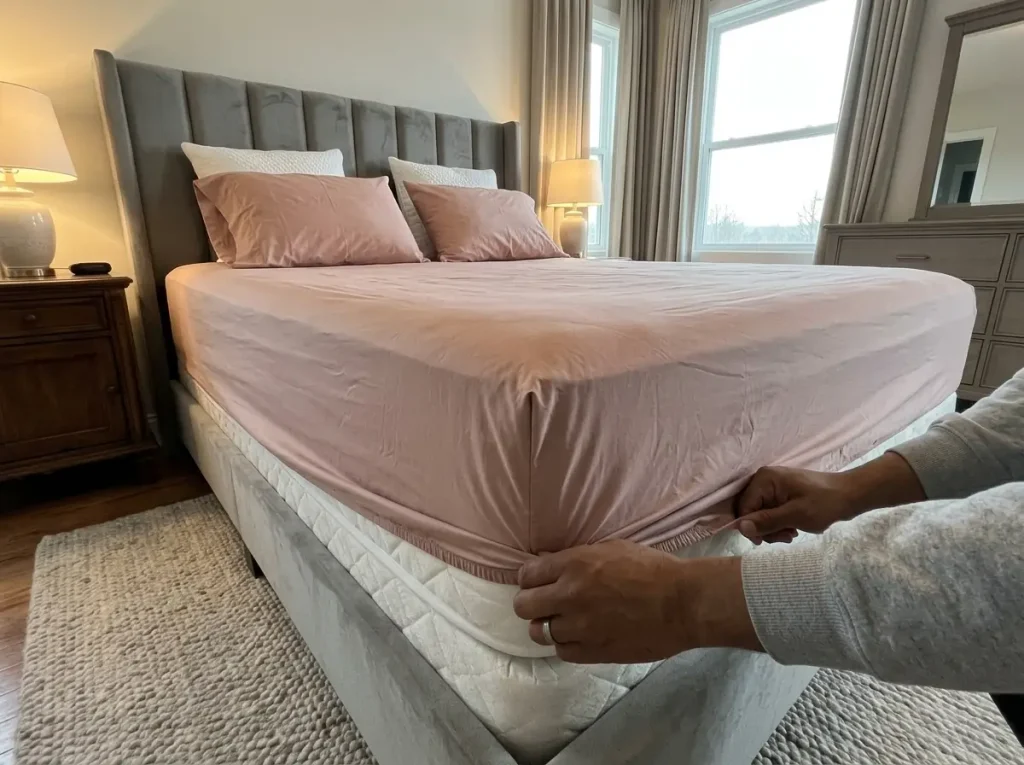
The mattress is not the height you are buying for. The mattress plus the topper plus the protector is the height you are buying for, and the printed pocket depth was never counting those. A four-inch memory foam topper turns a 12-inch mattress into a 16-inch stack, and the sheet you bought for a 12-inch bed will spend every night trying to climb off it.
Measure with the topper and the protector on, with a tape measure, from the base of the mattress to the top of the whole stack. Then add two inches for the shrinkage that is coming. That total is your minimum pocket depth, and it is almost always bigger than the number people guess.
Buy for the Mattress You Will Have at Wash Twenty
Here is the number that turns the sizing rule from advice into arithmetic. Under Consumer Reports’ washing protocol, tested cotton sets shrank up to 6%, and some no longer fit even an 8-inch mattress after just 15 washes. Not a 16-inch mattress. Eight.
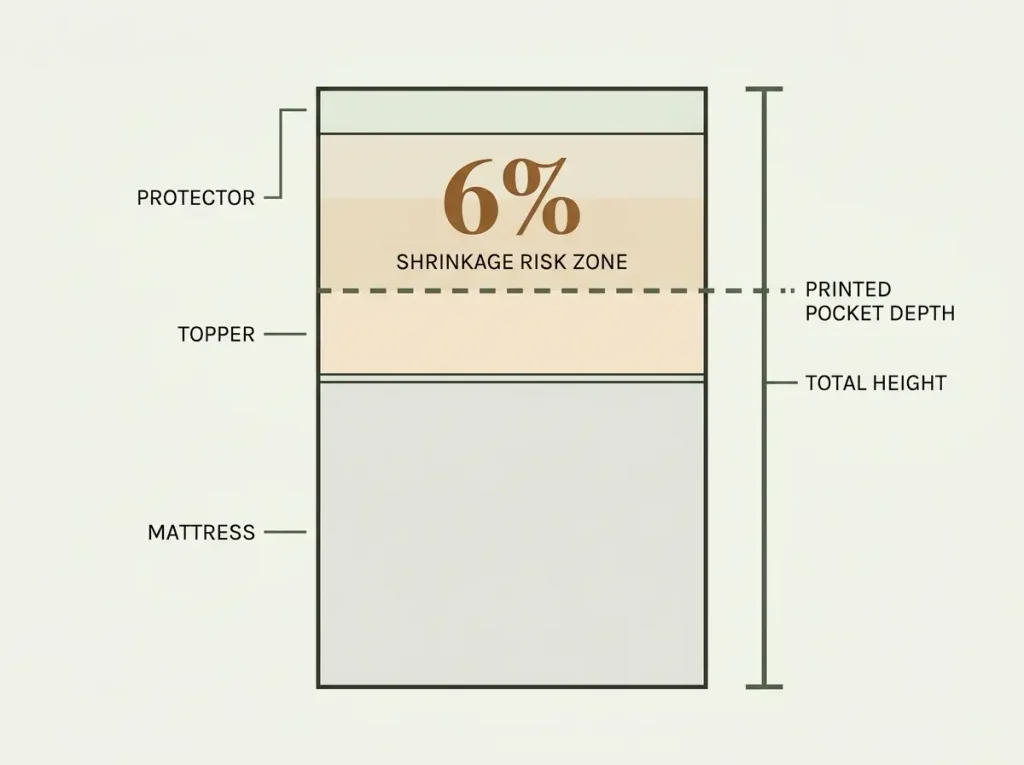
So the printed pocket depth is a best-case, pre-shrinkage figure, measured on a sheet nobody has washed yet. The rule that follows is simple and slightly uncomfortable: buy the pocket depth for the mattress you will have after twenty washes, not the one in the package photo. Round up. Always round up.
Wash it before the first use, too, and not for hygiene theater. The shrinkage is going to happen whether or not you have decided this set is a keeper, and it is far better to find out on day one, while the packaging is still in the hall and the return window is open, than in February. This is also where finish chemistry shows up for the first time. The ALPHA HOME Deep Pocket King Sheet Set is enzyme stone-washed percale with a 16-inch pocket, which is what “washed cotton” on a label is supposed to mean: pre-softened mechanically, by physically breaking the fibers down, rather than with a chemical softener that rinses out of the fabric over the first several laundry cycles and takes the softness with it. Its flaw, in writing: the listing is down to a single colorway, so a reader who wants a different color may not find it at this link.
That first wash is also where the care label stops being a formality. Cotton shrinks because the fibers were stretched under tension during weaving and the first soak lets them relax back, and heat is what accelerates that relaxing. A cold or warm wash and a low tumble dry give the fabric a gentler version of the same process, spread over more cycles instead of all at once. A hot wash and a high dryer setting compress the whole shrinkage curve into the first month, which is how a sheet that fit in week one stops fitting in week five. Line drying avoids the heat entirely, at the cost of a stiffer hand feel until the set has been slept on a few nights. Consumer Reports runs its own durability test at whatever the manufacturer’s care instructions say, which is worth noticing: the protocol treats the label as the authority, and so should you.
Too big is a failure mode too, which almost nobody says. An expensive sateen set can have oversized pockets that keep working loose from the mattress all night, because the elastic has nothing to grip when there is too much fabric for the depth. Going two sizes up is not the safe play. It is the other way to get the same three a.m. result.
The level-3 detail here decides which piece of the set you should actually be evaluating. The fitted sheet fails before the flat sheet does, every time, because it is the only piece under tension for eight hours a night. When a set gets retired, it is almost always the fitted sheet that retired it while the flat sheet was still fine. Which is why the pocket number deserves considerably more of your attention than the thread count printed next to it in larger type.
And the anti-sell to close on, because this section could easily be read as an argument for spending more. The Linen Home 100% Cotton Percale Sheet Set sits at 200 thread count, single-ply, OEKO-TEX certified, and states all three plainly, which is proof that “budget” and “labeled honestly” are not opposites, which is this whole article’s argument applied at the bottom of the market. Its flaw, in writing: its 15-inch pocket is tighter than the 16-inch sets above, and on a tall mattress with a topper it can come up short once the shrinkage lands.
Wash Twenty — What Survives and What Gives Out First
Every claim in this article is a prediction about a fabric nobody has slept on yet, and there is exactly one honest way to settle a prediction like that. You wash it twenty times and look.
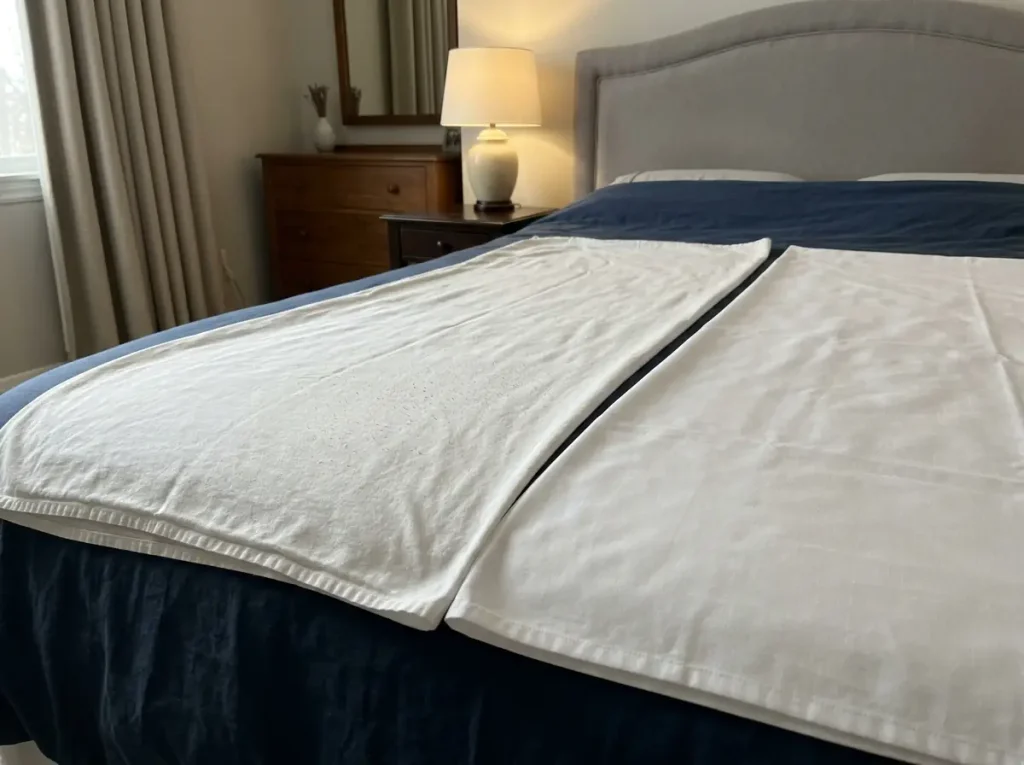
That is not a slogan invented for a blog. Consumer Reports washes and dries a fitted sheet 20 times according to the manufacturer’s own care instructions, roughly a year of biweekly laundering, and checks the corner fit every five cycles across 8-, 10-, 14- and 18-inch mattresses. Wash twenty is close to the actual industry bar, which means it is a fair number to hold any cotton sheet claim against, including the ones in this article.
Over that span each variable reveals itself on its own schedule, and knowing the schedule tells you what you are looking at when something changes.
- A finish leaves. Chemical softeners and wrinkle-resist treatments rinse out over the first handful of washes, taking whatever they were providing with them. Enzyme-washed softness stays, because it is mechanical: the fibers were physically altered, and there is nothing to rinse away.
- A short-staple cotton pills. The loose fiber ends work free under friction and roll up, first on the side that gets slept on.
- A sateen’s floats abrade. The long surface threads wear before anything structural does, so the failure is cosmetic long before it is a hole.
- A decent percale improves, then stops. It gets softer for a while as the weave relaxes, then plateaus and stays there, which is the best outcome available, even though it is the least dramatic.
Experiences run in both directions, and both are instructive. A new percale set can still feel like a scratchy sweater after several washes, so “gets softer with every wash” is a marketing promise, not a property of cotton. And a cotton set can soften on schedule and then pill anyway. The first set never delivered the softening; the second delivered it and then failed at the fiber. Different failures, same lesson: the softening and the durability are controlled by different things, which is why which weave lasts longer under the same washing is a separate question from which one feels better in the shop.
Three places tell you everything, and they tell you before the rest of the set does: the corners of the fitted sheet, the hem of the flat sheet where it gets gripped and pulled every night, and the patch where a shoulder rests. Check those at wash twenty and you already know how the next year goes.
Which brings the buying argument back around to where the article started. The saying “buy once, cry once” usually gets read as a spending argument. It is not. It is a staple-length argument. The extra money is buying fiber that is still in the yarn at wash forty, and that is the only thing it is buying that a finish could not have faked for a season.
And week one lies in one specific, predictable direction. Almost everything feels good after the first wash, because almost everything ships with a finish designed to survive exactly that one wash and make exactly that impression. Which means the set that feels slightly disappointing on night one and completely unchanged at wash twenty is the better sheet, and it is the one the reviews punish, because the reviews get written in week one.
What to Do With This
Read the package in this order, and the order is the whole method: variety name first (or its absence), weave second, finish third. Thread count last, and read it as evidence about ply rather than as a grade. A number that looks unimpressive from a brand that could have inflated it is telling you the truth about its yarn.
An unnamed cotton is Upland. Silence on the package is an answer, not an omission, and it is one of the few answers you can get for free while standing in a shop.
Buy the pocket depth for the mattress you will have after twenty washes, not the one in the photograph. Measure the whole stack, add two inches, round up.
The wash-twenty check: after a season of laundering, look at three places: the corners of the fitted sheet, the hem of the flat sheet, and the patch where a shoulder rests. Pilling in those places is a staple-length verdict, and no wash routine reverses it. What you learn there tells you what to look for on the next package, which is worth more than any review.
Before buying anything at all, go and read the package of the set already on your bed. If it names a variety, you know what you have and why it has behaved the way it has. If it names nothing, you also know. Sleep on that for a week before you spend.
Frequently Asked Questions
01What thread count is best for 100% cotton sheets?
Between 200 and 400 on single-ply yarn. Above that the number usually counts twisted plies twice, so a 300 single-ply sheet often breathes better and lasts longer than an 800. The ply matters more than the count it produced.
02Are 100% cotton sheets better for you?
Better than a polyester blend for airflow and for moving moisture, yes. But 100% cotton is the entry condition rather than the grade. Staple length and weave decide everything that happens after that.
03How can I tell if cotton sheets are good quality without buying them?
Look for three things on the package: a named variety such as Pima, Supima or Egyptian; a modest single-ply thread count stated plainly; and a certifying body named rather than just the word organic. Silence on all three is itself an answer.
04Do cotton sheets really get softer with every wash?
Often, not always. A good long-staple percale softens for a while and then plateaus. A cheap set may soften from a finish that rinses out in the laundry, then start pilling once the finish is gone and only the short fiber is left.
05Is Egyptian cotton actually better than American cotton?
Not by origin. Both names are staple-length claims in disguise, and American Supima at the same staple length does the same job, with a trademark owner defending the name, which Egyptian cotton lacks.





Tried it on your own bed?
No comments yet. Tell us what you changed, and what the sheet did after a few washes.