






What’s in here7 sections
The internet argues about microfiber sheets as if there were one answer waiting at the end of the argument. There isn’t one, because there isn’t one bed. The guest room down the hall that gets used at Thanksgiving and the mattress somebody lies on three hundred and sixty-five nights a year are two different questions wearing the same label, and every page that treats them as one question has already lost.
The fabric itself is settled science: microfiber fabrics measure lower heat conductance than conventional fabrics, which is another way of saying they insulate. That single measured property is the whole article — right below, wrong above, and the bed decides which.
Quick Answer
Microfiber insulates, so the bed decides the verdict, not the fabric.
- Buy it for a guest bed slept in a handful of nights a year.
- Buy it for a kid’s bed, because it dries fast.
- Buy it for a dorm, a rental, or a cold room.
- Buy it if you wake up cold most of the year.
- Skip it if you run warm or the bedroom does.
- Skip it for the bed you sleep in every single night.
What Actually Decides the Call
Before naming a single bed, name the four things that decide it, because the fabric does not change from room to room. Only the demands on it do.
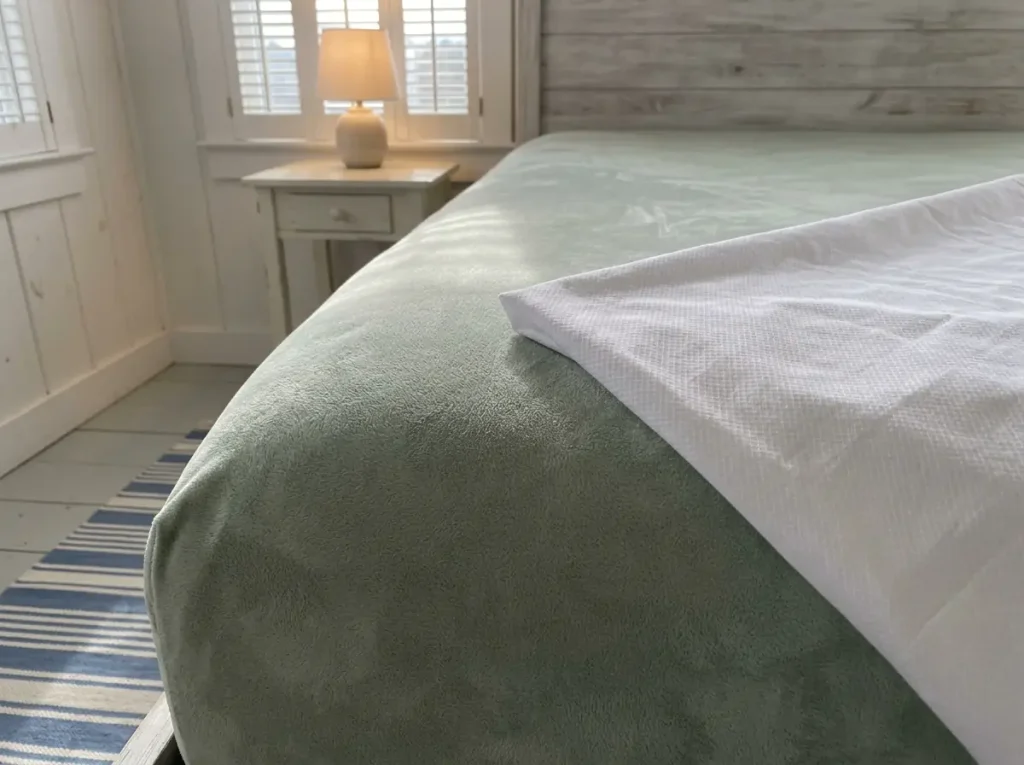
Start with the fiber, once, and then hand it off. Microfiber is polyester, sometimes a polyester and nylon blend, spun below roughly 1 dtex per filament: half the diameter of a fine silk fiber, a third of cotton, a hundred times finer than a human hair. That sub-denier threshold is the only thing separating a spec from an adjective on the package.
The identity question belongs upstream, so if you want what microfiber actually is in full, the pillar has it, and the naming confusion with the same fiber at a different denier is settled next door. This article is downstream of both. It only asks whether you should buy the stuff.
Now the mechanism that decides everything else. Two peer-reviewed textile handbooks say the same thing in nearly the same words: fabrics made of microfibers measure lower heat conductance than conventional fabrics and therefore have higher thermal insulation, and they read warmer against skin depending on pressure (Hosseini Ravandi and Valizadeh, Improving Comfort in Clothing, Woodhead 2011, §2.3.2; corroborated almost verbatim in Srinivasan, Technical Textile Yarns, Woodhead 2010, §6.6.2).
Read that again slowly, because it reframes the entire internet argument. The r/Bedding consensus that microfiber “runs hot” is not a preference, not a bad batch, and not a marketing failure. That heat retention is the measured behavior of the fiber. Microfiber is an insulator by construction, and no amount of thermoregulation language on the packaging changes what the instrument recorded.
Which leaves four levers, and all four of them are about the bed, not the fabric. How many nights a year does this bed actually get slept in. Who sleeps in it, and do they run hot or run cold.
How warm is the room in the month that matters, which is usually January or usually August and rarely both. And how long does the set have to keep feeling like a new set, as opposed to just holding together. Answer those four and the verdict writes itself before you have read another word.
This is also why “cooling microfiber” is a phrase that never resolves itself. What makes a microfiber sheet feel soft in the store is the brushing pass across the surface, and that raised nap over an already tight weave is exactly what holds a layer of still air against you. Breathability in a sheet is not a quality of the fiber, it is a question of whether there are gaps for air to cross, and a densely packed sub-denier fabric with a napped face has closed most of them.
So the softness people buy it for and the heat people quietly stop using it for are produced by the same pass through the same machine. You do not get one without the other, and no amount of packaging copy has ever changed that. The thread splits cleanly in two on this: half of it says microfiber won’t hurt you, which is true, and half of it says it runs hot, which is also true. Only the second half is this article’s business.
The Beds Where It Is the Right Call
These are the beds where every property that makes microfiber a poor daily sheet stops mattering, and the properties that make it a smart buy start paying for themselves.
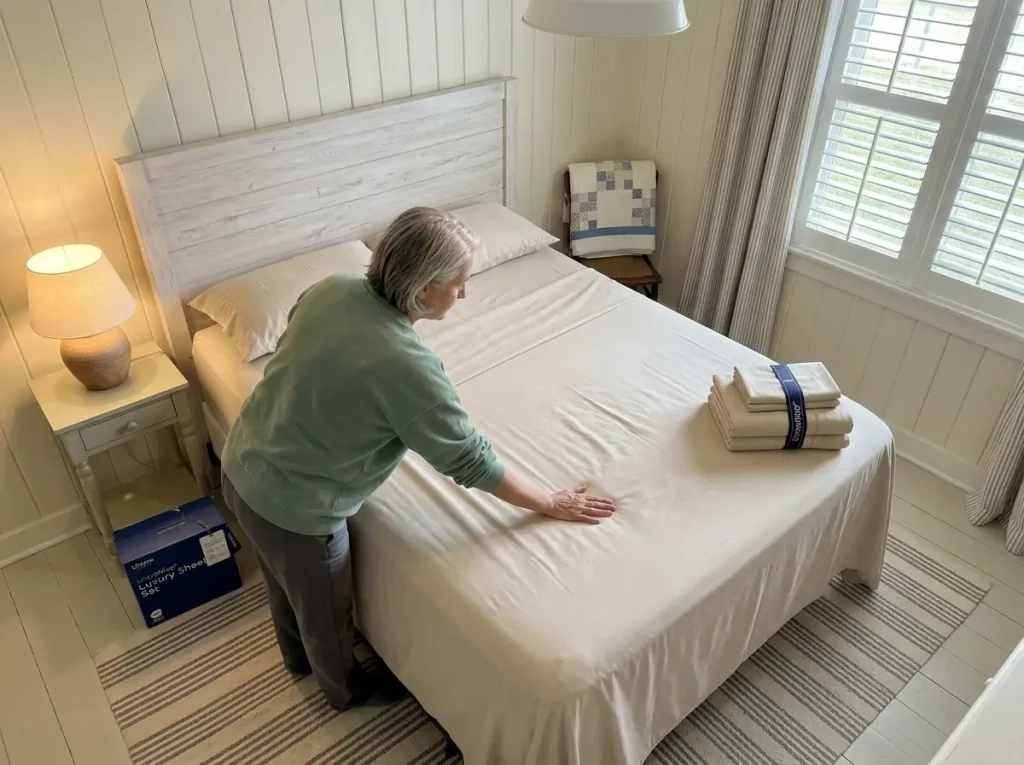
Take the guest bed first. Six nights a year, maybe twenty if your family is close and lives near. The comfort clock, the one that runs fast on this fabric, barely advances at that rate. This is seasonal use in the truest sense: the set works for a fortnight spread across a year and then goes back in the linen closet.
And a spare room is almost always the coldest room in the house, because nobody heats a room nobody is in, which means insulation stops being a defect and starts being the reason your sister-in-law sleeps well in November. There is a detail buried in that which only shows up once you have made the bed: a guest set gets judged on the first night, every single time, by somebody who did not choose it. First-night impressions are the exact window in which microfiber is at its absolute best.
Then the kid’s bed, and here the argument is a number rather than a feeling. Microfiber absorbs over seven times its weight in water and dries in one third the time of ordinary fiber (Hosseini Ravandi and Valizadeh 2011, §2.3.2). Anyone who has stripped a bed at two in the morning knows why that matters more than thread count ever will.
A cotton set stripped at 2 a.m. is still damp at dinner and the room smells faintly of wet laundry until Wednesday. A microfiber set goes through a normal machine wash, comes out, and is back on the mattress before the kid gets home from school. That quick dry behavior is the entire case for kids sheets, and it is why the category is sold the way it is.
The Utopia Bedding Full Sheet Set is a 100 percent microfiber four-piece with a 15-inch pocket, sized Full, which is the size most kid and dorm mattresses actually are. Four pieces means you get the spare pillowcase that always goes missing first. Its flaw is the one this whole article is built on: the fast-dry advantage is real and it does not change the fact that the set runs warm every night it is used, so in an overheated bedroom you will trade one problem for another.
Before buying a guest set, sleep one night in the spare room yourself, in the coldest month of the year. You will learn in eight hours whether the problem is the sheets or the radiator, and the room is what your guests will actually remember.
The college dorm and the short rental sit in the same category for a different reason: nobody expects to keep the set. One academic year, a room where the heating is somebody else’s decision, and a box that gets abandoned in May. When the plan is to throw it out in nine months, cheap sheets are not a compromise, they are the correct answer.
The r/Bedding thread has a commenter whose arc says it better than any spec sheet could. They used microfiber happily right through college in a cold, under-heated dorm, described it as warm and comfortable, and only turned against it after moving somewhere hot year-round. Same person, same fabric, two opposite verdicts. Nothing changed except the room.
And then the cold sleeper, who is the reader nobody writes for. If you wake up cold nine months out of twelve, you are being handed a measured insulator for the price of a plain cotton set. Every complaint in every thread is describing a property you actively want.
For you the defect is the feature, and it is worth being blunt about it, because the entire SERP is written as though the hot sleeper were the only person who buys sheets. The Mellanni Iconic 4-Piece Sheet Set is 100 percent polyester, double-brushed, deep-pocketed, and it is the anchor of the budget sheets shelf. Its flaw is written on its own box: it is marketed as cooling, and cooling is precisely the claim the handbook measurement does not support. Buy it for the warmth it genuinely delivers, not for the word on the package.
Before any of that, though, the free move. If the guest room is cold, the layer that fixes it is a spare blanket folded over the foot of the duvet, not a new set of sheets. That costs nothing, it works tonight, and half the people about to buy a warmer sheet set already have the blanket in a closet. If you are weighing a budget synthetic and the shortlist also has viscose on it, how it compares with bamboo at a similar price is the next comparison to read.
The Beds Where It Is the Wrong Call
The same insulation that earns the guest room its set is exactly what makes this the wrong buy for the bed you actually sleep in.
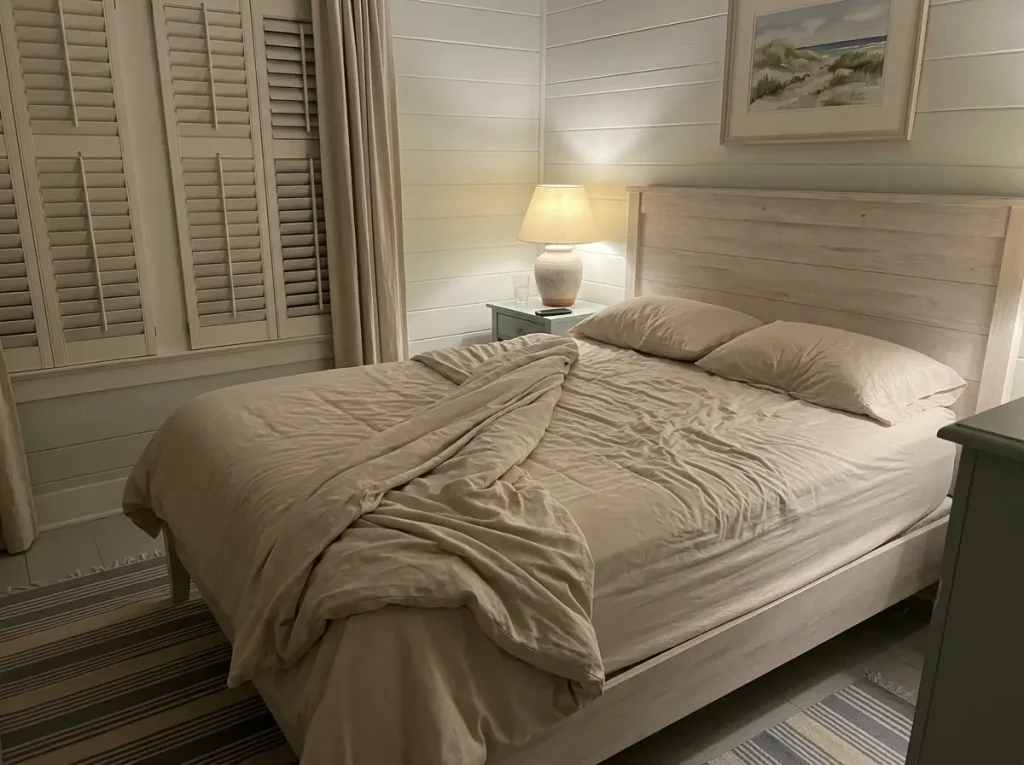
Start with the hot sleeper, stated as plain mechanics rather than as a preference. Lower heat conductance means the heat you generate stays roughly where you generated it, trapped in the still air of that brushed nap instead of moving out through the weave.
The community has a blunter version, said independently by more than one commenter: sleeping in a plastic bag. That is not hyperbole, it is a decent lay description of what a closed synthetic surface does when body heat has nowhere to go. Add a warm climate or a bedroom without air conditioning and the room is doing half the work against you before you get in.
Here is the trap that catches the most people, and it deserves its own paragraph because nobody in the search results separates the two ideas. Microfiber genuinely wicks better than normal-denier polyester. That is measured too, in the same handbook: water drop absorbency, drying rate and total absorbency all came out better than normal-denier fabric in the knitted studies (Srinivasan 2010, §6.6.2).
So the marketing is not lying when it calls the fabric moisture-wicking. It is lying by implication when it lets you conclude that moving moisture means losing heat. Wicking is not cooling. A fabric can pull sweat off your skin and still keep the warmth pinned there, and microfiber does exactly that. That confusion, more than any other single thing, is how a hot sleeper ends up with the wrong set and cannot explain why it feels wrong.
The failure that follows is not dramatic, which is the part worth knowing in advance. Nobody wakes up drenched on night one and demands a refund. What happens is that around the fourth warm week the set quietly becomes the one that stays folded in the closet, and the reason almost never gets said out loud.
People assume they bought a bad set. They bought a set built for a different bed.
Worth saying plainly, because the comparison articles muddle it: the warm-fabric shelf is not one shelf. Flannel is brushed cotton and it is honest about being a winter fabric, which is why nobody is surprised when it sleeps hot. Sateen floats four threads over one and closes the surface, so it runs warmer than percale without anybody admitting it. Microfiber is the one that gets sold as the cool option while measuring as the warm one, and that is the only reason it needs an article like this.
So if the verdict came out wrong for you, here is the honest swap rather than a dead end. A basic cotton percale at a comparable price does the one thing microfiber structurally cannot: one thread over, one thread under, gaps between them, and air moving through the gaps. For daily use that gap structure is worth more than any finish.
The Linen Home 100% Cotton Percale Sheet Set is 200-thread-count single-ply cotton with a 15-inch pocket and an OEKO-TEX Standard 100 certificate. Its flaw, said in the same breath as the recommendation: 200 single-ply is a plain percale, not a fine one. It feels distinctly rougher out of the package than a new microfiber set does, it will not look ironed and it never will, and you are trading first-week softness for the fact that it gets better with every wash instead of worse.
The Trade Nobody Prices In
Microfiber does not wear out the way cotton wears out, and that difference is the real reason the guest bed and the daily bed are such different questions.
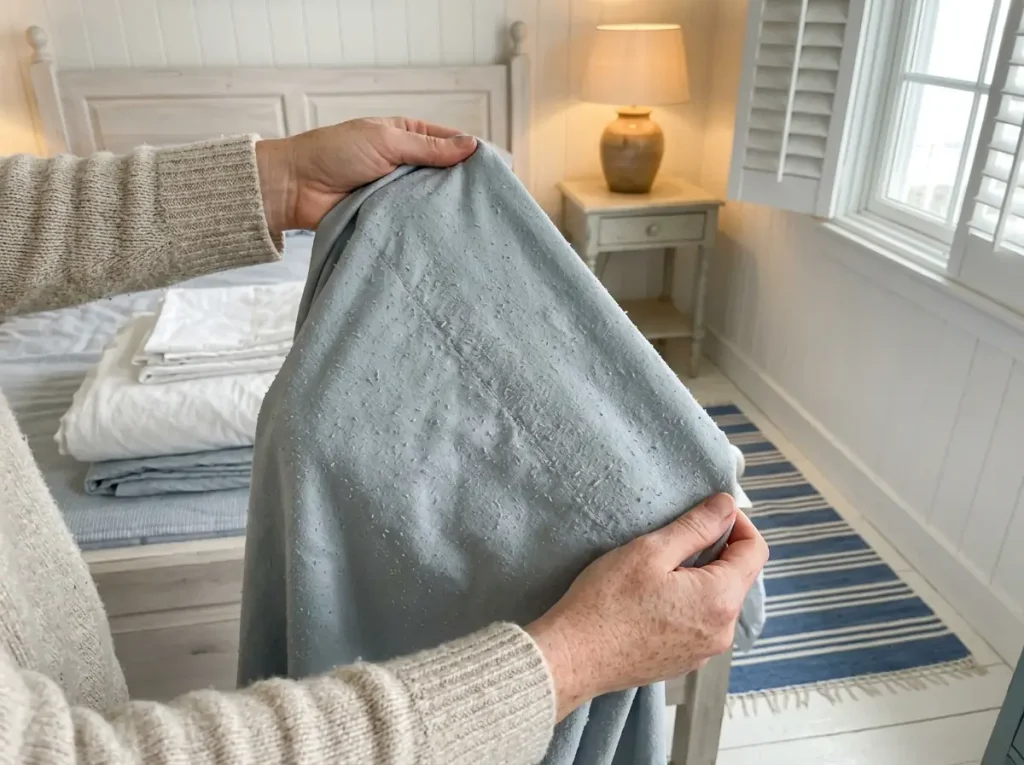
There are two clocks running on any synthetic sheet set, and they run at wildly different speeds. Call the first one structural durability: the fabric stays intact, holds its seams and refuses to develop holes for years. Call the second one comfort durability, and it is fast — pilling, static and held odor arrive somewhere between three months and a year of nightly use.
The sibling node already did that autopsy in full, so if you want what you give up on durability with the timeline and the failure modes laid out, that is where it lives. What matters for a buying decision is only the gap between the two clocks.
The set is fine. Nobody would throw it out. And nobody wants to sleep on it any more.
That gap is why the word lifespan is close to useless on a sheet listing. A set can have a long structural lifespan and a short useful one, and the number a brand prints is always the first kind, because the first kind is the flattering one. For an everyday sleeper the second number is the only one that has ever mattered.
Now the claim on the box that measurement does not support, and it is worth naming because it is the reason people expect the comfort clock to run slower than it does. One of those two handbooks states plainly that microfiber fabrics resist pilling. The other, reporting actual knitted-fabric studies, states that “pilling resistance and abrasion resistance of the microfibre fabrics did not vary significantly compared with normal denier fabrics” (Srinivasan 2010, §6.6.2, refs 43 to 46).
Two peer-reviewed textbooks, same publisher, opposite conclusions, and the measured study is the one contradicting the marketing. Being finer makes a fabric feel softer at the start. It does not make it pill less.
Which is where a better-made set earns an honest mention and an honest limit. The MALOUF Double Brushed Microfiber Sheet Set is the more carefully finished version of the same thing: double-brushed, noticeably nicer in the hand than the budget sets, and genuinely good on wrinkle resistance, which is the one everyday advantage synthetics hold over cotton and the reason it comes off the line looking made.
It buys you a better first month. It does not buy you different physics, because the second brushing pass that makes it softer is the same pass that traps more air, so it runs at least as warm as anything cheaper. And it ships in two to three days rather than immediately, which matters if the guests arrive Friday.
While we are on claims: a wash cycle number with no test method behind it is marketing, full stop. AATCC maintains a standardized laundering protocol precisely so that “500 washes” can be a repeatable measurement instead of a slogan. A listing that names a number but names no method has cited nothing at all, and you should read it the way you read a horoscope.
Keep microfiber out of a hot dryer entirely. Fine filaments take heat faster than normal-denier fiber, and the glazed, slippery feel that shows up around wash twenty usually arrived from the dryer, not from the nights. Low heat, or pull it out damp and let it finish on the line.
That dryer rule is not folklore, either. The handbook is explicit about it: microfibers are more heat-sensitive than normal-diameter fibers because they are so fine that heat penetrates faster, so “they should not be pressed with a hot iron and they should not go into a hot clothes dryer” (Srinivasan 2010, §6.6.2). The hot dryer is what ends the softness early, which means half the people who conclude that microfiber does not last are describing their laundry settings rather than the fabric.
There is a second laundry habit doing quiet damage, and it is the one people reach for when the set starts feeling rough. Skip the fabric softener. Softener works by depositing a waxy film across the surface of the fiber, and on a sub-denier fabric there is far more surface per square inch for it to coat, so it builds up fast.
The film flattens the nap, seals the fabric further against airflow, and destroys the one property worth having here, which is the absorbency that made it dry quickly in the first place. A cool water wash and a low-heat tumble is the whole care routine, and it costs less than the softener does.
Put the two clocks against a calendar and the whole decision converts into arithmetic. Twelve nights a year against three hundred and sixty-five is not a difference of degree. It is the difference between a set that outlives its welcome by a decade and a set that never quite reaches it.
The last detail is the one that only shows up in a bed: the moment microfiber turns is not visible, it is tactile. The sheet starts catching on dry heels and rough hands long before anything looks worn out.
When One of You Runs Hot
Every verdict so far has assumed one person in the bed, which is the assumption that quietly breaks most bedding advice ever written.
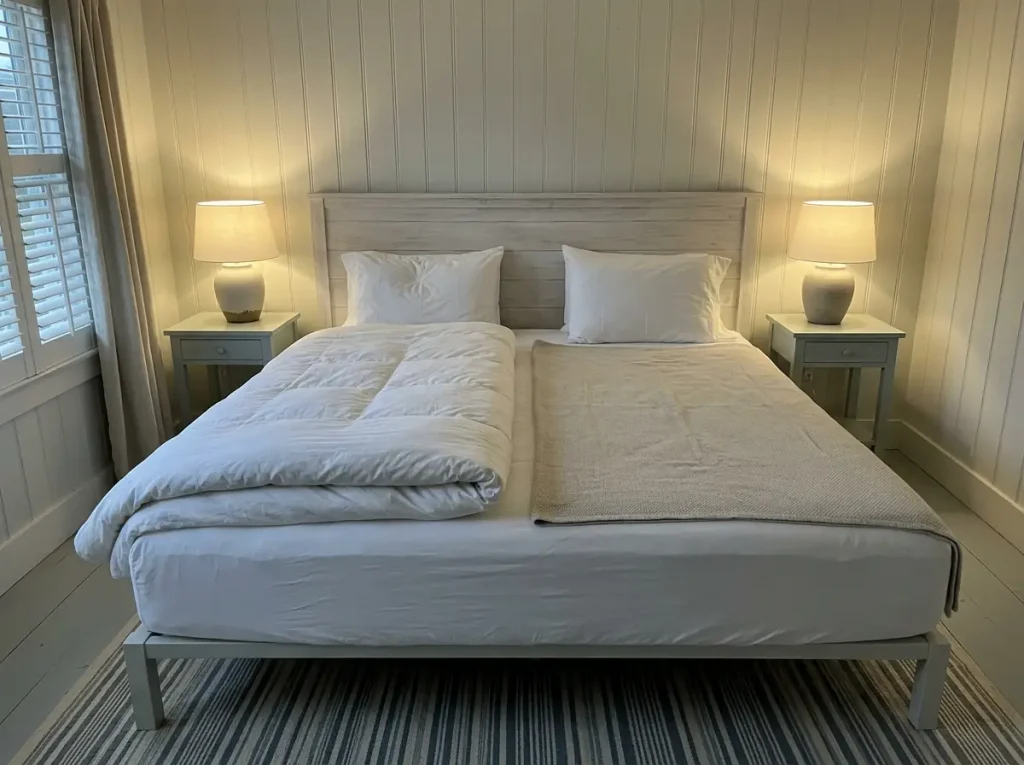
One of you is cold at eleven and pulling the duvet up. The other is throwing it off at three. Duvets can be split, and half of Europe already sleeps under two of them on one mattress for exactly this reason.
The sheet cannot be split. The fitted sheet is one continuous piece of fabric stretched over one mattress, and there is no his-and-hers version of the layer you actually lie on. Whatever it is made of, both of you are lying on it all night.
That single structural fact settles the argument, and it settles it in one direction. The sheet defers to the hot sleeper. The reason is an asymmetry rather than a preference: insulation is addable and it is not subtractable.
The cold one can pull a blanket over their side, wear socks, add a second duvet. The hot one cannot take the sheet away, because it is under both of you and it is the layer nobody can opt out of. So in a shared bed with one hot sleeper, the fitted sheet is a cotton percale and the argument is over. I keep coming back to this rule because it is the only bedding advice I know that does not need a caveat.
Before you replace anything, split the top layers for a week. Two duvets, or one duvet plus a blanket on one side only, settles more temperature arguments than any sheet swap I have seen described in a thread, and you can usually try it tonight with what is already in the closet. Couples typically diagnose this as a duvet problem for years before anyone thinks to suspect the sheets, and the reason is simple enough: the duvet is the layer you can see being fought over. The sheet just sits there being blamed for nothing.
Before replacing any sheet in a shared bed, split the top layers for a week. Two duvets settle more temperature arguments than a sheet swap does, and it costs nothing to test with what is already in the closet.
There is still a place for microfiber in a shared bed, and it is a better place than the sheet. Put it on the cold partner’s own top layer: a microfiber blanket or their own second duvet, on their side only. That uses the insulation deliberately for the person who wants it instead of imposing it on the person who does not.
One honest caveat, because this section has no source behind it the way the rest of the article does. Nobody has studied the two-sleeper case, and the thread this article draws from was a single person buying sheets for a dorm. What you just read is reasoning from the measured mechanism, not a finding. It is the reasoning I would follow, and it is worth a week of your own testing before it is worth your money.
The Verdict, and What to Do Tonight
Microfiber insulates. That is not a defect and it is not a feature, it is a property, and the bed you put it on decides which one it becomes.
Right call: guest rooms, kids’ beds, dorms, short rentals, cold sleepers, and anything that needs to be washed and back on the mattress the same afternoon. Wrong call: a hot sleeper, a warm room, and any bed slept in every night for years. In a shared bed the sheet answers to whoever runs hot, because a cold sleeper can add a layer and a hot one cannot take the sheet away.
After a season of washes, run the back of your hand across the sheet before you look at it. Microfiber tells you it is finished by catching on dry skin long before anything looks worn, and if the set has been through a hot dryer, that day arrives sooner than it needed to.
So before you buy anything, count the nights. If the bed gets slept in fewer than twenty nights a year, this decision is far smaller than the internet has made it and almost any set will do. If it gets slept in every night, spend the same money on percale.
Frequently Asked Questions
01What are the downsides of microfiber sheets?
It insulates, so it sleeps warm, and its comfort life is far shorter than its structural life: pilling and static arrive while the fabric is still perfectly intact. It is also more heat-sensitive than normal-denier fiber, so a hot dryer glazes the surface and ends the softness early.
02What is better, 100% cotton or microfiber?
Neither, and that is the honest answer: it depends on how often the bed is slept in and by whom. Cotton wins for nightly use and for anyone who runs warm. Microfiber wins for guest beds, kids’ beds and cold sleepers, where fast drying and insulation are what you want.
03Is it better to sleep on cotton or microfiber sheets?
For a bed slept in every night, cotton, and percale specifically, because the one-over-one weave leaves gaps and gaps move air. Microfiber beats it on drying time and on cost. It does not beat it on temperature, and temperature is what a nightly bed is judged on.
04Is it healthy to sleep on microfiber sheets?
The online argument sounds like a safety question, but the complaint underneath it is almost always comfort, meaning heat. The one checkable claim on a package is an OEKO-TEX Standard 100 tag. The exposure and shedding question is settled next door, in what the label actually screens for.
05Do microfiber sheets get less soft over time?
Yes, and faster than cotton does. Pilling and static show up within months to a year of nightly use while the fabric is still structurally sound. A hot dryer speeds it up, and the measured studies do not support the claim that finer fiber pills less.




Tried it on your own bed?
No comments yet. Tell us what you changed, and what the sheet did after a few washes.