
What’s in here9 sections
- What Bedding Can Change, and What It Can’t
- The Layer That Sets the Ceiling
- Fiber by Fiber, for Heat and for Moisture
- Weave, Thread Count, and the Finish That Washes Out
- Check the Protector Before You Buy Anything
- The Changes That Cost Nothing
- Three Nights to Tell Whether It’s the Bed
- What to Do With All of This
- Frequently Asked Questions
You wake at three with the sheet stuck to your back, and the reality of that morning is blunter than anything a shop would print: waking in a pool of your own sweat, as if you had wet the bed. A sheet does not decide whether you sweat. It decides how fast the moisture clears once you have, and how much heat sits between you and the room while it does. That distinction is the whole of what bedding for night sweats can offer, and it is why this goes bottom up, protector first, and ends at the one line where this stops being a bedding question at all.
Quick Answer
Bedding cannot stop night sweats. It controls two things only: how fast moisture leaves the cloth, and how much heat builds between you and the air. Change the least permeable layer first, usually the mattress protector. Sweating that keeps waking you no matter what is on the bed is a doctor’s conversation, not a shopping one.
What Bedding Can Change, and What It Can’t
Most people arrive here having already bought one thing sold as cooling that did nothing, and they draw one of two conclusions: the product was a scam, or nothing helps. Both are wrong, and the reason is worth the two minutes.
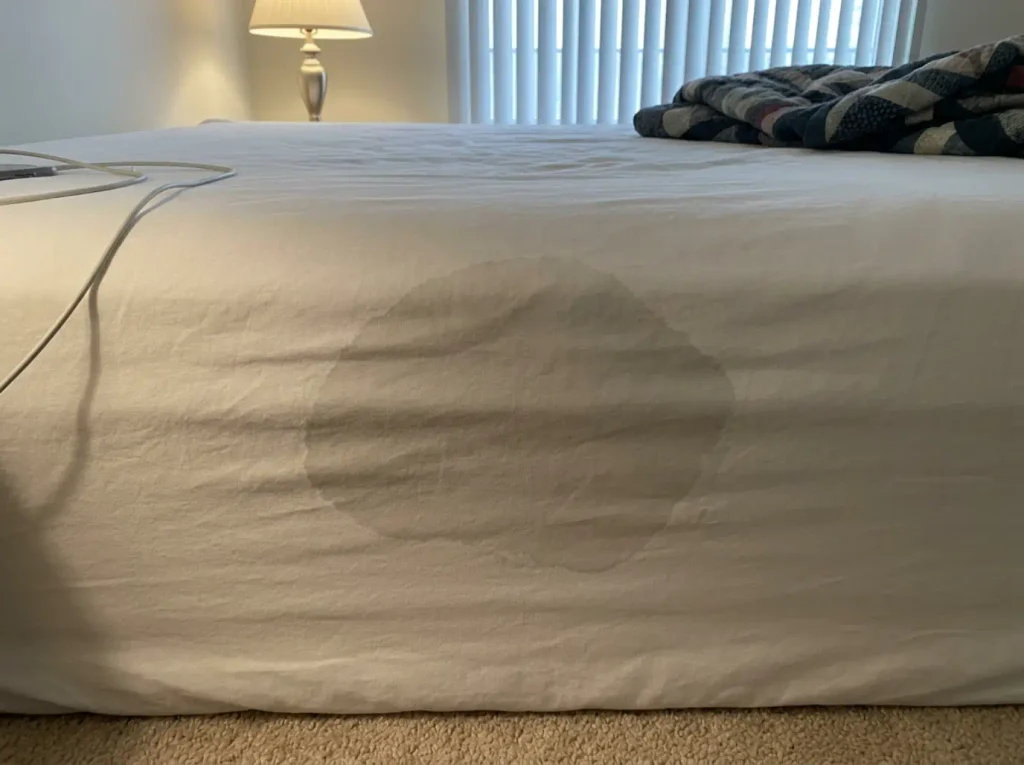
There are two levers on a bed and only two. The first is drying speed: how quickly moisture leaves the cloth once it is in there. The second is heat buildup, meaning how much warmth gets trapped between skin and open air.
Nothing you put on a mattress touches the gland that produced the sweat. Everything you put on a mattress changes what happens to it afterward.
A microfiber setup swapped for a percale cotton sheet and a duvet-cover-only system is a clean illustration of the mechanism. The change that matters is the layers, not the spending. Except she was still sweating.
What changed was that she stopped feeling it in the sheet. The moisture cleared before it pooled, and the heat left before it built. That is the entire promise of this article, stated honestly.
And the counter-case keeps it honest. Good bamboo sheets and pajamas can make no measurable difference until a medical adjustment is made. Bedding has a ceiling. Where that ceiling sits is not something a fabric can move, and if you are wondering whether a nightly pattern is worth a conversation with someone, that question belongs somewhere other than a shopping list.
Which brings up the word on the box. “Cooling” is not a measurement. Nobody certifies it, no test defines it, and any fabric can carry it. What actually decides how hot a bed sleeps is four things: the fiber, the weave, the grammage, and the finish.
Those get unpacked further down. The free moves come before any of them.
A sheet that feels dry at three in the morning is rarely a sheet that absorbed less. It is usually a sheet that released it faster. You find out which at six, when one bed has a cold damp patch under your hip and the other doesn’t.
The Layer That Sets the Ceiling
Somebody buys expensive sheets, sees nothing change, and never once considers the vinyl-backed thing that has been under the fitted sheet since they moved in.
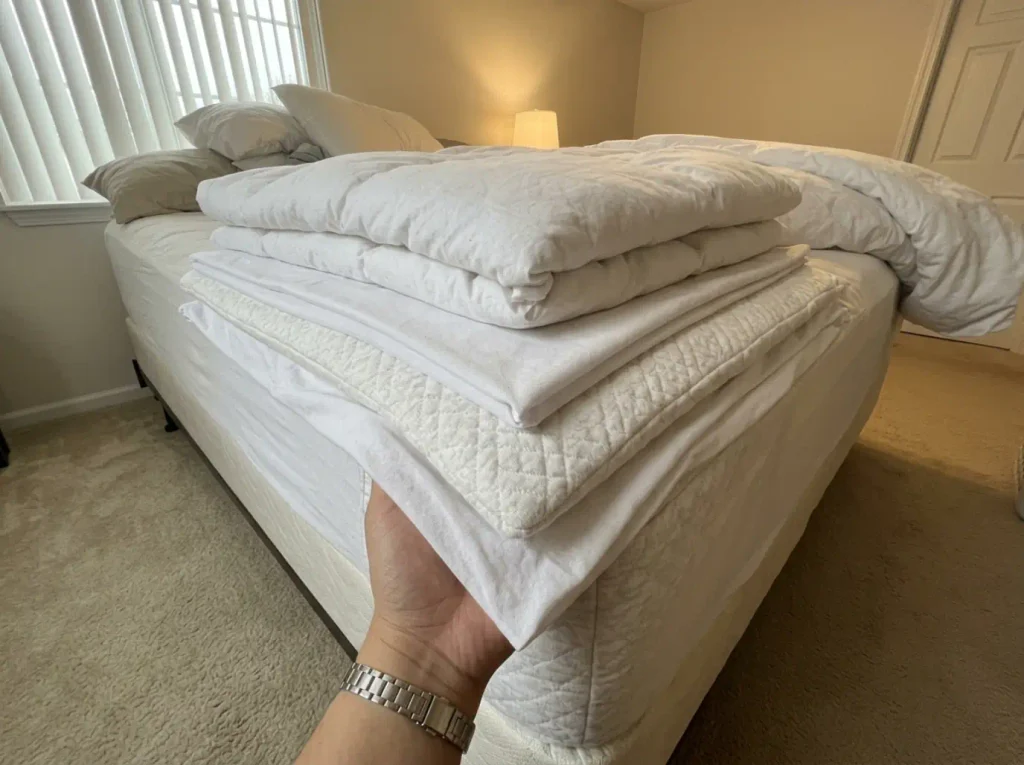
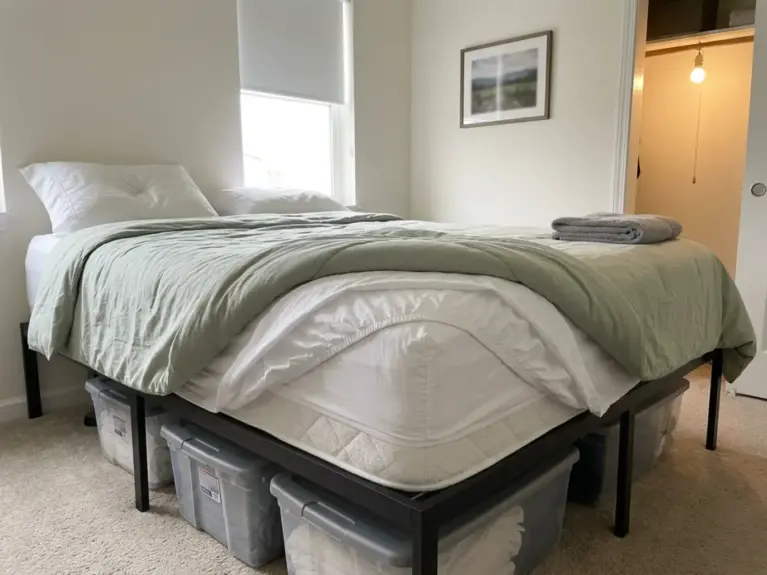
The bed is four layers, bottom up: mattress and protector, then fitted sheet, then flat sheet, then duvet or comforter. Moisture and heat leaving your skin have to cross all four to reach the room. Layers stacked in series behave like plumbing, and the narrowest pipe governs the flow, no matter how wide the rest are. A vapor-tight membrane sitting under your sheet caps everything above it.
Which means the shopping order almost everybody uses, best sheets first, is backwards. It is the same reason one wrong layer undoes the other three in any hot-sleeper build.
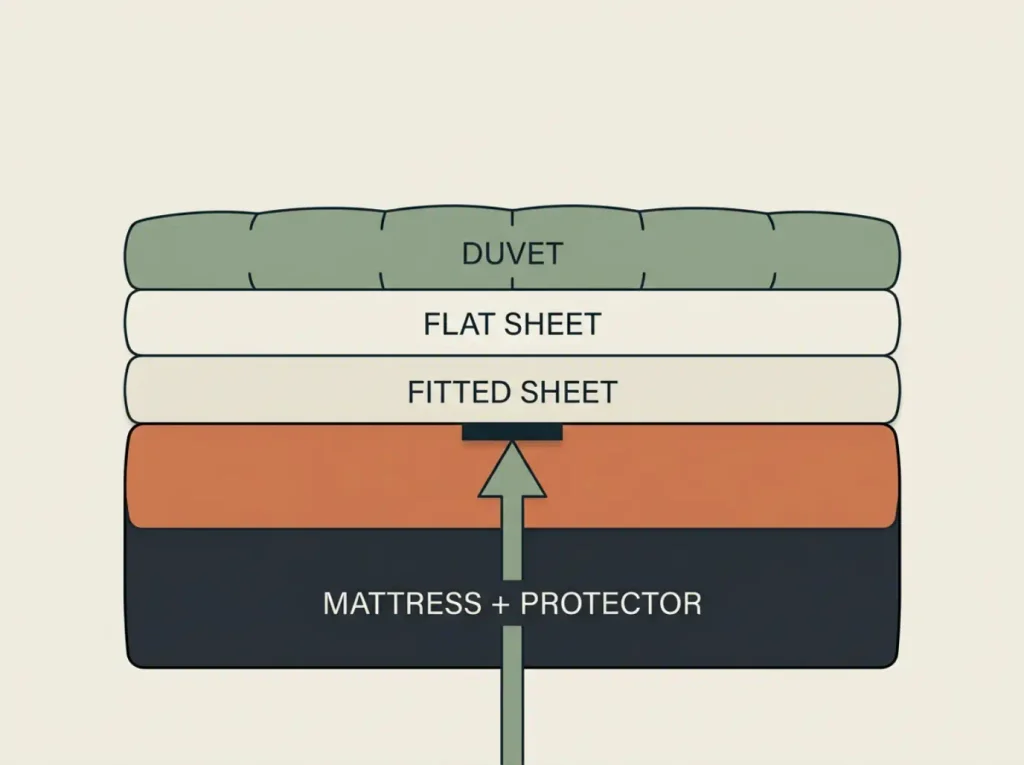
The protector is where this usually goes wrong, because two products with an identical job description behave in opposite ways. A vinyl or PU-film protector is a plastic sheet: it stops liquid by stopping everything. A TPU membrane has pores small enough to block water droplets and large enough to pass water vapor. Same three words on the packaging, opposite behavior at three in the morning.
The community already suspects this without having a framework for it. Many people go through sheets, duvets and mattress pads, then ask almost as an afterthought whether the protector’s fabric or weight matters. It matters more than everything else combined.
Two other ceiling candidates deserve a line each, then we move on. A memory-foam or gel mattress topper stores heat and gives it back all night, and no sheet undoes that, which is also why a cooling mattress pad or a cooling pillow bought on its own so often changes nothing. A comforter heavier than the season does the same thing from above. Neither is this article’s depth, but if your protector checks out and the bed still runs hot, they are where to look next.
Find your own ceiling before you buy anything. Peel one corner of the fitted sheet back in the morning and feel where the damp actually is: on the sheet’s face, between the sheet and the protector, or on the protector’s plastic side. The layer holding the water is the layer to change. It costs nothing and it takes ten seconds.
Fiber by Fiber, for Heat and for Moisture
Every list says bamboo. Bamboo has been reported to do nothing for some sleepers and to help others. Both can be true, and the reason is which bamboo was in the bag.
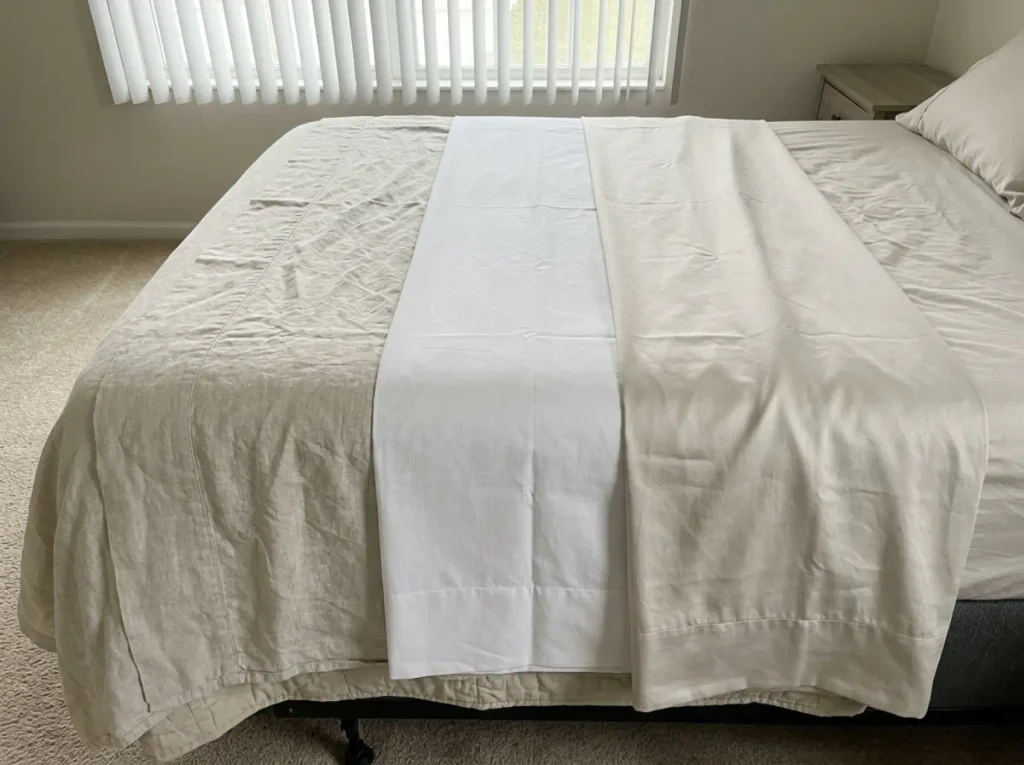
Cotton: what “breathes” actually means
Long-staple cottons get sold on smoothness, and pima cotton is the name that does most of that selling, but the number that matters for a sweating sleeper is the same for all of them. Cotton’s moisture regain sits around 8.5 percent, which means the fiber itself pulls in and holds a share of the moisture coming off your skin rather than leaving it as a film.
Organic cotton and GOTS certified sets behave identically here: those labels certify how the crop was grown and processed, not how the cloth handles sweat. That is the whole of “cotton breathes”: not airflow, absorption. It is worth reading cotton’s roughly 8.5 percent moisture regain is what lets the fiber absorb and buffer sweat instead of just holding it against your skin from the fiber body itself rather than from a shop.
The trade-off is real and nobody states it. Once cotton goes from damp to properly wet, it needs roughly 4 to 6 hours to dry, against 30 to 60 minutes for polyester under the same conditions. If you perspire lightly, cotton’s buffering is doing you a favor all night. If you wake soaked, that math turns against you before morning.
Linen: the fastest release among the naturals
Flax absorbs heavily and gives it back quickly, and the structure stays open enough to keep air moving even when the cloth is damp. That combination is rare. Most fibers do one or the other.
GSM is the number that decides a linen set, and almost nobody prints it. Grams per square meter tells you the weight of cloth you are actually buying, which a thread count on a linen listing does not. A brand that publishes its grammage is telling you it has nothing to hide about the weight.
The DAPU 100% French Linen Sheets are a 170 GSM flax set that declares the number on the listing, which is the standard this whole blog argues for. It absorbs hard and releases fast, which is the profile a soaked sleeper wants. And it wrinkles far more than percale and needs several washes before it softens, so anyone expecting a smooth hand on night one is going to be disappointed, and it will never look ironed. That is not a defect; it is flax.
If you want the full accounting of whether linen earns what it costs, that argument is its own article.
Bamboo: viscose or lyocell, and the label rarely says
Most “bamboo” on a shelf is viscose, or rayon to be precise: the plant dissolved in solvent and re-spun into a new fiber. It is smooth, it feels cold to the hand, and it holds moisture rather longer than its reputation suggests. Lyocell uses a closed-loop process and produces a genuinely different fiber behavior. The front of the bag says bamboo either way.
The ettitude 100% Lyocell from Organic Bamboo Sheet Set is the version that is actually lyocell rather than viscose, in a sateen weave with OEKO-TEX Standard 100 certification and a 17-inch pocket. It makes the distinction concrete instead of theoretical.
Its problem is supply: stock on it runs thin and the link can go dark without warning, and lyocell costs noticeably more than the viscose sets sitting beside it on the same shelf. Shrinkage is another cost, and it can happen even with careful washing. That complaint attaches to the viscose sets far more often, and it is one more reason what separates bamboo viscose from lyocell is worth knowing before you pay for either.
Polyester and microfiber: fast, and warm
Premium polyester finishes move vapor at over 3000 g/m²/24hr against cotton’s roughly 800 to 1200. In the moment, that is genuinely faster. It is not marketing.
And it still sleeps hot for a great many people, because polyester does not absorb. What it fails to move stays on your skin as a film rather than getting pulled into the cloth. So it is not that synthetics are wrong for sweating.
It is that they are all or nothing. When the vapor transfer keeps up, they are the driest thing on the bed. When it doesn’t, you are lying in it.
Here is the whole comparison in one place.
| Fiber | Absorbs Moisture | Drying Speed | The Trade-Off |
|---|---|---|---|
| Cotton | Yes, around 8.5% regain | Slow once properly wet: 4-6 hours | Buffers a light sweat well, stays wet under a heavy one |
| Linen (flax) | Heavily | Fast, and airflow holds up while damp | Wrinkles permanently, wants several washes to soften |
| Bamboo lyocell | Moderately | Good, and consistent wash to wash | Costs more than the viscose sets it sits next to |
| Bamboo viscose | Holds it longer than expected | Moderate | Cool to the hand in the shop, prone to shrinkage reports |
| Polyester / microfiber | No | Fastest vapor transfer: 3000+ g/m²/24hr | What it can’t move sits on your skin instead |
One thing that table cannot show you: cool-to-the-touch and stays-cool are different properties, and shops sell the first. Sateen and viscose both feel cold under a palm in the aisle because they conduct heat away fast on contact. Thirty minutes later, under a sleeper, that initial chill says nothing whatsoever about where the heat ended up.
Weave, Thread Count, and the Finish That Washes Out
The set that worked beautifully in April and does nothing in July was not a scam. It wore out, on a schedule nobody printed on the bag.
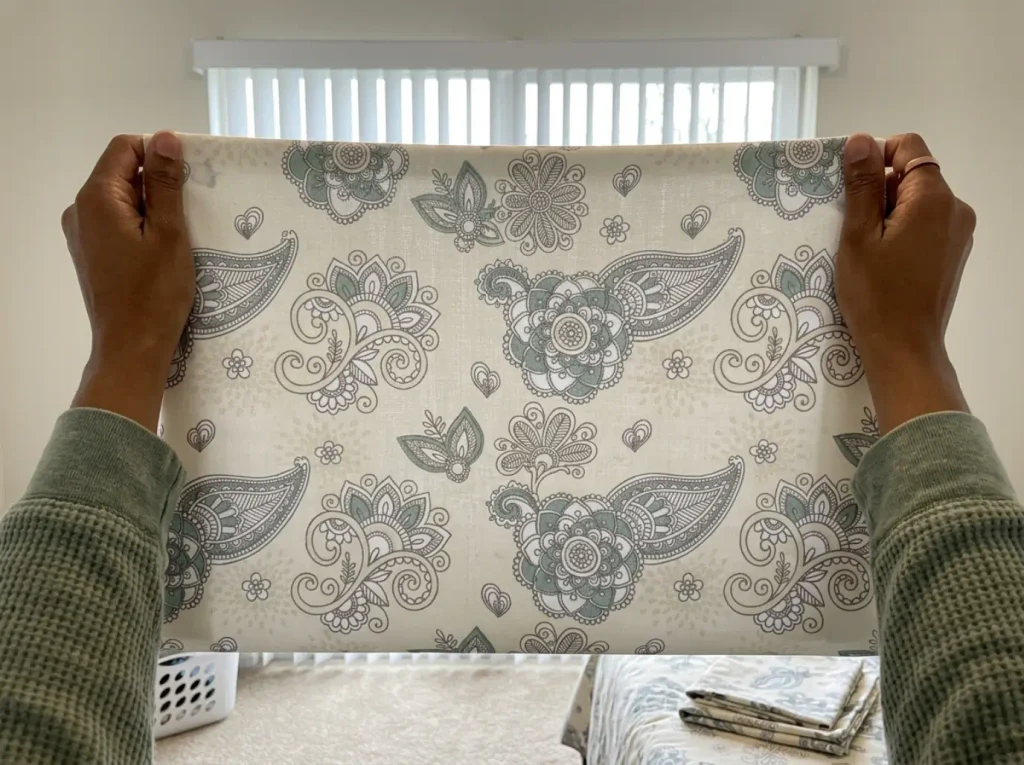
Percale and sateen are not textures, they are structures
Percale is one thread over, one under, all the way across. The grid leaves gaps between the threads, air moves through the gaps, and the hand is crisp and matte because of the grid rather than because of any treatment.
Sateen floats four threads over one. That float is what makes it smooth and heavy-feeling against skin, and it is also what closes the gaps. A sateen sleeps warmer than a percale of identical fiber and identical count, every time, because the structure is denser by design.
For somebody waking up damp, the weave choice does more than the fiber upgrade they were about to spend on. That is the single most useful sentence here.
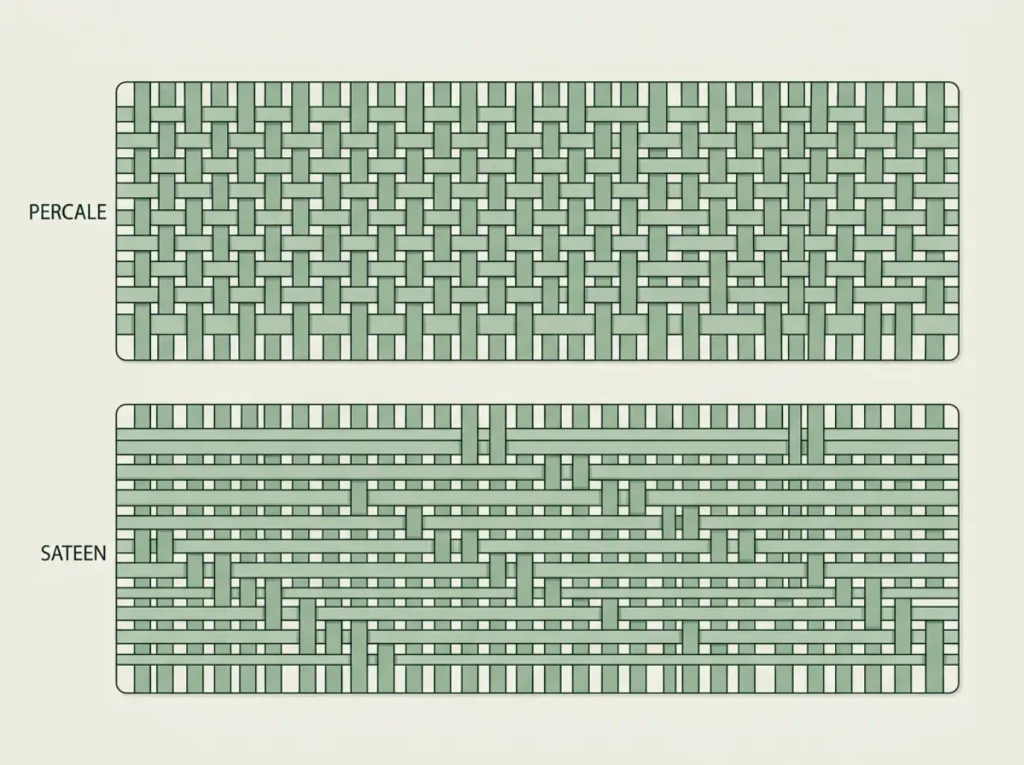
The Feather & Stitch 100% Cotton Percale Sheet Set is what choosing by structure instead of by number looks like: 300 thread count, plain weave, 16-inch pocket, and it behaves the way the paragraph above describes because of how it is built rather than because of anything sprayed on it. Its flaw is the same as its virtue: it wrinkles easily and will never look ironed, which is the price of the gaps that let it breathe. If you want percale against sateen, side by side, the full comparison lives there.
What thread count stops telling you above 400
Counts above roughly 400 are usually reached by twisting thin plies together and counting each ply as a thread. The result is denser cloth, not finer cloth, and denser is the wrong direction for a bed that runs hot. One line is all that deserves here; what thread count actually tells you is a full autopsy of its own.
“Moisture-wicking” has a shelf life nobody prints
The industrial definition of a functional wicking finish is one that still wicks after at least 15 washes. Better bonding methods target 30. Weaker bonding can be gone by 8. No brand prints the wash count its finish is rated for, so you buy without knowing which of those you got.
The failure is mechanical, not fraudulent. The finish is a chemical bond to the fiber surface, and washing, abrasion and stretching degrade that bond on a schedule. It is not a defect. It is the expected life of a topical treatment, behaving exactly as topical treatments behave.
Which is the wash-twenty seal of this whole article. A fiber-and-weave choice still works at wash forty because the behavior is structural. The grid is still a grid, the flax still absorbs. A finish is a coating, and coatings leave.
Crisp and breathable are not the same property, so don’t read one as the other. A percale that has gone soft has lost its starch, and that softening with wash happens in the first few cycles, and the grid underneath is untouched and moves exactly as much air as it did new. A sateen sold as cooling that has lost its slip has usually lost the finish that was doing the work, and that one does not come back.
Check the Protector Before You Buy Anything
The cheapest fix in this entire article is discovering that a cheap item bought years ago is capping an expensive one bought last week.
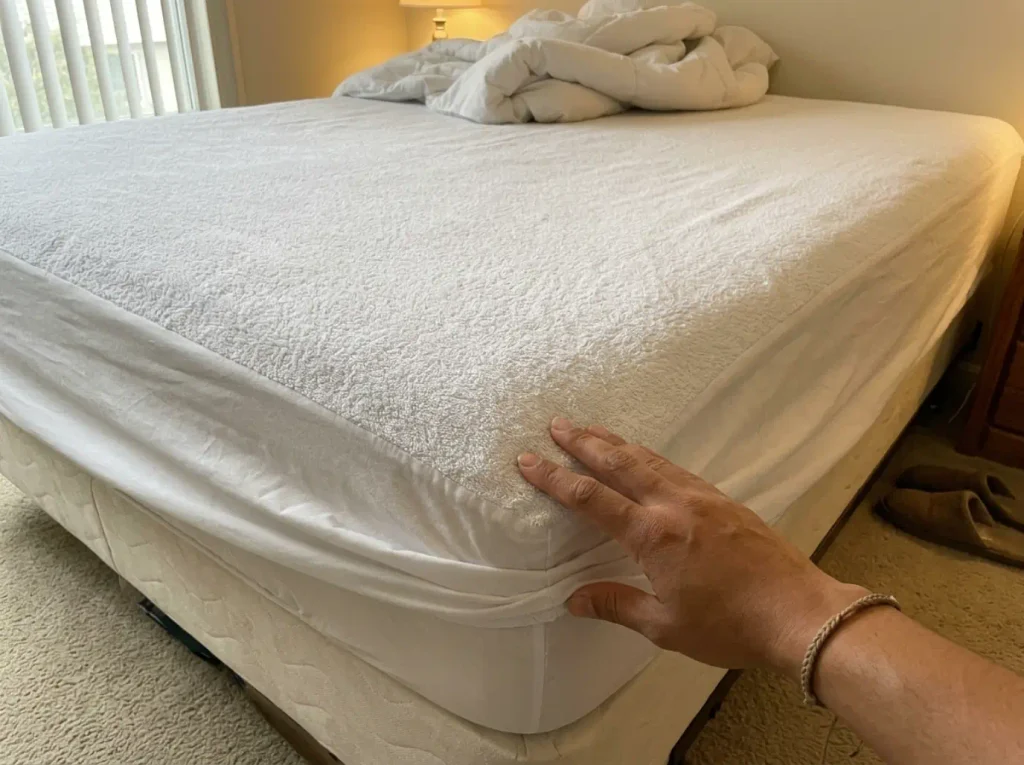
The free check comes first. Almost every waterproof mattress protector on the market falls into one of two families, and telling them apart takes ten seconds. Pull the fitted sheet off one corner and look at the protector’s underside, then feel it. A smooth, plastic-feeling film is vinyl or PU, and it is a barrier to vapor as much as to liquid. A cloth face with a thin backing that flexes without crackling is likely a breathable membrane type, and it can pass vapor while still stopping a spill.
A vinyl-backed protector that traps is not broken. It is doing its waterproofing job perfectly and failing the other one nobody told it about. Replacing it costs a fraction of what a sheet set does, and it moves the ceiling for every single layer above it, which no sheet purchase can do from the top of the stack.
What replacing it does not do is reduce the sweating. It changes where the moisture goes and how fast it gets there. Keep that frame intact or the next purchase will disappoint you the same way the last one did.
The Nestl Premium Cotton Terry Mattress Protector is the membrane type described above made concrete: a cotton terry face against your sheet and a TPU backing rather than a plastic film, so liquid stops and vapor doesn’t. Its flaw is physical: the terry face adds a little bulk and a little noise when you turn over, compared with a smooth jersey protector, and light sleepers notice that. There is a real difference in how the two wake you, too: terry holds the moisture up in the pile and away from skin, so the sheet above it feels dry longer, at the cost of that bulk.
Mattress encasements are the other branch and they get one line. A full-zip encasement wraps the entire mattress rather than just the top, which means more surface sealed, less breathability across the whole slab, and more heat held. A real trade if you need one for other reasons. Comparing which protector membranes actually pass vapor properly needs its own space.
Listen to the bed. Sit down hard on the mattress with the sheet off and pay attention to the sound the protector makes. A dry crackle is a plastic film, and that is your ceiling. A soft rustle or nothing at all points to a membrane backing. The crackle test takes one second and tells you more than the packaging did.
The Changes That Cost Nothing
The change that works best is often not a purchase. It is taking one layer apart.
Take the stack apart before you replace it
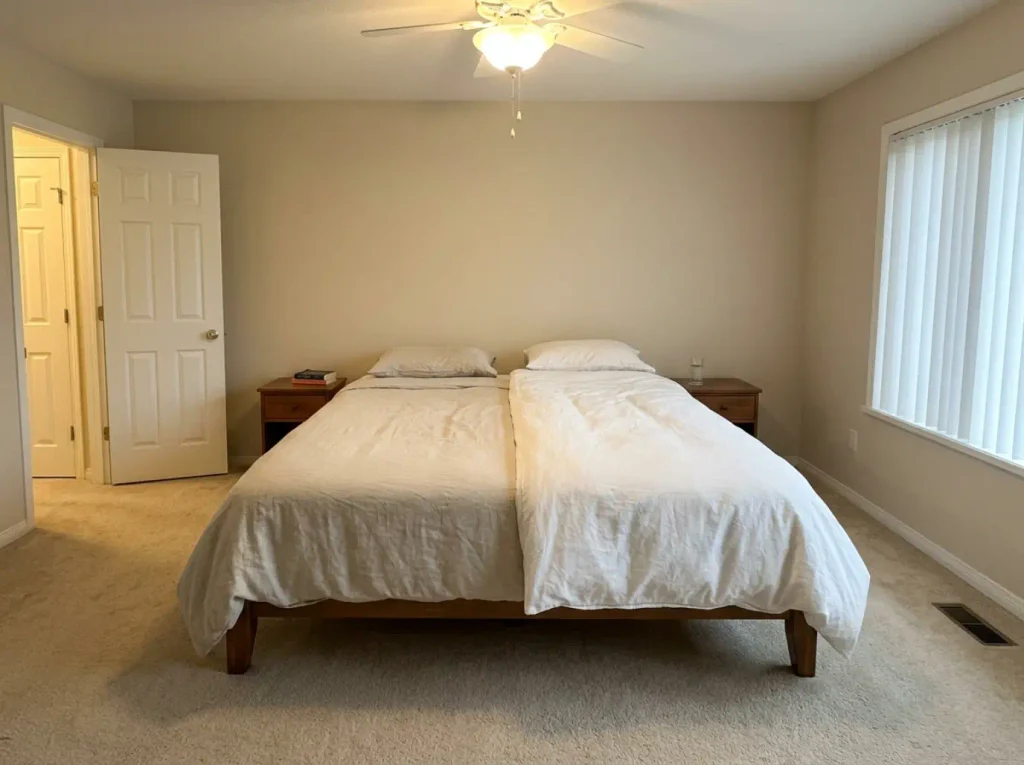
Drop the top sheet or drop the comforter, not both and not neither. Every layer you remove is one fewer ceiling in the series, and the stack only has four. The same logic sends a spare blanket off the bed in summer, and it is worth turning the pillowcase over too, since that is the one piece of cloth your face is against all night.
The duvet-cover-only system is the change that works best for many people: a washable cover over a lighter insert instead of an all-in-one comforter. It is easy to wash mid-week, which matters more than it sounds when a bed gets soaked twice a week.
The advice that holds up is worth repeating plainly: swap the top layer before you replace the sheet set. The sheet is the layer touching you, so it gets the blame, but the duvet is usually the heavier offender and always the harder thing to wash.
Two people, one bed
Almost nobody covers this, and it is half the searches. Two people, one bed, and one of them soaked while the other is cold under the same quilts. Couples often end up with one partner clammy and sweating while the other finds the same bed comfortable.
Split the fill, not the bed. The $1,500 poster’s actual fix was moving her partner’s wool-blend insert to a twin size so it covered only his side. Two inserts, one bed, and each sleeper gets the weight they need. In a shared bed the sheet stays shared, because the sheet is not where the two of you disagree. The top layer is.
When two people in one bed need different weights, buy a twin-size insert for the lighter sleeper instead of hunting for a compromise queen. Two inserts side by side under one cover, or one insert covering a single side, gives each sleeper their own fill without splitting the bed into two beds. It is the fix half of Europe has used for a century, and it costs less than the third comforter you were about to try.
The room and the wash
Airflow on its own does not close the gap. A fan moves air across the top of a bed; it does nothing about a capped stack underneath you. Room temperature, ventilation and air conditioning are support for the layer changes, not a substitute for them.
Washing gets one line here, and then it goes where it belongs. Sweat leaves residue down in the fibers that a normal wash cycle does not always clear, which is why a set that looks clean can still smell by Wednesday.
No fiber has real odor resistance once that residue is in it. Washing so the smell doesn’t set in is a routine, not a tip. And the free moves in this section all operate on the same four-layer system as building the whole bed for a hot sleeper, if you want the version that isn’t specific to sweating.
One more piece of logistics that outranks any fiber comparison above. A duvet cover comes off and goes through a normal wash on a Tuesday night. A comforter goes to a laundromat or waits for a dry weekend. For a bed that gets soaked twice a week, that difference decides more of your comfort than the fiber does.
Three Nights to Tell Whether It’s the Bed
Somebody who has already changed the sheets twice with nothing to show for it does not need a fourth recommendation. They need a test.
The three-night test
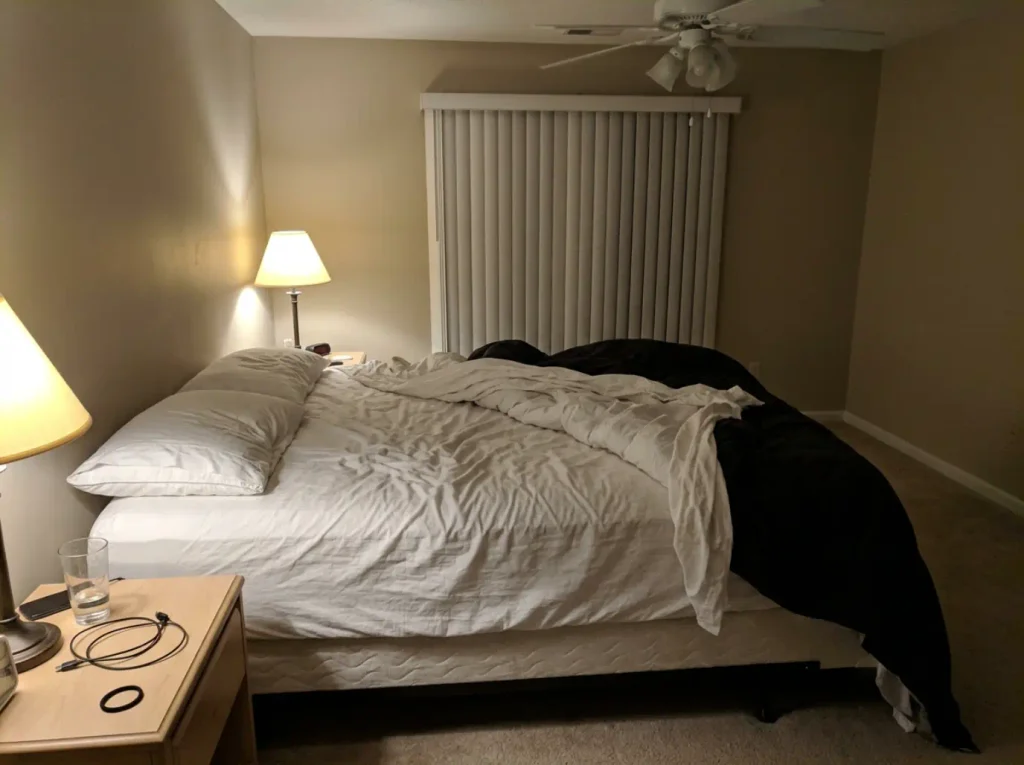
- Night one, change nothing. In the morning, note where the damp is: the sheet’s face, between sheet and protector, or the protector itself. That is your baseline, and the location matters far more than the amount.
- Night two, strip one layer. Top sheet off, or the comforter swapped for a lighter insert. One change only. Two changes and the result tells you nothing.
- Night three, change the ceiling. Protector off entirely, if you can go a night without a waterproof layer. This is the one test that reveals whether the cap is real.
How to read it: if the damp moves, shrinks, or shows up later in the night, then bedding is a genuine variable for you and everything above applies. If all three mornings are identical, the bed is not your lever, and nothing in this article will change that. Before blaming the fabric, it is worth knowing what to rule out before you blame the bedding.
The reading is in the location, not the size of the patch. Wet on the sheet’s face with dry cloth underneath means moisture was clearing upward and something above stopped it. Wet on the protector’s plastic side means it never had anywhere to go in the first place.
Where this stops being a bedding question
If the sweating comes with a fever, unexplained weight loss, or shows up regularly enough to wake you no matter what’s on the bed, that’s a conversation for your doctor, per Mayo Clinic. Not a shopping list. That is the threshold, and this article stops there.
It is also why the bamboo-sheets story from the beginning matters: when the driver is medical, the ceiling is medical too, and no fabric moves it. For the two largest groups arriving at this question, the specifics live elsewhere: building the bed around menopause night sweats and what changes for men are each their own build.
What to Do With All of This
Bedding changes how fast moisture clears and how much heat sits on you. It does not change whether you sweat. Hold every purchase up against that sentence and most of them stop being tempting.
Find the ceiling before you shop. The least permeable layer governs the entire stack, and it is usually a protector nobody has looked at in years, which means the cheapest item on the bed is capping the most expensive one.
Choose by structure, not by adjective. A percale weave over a fiber that absorbs is still working at wash forty because the behavior is built in. A finish sold as cooling can be gone by wash eight, and the bag never said which one you bought.
After a season of washes, check for the two failures that actually matter: a wicking finish that has quietly stopped moving anything, and a set that has gone soft in a way that means the weave has closed rather than relaxed.
Pull the fitted sheet off one corner tonight and feel where the damp really sits. Run the three nights. Then decide what, if anything, needs replacing.
Frequently Asked Questions
01What is the best bedding for night sweats?
A breathable weave over an absorbent fiber, above a protector that passes vapor. Percale or linen beat sateen for drying speed, but the protector underneath them decides how much any of it can do.
02Can changing my bedding stop night sweats?
No. Bedding changes how fast moisture clears and how much heat builds, not whether you sweat. Some improvements are about how much sweating is felt rather than how much sweat is made, and the sweating itself can stay the same.
03Does the mattress protector matter for night sweats?
More than most sheet upgrades. A vinyl or plastic-film protector blocks vapor and caps every layer above it. A cotton-faced protector with a breathable TPU membrane does the same waterproofing without the trap.
04Do cooling sheets stop working after a while?
The ones relying on a topical finish do. A wicking treatment only counts as functional past 15 washes, and weak bonding can fail by eight. Weave and fiber choices do not wear out that way, because the behavior is structural.
05Should one person’s sweating change what the whole bed uses?
Only the top layer. Keep the shared sheet and split the fill: two lighter inserts, or one insert sized to a single side, so each sleeper gets their own weight without dividing the bed in two.




Tried it on your own bed?
No comments yet. Tell us what you changed, and what the sheet did after a few washes.