







What’s in here7 sections
Three names sit side by side on three packages, and every shopper reads them as three competitors in the same race. They are not. Two of them are the same plant arranged two different ways on the loom: percale goes one thread over and one thread under, sateen floats four over one. The third is not cotton at all, but flax.
That means the question everybody types, which of the three is best, is really three questions wearing one coat, and it cannot be answered until you know which one you are asking. Below: what each fabric physically is, what it does on a hot night and a cold one, why no number printed on any of the three packages compares to the other two, what a season of washing does to each, and how to pick without spending anything first.
| Fabric | What it actually is | Feel | Sleeps | Wrinkles | Best for |
|---|---|---|---|---|---|
| Percale | Cotton, plain weave: one over, one under | Matte, crisp, dry | Coolest of the three in heat | Wrinkles, and stays wrinkled | Anyone who runs hot, and every shared bed |
| Sateen | The same cotton, four threads floating over one | Smooth, low sheen, heavier drape | Holds warmth in | Hides creases best | Cold sleepers and cold rooms |
| Linen | Flax: a different plant, not a weave choice | Textured, dry, loosens with use | Cool in July, warm in January | Rumpled by design, forever | Year-round use and a decade of it |
Two Are a Weave. One Is a Fiber.
The three names are not even the same kind of word, and until that is straight, nothing else about them can be compared. Two of them answer how was this woven. One of them answers what plant is this. Somebody who has washed all three would say it faster: you are comparing a road to two cars.
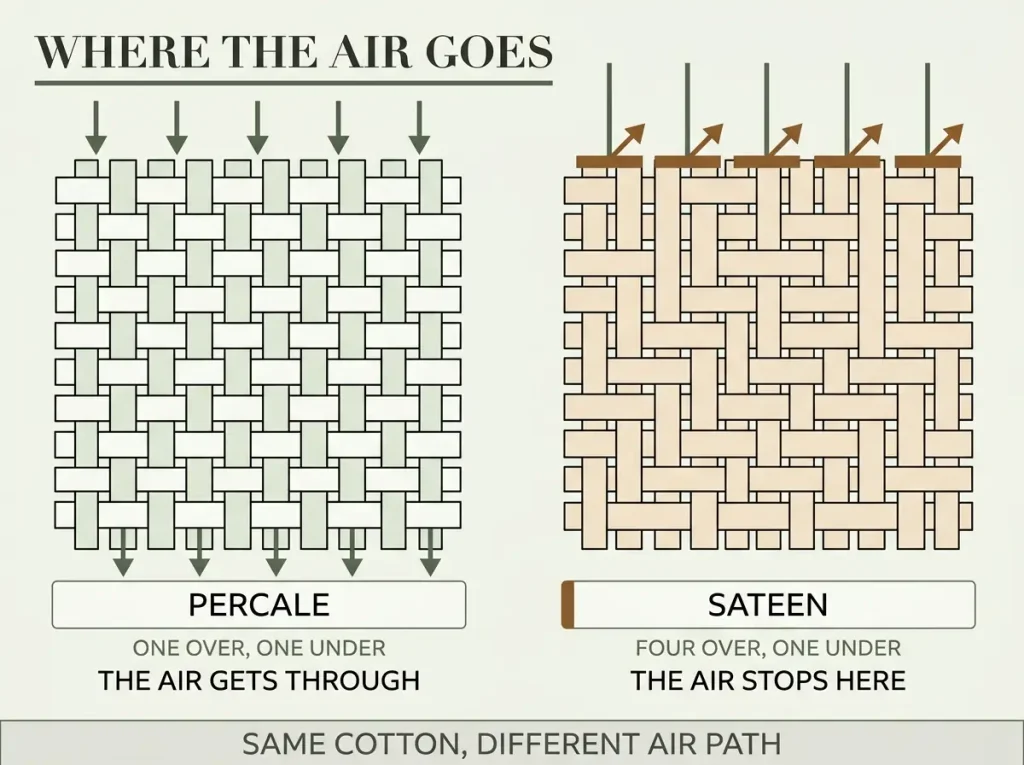
Start with percale, because it is the simplest structure a loom can make. One thread over, one thread under, all the way across and all the way down, a tight balanced grid with a crossing at every single intersection. Every crossing is a small interruption in the surface, and interruptions leave gaps. Those gaps are why air moves through it and why it feels matte and dry against skin instead of slippery.
Sateen is the same loom told to do something else. Three or four threads float over one before they get anchored, which leaves long, unbroken runs of thread lying on the face of the cloth. That exposed run is where the sheen comes from, because light reflects off an uninterrupted surface. It is also, exactly, where the abrasion lands.
Both of those are cotton. The same fiber, arranged two ways. A percale and a sateen from the same mill using the same bale of cotton are the same raw material with two different air paths cut into it, which means that when you choose between them you are not choosing a material at all, and the staple length under both of them changes what either weave is capable of. That is the layer worth reading about separately, because both of them are cotton, and the staple length under them changes what either weave can do before the weave gets a vote.
Linen is not on that spectrum. Linen is flax: a different plant, a hollow-cored fiber, thicker, stiffer and considerably longer than cotton. It is not a third weave. It is the layer above the weave question, and it gets woven its own ways once you have already chosen it. This is where the most common shopping mistake in the threads comes from: people read “linen” as a texture word, meaning rough and casual and rumpled, rather than as a fiber word. So they buy a “linen-look” cotton, put it on the bed, and wonder why it sleeps exactly like cotton. Because it is cotton.
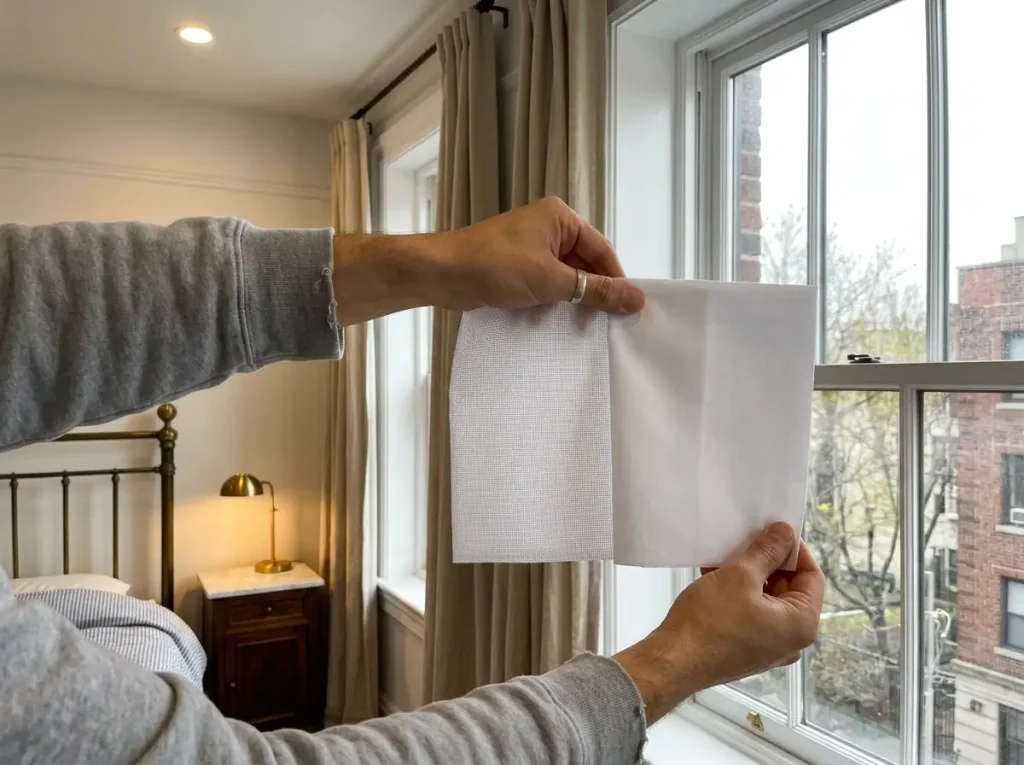
Here is the two-second version, and it works in a shop. Hold a percale and a sateen of the same cotton up to a window. The percale shows a visible grid of light coming through it, small and regular and evenly spaced; the sateen shows a milky, closed surface with almost nothing getting through.
Same fiber, same thread, same mill. The light passes through one and not the other, and that single observation is the whole temperature argument made visible before anyone has claimed anything. If you want to go further into what the thread is actually doing, the pillar takes every construction in turn. And the same fiber-versus-weave logic decides your duvet cover and your pillowcases, not only the sheet you sleep against.
What Each One Does on a Hot Night and a Cold One
Once the fiber-versus-weave question is settled, the three separate cleanly on temperature. This is the one axis where a straight recommendation is possible, so here it is.
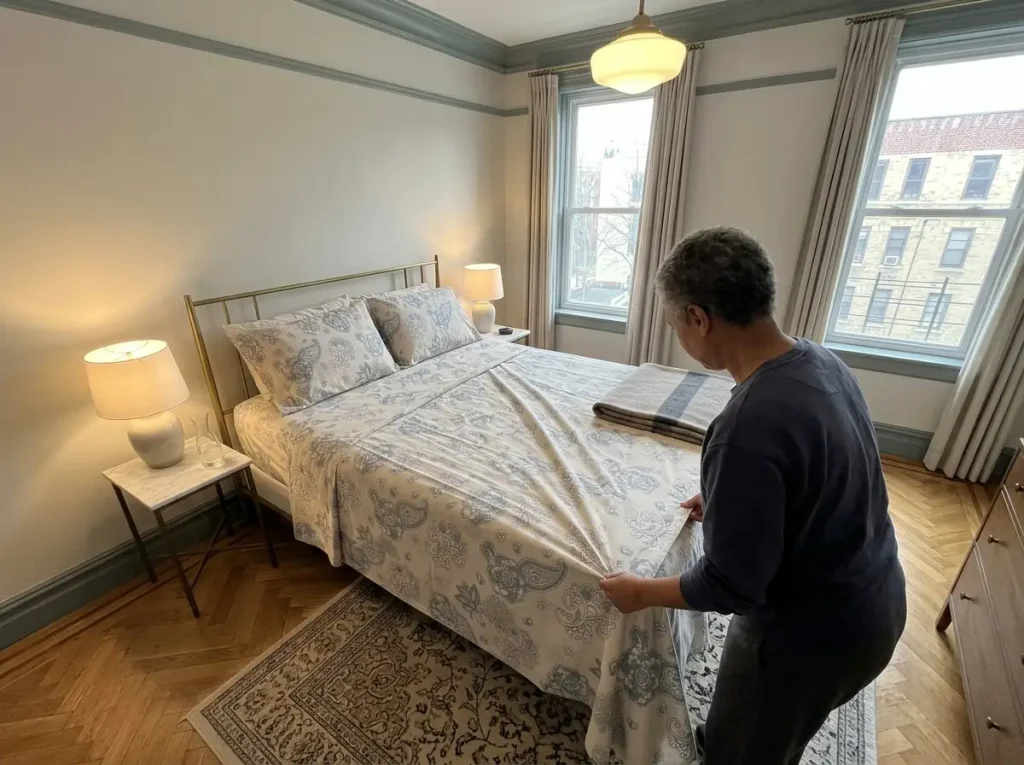
Percale is the strongest performer for a warm sleeper, and the reason is the grid you just held up to the window. The air path runs straight through the cloth, so the heat you make between midnight and three has somewhere to go instead of banking under the sheet with you.
Sateen does the opposite, and it does it on purpose. The floats close the surface, which is precisely what makes it feel smooth and precisely what makes it sleep warmer. One property, two consequences. In a cold bedroom that is a feature. The SOHO 100% Egyptian Cotton Sateen Stripe Sheet Set is a 500-count sateen, which sits at the top of the honest band rather than making a four-digit claim, and it is the version of this weave worth owning if your problem is a cold room. Its flaw is structural and worth knowing before you buy: the exposed floats pill and the sheen goes if the set ever meets a hot wash or a fabric softener. That is the weave, not the batch.
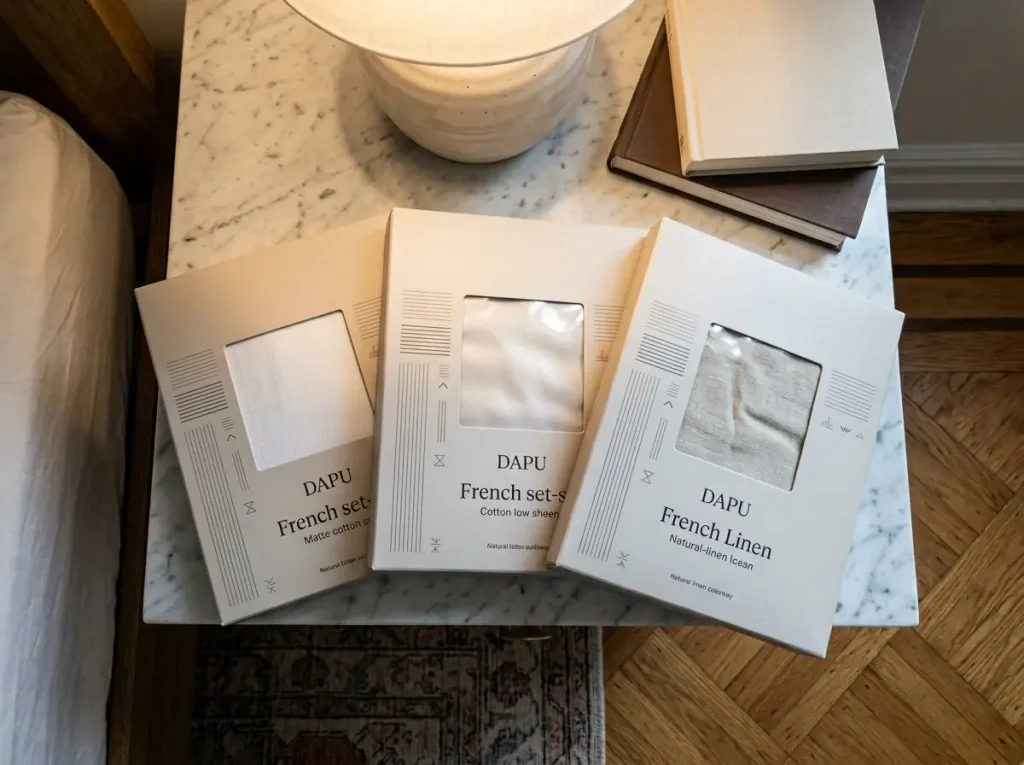
Linen is the only one of the three that refuses the seasonal trade-off entirely. The hollow fiber core is doing the thermoregulation here: it moves moisture out in summer and traps a still layer of warm air in winter, which is why linen is the closest thing on this page to year-round bedding. Comparable to percale in July, warmer than percale in January, and without sateen’s surface weight. The DAPU 100% French Linen Sheets declare 170 GSM on the listing, which is the only honest number linen has and a rarer thing to find printed than it should be. The flaw, stated plainly: it arrives stiffer and coarser than most people expect, and it takes about a dozen washes to soften properly. It is not broken. It is new. For the cold half of that dual property, linen in a cold bedroom goes deeper than one line can.
Then there is the bed with two people in it, which is where the neat persona advice on every other page falls apart. Two different fitted sheets on one mattress is not a thing, so the weave is the one bedding decision a couple cannot split down the middle. The rule that survives contact with a real bed: pick the weave that costs the wrong sleeper the least. Percale under a shared duvet lets the hot sleeper survive while the cold one adds a blanket on their own side. The reverse does not work, because you can add warmth to a cold sleeper and you cannot subtract it from a sateen.
Before any of this becomes a purchase, do the free version. Take the top sheet off. Or change which layer sits against your skin and leave everything else alone for a week. A large share of “these sheets sleep hot” complaints in the threads turn out to be a duvet problem wearing a sheet’s name, because the sheet is one layer of five, and it is rarely the one making you hot.
Sateen feels cooler than percale for about the first ninety seconds. The smooth face makes broad contact and conducts heat off your skin fast, which is the sensation that sells it standing up in a shop. Then the closed surface stops the air and it turns. Ninety seconds of hand test is not the same measurement as seven hours of sleeping, and the shop only lets you run the first one.
And if you are buying percale on the strength of all this, the reference set is the Feather & Stitch 100% Cotton Percale Sheet Set: 300 single-ply threads, a 16-inch pocket stated on the listing, and a count that sits in the middle of the range this article is about to explain rather than above it.
Why No Single Number Ranks the Three
Every package carries a number. The numbers look comparable, they sit in the same spot on the front of the box, and not one of them survives the trip from one fabric to the next.
Thread count has an honest ceiling and it is around 400. Counts near 400 to 430 genuinely do indicate soft cotton, and that part is not marketing. Counts at 800 and 1200 cannot be produced organically on a loom at all; those threads were put there artificially, by twisting two or three thin yarns together into one and counting each strand separately.
The community calls it ply-doubling and the result is denser, not finer. What you have is a heavier sheet with a bigger number and the same fabric underneath, and what a thread count is actually counting goes through the mechanism in full. None of this is guesswork either: pilling and weave density are things an accredited lab measures with a named method, not a guess, which is exactly why a listing that dodges the ply and the staple is the weaker listing.
The honest bands are also different per weave: roughly 200 to 400 for percale, roughly 300 to 500 for sateen. The same digit on two packages means two different things, because the two weaves need different densities to work at all. A plain grid is dense by construction, while a float weave has to be packed tighter to hold its floats in place. So a 400 on a percale is near the top of its range and a 400 on a sateen is in the middle of its.
It does not even cross reliably within cotton. A 400-count percale spun from long-staple cotton will beat a 600-count sateen spun from short-staple, on feel and on how long it survives. Weave and staple decide more than the count ever does, which is the uncomfortable version of the answer: the digit is the least informative thing on the package and it is the only thing printed in large type.
And linen does not play at all. Flax comes from the thick center of the plant, so far fewer threads physically fit into the same area, so a low thread count on linen is a consequence of the fiber, not a defect in the cloth, and manufacturers stopped printing it because it says nothing. Linen is sold by GSM, grams per square meter.
Here is the part that gets skipped everywhere. GSM is not a better thread count. It is a different unit answering a different question: GSM weighs the cloth, thread count counts the threads woven into it. Bed Threads puts it flatly: “strictly speaking, there’s no comparison to be made between GSM and thread count.” There is no conversion and there is no winner, because they are not two grades of the same scale.
Bed linen sits around 170 GSM, and that grammage only means something once you see the scale it lives on: a bath mat is about 900, a winter coat 700, denim 400, a hessian sack 275, fly-screen netting 196, bed linen 170, a summer shirt 135. Sheets are near the light end of that list, lighter than a fly screen, less than half a pair of jeans. Which reverses the instinct most people bring to the number, because higher GSM reads as more substantial and at the top of that scale you are describing a doormat.
That 170-versus-135 gap between bed linen and shirt linen is worth reading correctly, because it is a durability margin and not a warmth one. Those extra thirty-five grams are what survives being washed weekly and hauled across a mattress every morning for years. It is why featherweight linen sheets sold on how soft they feel out of the bag go thin at the hem first: they were built to be worn, not slept on.
GSM only compares honestly between two cloths of the same fiber and the same weave, and what you are paying for when linen costs three times the percale is where those bands get taken apart properly. Across the three fabrics on this page, it ranks nothing.
Two ways to catch a doubled count without a lab. Look for the word single-ply on the listing. A set that has it says it, and a set that stays silent on ply while printing 1000 on the front has told you which one it is. Then hold the fabric to a window: a genuinely fine high count still lets a fine grid of light through, while a doubled one reads dense and dull because the extra number came from thicker yarn.
What a Season of Washes Does to Each
All three feel good the week they arrive, which is the least useful week to judge any of them in. Call it the wash twenty test: the fabrics diverge somewhere around the twentieth cycle, and they diverge in different directions. Everything before that is the break-in period, and all three are still lying to you during it.
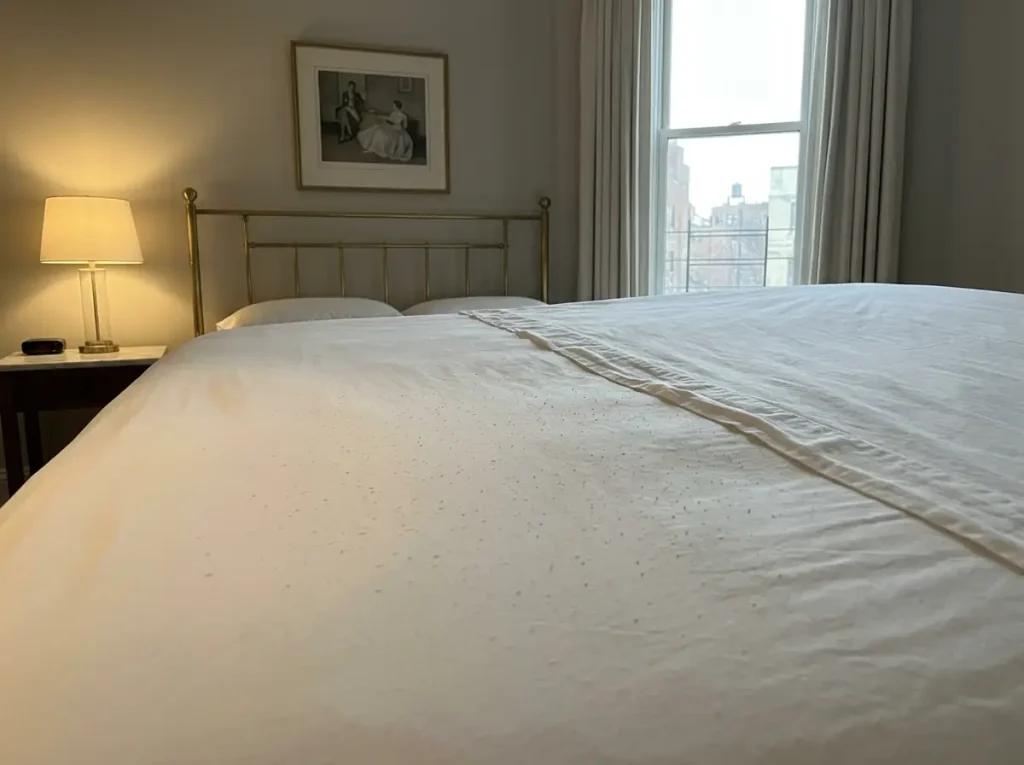
Percale keeps its structure and loses its starch. The mill finish that makes a new percale feel almost stiff washes out over the first few cycles, and what is underneath is the fabric you actually paid for.
It softens without going slack, and the locked grid resists pilling because there is very little exposed thread for anything to abrade. Surviving an industrial laundry and still coming out flat is why hotels put percale on every bed, for reasons that have nothing to do with how it feels.
Sateen loses sheen and gains pills, and this is the most repeated complaint in independent testing rather than a run of bad luck. It is structural: the floats that make the surface smooth are the part of the cloth that rubs against skin, forearms and knees all night. Hot water and fabric softener accelerate both failures at once, because softener coats the exposed surface and takes the luster and the wicking with it. The head-to-head question of which of the two cotton weaves outlasts the other, and by how much is settled elsewhere and it is not close.
Linen goes the other way, and it is the only one of the three that improves on both counts at once. Flax gains strength when wet, so the wash cycle is physically working the fiber softer while the cloth gets tougher rather than weaker. Give it roughly a dozen cycles to reach a relaxed hand, which is a long time to wait on a bed you just paid for and the reason so many people judge it wrong in week one. What that buys is measured in years rather than washes, and how long linen actually lasts puts numbers on it by GSM band.
Where you look after a season is different for each. Percale fails at the edges: the hem, and the fitted-sheet corners where the elastic keeps pulling. Sateen fails in the field, the open middle of the flat sheet where nothing touches it but skin. Linen fails at nothing much for a long time, and when it finally does it will not be at the seams, which outlast the cloth around them.
That difference is a diagnosis, not a trivia. A pilled sateen and a worn percale break in opposite places, so the damage tells you what you own without reading the label. If the middle of your sheet is fuzzy and the hem is perfect, that was never a percale, whatever the package said.
Never put fabric softener on a sateen. Not a capful, not the dryer sheet version. Softener works by depositing a thin coating on the surface of the cloth, and on a sateen the surface is the long exposed floats, so the coating dulls the luster you bought it for and blocks the moisture path in the same pass. Cold wash, low heat, nothing added. On linen the same rule barely matters; on sateen it decides whether the set looks tired by month three.
The care that changes any of this is short, and it is not the same for all three. A cold water wash and a tumble low is right for every one of them, but it matters most on the sateen, where the failure mode is a surface treatment and heat is what sets it.
Percale is the most forgiving of a hot wash temperature, which is the other half of the hotel story. Linen barely cares, and a line dry finishes it better than a dryer does: pull it off the line slightly damp and the creases fall softer.
How to Pick Without Buying Anything First
The decision comes down to three questions, and two of them can be answered with the bed you already own tonight.

Question one, who is hot? If either sleeper runs warm, percale, and stop reading the rest of the temperature advice. If both of you run cold, sateen earns its place honestly. If the two of you disagree, percale plus separate top layers, for the reason given above: you can add heat to one side of a bed and you cannot take it out of a closed weave.
Question two, will you iron? Nobody irons. Linen will never look pressed, not after the twelfth wash and not after the hundredth, and that has to be a thing you actively like rather than a thing you are prepared to tolerate. On wrinkle resistance alone sateen wins, and percale sits in between: it creases, and it reads crisp rather than smooth, which is a different look and not a lesser one.
Question three, what does the bed already do? Strip the top sheet for a week, move the duvet down one weight, change nothing else and buy nothing. A surprising share of “wrong sheets” turns out to be a right sheet under a wrong duvet, and changing the bed by season instead of by fabric is the version of that test that carries through the year rather than one week.
Then there is the honest order of operations, which almost nobody follows because it is not the order of temptation: duvet first, then room, then sheet. The sheet is the layer people replace first because it is the layer they can feel, and it has the least thermal authority of the three. Changing it fixes the problem it caused. It does not fix the other two.
On money, the usual advice is to buy up. After enough ply-doubling stories, a mid-range single-ply percale does everything a doubled-count set does, and the difference between them lands in the wash rather than in the shop.
So the budget answer is not a compromise here. The Linen Home 100% Cotton Percale Sheet Set is a 200-count single-ply percale with a 15-inch pocket and an OEKO-TEX certification, which puts it at the floor of the honest band rather than in bargain territory below it. Its flaw, plainly: at 200 it reads less dense under the hand than the 300 does. Right for a guest room or a bed that gets washed constantly, not the set for the main bed.
Spending up is a real answer in exactly one case, and it is linen, but only if the look and the seasonal range are what you want, not because it is the expensive one and expensive feels safer. Its case is the decade, not the first night, and whether linen is worth it at all is a question that deserves its own page rather than a column in a table. And if all three of these fail you on feel, the two weaves this comparison leaves out are where the rest of the answer lives.
The Short Version
Percale and sateen are one decision and linen is a different one. Answer the fiber question first, cotton or flax, and only then answer the weave question, because doing it in the other order is what makes the whole comparison feel unanswerable.
No number crosses between them. Thread count has an honest ceiling near 400, different honest bands per weave, and it stops meaning anything at all at linen; GSM weighs the cloth instead of counting its threads and only compares within one fiber and one weave. Shop the weave and the fiber. The digit is decoration.
Percale for heat, sateen for cold, linen for both and for the decade — and a shared bed takes percale, every time, because warmth can be added to a cold sleeper on their own side and cannot be subtracted from a hot one.
After a season, look in a different place on each: the field of the sateen, the hem and corners of the percale, the seams of the linen. Wear turning up somewhere you did not expect it usually means the fabric was not the one the package said it was.
Take the top sheet off tonight and sleep on the bed you already own for a week. If the problem moves, it was never the weave. If it does not move, you now know which of the three to buy and, more usefully, why.
Frequently Asked Questions
01Do hotels use sateen or percale?
Percale, near-universally, and the reason is the laundry rather than the feel. Hotel linen is washed and pressed industrially, and the plain weave is the one that survives that treatment and comes out flat. The full mechanism is here.
02What is better, percale or linen?
Neither, because they answer different questions. Percale if you want cotton that is crisp, dry and coolest in heat. Linen if you want a fabric that works in both seasons, improves for a decade, and will never once look ironed.
03What are the downsides of percale?
It feels stiff for the first few washes, it wrinkles more than sateen, and it never reads smooth or lustrous. None of the three is a defect: they are the plain weave doing exactly what a balanced grid does, and the crispness is the point.
04Can you tell percale from sateen just by looking?
Yes. Hold both up to a window. Percale shows a visible grid of light coming through the weave; sateen reads as a closed, milky surface with a low sheen. It takes two seconds and it works through packaging film.





Tried it on your own bed?
No comments yet. Tell us what you changed, and what the sheet did after a few washes.