


What’s in here10 sections
- What Actually Decides Whether Bedding Sleeps Warm
- What Changes for Warm Months
- What Changes for Cold Months
- The Layer That Does Most of the Work
- The Free Move Before the Expensive One
- The Layer Everyone Forgets
- The Calendar Is Not the Thermostat
- Putting the Off-Season Set Away, and Getting It Back
- Conclusion
- Frequently Asked Questions
“Summer bedding” and “winter bedding” are shelf categories. They are not properties of anything.
Everybody tells you to switch bedding for the seasons and nobody tells you what actually changes. The same fiber, cotton, gets sold to you twice a year in two different weights, and the weight is doing all of the work while the label takes the credit. Percale is one thread over, one under, which leaves gaps, and gaps move air; flannel is that same cotton brushed until the surface holds a layer of still air against your skin. Same plant, opposite jobs, and nothing on either package tells you that.
What follows is what actually decides warmth, what changes at each of the four layers on a bed, what costs nothing before it costs anything, and what to check when the off-season set comes back out of the closet in November.
Quick Answer
Yes, change your bedding with the seasons, but fiber, weave and weight decide the season, not the calendar. Only two or three pieces genuinely need to move: the sheet’s weave and weight, the warmth of the top layer, and whether the mattress protector breathes. Everything else is optional.
What Actually Decides Whether Bedding Sleeps Warm
Pull out your summer sheets and your winter sheets and read both tags. There is a good chance they both say 100 percent cotton. That is not a mistake in the labeling, and it is not a trick either. It is the whole point.

Cotton’s own thermal conductivity, measured in published textile research, is modest, somewhere around 0.035 W/m·K, and the weave and the weight do the rest of the work. The fiber is barely the variable. Four things are: the fiber, the weave, the weight and the finish.
That holds for the fibers people reach for when they want out of cotton, too. Bamboo is viscose and drapes heavy; silk is light but seals against the skin; jersey is knitted rather than woven, which is why it stretches and why it sleeps warmer than its weight suggests. Moisture-wicking is a property of the fiber and the structure together, never of the word on the package.
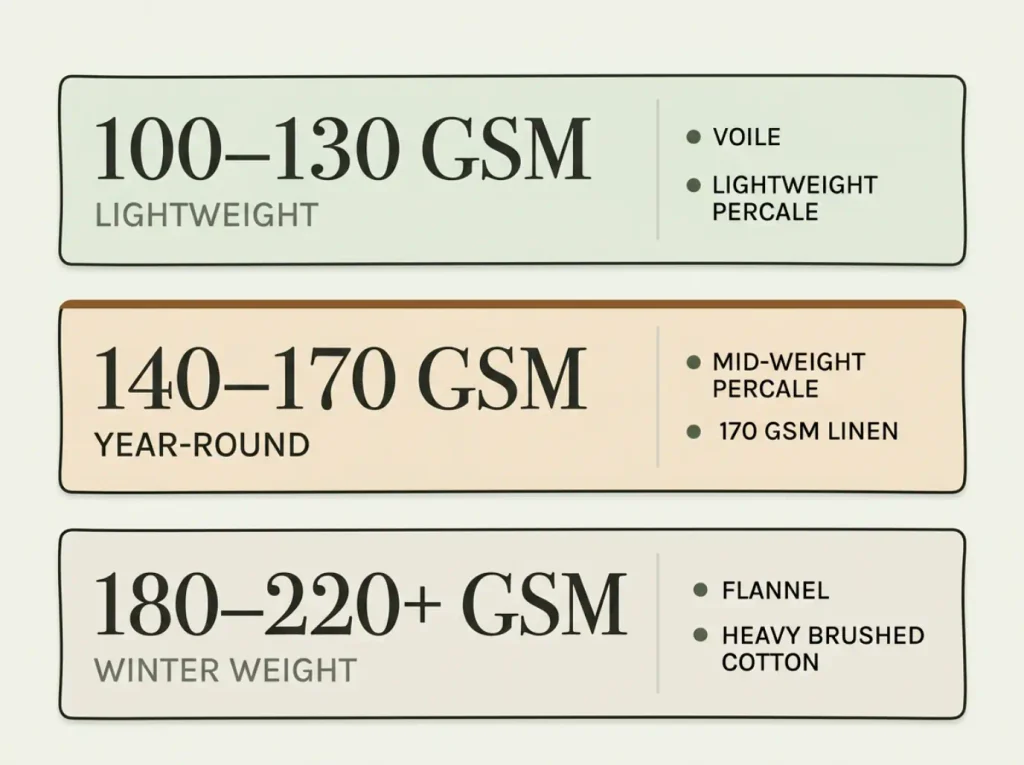
Weight is the one that matters most and the one you will almost never see printed. GSM, grams per square meter, is the real season label. Roughly 100 to 130 is lightweight, 140 to 170 is the year-round middle, and 180 to 220 and up is winter weight. Two cotton sheets with identical fiber content and identical thread count can sit two full GSM tiers apart, and the listing will call both of them breathable cotton without blinking.
Weave is the lever you can actually see, because percale and sateen are the same cotton interlaced two different ways. Percale goes one over and one under, all the way across, and that frequent interlacing leaves an open structure that air moves through. Sateen floats four threads over one, which packs the surface smooth and closed, and closed holds heat against you. Twill, the third weave you will meet on a bed, runs diagonally and sits between the two.
Percale’s working thread-count range is 200 to 400; sateen’s runs 300 to 600, and that difference is not a quality gap. It is a different fabric doing a different job.
Then there is ply, which is where the numbers start lying. Single-ply is the standard for warm-weather sheets. Counts pushed past 400 or 500 on a “single fiber” claim usually mean two or three thin yarns twisted together and each one counted.
Denser, heavier, warmer, and sold to you as finer. An 800-count sateen can sleep hotter than a 250-count percale, which is the opposite of what the box implies.
Some people who are sick of pilling and thin sheets are willing to spend a bit more the next time. They did not use the word GSM once. But that is exactly what they were shopping for: they had bought on the fiber name, gotten burned, and worked out on their own that the spec was the thing they had been missing.
When a listing will not give you a GSM, weigh the set you already own. A kitchen scale and a queen flat sheet is enough: divide the grams by the area in square meters and you have the number the manufacturer would not print. Do it once with the set you know sleeps right and you have a personal benchmark to shop against forever.
What Changes for Warm Months
The first genuinely warm night of the year is always a surprise, even though it arrives every year. The bed that was right in February is suddenly a problem at two in the morning, and the layer you are fighting with is the one touching you. That is why the sheet changes first: it is against skin all night, and everything above it is negotiable in a way the sheet is not.
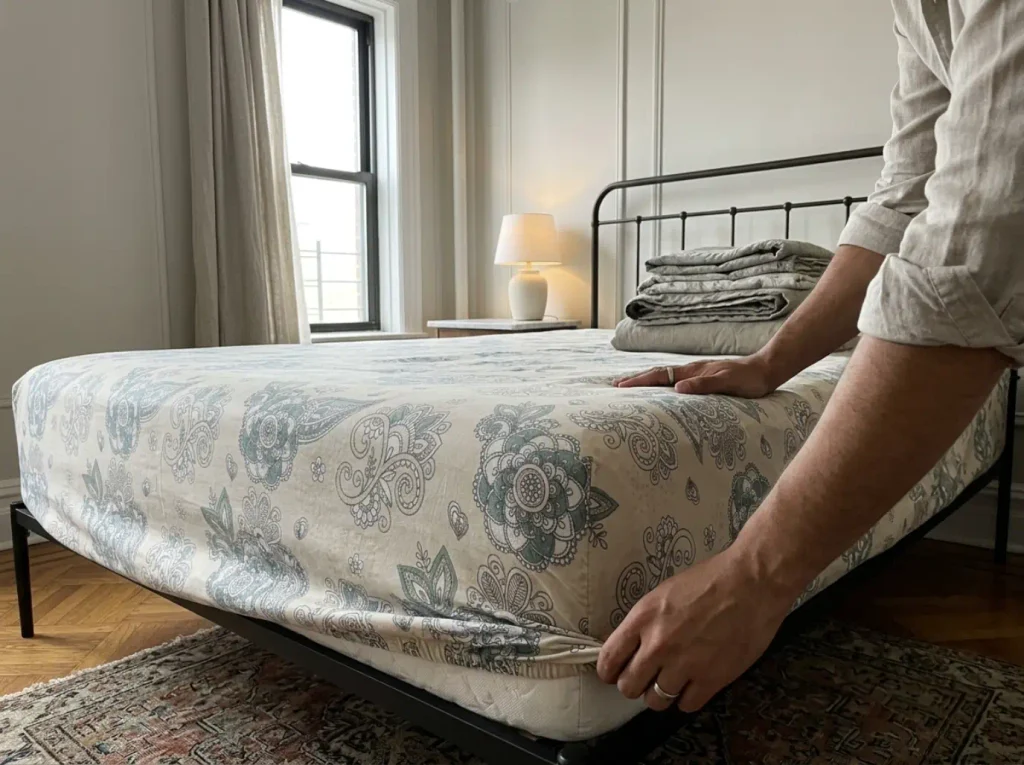
What you want in warm months is a plain weave in the low GSM tiers, single-ply, no brushed surface, and nothing with a sheen lying flat against you. That is the whole spec. The Feather & Stitch 100% Cotton Percale Sheet Set is a 300-thread single-ply percale with a 16-inch pocket, and the reason to point at it is not that it is special cotton — it is that the listing names its weave and its pocket depth instead of just saying breathable. Breathability is the word every listing reaches for and almost none of them define; here it means the gaps in a one-over-one weave, and you can hold the fabric to a lamp and see them.
Its flaw is real and worth knowing up front: percale crackles when it is new and takes several washes to soften, so anyone shopping for soft on day one will be disappointed on day one.
Linen behaves differently from cotton at the same weight, and this is the part the seasonal charts get wrong. The flax fiber is stiffer and the yarn coarser, so the fabric holds itself off your skin instead of clinging to it. Air moves in that gap. The DAPU 100% French Linen Sheets are one of the very few linen sets that print a number: 170 GSM, which lands in the year-round tier, not the summer one. That is not a contradiction. That is the reason linen crosses seasons instead of belonging to one. The flaw is the one everybody already suspects and nobody says out loud: the wrinkling is permanent, not a phase, and if you want the bed to look pressed at noon you should not buy linen at all.
Here is the part that undercuts half of this section. The percale that works in July is the same percale that works in November with something heavier over it. If the layers above the sheet are doing their job, the sheet does not have to be seasonal at all. Two sheet sets in rotation is a convenience, not a requirement.
The usual warm-weather move is not a purchase in the first place, it is subtraction: something comes off the bed. When you do want the piece-by-piece order, the piece-by-piece order for stripping the bed down for summer is its own article, because it is a list and this is a map.
What Changes for Cold Months
Flannel is not a fiber. It is cotton that has been run through a machine with fine wires until the surface fibers stand up, and that raised nap holds a layer of still air against you. That is the entire mechanism. There is no special warm cotton; there is ordinary cotton with a fuzzy face.
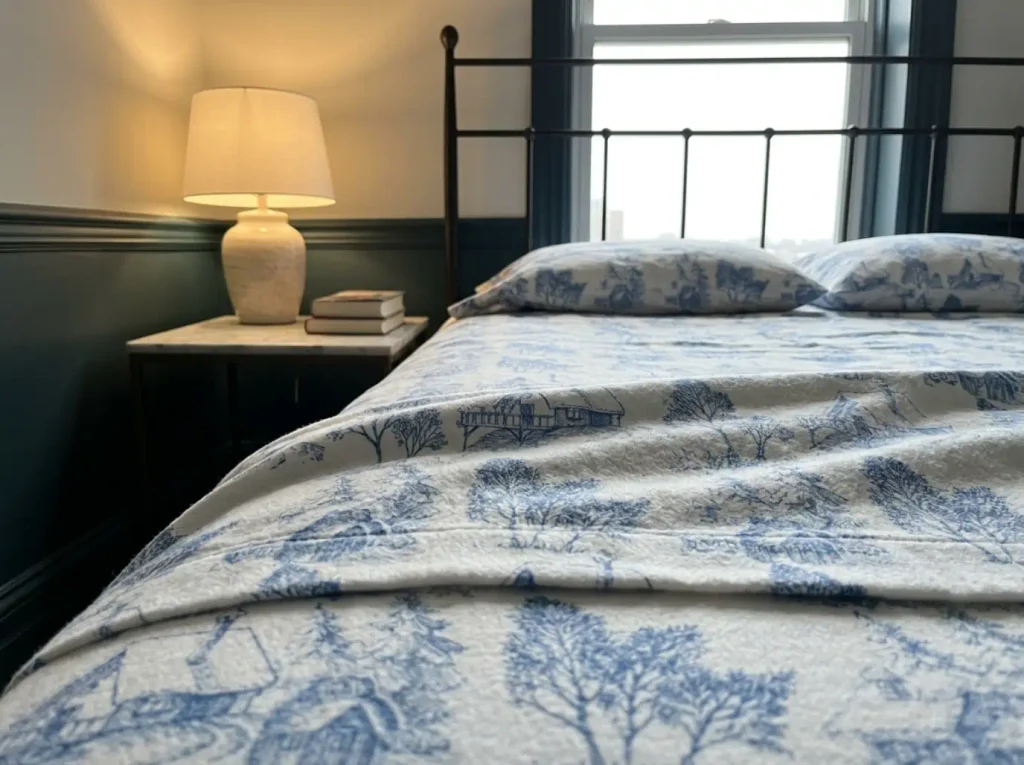
Which means the nap is also the failure. Short brushed fibers rub against each other in the washer and the dryer, work loose, and ball up. Pilling in flannel is a wear curve, not a defect, and anybody telling you a good flannel never pills is selling flannel. What pushes the timeline out is GSM and brush count, single-brushed against double-brushed, which is precisely why an unlabeled flannel set is a gamble with your November.
The pilling also shows up somewhere predictable before it shows up everywhere. Look at the middle of the fitted sheet, where the friction is, and at the top hem where the duvet rubs across it every time somebody turns over. Those two places go first, and they go while the rest of the set still looks fine, which is why people report flannel failing suddenly.
It did not fail suddenly. They were looking at the wrong part of it.
The Pointehaven 180 GSM 100% Cotton Flannel Sheet Set is double brushed, pre-shrunk, and prints 180 GSM on the listing, which puts it right at the entrance to the winter-weight tier. That printed number is the whole reason it is here: it is the difference between choosing and guessing.
Its flaw is the flaw of every brushed cotton ever made: it will pill. The higher GSM and the double brushing buy you seasons, not immunity. Many of the people asking for advice learned that the expensive way.
Wash flannel inside out and skip the dryer sheets. Fabric softener coats the nap and mats it down, which is the look people mistake for pilling in month two, and the tumbling face-to-face is what tears the loose fibers free in the first place. Line dry the first three washes if you can stand the stiffness, because that is where most of a flannel set’s lifetime pilling gets decided.
Flannel is not the only brushed option people reach for, either. Fleece traps more air and breathes far worse, so it runs damp; a wool blanket does the same job as flannel from above the sheet rather than against the skin.
There are two routes to a warmer bed, and only one of them costs money. A heavier weave is one. A heavier layer over an ordinary weave is the other. Before you commit to flannel for the whole cold half of the year, it is worth reading when flannel is worth it and when it is simply too much, because for a lot of bedrooms the honest answer is that it is too much.
The Layer That Does Most of the Work
Here is the bed that defeats people. They swap the sheets in October, they swap them again in May, and neither swap changes much, because the same heavy insert stayed on top of the whole thing for twelve months. The sheets were never the big variable. The insert carries most of the thermal mass on that bed, and changing the small variable while the large one sits still is rearranging, not adjusting.

The better arrangement is one all-season insert plus one blanket, and the reason is that it moves in two directions instead of one. Two seasonal inserts give you two fixed states, warm and warmer, and a swap day in between. An all-season insert with a blanket you can add or throw off gives you a range you can adjust at eleven at night without opening a closet.
The mechanism is additive and subtractive. Nothing has to be a changeover, and the duvet cover never comes off at all.
The Cuddledown Dreamstead Down Alternative Comforter is built for exactly that: an all-season fill weight inside a 100 percent cotton percale shell, which keeps the outside of it inside the same weave logic this article opened with: one over, one under, air moves. Fill power is the number to read here if the listing prints one: it measures loft, and loft is trapped air, which is the whole of a comforter’s warmth.
Its flaw is written into the words all-season. It is a middle, and a middle is by definition short of the extremes: at the peak of a real winter a genuinely cold sleeper will want more, and in July a genuinely hot one will still want less. If you are choosing between synthetic and the real thing, down against down alternative for warmth is the comparison that decides it.
One more thing about the top layer, and it is the reason it can afford to be the expensive piece. Medical guidance settles on washing sheets weekly, whatever the season, while the insert needs washing roughly twice a year. So the piece carrying most of the warmth is also the piece spending the least time in a machine.
It is not a laundry problem. It is a storage problem, which is a much easier problem to have.
Stacking two inserts into a single cover for winter loft is a move that can make a bed feel like an oven. Yes. The right answer is that one of them comes back out when it warms up.
The Free Move Before the Expensive One
You almost certainly have a browser tab open on a winter set right now. Close it for a week. There are three changes ahead of it that cost nothing, and in most bedrooms one of them is the entire fix.
- Take a layer off before you add one. The top sheet, the throw at the foot of the bed, the second pillow you sleep half on top of. Remove one. Give it a week before you decide.
- Add a single blanket over the set you own instead of replacing the set. One piece moves a bed a whole tier, and you can take it off at three in the morning without waking anybody.
- Turn the duvet back on one side only. A shared bed can run two temperatures under one cover, and this costs nothing and takes four seconds.

Only after those does buying enter, and when it does it should be one piece, not a set. The Utopia Bedding 100% Cotton Thermal Blanket is 350 GSM cotton in a waffle weave, and it is the cheapest single object that moves a summer bed toward a winter one. Its flaw is the weave itself: the honeycomb catches on rings, watch clasps and long nails, and one good snag pulls a visible loop.
A waffle blanket also does more than its weight suggests, and the reason is worth knowing because it is the same reason flannel works. The honeycomb structure traps air inside the pockets. It is the brushed nap’s trick, built into the weave instead of glued to the surface, which is why it does not pill the way a nap does.
Worth being clear about what you are buying: a bed blanket is sized to the mattress and tucks; a throw blanket is sized to a couch and will leave your feet out. People reach for the throw because it is already in the house, and then wonder why the fix only half worked.
Notice that the community arrived at this on its own, from the other end. The winter fix for two inserts is subtraction: remove one insert, and it is the same move played backwards. The whole seasonal rotation is one piece added and later taken away. If you still want to know how many sets you actually need to rotate, that math is its own article and it deserves to be worked properly rather than guessed at here.
The Layer Everyone Forgets
Somebody changes the sheets, changes the duvet, and the bed still sleeps hot. This happens constantly and the reason is almost always the same: there is a layer under everything that never moved and never gets mentioned in a seasonal-swap article.
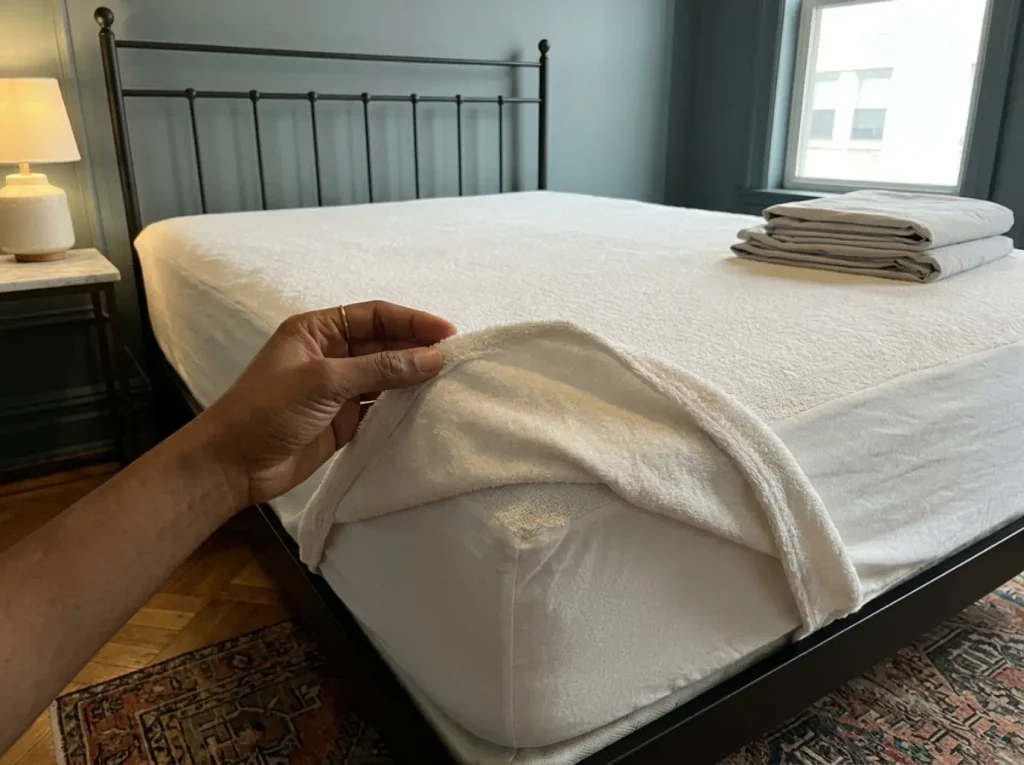
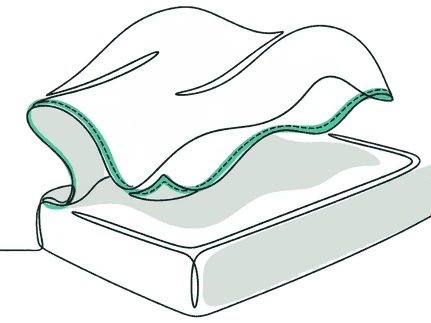
The mattress protector sits under the fitted sheet and directly on the mattress, which means every bit of heat and every bit of moisture leaving you has to cross it before it reaches anything else. It is the first thing in the stack and the last thing anybody looks at.
What decides whether it breathes is the backing, not the face. A TPU backing is a membrane that passes water vapor while blocking liquid. A vinyl backing does not pass vapor at all — it is a raincoat with a sheet on top of it, and no percale on earth can undo it. A quilted mattress pad is a different object with a different job, and a mattress topper is a third: none of them substitutes for the other two.
This is settled ground in the night-sweats side of this site, and it is worth carrying over here, because one wrong layer undoes three good ones and the protector is the one most likely to be that layer. The sheet is what you feel. The protector decides what reaches the sheet.
The Nestl Premium Cotton Terry Mattress Protector is a cotton terry face over a TPU backing, which is the construction that survives being checked twice a year instead of being replaced. Its flaw shows up at the corners first: the elastic loosens before the fabric wears out, and on a tall mattress or one with a thick topper it can start slipping off while the protector itself still looks new.
You do not need to swap the protector by season. You do need to check it at the two moments you would swap anything else, because that is when a backing that has gone stiff or started crackling under your hand gets noticed. A TPU membrane that has been through a hot dryer too many times gets brittle, and brittle stops breathing.
Run your palm across it flat while the bed is stripped. If it crinkles, it is finished.
Wash the protector on warm and dry it on low, always. High heat is what kills a TPU membrane, and it dies quietly: no tearing, no visible damage, just a backing that has gone crisp and stopped passing vapor. Most protectors that get blamed for sleeping hot were breathing fine when they arrived and got cooked in a dryer six months later.
The Calendar Is Not the Thermostat
Two people, same date on the calendar, one in a stone house in Vermont and one in an apartment in San Diego. October means flannel to the first and means nothing at all to the second. The month is not the input. Room temperature is the input, and the month and the room are only loosely related.

A climate-controlled apartment where the HVAC runs year-round barely has seasons at all; a drafty room with a single-glazed window has them twice as hard as the calendar says.
Bedrooms also have their own weather, independent of the house they sit in. The bedroom over the garage is the coldest room in winter no matter what the thermostat in the hallway reads. The one under the roof is the hottest in August by a wide margin. A thermostat measures one spot on one wall on one floor, and your bed is not standing there.
Some rooms simply run cold in a way no bedding fixes, and a bedroom that runs cold no matter what the thermostat says is a different problem with a different fix.
Airflow moves the answer further than fabric does, and it is free. A window cracked two inches overnight can shift a bed a whole tier, which is more than swapping from sateen to percale will do. This is the part I have changed my mind about: the standard advice is to solve a warm bedroom at the sheet layer, and after enough threads where somebody bought the cooling set and got nothing for it, the air in the room turns out to be the bigger lever nearly every time.
Which reframes the two switch dates. They are not dates at all. They are the two weeks in the year when you notice you are adjusting the covers every single night, pulling something up at two and pushing it off at four. That is your spring/summer change, and your fall/winter one, and neither of them lands on the same week two years running.
And the reliable signal is not how you feel getting into bed, because body temperature drops through the night whatever is on top of you. It is what the bed looks like at three in the morning. A duvet consistently shoved to one side is the room telling you before the calendar does.
A shared bed makes all of this concrete, because two sleepers in one room disagree about the exact same air. Thermoregulation is individual, and a hot sleeper next to a cold one is not a bedding problem you can solve with one duvet.
That disagreement is the reason two twin duvets under one cover exist at all: each side gets its own fill weight, and neither person has to win. Somewhere in the shoulder seasons the fabric question comes up on its own, usually as a question about whether linen actually holds up in winter, which has a real answer, and it is not the one most people assume.
Putting the Off-Season Set Away, and Getting It Back
November, the closet, the winter set unfolded on the bed, and the smell of the closet coming with it. There is a faint yellow shadow running across the fold line that absolutely was not there in March. This is the half of the rotation nobody writes about: a set spends six months of the year not on a bed, and what happens to it in those six months decides whether you have a rotation or a slow replacement cycle.
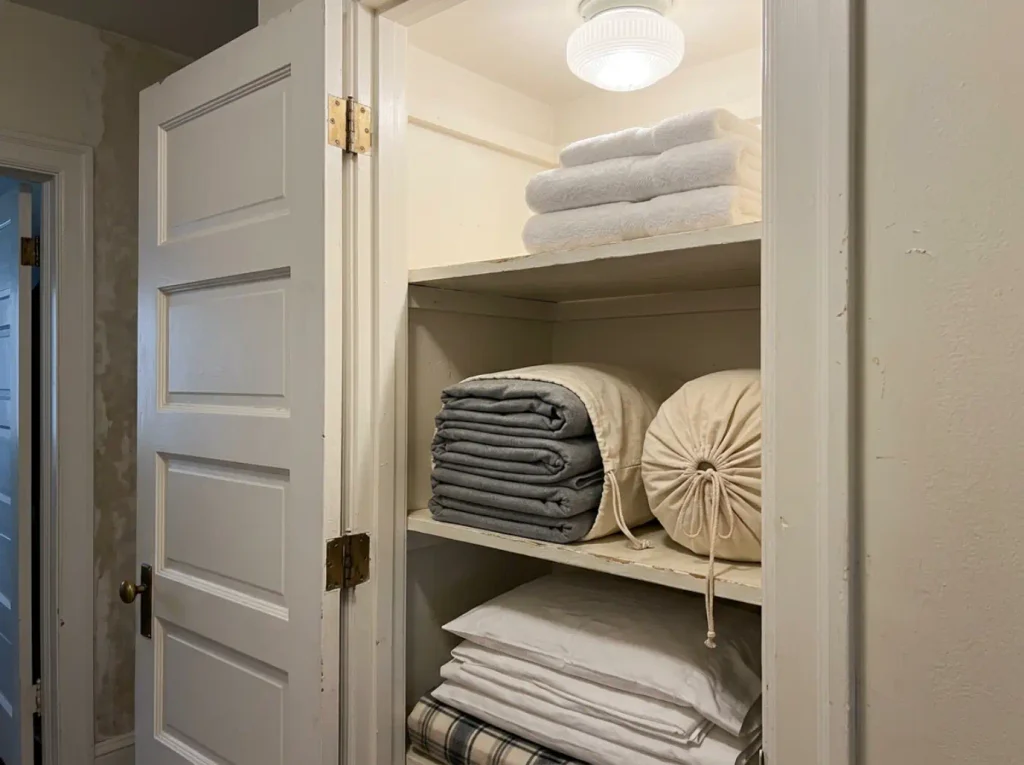
Wash the set one last time before it goes away, on a normal cycle, and dry it completely. This is not tidiness. Body oils and skin cells left in the fibers are what oxidize into those yellow marks over months, and they are what attracts pests to a folded stack. The set that comes out stained was clean-looking when it went in.
If you want the full sequence, the order that gets a set genuinely clean applies here exactly as it does after a bad week.
Off-season storage is where most of a set’s damage actually happens, and it is entirely avoidable.
Store it breathing. A cotton bag, a spare pillowcase, an open shelf, anything that exchanges air. A sealed plastic bin holds whatever moisture went in with the fabric and keeps it pressed against the fabric until spring, which is how a perfectly clean set comes out smelling closed.
And fold it along different lines than last year. A permanent crease is a fiber that has been bent in the same place for two seasons running, and it does not come back.
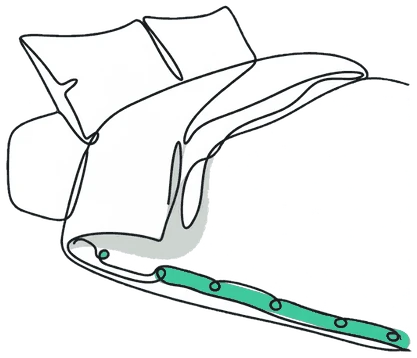
Coming back out, air the set for a day before it goes on the bed, then look at the hems and the fitted sheet’s elastic before you look at the fabric. That is where a stored set shows its age, and it is a different aging curve from a set in weekly use. The rotated set does not get twenty washes a year; it gets ten, so the weave stays fine for a long time while the elastic and the folds quietly give out. People throw out sets with perfectly good fabric because the corners stopped gripping.
While you are reading the tag, know what it does and does not cover. An OEKO-TEX Standard 100 certification, which tests for harmful substances across cotton, linen and viscose alike, tells you the finish chemistry on that fabric was tested. It tells you nothing whatsoever about GSM, weave or warmth.
A certified sheet can be the wrong sheet for January. Two different questions, one tag. And when it is January and you want the cold-weather bed assembled properly rather than mapped, the winter set built piece by piece is where that build happens.
Conclusion
The season is a weight and a weave, not a fiber. Read the GSM if the listing gives you one and weigh the set yourself if it does not, because the word on the front of the package is the least informative thing on it.
Change the top layer first. It carries most of the range on any bed, and the sheets matter less than whatever is lying over them. And do the free moves before the expensive one: a layer removed or a single blanket added settles more bedrooms than a second full set does.
After a season of weekly washes, look at the hem stitching and the fitted sheet’s elastic before you look at the fabric. On a rotated set those are what give out first, while the weave is still perfectly good. Rotate bedding for long enough and the elastic becomes your replacement clock, not the fabric.
Take the top layer off tonight and leave everything else exactly where it is. Sleep on it a week. If the bed turns out to be right, you were never buying a season — you were buying a layer.
Frequently Asked Questions
01How often should you change your bedding in the winter?
Weekly, the same as every other season. The cadence does not change with the weather, only the fabric does. The piece that actually changes seasonally is the duvet insert, and that needs washing roughly twice a year.
02What is the correct order for layering bedding?
From the mattress up: protector, fitted sheet, flat sheet, blanket, duvet. Nothing above that order is negotiable. The seasonal adjustment happens at the blanket and the duvet, never at the layers underneath them.
03Do you really need separate summer and winter sheets?
No. One mid-weight set plus one added blanket covers most climates without a second purchase. The case for owning two sets is comfort at the extremes, and how many you actually need is worked out in full in the how-many-sets article.
04Is linen or cotton better for changing seasons?
Linen crosses seasons more easily, because the stiffer yarn holds the fabric off your skin instead of clinging to it. Cotton wins on price and on softness. Either way the weight matters more than which fiber you picked.
05What happens if you do not wash sheets before storing them?
Body oils and skin cells left in the fibers oxidize into yellow marks over months, and they attract pests to the folded stack. One normal cycle and a complete dry before folding is what prevents both.




Tried it on your own bed?
No comments yet. Tell us what you changed, and what the sheet did after a few washes.