







What’s in here7 sections
Every linen listing says thermoregulating, and not one of them tells you what the fiber is actually doing. It is not a mood the fabric is in. Each flax fiber runs a central channel through a thick cell wall, and that channel holds a pocket of still air inside the yarn itself — the same pocket that moves air in July and holds it in January.
So the honest question about linen in winter is not whether the fiber works, because it does. It is which layer on your bed was ever going to do the warming. Here is what the fiber does, why the sheet is not that layer, what weight changes, what happens when one of you runs cold, and what an old set feels like in a cold room.
Quick Answer
Linen is warmer in winter than its summer reputation suggests, because the flax fiber is hollow and traps a layer of still air against the skin. But the sheet is not what does the winter work; the duvet fill on top of it is. Under a thin duvet, linen sleeps cold. Under wool or a heavier fill, it holds its own year-round.
What the Hollow Fiber Actually Does
The intro named the lumen. This is where thermoregulating stops being a word on a box and turns into a structure you can picture, and where it gets separated from the two other flax properties people keep confusing it with.
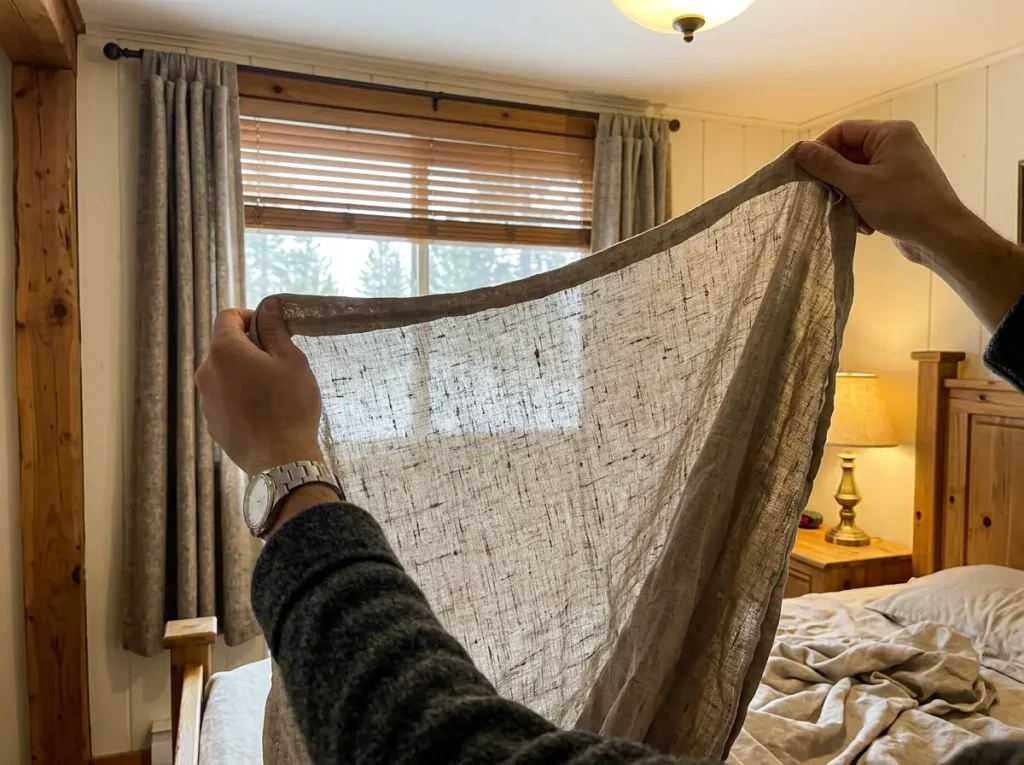
The tube inside the tube
A flax fiber is not a solid strand. It is a thick cell wall wrapped around a central channel called the lumen, and the fiber bundles themselves sit inside a stalk core that is also hollow. A tube inside a tube.
That matters because the air pocket lives in the yarn, not in the weave, which is why linen behaves the way it does even when the weave is fairly open. It is also why the comparison people reach for first, sateen, misses the point: a sateen floats four threads over one and changes how the surface feels and sheds heat, but it cannot put a channel inside the fiber. Cotton has a lumen too, and it collapses as the fiber dries and twists flat. Flax keeps its channel open, and that difference is the whole argument.
It survives processing, too, which is not obvious. Flax goes through retting to rot away the gum holding the fibers to the stalk and scutching to beat the woody core off, and neither step crushes the channel. What comes out is a long staple length — far longer than cotton’s — which is why linen yarn can stay coarse and strong without being spun tight. Silk and bamboo viscose both feel smoother against skin, and neither one has a hollow core doing this.
Why still air warms and moving air cools
Air is a terrible conductor of heat when it sits still and a good one when it moves. That single fact explains how one fabric does two opposite jobs across a year.
In July, linen’s stiff hand feel holds the fabric off the skin and its open weave lets the trapped air exchange with the room, so heat leaves you. In January, under a duvet, that same air stops moving and starts insulating. Nothing about the fiber changed between the two nights. What changed is whether the air had anywhere to go.
The lab version of this is less romantic and more useful. A 2014 comfort and performance study by the Alliance for European Flax-Linen & Hemp, run at CETELOR at the University of Lorraine, put linen against cotton, viscose and polyester and found linen retains heat better than viscose or cotton: moderate insulation, a genuine compromise across seasons.
Moderate. Not exceptional, not seasonal. That is the actual finding sitting underneath the marketing word, and it is a more modest claim than any listing makes.
New linen feels colder to the touch than cotton in the first ten seconds you get in, and that has nothing to do with how warm it will sleep. It is the stiff, un-softened hand pulling heat off your skin fast at the moment of contact. Give the bed four or five minutes before you judge it. Most people who decide linen is a summer fabric decide it before the bed has warmed at all.
The 20 percent that decides whether you feel cold
Here is the number that matters more in winter than in summer: linen absorbs up to 20 percent of its own dry weight in moisture before it starts to read damp to the touch. Cotton reads clammy well before that.
And in a cold room, dampness is what makes you feel cold, because a wet layer against skin pulls heat away far faster than a dry one, which is why the 3 a.m. clammy patch turns a bearable bed into a miserable one. Linen mostly does not produce that patch, and that is the moisture-wicking claim doing something measurable for once. This is not a brand adjective either; it comes out of the standardized moisture-regain tables textile labs use to test fibers like flax, the same family of standards used to check any cellulosic fiber.
One thing to keep separate while we are inside the stalk. Flax is close to non-elastic, with almost no recovery when you bend it, which is why linen creases and then keeps the crease. Same fiber, different fact, and it has nothing to do with warmth. If that is the property you came for, why linen creases and stays creased is its own answer.
The Sheet Isn’t the Layer Doing the Warming
So the fiber does hold air. Which is exactly where most winter advice goes wrong, because it lets you believe the sheet is generating the warmth. It isn’t. And once you see which layer is, the whole question changes shape.
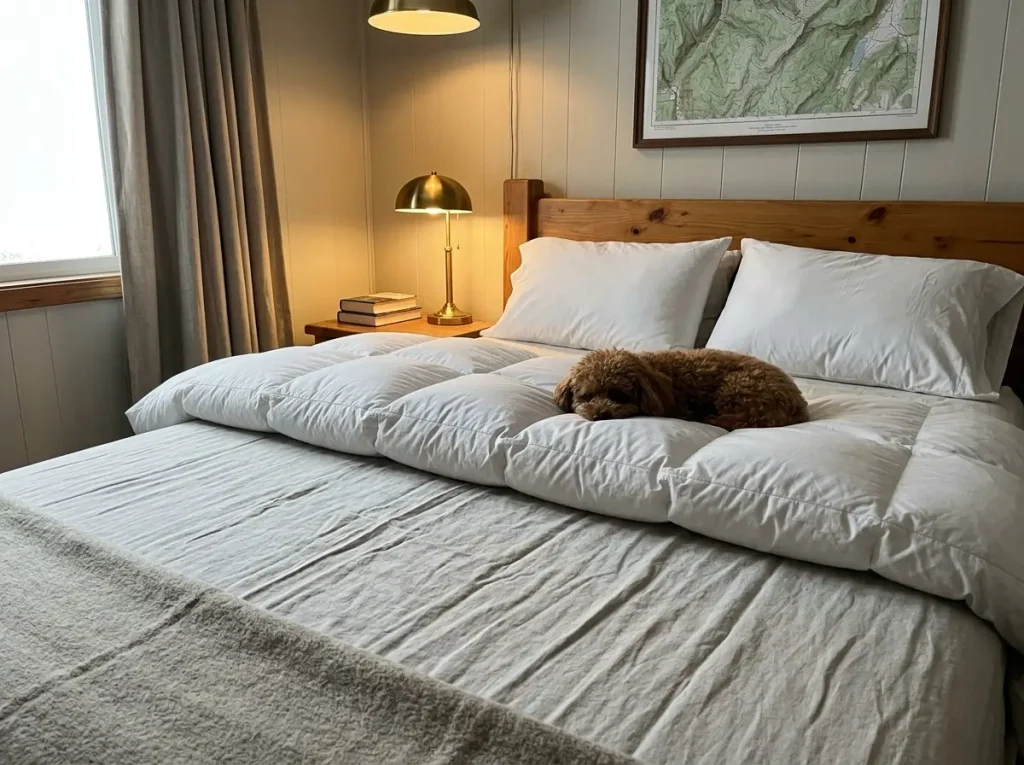
What a duvet does that a sheet cannot
Run the arithmetic of a bed. A fitted sheet is a fraction of a millimeter of fabric lying against your skin, and the flat sheet over it adds another. A duvet inside its duvet cover is several centimeters of lofted fill holding still air in place.
Both work by trapping air; only one of them has room to trap a meaningful amount of it. The insulation on your bed is almost entirely in the second one, and no fiber story about the first one changes that ratio. It is also why a TOG rating exists for duvets and for nothing else on the bed.
Which gives you the failure before the fix. A thin summer duvet over linen sleeps cold no matter what the sheet label promises, and the person who swapped to linen for winter, kept their summer duvet, shivered for a week and concluded linen doesn’t work in the cold was measuring the wrong layer. The variable worth changing is the fill, not the fiber underneath it.
Change the fill, not the fiber
Before you buy anything: you probably do not need different sheets. Put a heavier duvet, or a second one, or a quilt you already have folded in a closet, over the linen you own. Add the wool layer only on the side of the bed that needs it, and sleep on that for a week.
That costs nothing, it takes one evening, and for most people who think they have a linen problem it settles the question. Check one more thing while you are at it: a waterproof mattress protector under the sheet traps everything the linen just moved away from you, and it undoes this entire argument from below.
If the week tells you the fill really is too thin, that is the piece to replace. The Cuddledown Dreamstead Down Alternative Comforter is the sensible pairing for a midweight linen sheet: a synthetic fill at roughly 500 fill-power equivalent inside a 235-thread percale shell, OEKO-TEX Standard 100 certified. The percale shell matters as much as the fill, because a tight shell holds the moisture the linen just moved away from you.
Its flaw is in the name: it is an all-season duvet, not a true winter one. If your bedroom genuinely drops, this is the base layer, not the ceiling. For the full stack in the order it goes on, the order the winter layers actually go on covers the fill-power side of this properly.
Why a dry sheet is a warm sheet
The sheet’s real winter job is staying dry against skin. A sheet that holds sweat turns the duvet’s trapped warmth into a cold, damp layer sitting on top of you, and that is where linen’s 20 percent finally earns its keep. Not in July, when everyone talks about it, but in January, when a clammy sheet under a warm duvet is the specific thing that wakes you.
The tell that you got the layers backwards is waking warm at the shoulders and cold at the hips. That is the duvet doing its job where it is draped and nothing at all where it has slid off. A sheet problem would feel the same everywhere.
Worth noting that nobody in the r/BuyItForLife threads on linen frames replacement by season. Posters report sets lasting 18 months, two years, “4ish years”, counted in wash cycles and wear rather than in winters. The sheet was never the seasonal variable in the first place.
Weight Changes the Answer, and the Label Rarely Says It
Two sheets can both say 100 percent linen and behave nothing alike in a cold room, because the fiber mechanism is identical and the amount of it per square meter is not. That number is on almost no package.
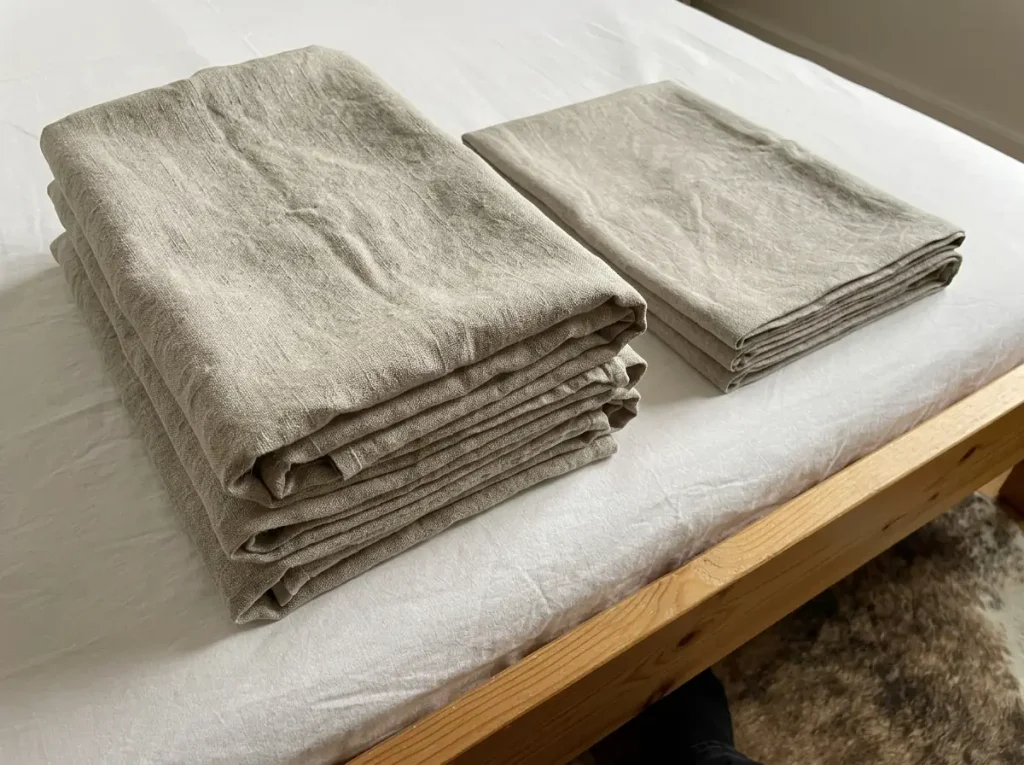
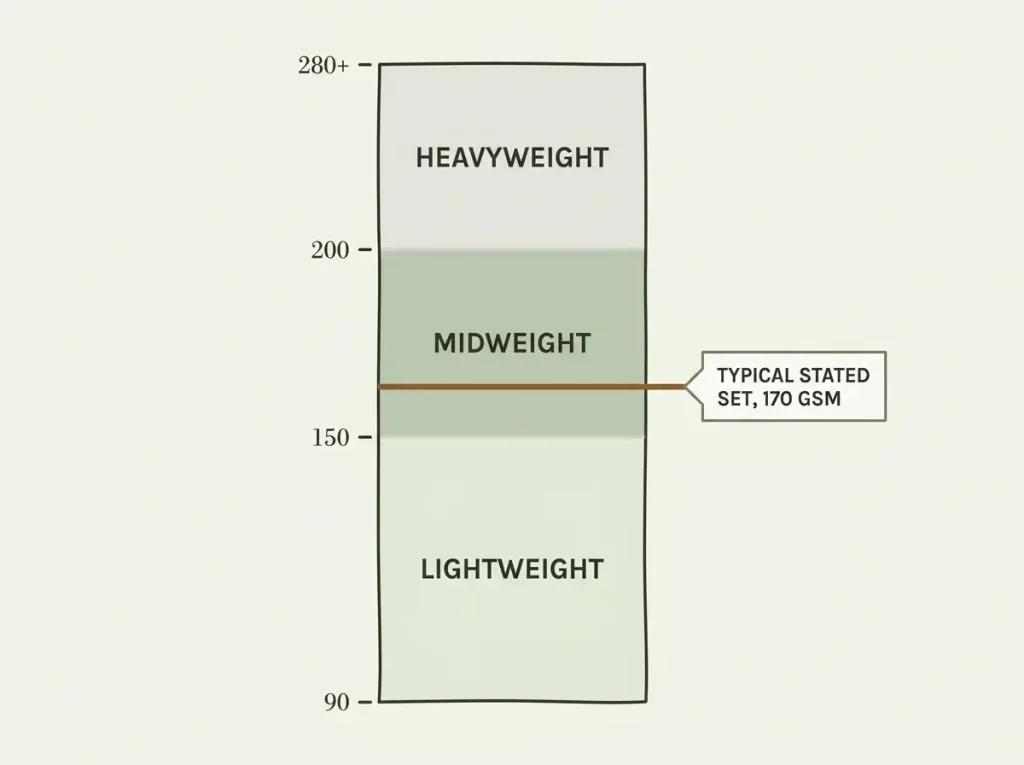
The three weight bands
Roughly 90 to 150 GSM is lightweight. Roughly 150 to 200 is midweight. From 200 up you are into heavyweight. Same fiber, same lumen, different mass, and therefore a different amount of trapped air per square meter of bed.
Weight is also the number seasonal bedding advice skips entirely, which is odd, because it is the only figure on a linen page that predicts anything at all about winter.
A gauzy summer-weight linen simply has too little mass to slow convective heat loss, and that is the honest reason a linen set can sleep cold. Not the fiber failing. The weight being wrong for the job you handed it. If you want the argument for why heavier sets cost what they cost, what you are paying for when the GSM goes up makes that case separately.
What “European Flax” is actually telling you
Now take the label apart. European Flax, the Masters of Linen mark that sits alongside it, Belgian flax, French linen: these tell you where the flax was grown and, in the case of the certified schemes, that it was traced along a chain from field to yarn. All useful. None of it predicts warmth.
Wirecutter’s own linen testing sorts sheets into light, mid and heavyweight classes and says roughly the same thing about origin claims: they are about provenance, not performance. An origin badge on a 110 GSM sheet is a true statement about a fabric that will still sleep cold.
Listings that print a figure at all tend to land mid-band. The DAPU 100% French Linen Sheets state 170 GSM on the page, which is one of the few times you get to check a linen set against a chart instead of guessing by photo, and 170 sits squarely in the midweight band. Its flaw is exactly that: 170 GSM is midweight, not heavy. If you genuinely sleep cold, the linen is not the layer that will fix it, and the duvet on top is.
The Sijo Stone Washed Organic French Linen Bed Sheet Set is the GOTS-certified alternative and arrives stonewashed, so part of the softening is already done at the factory. New linen is still coarser than cotton, though, and that does not change until several cold washes in.
One thing neither page settles for you: pocket depth. Linen shrinks a little on its first hot-adjacent wash and a fitted sheet cut shallow will start popping off a tall mattress by winter, which reads as a cold-night problem and is really a fit problem. Check the stated depth against your mattress plus any topper before you check anything else. And a Fair Trade Certified or GOTS mark on either page is about how the set was made, not about how it sleeps.
How to weigh the set you already own
Before buying by weight, weigh what you have. A kitchen scale and one pillowcase will tell you more than the product page did: weigh the case, measure it, and divide grams by square meters.
A standard 20 by 30 inch case is about 0.39 square meters of fabric per side, so double it. A 60 gram case is around 78 GSM of very light linen; a 130 gram case is comfortably midweight. Five minutes, no purchase.
Midweight linen takes about five minutes to warm up under you where cotton takes about one. That window is where people decide the bed is cold and get up to fetch a blanket they did not need. If you are testing a new set in winter, get in and stay in for ten minutes before deciding anything.
And if what you actually want is the seasonal verdict, the specific weight at which a linen set earns its place on the bed from November to March, then the weight threshold that decides whether linen stays on the bed all winter settles that one rather than repeating it here.
When One of You Runs Cold and the Other Doesn’t
Everything so far assumes one person’s answer settles the bed. It rarely does. And the hollow-fiber argument turns out to help exactly one of the two people sleeping on it.
Who the hollow fiber actually helps
Straight version: the lumen and the moisture regain help the hot sleeper. Less clamminess, air with somewhere to go, sweat handled before it turns into a cold patch.
For the cold sleeper they do essentially nothing, because the sheet was never the insulating layer and a fiber that manages moisture well does not generate heat. What linen does for the hot sleeper specifically is a whole argument of its own; the point here is that it is only half the bed.
Which means the linen sheet is not the thing in dispute. Both of you can keep it. What differs is what goes on top of each side. And I will be honest about the provenance of that conclusion: no community source addresses linen specifically for the shared bed, so this is reasoned from the fiber mechanism rather than lifted from somebody’s thread.
Two duvets, or one duvet and a wool layer
Two arrangements work. The first is two duvets of different fill weight on one bed, which is what half of Europe already does and which stops the nightly tug entirely. The second is one shared duvet plus an extra layer on the cold sleeper’s side only. Try the free version first: fold a spare duvet double over one side for a week and see whether the difference is the fill weight or the draft.
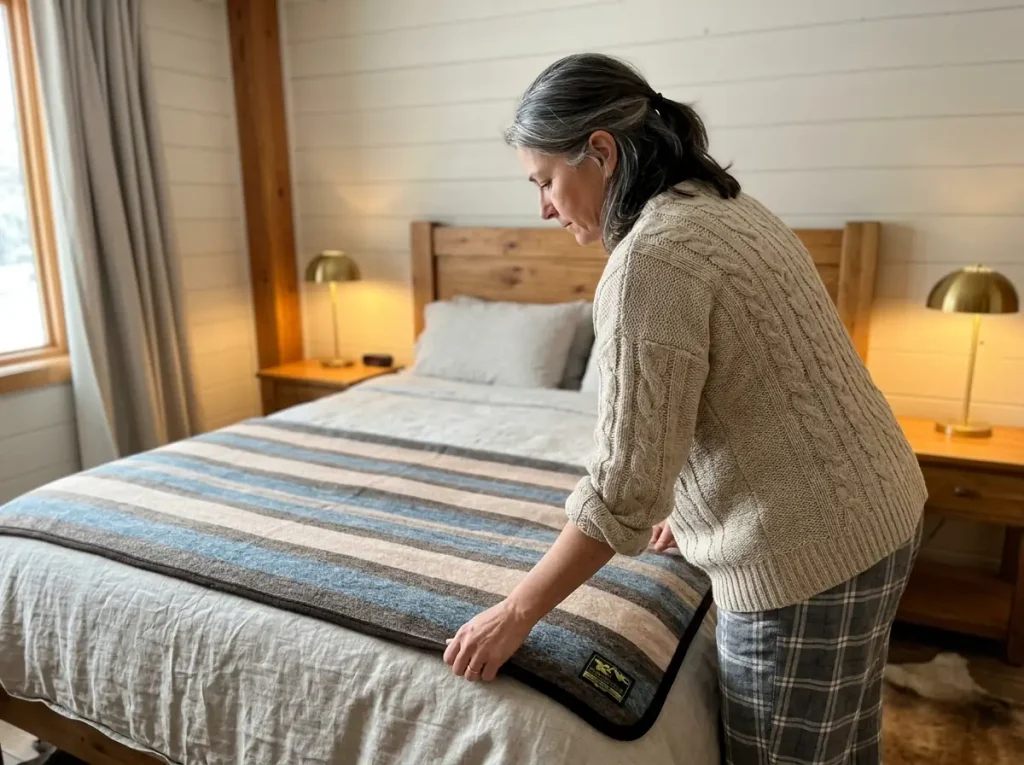
If it is the fill weight, wool is the layer to add, because it holds air at low mass and does not seal moisture in the way a synthetic throw does. A Desert Breeze Alpaca & Sheep Wool Blanket is 50/50 alpaca and Peruvian sheep wool, woven in Peru, and it goes over the linen on one side and changes nothing for the other sleeper.
Its flaw: it is an added blanket, not a different sheet. If what you want is to fix the whole bed rather than one side of it, the linen was never the problem.
One detail nobody warns you about. Adding weight to one side changes the drape on that side, so the shared duvet stops sealing along the middle of the bed and a channel opens along the spine. That gap is what actually makes the cold sleeper cold, more than the missing loft is. Tuck it before you add more weight.
Before adding anything to a cold sleeper’s side, run a hand down the middle of the bed once you are both under the duvet. If you can feel the room in that channel, the fix is closing the gap, not buying loft. A shared duvet that sits flat along the spine is worth more to the cold half of the bed than a heavier fill that still leaves the channel open.
What an Old Linen Set Feels Like in a Cold Room
Every claim in this article treats linen as a category, and a linen set is not one thing across its life. The sheets you bought stiff and cool to the touch are a different fabric by their second winter, and the change cuts both ways.
The months it takes to soften
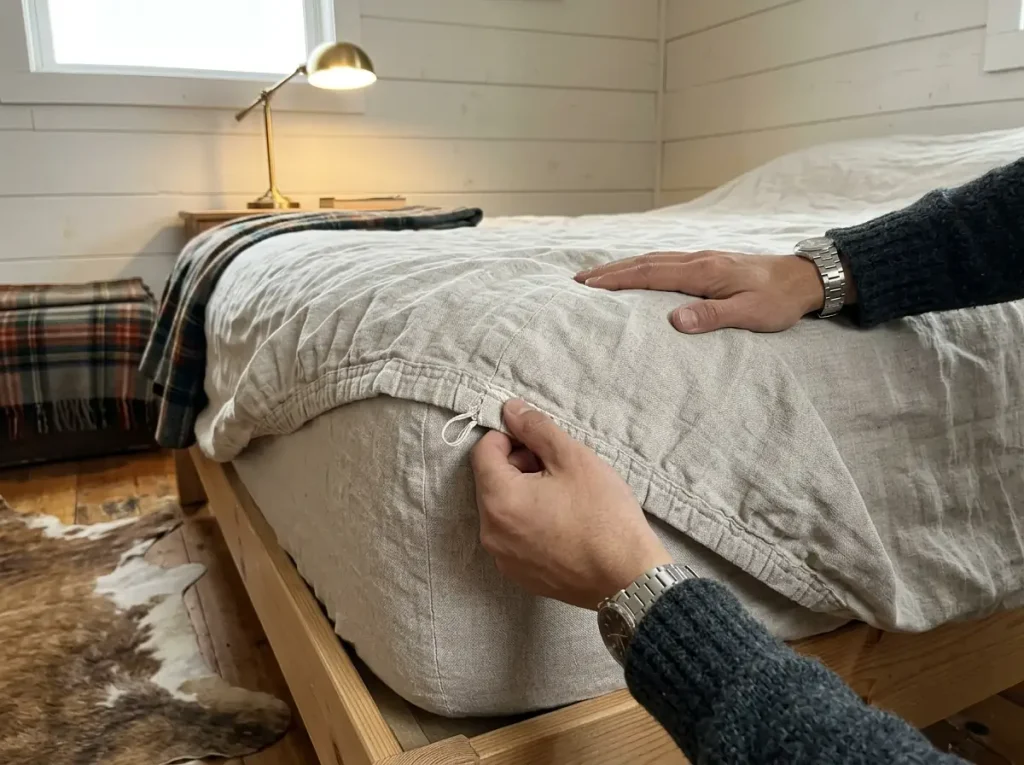
Flax fibers arrive thicker and stiffer than cotton, and repeated cold washes are what relax them. The community words for the new state are sandpapery and scratchy at first, and the people using them are not exaggerating. But they are describing a phase, not a defect, and it takes months rather than one wash.
The shedding that comes with those first weeks is real and temporary too: short flax fibers working loose from a weave looser than cotton’s, heaviest early and then gone. Buyers who expected a cotton-like unboxing read it as a fault. It is the set settling, and it is a different thing from fraying, which happens at the hem and much later.
Softer and thinner at the same time
Here is the part that cuts the other way, and it is the one nobody mentions. An aged set is softer and thinner. Softer means it drapes closer to you, rumpled rather than standing off the mattress, and closer contact reads warmer. Thinner means slightly less air held, which reads cooler.
The net for most people is warmer, because contact beats a small loss of loft. But do not expect a well-worn lightweight set to out-insulate a heavier new one. The mass is gone and no amount of drape brings it back. How long a linen set actually lasts, by weight has the durability side of this in full.
The wash that gets you there
The routine is free and short:
- Cold or lukewarm water, always. Hot water does not speed the softening, it just wears the fabric.
- Air-dry, or tumble on the lowest heat with wool dryer balls, which agitate the fibers apart better than heat does.
- Half a cup of baking soda in the load instead of a softening detergent; fabric softener coats flax and undoes the moisture behavior you paid for.
That is it. No specialty product.
And if after a full winter of correct layering you decide linen genuinely is not it, brushed cotton flannel is the honest swap, and a double-napped set like the Pointehaven 180 GSM 100% Cotton Flannel Sheet Set gains you warmth and gives up what linen was doing with moisture, so it is not a free swap but a different trade. Whether the fiber was worth it in the first place is a bigger question, and whether linen is worth it in the first place answers it properly.
The Short Version
Three things to take away. The hollow flax fiber is real and it does hold still air, but it holds a fraction of what the duvet holds, so change the fill before you change the sheet. Weight decides whether linen reads warm at all: midweight and up in winter, and a gauzy summer linen was never going to do it whatever the fiber does. And if one of you runs cold, the fix goes on top of one side of the bed, not underneath both of you.
After a season of washes, look at the hem stitching at the fitted-sheet corners rather than at the field. The field will have softened and will be fine; the field is almost always fine. The hem is where a linen set actually ends, usually at the corner you sit on to put your shoes on.
Tonight, put a heavier duvet over the linen you already own. Sleep on it a week. If you are still cold, then go weigh the sheets.
Frequently Asked Questions
01Is linen warm enough for winter?
Yes, in the midweight band and under a proper duvet. On its own under a thin duvet, no. The hollow flax fiber holds a layer of still air, but the fill above it does the bulk of the insulating work.
02Do linen sheets feel cold?
They feel cool for the first few minutes and then warm with you. A new set pulls heat off the skin quickly at the moment of contact because the un-softened hand sits flat against you. That eases as washes soften the fabric.
03What are the disadvantages of linen sheets?
It arrives coarse, it sheds for the first weeks, it creases permanently, and it costs more per set than cotton. The coarseness and the shedding both resolve with repeated cold washes. The creasing does not, and it never will.
04Which fabric is best for a winter bedsheet?
For warmth alone, brushed cotton flannel. For warmth without the clammy patch, midweight linen. Flannel’s napped surface holds more air at the skin; linen handles moisture better. Either way, the duvet above matters more than the choice between them.
05Why don’t hospitals use linen sheets anymore?
Cost and laundering, not performance. Industrial laundries wash at high temperature and high volume, and cotton-polyester blends survive that cycle cheaply and press flat. Linen costs more per set and comes out of the machine creased.



Tried it on your own bed?
No comments yet. Tell us what you changed, and what the sheet did after a few washes.