







What’s in here7 sections
- Why a Blanket Warms You, and Why Weight Is the Wrong Measure
- The Materials, Ranked by What They Hold
- What Each Material Looks Like After Twenty Washes
- The Size Nobody Checks, and the Bed Shared by Two
- What Each One Costs You — Care, Allergies and the Electric Shortcut
- Pick the Bill You Are Willing to Pay
- Frequently Asked Questions
You stand in the aisle, you pick up the thickest thing on the shelf, and you assume the thickness is the warmth. Months later the story people tell about that purchase is always the same: the thin, tightly woven twill blanket that looked unimpressive on the shelf was quietly doing more work than the plush one. A blanket does not make heat.
It holds still air against you, and the fiber that holds the most air per gram wins, which is why the useful ranking of the best warm blankets runs on warmth to weight and not on how substantial something feels in your hands. What follows is that ranking, material by material, with what each one looks like after a winter of washes and what every single one of them will cost you.
Quick Answer
Ranked by heat held per ounce, not by thickness:
- Wool and down lead: crimp and cluster trap still air in three dimensions
- Brushed cotton follows: the nap traps a thinner layer of the same air
- Fleece trails at equal weight, and catches up only by adding bulk
- Nothing here is fiber magic: it is air volume, held still
- Three things override the ranking: a shared bed, a down allergy, and what your washing machine will do to wool
Why a Blanket Warms You, and Why Weight Is the Wrong Measure
Thickness is the wrong measurement, so here is the right one. A blanket is a container for still air, and the fiber decides how much air that container holds per gram of itself. Everything ranked further down this page is a consequence of that one sentence, which is also the reason the warmth in winter bedding comes from air, not from weight is the argument this whole cluster is built on rather than a slogan.
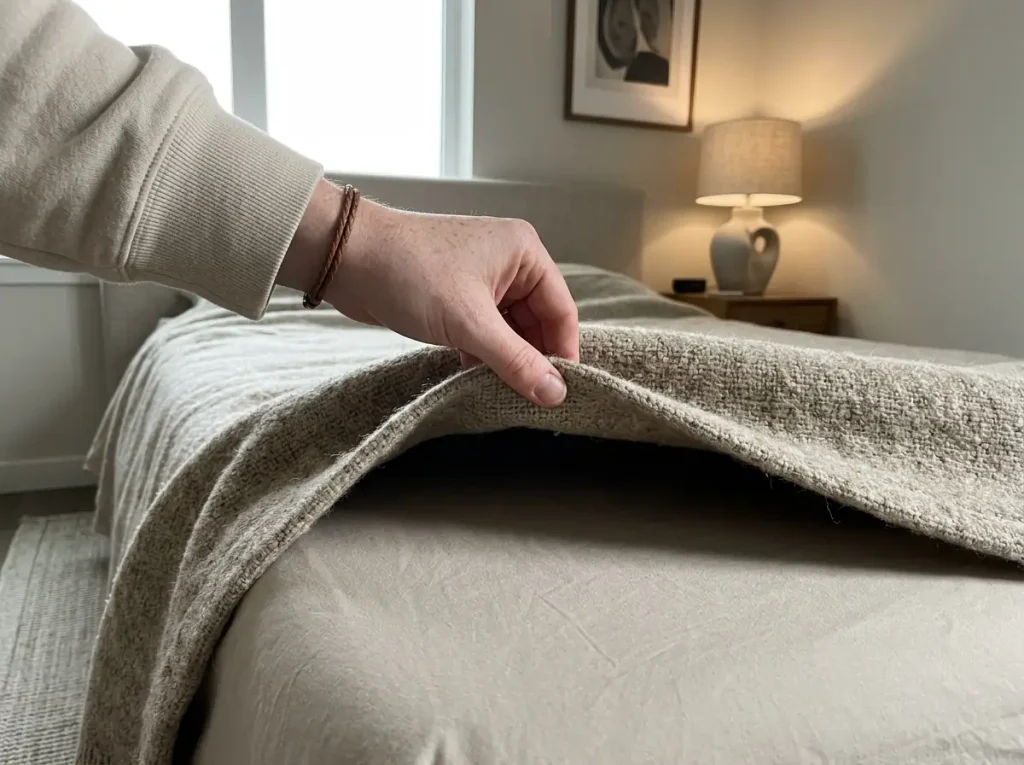
Almost everyone has the friend with two blankets that make no sense together: one wool piece that weighs nothing and warms the whole bed, one fleece throw like a rolled-up rug that somehow does less. Nothing about that is mysterious once you look at the fiber instead of the bulk.
Crimp, Nap and the Air They Hold
Wool fiber does not run straight. It crimps: a natural wave along its length that holds neighboring fibers apart instead of letting them pack flat, and that structure creates air pockets in three dimensions around every single fiber. Woolmark, the wool industry’s own certification body puts the consequence plainly: wool has one of the highest insulation-to-weight ratios of any fiber, natural or man-made.
Now compare that to a flat weave or a knit. Those trap air too, but essentially in one plane, a layer between you and the blanket, and not much more. That is the entire difference between the light blanket that wins and the heavy one that loses at the same weight on the scale.
Not fiber magic. Geometry.
Brushing does the same job mechanically. Running a woven cotton over rollers with fine wire lifts the ends of the fibers into a raised nap, and that nap holds a thin layer of still air the flat surface never had. Which is why a brushed fabric at a lower GSM can out-warm a heavier flat weave. The brushing built the air layer, the raw fabric weight did not.
Where the Fleece Argument Is Actually Right
The usual position at this point is that synthetic fleece is simply the inferior fiber, and that is where the argument overreaches. An independent insulation test by Big Skies found that fleece, once thickened to match wool’s weight, actually loses about 12% less heat than wool does. Read that carefully, because it is the honest complication: the crimp advantage is real, and it is weight-dependent, not absolute.
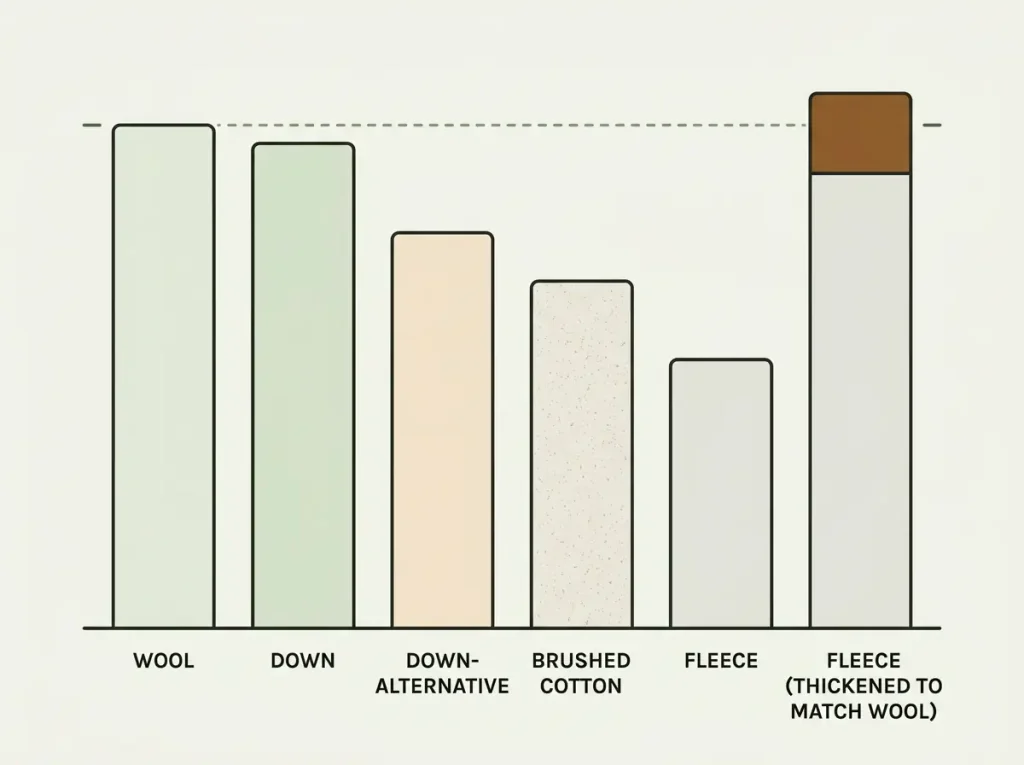
So a thin fleece throw underperforms a wool blanket not because polyester is a lesser fiber, but because that throw was never built up to match wool’s trapped-air volume. Give fleece enough mass and it competes. The catch is that the mass is the whole cost: you carry it, you store it, and it presses down on itself in a stack.
Why GSM on the Label Answers a Different Question
GSM measures grams per square meter. It tells you how much material is there, and it says nothing at all about how that material is arranged. A 350 GSM honeycomb cotton and a 350 GSM flat sheeting are the same weight of the same fiber and they are not the same blanket, because one of them is holding air in pockets and the other is lying flat.
The r/Bushcraft version of this is blunter and older than any of the marketing: no wool blanket will be anywhere near as warm, for the weight, or pack as small, as a down comforter. That is the community saying warmth-per-weight is the yardstick, in the plainest language available.
The same blanket is warmer over a flat sheet than straight against skin, and it costs nothing to test. The sheet adds one more still-air gap, so the count of layers matters roughly as much as which fiber you bought. Nobody selling blankets mentions this, because it is the one upgrade that involves no purchase: try your current blanket on top of the flat sheet for three nights before you conclude the blanket is the problem.
The Materials, Ranked by What They Hold
The mechanism gives the order, so this is where it gets spent. Five materials, from the one that holds the most air per gram down to the one that needs the most bulk to keep up, and what each is genuinely good at, which is a different question from which one wins.
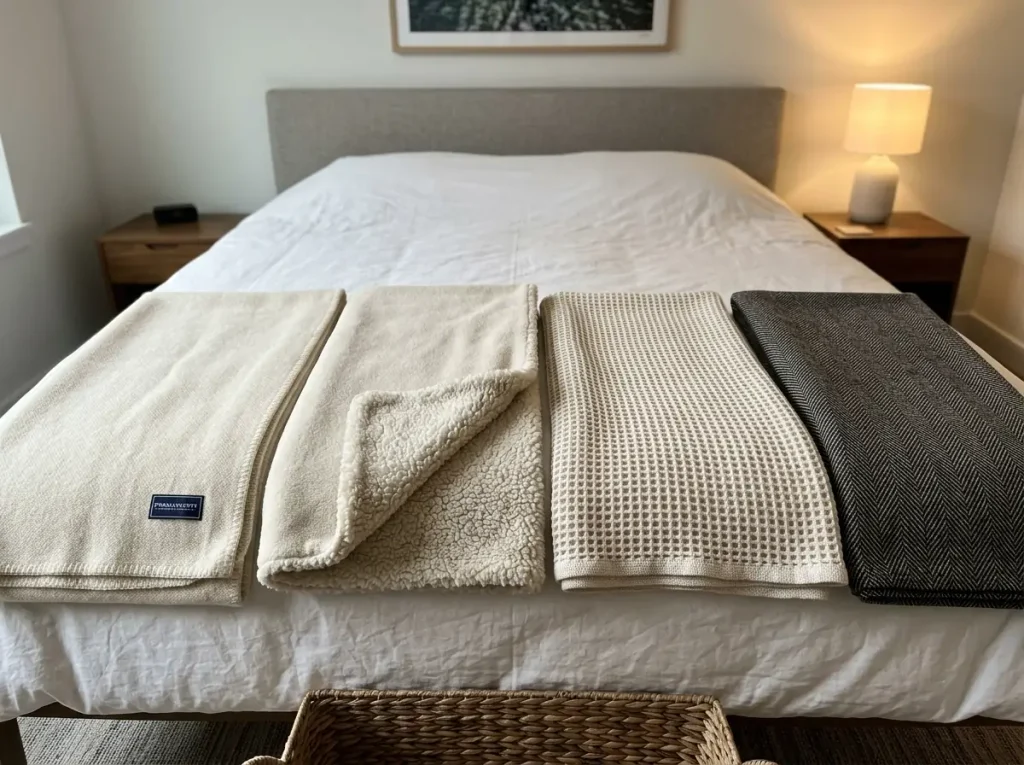
Picture the actual moment: three blankets over one arm, and a decision that has to be made before the store closes.
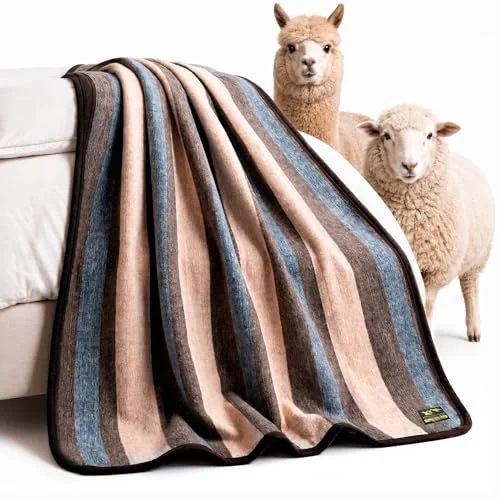
Wool, and the Alpaca Blend That Fixes the Itch
One distinction first, because it decides which of these you are shopping for: a throw blanket is sized for a sofa and one person, while a bed blanket has to clear the mattress on both sides. Everything below is the bed blanket.
Wool tops the ranking on warmth to weight, and it does something the synthetics do not: it breathes. Its breathability is the point: wool is moisture-wicking in the literal sense, moving damp through the fiber instead of letting it sit between you and the fabric, which is why a wool blanket rarely goes clammy on a mild night and why a hot sleeper tolerates one better than the bulk suggests. The r/BuyItForLife regulars say it in one line: high-quality wool regulates temperature better than any fleece, and the split in those same threads is always about the itch, never about the warmth.
The itch is worth being specific about, because it is not evenly distributed. A wool blanket touches skin in exactly one place all night: the top edge, against a bare arm and the side of the neck. That is where straight wool announces itself.
It is why alpaca-and-wool blends exist at all. The blend is not a way to make wool cheaper. It is a fix for the one contact point that decides whether the blanket stays on the bed.
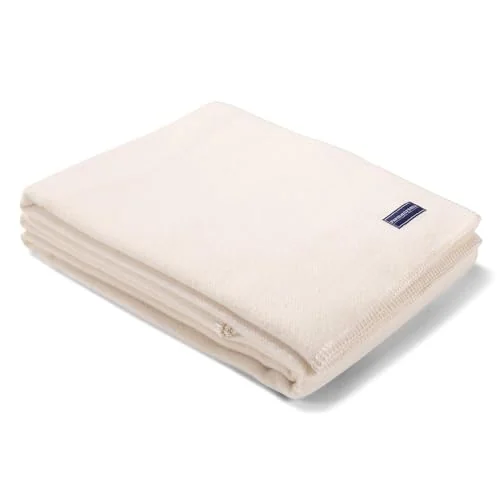
If the top edge against a bare arm is what stops you buying wool, the blend is the answer rather than a compromise, and it sits a tier below the reference pick without leaving the fiber family.
Down sits alongside wool at the top for a related reason. Each cluster is a three-dimensional tangle of filaments rather than a straight fiber, so it holds a huge volume of still air for almost no mass, the highest warmth-per-weight in this entire list when it is real down. The down-alternative version trades away some of that in exchange for two things people actually want: it washes without special handling, and it carries no allergen. That trade gets its own section further down, because it deserves more than a clause.
Fleece and Sherpa, Priced for the Bulk They Need
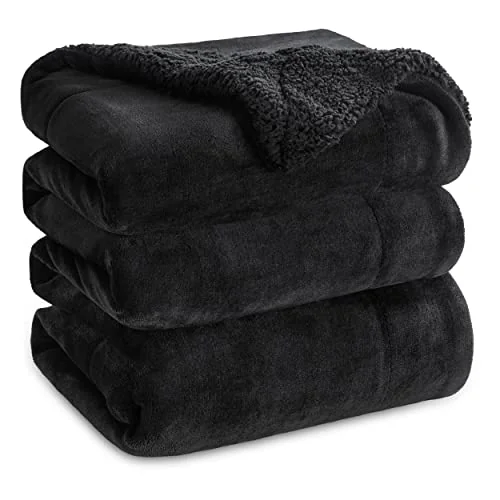
Fleece and sherpa are the cheapest route to a lot of warmth, provided you accept the bulk and the static. Both are polyester knits with a raised pile; sherpa’s pile is denser and longer, which is why the same brand can put one of each on opposite faces of one blanket and have them feel like different products. The softness words on those listings describe the pile and nothing else: minky is a short dense polyester pile, chenille is a yarn with the fuzz spun into it, and neither word tells you a single thing about how much air the blanket holds. Per the equal-weight test above, fleece is genuinely competitive once it has been thickened enough.
It just needs more of itself to get there.
The honest framing is that fleece is not a worse fiber, it is a bulkier route to the same destination, and how you feel about that depends entirely on whether the bulk bothers you. Worth noting where the boundary of this ranking sits: a quilt holds its air a different way, in stitched channels, and a loose blanket that you pull, fold and rearrange is a different object from a layer whose loft is stitched into place.
Cotton, Where the Weave Decides More Than the Fiber
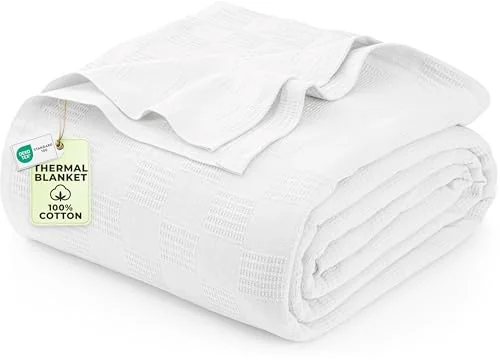
A brushed cotton blanket sits in the honest middle: no static, no special wash cycle, and a warmth that depends almost entirely on construction. A honeycomb or thermal weave builds pockets into the cloth itself. A brushed surface lifts a nap. A flat plain weave does neither, and no amount of cotton in it will make it warm.
That is the sentence to carry out of this whole section. With wool and down, the fiber does most of the work. With cotton, the weave does, and two cotton blankets of identical weight can land in completely different places on this ranking depending on how the threads were arranged. Which is also why cotton is the material where reading the construction on the label actually pays.
What Each Material Looks Like After Twenty Washes
Every pick above was judged on a shelf, which is the one place a blanket never has to prove anything. This section takes the same materials to the far side of a winter of washing, where two of them change character entirely and one of them changes in the direction nobody expects.
The moment that matters is the second winter: the blanket comes out of the closet and it is not quite the blanket you remember putting away.
Wool Goes Linty, Then Settles
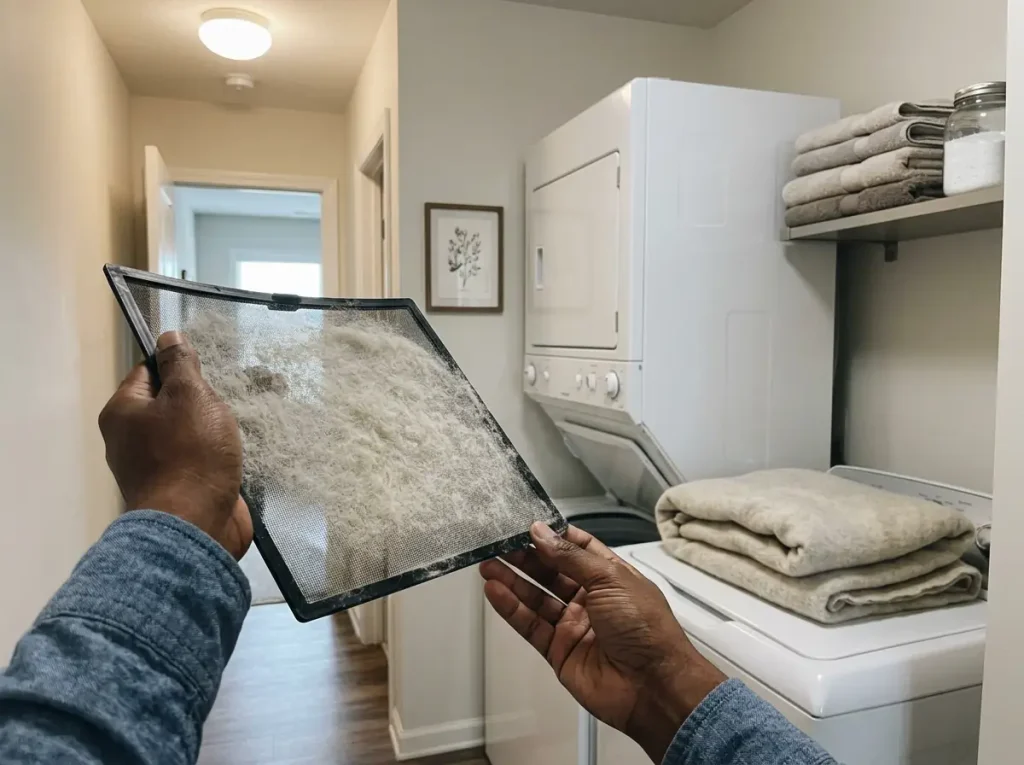
New wool sheds. For the first several washes it fills the dryer’s lint trap, and if you have never owned a wool blanket you will read that as a defect and start composing a return. It is not.
The loose fiber ends left over from spinning and weaving work their way out over the first handful of cycles, and then the blanket settles — the community’s own word for the point where shedding stops and the fabric reaches its long-term texture. After that it does not leave fuzz on the sheets at all.
The wet-animal smell follows the same arc and has a simpler cause: wool holds a lot of water, and damp wool smells like what it is. The smell is gone the moment the blanket is genuinely, completely dry, which on a queen-size piece laid flat takes longer than you think. Judged new, both of these look like flaws. Judged at wash twenty, they were a break-in period.
Fleece Goes Staticky, and Cheap Fleece Goes Flat
Static is not a quality signal in fleece, it is a fiber property, and it shows up every time. The best-performing fleece in Wirecutter’s testing, the one that resisted pilling better than anything else they tried, still needed a dryer sheet on every load. That is the ceiling, not the failure case.
The failure case lives in the three-star reviews of cheap sherpa listings, and the story there is remarkably consistent: soft and warm the first month, flattened and pilled by the time the cold actually sets in. What happens is that the pile crushes where you grip it and pull it up, and crushed pile is exactly the trapped air from section one being permanently squeezed out. That flatness is not cosmetic damage. It is the blanket losing the mechanism that made it warm.
Cotton Starts Wrinkled and Improves
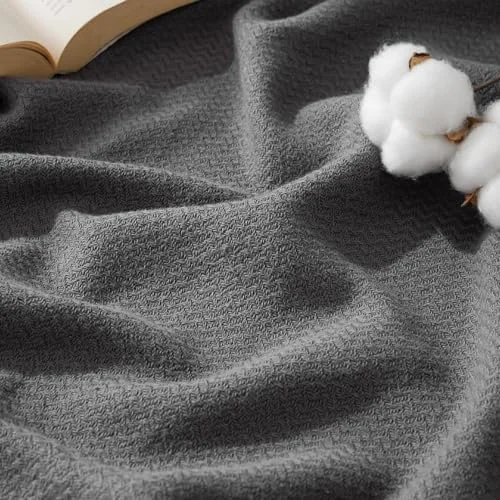
Cotton runs the opposite curve, and it is the one material where the first impression is actively misleading. A tightly woven cotton in a twill weave or a herringbone looks its worst brand new, because the tight weave shows every crease from the packaging, and it loosens up and wrinkles less over time. Send that one back in week two and you returned it precisely at its low point.
Construction beats fiber, and the cleanest proof of it comes from inside the same fiber. A cotton woven to imitate a garter stitch went through five washes keeping its texture with no pilling and one or two pulled threads. A four-layer cotton gauze in the same test was still shedding heavy lint at wash five.
Same fiber. Opposite outcomes. The word “cotton” on the label predicted neither one.
That gives you a rule worth more than any single pick: an open weave snags. A waffle weave, the stacked gauze layers of a four-layer coverlet, anything with visible gaps. On long nails, on pet claws, and on the latch inside your own washer and dryer. It belongs under something sturdier, as a middle layer, not exposed on top of the bed where it will catch on everything for a season and then look it.
A pulled thread on a woven cotton blanket is almost never a wash failure and almost always a snag from the machine’s own drum latch. That is why open-weave picks age visibly faster than their fiber suggests, because the damage is mechanical, not chemical. Wash an open weave inside a zipped mesh laundry bag and the entire problem disappears, which is a small purchase that saves a large one.
Below are the two cotton blankets that sit on opposite sides of that rule, and the free advice comes first, because if your open-weave blanket is currently on top of the bed, moving it underneath the duvet costs nothing and fixes most of what is wrong with it. Brushed cotton behaves the same way in sheets, where the nap and the GSM tell the same story about construction over raw weight.
The Size Nobody Checks, and the Bed Shared by Two
Everything above assumed the blanket fits. On a shared bed with a modern mattress that is the assumption that fails most often, and this is the section that can save you from buying anything at all.
Size Up for a Deep Mattress, and a Topper Counts
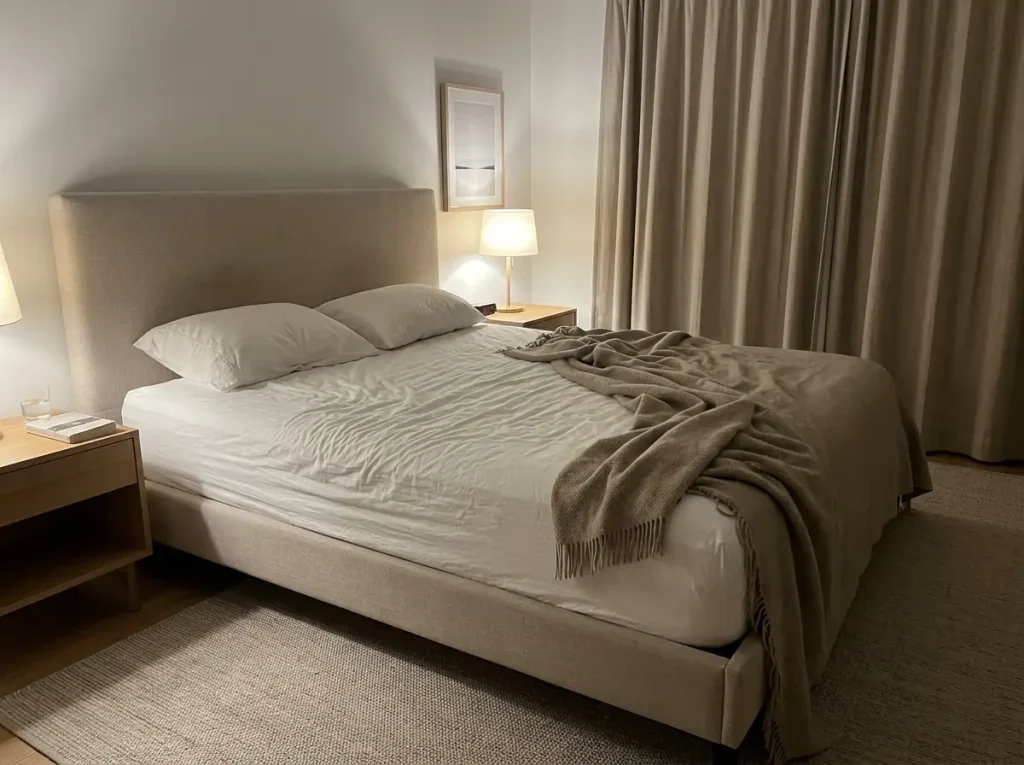
King is the size most likely to run narrow, which sounds backwards until you look at what mattresses have done. In testing, a king plush-loft blanket barely covered the sides of a 10-inch-deep mattress, and a king twill blanket was too narrow to tuck under my 10-inch-deep king mattress. Ten inches is not a deep mattress by current standards. It is roughly the shallow end.
So the rule is simple and it is free: on anything thicker than a standard 10-inch mattress, size up one level regardless of what the label says. And a topper counts toward that thickness. The blanket does not know the difference between four inches of mattress and four inches of foam sitting on top of it, it only knows how far it has to reach.
Roomy Enough for Two, or It Gets Pulled All Night
The sizing standard for a shared bed is not a preference. A blanket has to be roomy enough for two people to enjoy, so they don’t have to fight over it all night, and undersized is the single most common cause of the 3 a.m. tug-of-war that both people blame on each other.
Here is the part that actually surprises people, though. A blanket tucked in on one side has quietly stopped being shared bedding. It has become one person’s, because the untucked sleeper now has to pull against the weight of the mattress to get any of it, and pulling against a mattress wakes the other person every time. The tug-of-war is usually created by how the bed was made, not by how big the blanket is.
That fix costs nothing and takes four seconds: stop tucking, and let the blanket sit loose on top where either person can move it.
Two Light Blankets Instead of One Heavy One
The other shared-bed problem is temperature, not territory, and it shows up as one partner running too warm under a wool blanket plus a comforter while the other is still cold. No single blanket solves that, because it is wrong for both people in opposite directions.
Two lighter blankets, one per sleeper, beats one heavy one whenever the two of you disagree about temperature, the same logic behind the two-duvet arrangement half of Europe already sleeps under. It also has a side benefit the single-blanket setup cannot offer: an air gap between two thin layers holds more heat than one thick layer of the same total weight, so the cold sleeper can stack both when the room drops. That’s it. No purchase required to test it, if you already own two blankets.
Worth remembering that any of this sits inside a bigger picture: the blanket is one layer of a colder room’s whole stack, and in a genuinely cold bedroom the layering order matters as much as the blanket, because a bed that is cold from the mattress up will stay cold no matter how good the top layer is.
What Each One Costs You — Care, Allergies and the Electric Shortcut
Warmth-per-weight picks the material and size makes it usable, which leaves the part everybody else writes as a footnote: what each of these blankets asks of you once it is actually on the bed.

Washable Wool Means Cold and Gentle
“Machine washable” on a wool label is true and it is not a permission slip. Machine washable wool means cold water at 86°F or below, the lowest spin setting your machine has, a wool-specific detergent, and lay flat to dry. Not tumble dry low, which is still heat, and not even a hanging air dry.
High heat and a fast spin are what cause the shrinkage and felting people report, not the washing machine as such. Felting is the wool scales locking together under heat and agitation, and once they have locked, nothing releases them.
Laying it flat matters for a reason that has nothing to do with shrinking, and it is the detail that catches people who did everything else right. A wet wool blanket is heavy, and hung over a line it stretches under its own weight, and it comes back a different shape and a different size than it went in, having never shrunk at all.
The Allergy Trade, and What Replaces Down
Down’s cost is the allergen, and it is the one trade on this list with a clean substitute. A real down blanket carries the highest warmth to weight on this page and the one problem money cannot solve. If down triggers a reaction for either person in the bed, the honest answer is not a better down or a tighter shell: it is a synthetic fill that gives most of the warmth-to-weight without the exposure. That comparison plays out in more detail as down against its alternative in a duvet, where fill power and shell construction change the math, but for a loose blanket the decision is simpler.
The Electric Blanket Is a Pre-Heat, Not a Layer
The electric blanket deserves neither the sales pitch nor the ban it usually gets. The number worth knowing comes from the Electrical Safety Foundation International’s electric-blanket fire guidance: electric blankets and heating pads are involved in roughly 500 fires a year, and almost all of those involve units more than ten years old. That is a maintenance statistic, not an indictment of the category: the fire safety question is about the age of the unit and the habit around it, not about the brand on the controller.
Which means the habits matter more than the brand. Never run one unattended or while you are actually asleep, never fold it while it is on, because a fold concentrates heat exactly where the wire bends, buy only units tested by a nationally recognized testing laboratory, and replace it after about a decade whether or not it still works.
That leaves the practical question of how to use one, and the answer comes straight out of the mechanism at the top of this page. An electric blanket makes heat. A wool or cotton blanket holds it.
So the correct arrangement is to run the electric layer for twenty minutes before you get in, turn it off, and let the trapped air in a proper blanket keep what it made. You get the warm bed without the all-night current, which is also the honest version of whether the heated blanket beats simply adding a layer.
Store wool folded loosely in a breathable storage bag of cotton or linen, never in a vacuum-sealed storage bag. Compression is what flattens the crimp, and flattened crimp is exactly the trapped air you paid for. A wool blanket that spent six months under vacuum comes out thinner than it went in and takes weeks of hanging to recover, if it recovers. The plastic bin is also a moth invitation the cotton bag is not.
Fleece’s cost was already priced in two sections ago: the static, every load, and in the cheaper tiers the flattening that ends the blanket’s useful life before anything visibly wears out. And cotton’s cost is the snag, which is a placement decision rather than a purchase one.
Pick the Bill You Are Willing to Pay
Rank by warmth-per-weight, not by thickness. The fiber that holds air in three dimensions, wool’s crimp and down’s cluster, wins at equal weight, and the plush thing on the shelf is usually bulk standing in for loft. Fleece gets there too, it just charges you volume for the privilege.
Buy the size up if the mattress is deep or the bed is shared, and stop tucking the blanket in on one side. That combination is free and it fixes the most common complaint anybody has about any blanket on this list, which is not that it was not warm enough but that it was not there at four in the morning.
And every material sends a bill.
Wool charges a careful wash and a break-in period that looks like a defect. Down charges the allergen. Fleece charges static and bulk. An open-weave cotton charges snags and asks to live underneath something.
Pick the bill you are willing to pay, because there is no material on this page that does not send one.
The wash-twenty check: after a full winter of washes, look at the surface under a lamp. Wool that has stopped shedding into the lint trap has settled and is finished changing. That is the blanket you now own for years. Fleece that has gone flat and shiny where you grip and pull it is done, and no wash brings the pile back, because the air pockets that made it warm have been crushed rather than dirtied.
Before you buy anything at all: move the blanket you already own on top of the flat sheet instead of under the duvet, and leave it untucked so either person can pull it. Give it a week. If the bed is still cold, the material genuinely is the problem, and now you know which one to reach for and what it will cost you.
Frequently Asked Questions
01What is the warmest type of blanket?
Wool and real down hold the most heat per ounce, because both trap still air in three dimensions rather than in one flat layer. Fleece can match them, but only once it is thick enough to make up the difference in bulk.
02Is a heavier blanket warmer?
No. Weight measures material, not trapped air. A light wool blanket regularly out-warms a much heavier fleece throw, and a brushed cotton with a deep nap can beat a heavier flat-woven one at a lower GSM.
03What is the warmest blanket for extreme cold?
Layers beat any single blanket. Two lighter blankets with an air gap between them hold more heat than one thick one of the same total weight, and they let you take half of it off when the room changes.
04Are wool blankets hard to wash?
Machine-washable wool needs cold water, the lowest spin and a wool detergent, laid flat to dry. The shrinking people report comes from heat and a fast spin, not from the machine itself.
05Why does my new blanket shed so much lint?
New wool fills the dryer’s lint trap for the first several washes and then settles, and that is a break-in phase, not damage. A four-layer cotton gauze can keep shedding much longer, which is a construction problem rather than a fiber one.




Tried it on your own bed?
No comments yet. Tell us what you changed, and what the sheet did after a few washes.