

What’s in here10 sections
- Why Three Blankets Still Leave You Cold at 4 a.m.
- Warmth Is Trapped Air, and Every Fabric Traps It Differently
- Fill Power, GSM and Tog Measure Three Different Things
- What Actually Goes Where, From the Mattress Up
- Warm at Bedtime and Cold at 3 a.m. Are Two Different Problems
- One Bed, Two Temperatures
- What to Change Before You Buy Anything
- What a Winter of Washing Does to All of It
- The Three Things Worth Remembering
- Frequently Asked Questions
You are already sleeping under three blankets and you still wake at four in the morning with your shoulders cold. Adding a fourth is the obvious move and it is the wrong one, because the thing that keeps you warm is not the fabric at all: it is the still air held inside it. Fibers conduct heat away from you. The pockets of trapped air between them are what resist it, which is why a lofted layer that weighs almost nothing can beat a heavy one, and why the order your layers go on decides more than any single purchase labeled warmest bedding for winter.
What follows is the mechanism, then the three numbers on the packaging and which one actually means warmth, then the build from the mattress up, then what a season of washing does to all of it.
Quick Answer
Warmth is trapped-air volume, not fabric weight, so three compressed blankets sleep colder than one lofted duvet. The order the layers go on, from the mattress up, decides more than which single warmest product you buy. And what wakes most cold sleepers at 3 a.m. is moisture sitting in a non-wicking layer, not a shortage of blankets.
Why Three Blankets Still Leave You Cold at 4 a.m.
The pile-on instinct is not stupid. It is just aimed at the wrong variable, and the hour you wake up is the clue that says which variable it missed. Everybody who sleeps cold has done the same thing at some point: gone to the closet, pulled out one more blanket, and thrown it on top. It works for about an hour.
The question this section answers is what happened between midnight and four.
Compression Is the Enemy, Not Thinness
Start with what a blanket physically does.
The fibers themselves conduct heat away from your skin; the still air trapped in the spaces between them is what resists that transfer. A structure’s entire job is holding air against you without letting it circulate away, and the textile trade has a name for the pockets that do it: dead air space. Fiber has a far higher thermal conductivity than the air caught between the fibers, which is the whole trick in one line, and it is also why breathability and warmth are not opposites here: the layer has to hold air still without sealing moisture in. Which means the useful measurement is not thickness, it is trapped-air volume.
Three heavy blankets press down on each other. That pressure squeezes out exactly the air that was doing the work, so the stack ends up holding less still air than a single well-lofted duvet would. More weight, less warmth — a genuinely counterintuitive result and it is the single fact the entire winter bedding aisle is built to avoid mentioning.
Your Own Temperature Curve Is Half the Story
The bedding did not get worse at four in the morning. You got colder. Through the night the sleeper keeps shedding core heat outward to the hands and feet, and the sleeper keeps shedding heat through the night, bottoming out in the early morning is the physiological curve underneath every 4 a.m. wake-up story.
The layers you went to bed under have to work hardest at precisely the hour your own furnace is running lowest.
And overshooting is as real as undershooting. Loft alone does not decide how warm a duvet feels, and a very high fill power can still feel warm in a cool room. That is not the sound of somebody who solved a problem, it is somebody who bought past it. Neither failure is fixed by adding.
The cold that wakes you is rarely uniform, and where it sits is the diagnosis. A cold band across the shoulders and upper back while your feet under three layers are perfectly fine is a moisture problem, not an insulation one — that band is where the sheet stayed in contact longest. Uniformly cold from the minute you got in is the opposite, and it is the only one more blankets will fix.
Warmth Is Trapped Air, and Every Fabric Traps It Differently
Once warmth is a question of air rather than mass, the fabric names on the packaging stop being brands and start being structures. Three of them do measurably different things with the same amount of cotton, and none of the guides that recommend them will tell you how. This is where a bed stops being a shopping list and starts being physics you can feel with your hand in a store.
Flannel: a Nap Full of Air Pockets
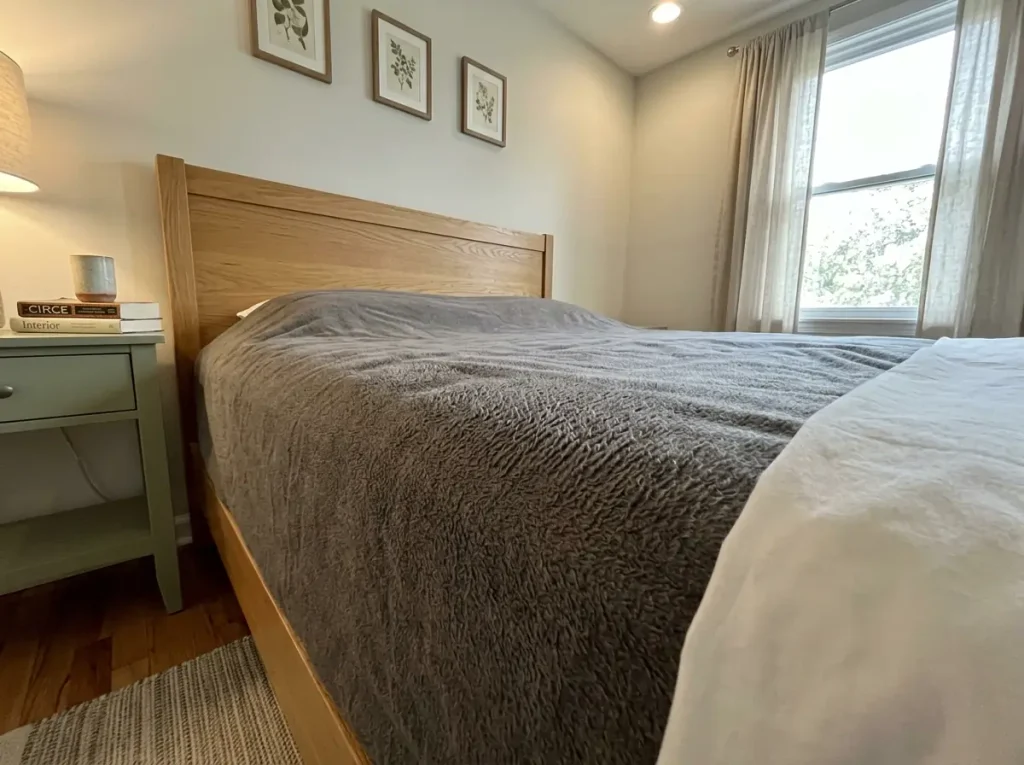
Flannel is not a fiber. It is a finish applied to a woven base: metal bristles brush the surface and pull fibers up out of the weave into a raised fuzzy layer called the nap. That nap is already full of tiny air pockets before you have warmed anything at all, which is exactly why flannel reads warm the second your hand touches it while a flat-woven sheet has to be warmed up first.
That contact warmth is a real property and it is also the reason flannel gets oversold. The nap is doing the work, and the nap is the part that does not survive the season, which is the argument the last section of this article is built around.
Sateen Floats, Percale Does Not
Sateen floats one thread over three or four others before passing under. That long float leaves a looser structure with bigger gaps, so it holds slightly more still air than a percale of the same fiber and count. It is the same fact as sateen feeling smoother and heavier in the hand: the float length is the whole difference between percale and sateen, and it decides both the feel and the warmth at once. Sateen is not a warmer fiber. It is a warmer geometry.
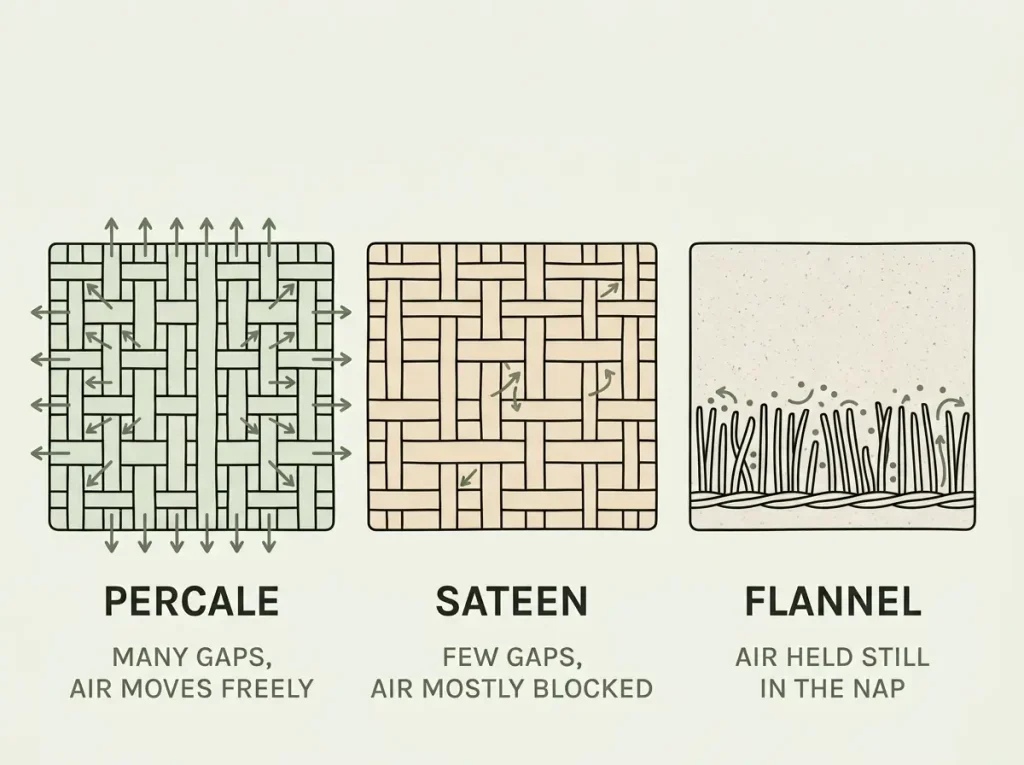
Percale does the opposite by design: one thread over, one under, minimal float, maximum airflow. It is the anchor weave of the cooling side of this site and not this one, which is the same mechanism read in the opposite direction: openness so heat escapes rather than nap so heat stays. Same physics, inverted goal.
The consequence nobody draws from any of this: one warm fabric for the whole bed is backwards. Each weave is good at a different job, and the build two sections down uses exactly that.
The Community Got to the Wool Rule First
A rule of thumb that circulates among sleepers has no manufacturer behind it, which is usually a sign it came from beds rather than from marketing: a wool blanket belongs nearest the body, not on top. Wool stays warm when wet, and the body produces moisture all night long, so cotton and polyester can absorb that moisture and turn cold and clammy. Wool takes on roughly a third of its own weight in moisture vapor without feeling wet and gives it back to the air. That is a fiber property, and it earns wool a low position in the stack.
Run a lamp low and level across a flannel sheet and you can see the nap lie in one direction, like a mown lawn. After a season of washing it lies in no direction at all. That is not cosmetic: a nap with no lie is a nap that has stopped standing up, and a nap that has stopped standing up has stopped holding air. It is the cheapest warmth test there is and it takes four seconds.
Fill Power, GSM and Tog Measure Three Different Things
The labels do print numbers, which feels like progress right up until you notice that the three numbers in circulation measure three unrelated properties and only one of them is about warmth. You are standing in front of two duvets.
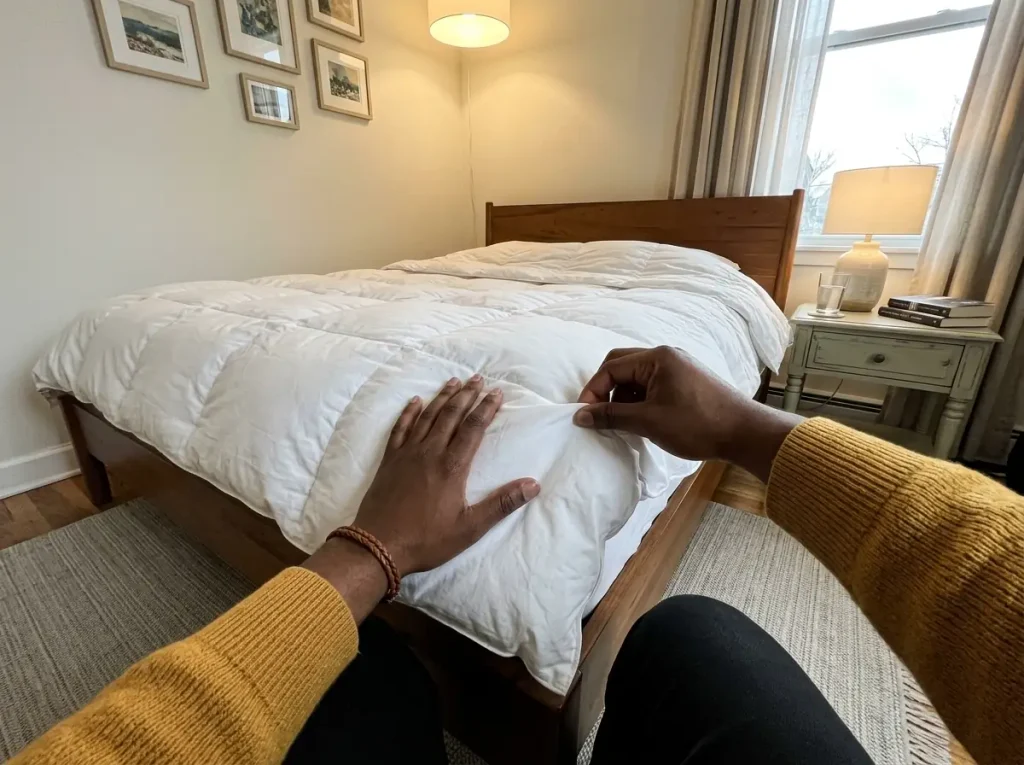
One says 700 fill power. One says 400 GSM. Neither of those tells you which one is warmer, and that is not an accident.
Fill Power Is Loft, and It Needs a Second Number
Fill power is the number of cubic inches one ounce of down expands to fill. It measures loft and the quality of the down. It does not measure the warmth of the finished item, because it says nothing about how much down went in. Fill weight is the other half of that sentence: excellent fill power that has been underfilled still sleeps cold, and a cheaper, denser duvet can beat it outright. Both numbers or neither.
GSM is grams per square meter, weight per unit area, applicable to any fill or fabric. It tells you how much material is in there, not how well that material insulates. A dense, flat, heavy layer and a light, lofted one can print the same GSM and sleep two tiers apart.
Tog Is the Only One That Measures Warmth
Tog measures the finished duvet’s actual thermal resistance, and only tog is tested on the finished duvet rather than on what went inside it: a hot-plate rig, a standard, a number that survives comparison between brands. The bands are settled: 1.0 to 4.5 is summer, 7.5 to 10.5 is all-season, 12 to 13.5 is winter, 15 is extra-warm.
That gives you the one hard filter this whole category lacks. If a duvet is sold as winter and states no tog of at least 12, and is not described as two duvets combined, treat it as unproven. Not fraudulent — unproven. Those are different, and the difference is that you can ask.
For flannel sheets the equivalent number is GSM, and the cold-climate sweet spot is 170 to 220 GSM. Below roughly 150 you have a flannel-look sheet: brushed enough to feel fuzzy in the package, not dense enough to build a nap that holds air through a night. Note that thread count measures none of this, because it counts threads per inch, which is a density figure, and density is not loft.
Most all-season duvet sets are secretly two duvets — a 4.5 tog and a 9.0 tog that popper together to make 13.5. Buy the pair rather than a single 13.5 and you have bought three seasons instead of one: the 4.5 alone for summer, the 9.0 alone for spring and autumn, both together for January. Same winter number, three times the year covered.
What Actually Goes Where, From the Mattress Up
With the mechanism settled and the numbers readable, the build is almost mechanical. The surprise is that it starts below you, not above. Every guide in this category says layer up. Almost none says what goes where or why, so people stack by weight with the heaviest thing on top, which is exactly backwards for the layer touching skin.
Start Below You, Because a Compressed Mattress Is a Cold Mattress
A mattress you have flattened over three years draws heat out of you all night, and no amount of duvet on top compensates for a cold plane pressed against your back. A lofted layer under you traps air the same way one over you does, and it is the layer nobody in this category ever counts.
The free version comes first, as always: pull out the topper you already own and have not used since the last apartment. Most people have one. If there genuinely is not one, the HYPREST Pillow Top Mattress Topper is a 1300 GSM down-alternative pillow-top in Queen, and its density is the point, because it is the loft under you rather than a comfort pad. Its flaw is availability rather than construction: it is the only topper verified for this niche so far and it moves in and out of stock, so if it is gone the category, not the product, is what you are shopping for.
The Sheet Against Your Skin Should Move Moisture, Not Maximize Heat
This is the position people get wrong most often, and they get it wrong by trying too hard. The weave against your skin has one job all night: move moisture away from you. Percale does that at any weight. A moderate flannel in the 170 to 220 band does it while adding contact warmth.
The heaviest thing you own does not, and putting it here is how a warm bed becomes a damp one by 3 a.m.
The Wool Goes Low, Which Feels Wrong and Is Right
Wool belongs under the fill layer, close to you, not spread decoratively over the top. The reason is the moisture property from earlier: merino wool and its relatives absorb roughly a third of their own weight in vapor without feeling wet and releases it back. A cotton or synthetic blanket in that position holds the moisture against you until it goes cold.
The Desert Breeze Alpaca & Sheep Wool Blanket is a 50/50 alpaca and Peruvian sheep wool blend woven at winter weight, warm through the crimped air-trapping structure of the fiber itself rather than through mass. It is also the premium piece on this page, so anyone shopping on budget alone should skip straight to the cotton thermal blanket further down instead.
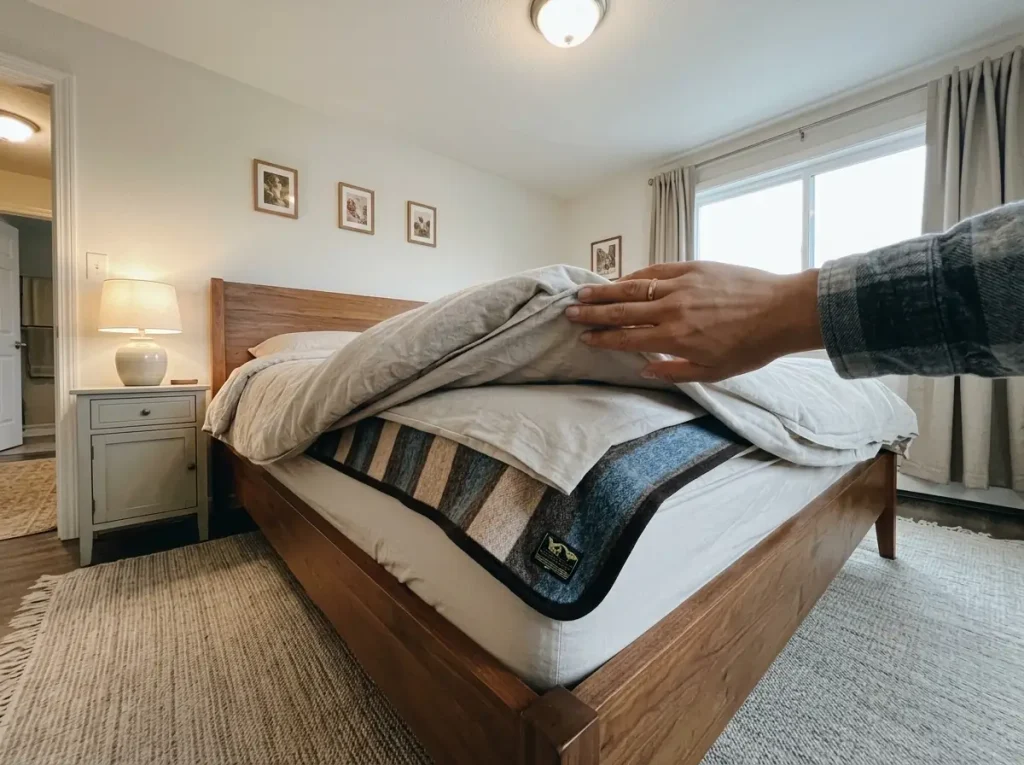
So the layering order, bottom to top: mattress, mattress protector, mattress pad or topper, fitted sheet, you, wool or brushed layer, top sheet folded back, duvet or comforter, then anything decorative. Each position has a reason and none of them is aesthetic. A weighted blanket, if you use one, goes above the wool and below the duvet, because its job is pressure and it flattens whatever sits under it. A bedspread or a decorative sham belongs on top of all of it or off the bed entirely, since neither is doing thermal work.
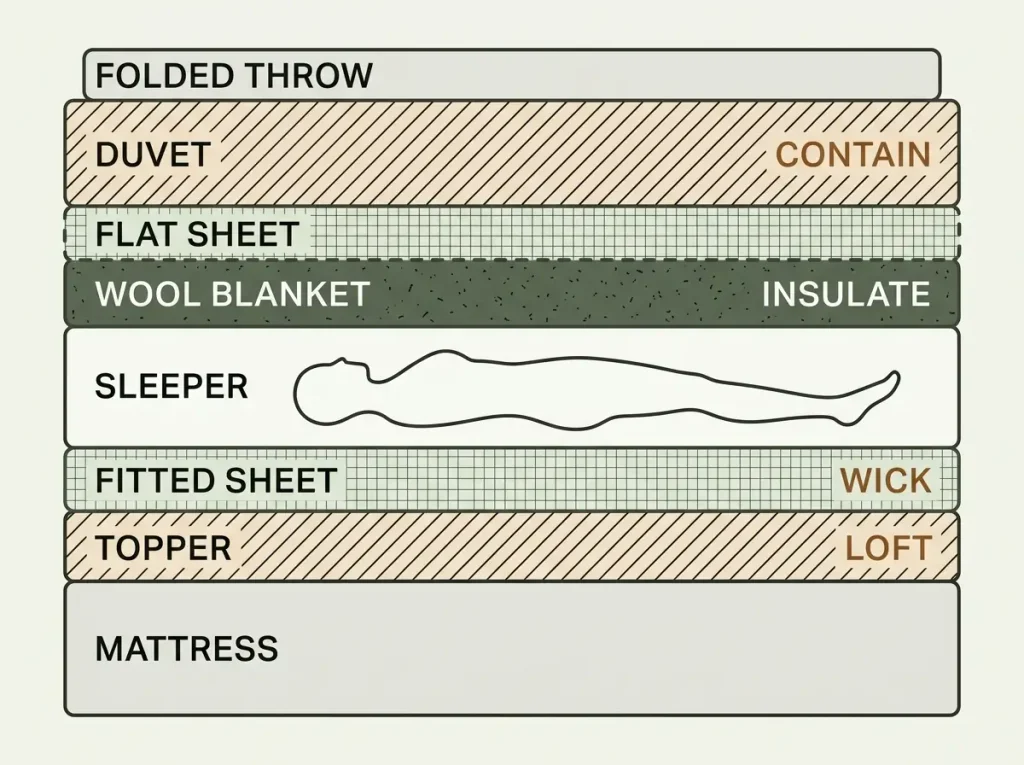
Where you stop is a rule, not a feeling: a shared top layer sized to the warmer sleeper, plus one second layer the colder sleeper controls. That is the ceiling. Beyond it you are stacking mass and trapping your own moisture, which is the failure the next section separates out. If your room genuinely runs cold rather than only feeling cold, the full build for a room that genuinely runs cold goes further than a pillar should, and there is a tactical version of exactly this list as the set in the order it goes on.
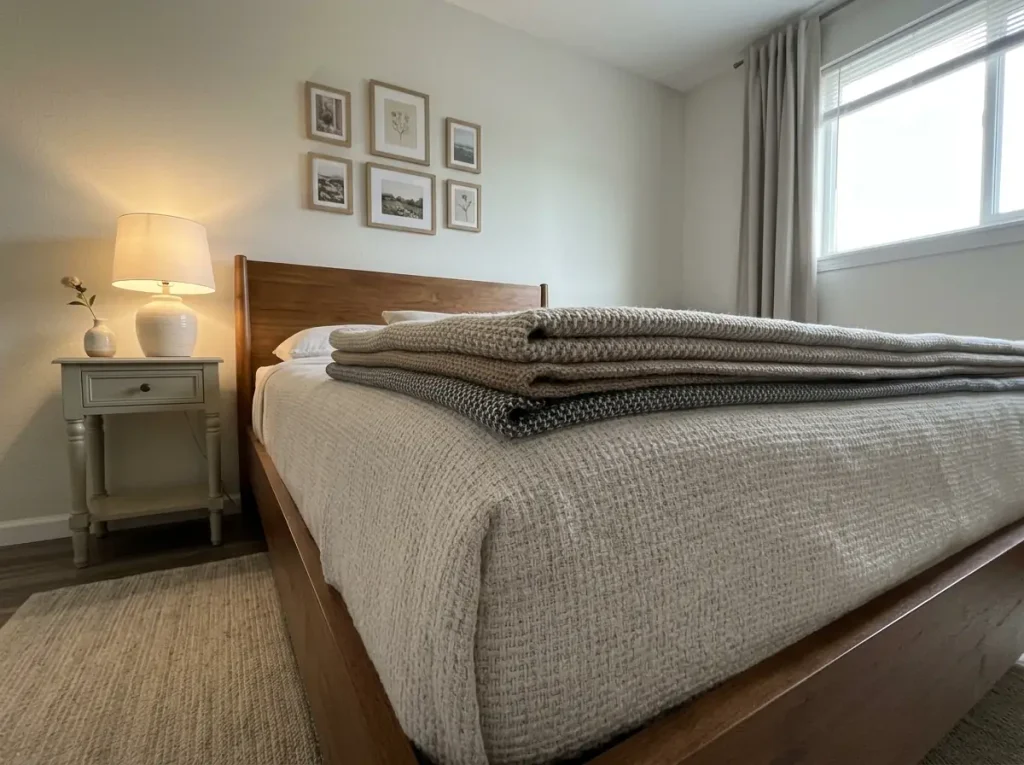
Layers slide, and a stack that has slid is a stack that stopped working around two in the morning. A blanket folded in half and laid across the lower half of the bed stays where you put it; the same blanket laid out full-length walks off the foot by the small hours. The arrangement is often called blanket lasagna, and the folding is genuinely half of why it holds together.
Warm at Bedtime and Cold at 3 a.m. Are Two Different Problems
Everything above assumes the bed gets judged once, at the moment you get into it. That is the assumption every roundup in this category makes, and it is why so many of their picks disappoint by morning.
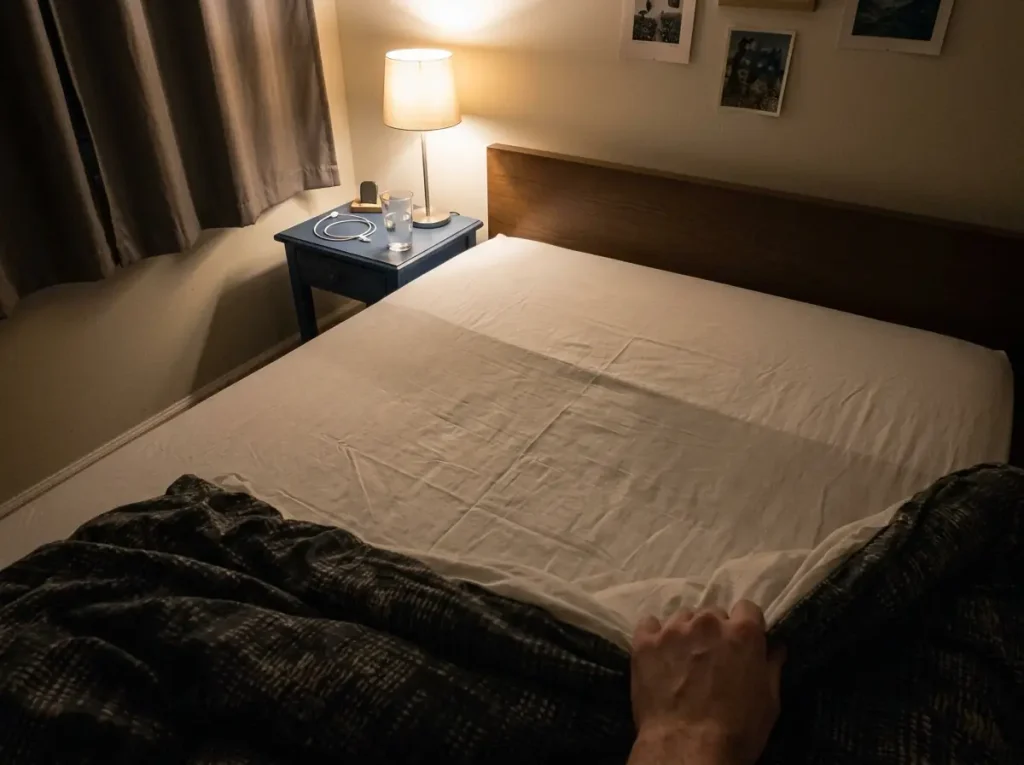
Two people describe the identical complaint, “I’m cold at night”, and they need opposite fixes. One needs more insulation. The other needs less of it in the wrong place.
Problem One: Cold From the First Minute
This is the straightforward one and the rarer one. You get into bed and it is cold, it stays cold, and it never really comes up to temperature. That is a genuine shortage of trapped air: too few layers, or layers compressed flat under their own weight. The fix is loft, not mass: a lofted duvet, an uncompressed topper, air rather than pounds.
Problem Two: Warm Getting In, Cold and Damp by Morning
This is the common one, and it is the one nobody in this category separates out. You go to bed warm. You wake up cold, and if you pay attention, slightly damp.
Over six or seven hours your breath, your skin and the room’s own humidity have loaded moisture into whatever layer sits against you. If that layer does not move it, the moisture sits there and cools, and it does so at precisely the hour your core temperature reaches its floor. That is the damp chill people describe as “cold to the bone” when the room is not actually cold, and it is a moisture-wicking problem, not an insulation one.
Which means the fix is not more bedding. It is changing the layer against your skin to one that moves moisture, which is a swap using pieces you probably already own, costing nothing. The usual advice is to buy warmer bedding when you wake up cold. After enough of these reports, I’d reverse the order: swap the layer against your skin first and only then decide whether anything is actually missing on top.
The Room Comes Before Either of Them
65 to 68°F is the range, and a bedroom outside it is not fixed by any comforter you can buy. A cold window three feet from the bed undoes a full tog point of duvet on its own. That is not a bedding problem being solved with bedding, and there is no product on this page that outperforms closing a gap in a frame.
The tell that separates the two problems is where the cold is. Uniformly cold from minute one is insulation. Cold across the shoulders and upper back while your feet are perfectly fine is moisture, and that band is where the sheet held contact longest. Down and its synthetic alternatives sit on different sides of that split, and down and its synthetic alternatives handle that moisture differently is a comparison for its own page.
One Bed, Two Temperatures
Everything above assumes one sleeper deciding for one bed, and roughly half of the people reading this share the mattress with somebody whose thermostat disagrees with theirs. One heavy comforter turns into a nightly negotiation. That is not a compatibility problem. It is a design problem, and there are three patterns real couples are running right now.
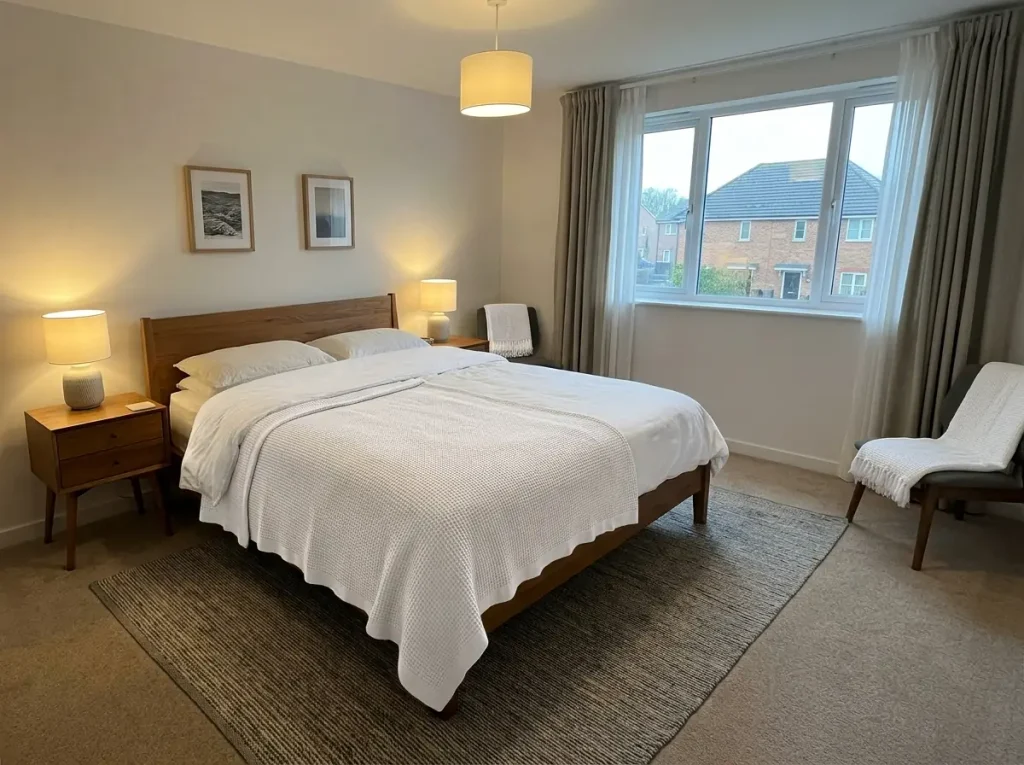
The governing rule came out of the community rather than a catalog, and it is worth stating before the patterns: size the shared layer to the warmer sleeper, and give the colder one an extra layer they control. Once you are already underneath a shared comforter, it is much harder to make it less warm. Adding is easy. Subtracting, at two in the morning, without waking the other person, is not.
And if the person beside you runs hot rather than a shade warmer, you are reading the same fiber-versus-weave question from the other temperature direction. A hot sleeper’s thermoregulation fails toward overheating, yours fails toward the damp chill, and the shared layer sits between the two.
Pattern One: Two Thin Blankets Under One Shared Comforter
The cold sleeper gets two thin blankets. One heavier shared comforter goes over the top of both people. Either person can then pull more or less coverage without renegotiating the whole bed, because the adjustable part is underneath and personal.
The Utopia Bedding 100% Cotton Thermal Blanket is the natural piece for that addable position: 350 GSM in a honeycomb thermal weave, which traps air by structure rather than by weight and is exactly what a controllable second layer should do. Alone, with nothing over it, it is not a winter blanket. It is a piece you add and remove, not the anchor of the bed.
Pattern Two: Separate Blankets, One Duvet on Top for the Look
Each partner has their own blanket at their own weight. A single shared duvet goes over both for a made-bed appearance, folded down on the warm sleeper’s side and pulled up by the cold one if they need it. This is the pattern that survives longest in real bedrooms, and the reason is not thermal.
Pattern Three: Two Duvets, One Cover
Stuffing two inserts into a single duvet cover, or a larger insert into a smaller cover, gives you compression-driven loft on one side without buying a heavier duvet. A twin-size insert is the natural piece for it, and the Utopia Bedding Twin Duvet Insert is a down-alternative all-season fill at 64 by 88 inches, which doubles loft on the cold sleeper’s half of a shared bed. On its own it is a twin-size insert and only makes sense inside the trick, so buy it for the trick or do not buy it.
What this page does not settle is whether an electric option beats another layer of fabric. Whether the electric option beats another layer is its own comparison with its own numbers.
The made-bed objection is the real obstacle to two-duvet sleeping, not the sleeping itself. Two separate duvets look like a hotel mistake until you lay one cover across both at the foot of the bed, at which point they read as deliberate. That single move is why pattern two survives in real bedrooms and pattern one often quietly gets abandoned by March.
What to Change Before You Buy Anything
Three of the four fixes in this article cost nothing, and they are worth running first for a reason beyond the money: they tell you which problem you actually have before you spend anything solving the other one. Reordering what is already on the bed takes about ten minutes and it is the same experiment the paid fix would have been.
Move the Brushed Layer Down and the Smooth One Up
Take whatever wool or brushed layer you own and put it nearer your skin. Put the smooth one on top. That is the whole change, it costs nothing, and it tests the moisture hypothesis directly: if you stop waking damp, the problem was never insulation and no purchase was going to fix it.
Fold, Don’t Drape
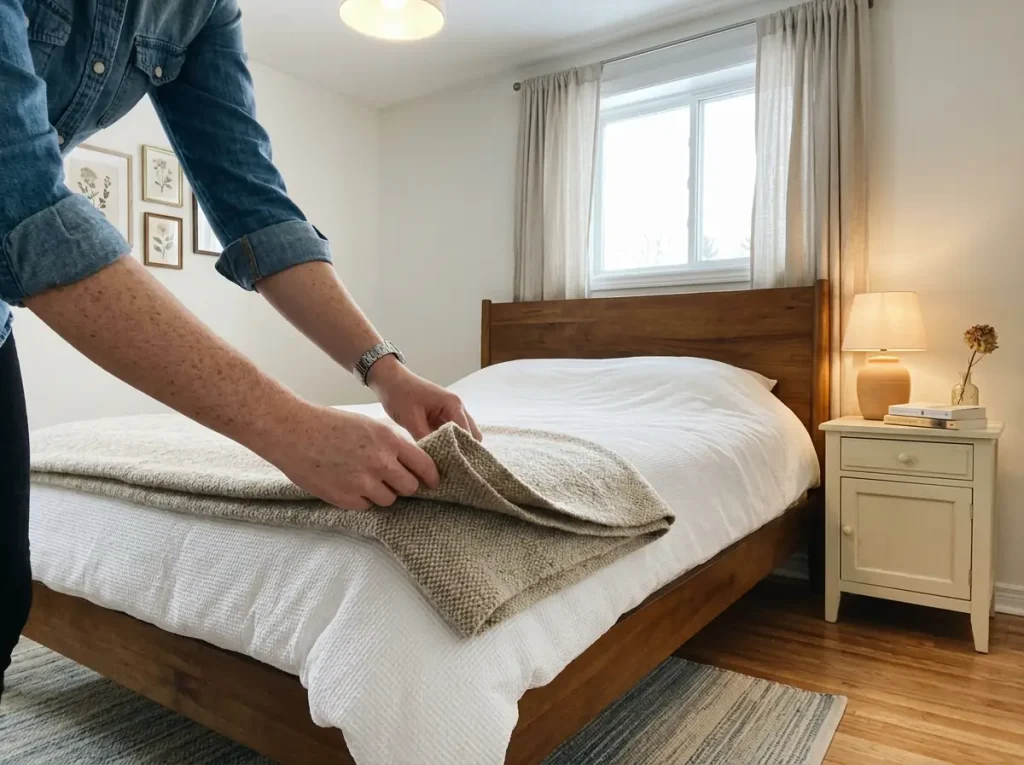
A blanket folded in half across the lower half of the bed concentrates its weight over your torso and stays where you put it. The same blanket laid full-length walks off the foot of the bed by two in the morning. This is free and it is the difference between owning a blanket and actually sleeping under it.
Uncompress What You Already Own
A duvet that has spent the summer compressed in a storage bag needs an hour out of it before it insulates properly, because loft is the entire mechanism and it has been squeezed out. That is the part of the seasonal bedding swap nobody schedules: unpack the winter layers the day before you need them, not the night you do.
Fix the room while you wait. Bedroom temperature is the setting underneath everything else here, and the recommended room temperature for sleep is 65 to 68°F, so check the thermostat and check the drafts before you check the store. And if the shared top layer is already winter-weight by tog, stop buying warmer duvets. The answer at that point is a controllable second layer, which is the rule from three sections ago doing its job.
A duvet that has been vacuum-bagged since March looks perfectly fine and insulates like a bedsheet for the first two nights. Shake it out and leave it over a chair for a few hours before you judge it, or you will judge the bag and go buy a replacement for a duvet that was never the problem.
Only after all of that does a purchase make sense, and the one that changes the most is the layer against your skin.
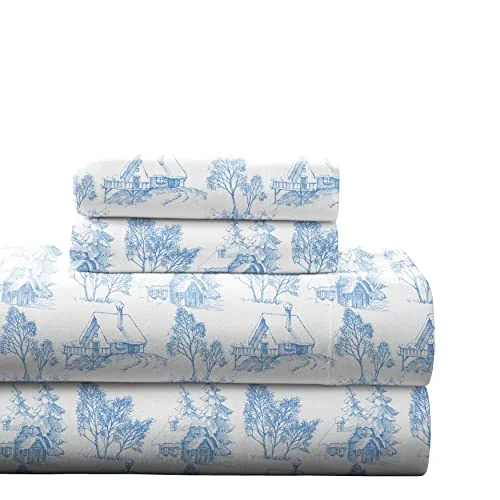
Flannel is not automatically the right answer, and the case where it is too much fabric is a real one, and when flannel is worth it and when it is too much settles that branch. The larger version of the same argument, that seasonal bedding is a weight problem, not a fabric one, is what the GSM number has been proving this entire time.
What a Winter of Washing Does to All of It
Every recommendation above describes bedding on the day it arrives, and the only honest way to close a warmth article is to say what the same bedding does by February. You buy the good flannel in October and by February it is not the flannel you paid for. That is not bad luck and it is not your washing.
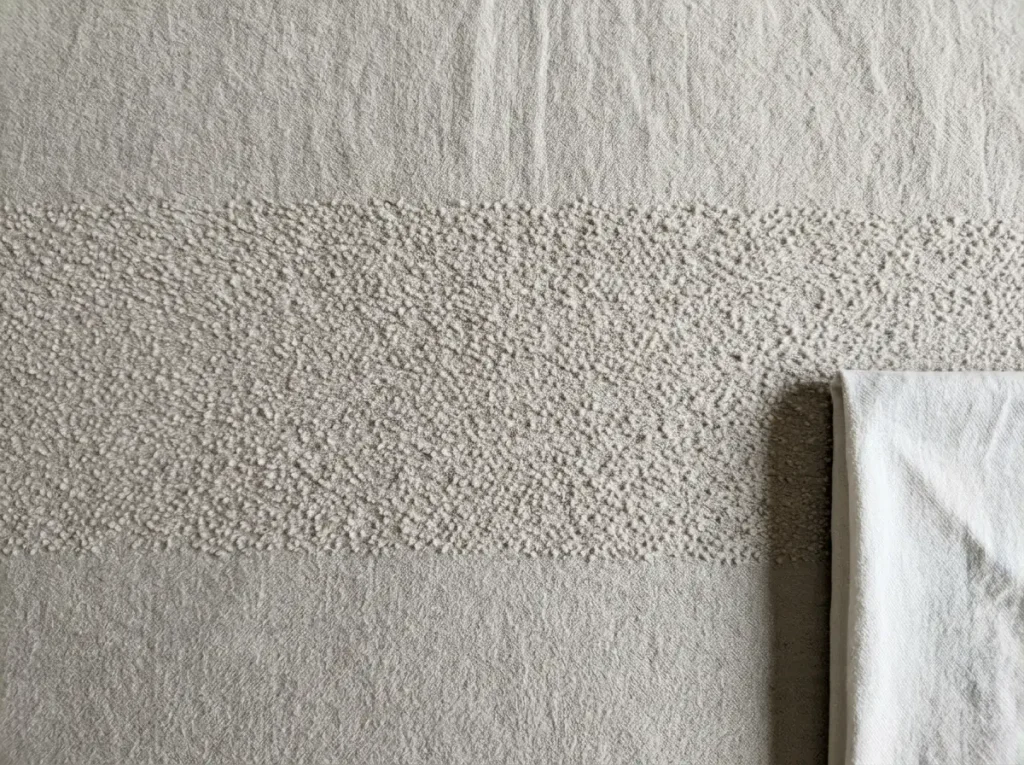
The Flannel Reports, and They Are Not About Cheap Flannel
Premium sets, LL Bean Supima and Coyuchi Cloud Brushed, pilled and lost softness inside roughly one season of light rotation, on a delicate cycle in cold water, line-dried.
Wash cold water and air dry is the correct care for brushed cotton, and here is the uncomfortable part: it was followed, and the nap went anyway. Even high-quality flannel can pill with correct care within one season, and most flannel pills no matter what.
The mechanism makes it predictable rather than unlucky, which is the only useful thing to know about it.
The nap is fibers that were pulled out of the weave. Washing and friction pull them further, they tangle into pills, and the raised layer that was holding all that air flattens out. Pilling and warmth loss are the same event described from two angles: one you can see, one you feel at four in the morning. Linen behaves unlike any of this in winter for structural reasons of its own, and linen, which behaves unlike any of them in winter is where that argument lives.
The Warranty Signal
A lifetime flannel warranty that has quietly become a one-year warranty reads as an admission. Whether or not that is the intent, it is a reasonable thing to check before you buy on brand reputation, because reputation in this category is priced in and durability increasingly is not.
Where the Honest Gap Is
No comparable wash-count reports exist for down, down alternative or wool. The flannel evidence is strong and specific; the fill-type evidence is not there yet. The same hole covers the blanket fibers this article only names in passing, merino, cashmere, mohair, fleece and faux fur among them, each of which ages differently and none of which has a season of reports behind it here. Which blanket materials hold up is the page better placed to chase blanket longevity, and whether a quilt can carry the top layer alone is a related question this page raises and does not answer.
At the end of the season, run a hand across the flannel against the nap direction. If it no longer lifts, it no longer traps. And look at where the pills are: worst along the band where the duvet rubs the sheet, roughly at chest line, is normal wear. Worst under the shoulders instead means friction from a rough top layer, which means your stack order is wrong and the fix is free.
The Three Things Worth Remembering
Add loft, not weight. Compressing three blankets squeezes out the air that was doing all of the insulating, so the pile that feels like more is doing less.
Build from the mattress up, and put the layer that moves moisture against your skin rather than the layer that feels warmest in the store. The warmest-feeling fabric is almost never the right one in that position.
Read tog on a duvet and GSM on flannel. Fill power tells you what is inside and thread count tells you how densely it was woven, and neither one tells you how warm the finished thing sleeps.
At the end of the season, run a hand across the flannel against the nap. If the fibers no longer lift, it has stopped trapping air, whatever it still looks like folded in the cupboard.
Tonight, before you buy anything: move the wool or brushed layer down against your skin, fold the spare blanket in half across the lower half of the bed, and leave the duvet out of its bag for an hour. Sleep on it a week. Then decide what is actually missing.
Frequently Asked Questions
01What is the warmest bedding for winter?
Whatever traps the most still air, not whatever weighs the most. A lofted duvet at 12 to 13.5 tog over a brushed or wool layer beats three compressed blankets, because compression squeezes out the air doing the insulating.
02What is the warmest comforter for winter?
One rated 12 to 13.5 tog, or two duvets combined to reach it. Fill power and GSM describe what is inside; tog is the only number tested on the finished comforter, which makes it the only one that compares across brands.
03What are the warmest bed sheets available?
Flannel in the 170 to 220 GSM range, where the brushed nap is dense enough to hold air but still breathes. Below about 150 GSM it is a flannel-look sheet, not a winter one, and most listings will not print the number at all.
04What is the best bedding for a cold bedroom?
Start under the sleeper with a lofted topper, then a moisture-moving layer against the skin, then the fill layer on top. Fix the room to 65 to 68°F first, because no comforter compensates for a draft three feet from the bed.
05Why do I wake up cold at 3 a.m. when I fall asleep warm?
Because your core temperature bottoms out in the early morning while a night’s moisture has been sitting in a non-wicking layer. That is a fabric problem against your skin, not a shortage of blankets on top, and adding more will not change it.

Tried it on your own bed?
No comments yet. Tell us what you changed, and what the sheet did after a few washes.