






What’s in here8 sections
- “Bamboo” Is Not a Fiber, and the Label Knows It
- What Each One Does When It Gets Wet
- The Wash Is Where the Comparison Actually Resolves
- The Money Only Makes Sense Over Years
- When Two People Want Different Answers
- How to Read the Tag Before You Buy Either One
- The Short Version
- Frequently Asked Questions
Two sheet sets are on the bed, both sold as the obvious upgrade, and only one of them tells you what it is actually made of. The more expensive package says bamboo, and bamboo is not a fiber under US labeling law. Cotton is a fiber you can name: it grows on a boll, gets combed and spun, and the word on the tag is the material in your hands. Bamboo is a woody grass that has to be dissolved in a chemical bath before it can be spun at all, and the dissolving gets done two different ways with two very different endings.
Below: what the tag hides, what each one does when it gets wet, what the washing machine does to both, what they really cost across a few years, and what to do when two people in one bed want opposite answers.
Here is the short version, arranged by the three things actually being sold rather than by the two words on the packaging.
| What decides it | Cotton percale | Bamboo viscose | Bamboo lyocell |
|---|---|---|---|
| Feel on night one | Crisp, matte, a little stiff | Slippery and cool on contact | Slippery, slightly denser |
| Moisture | Takes in about 8% at rest | About 14% at rest, pulls faster | Same pull, more uniform |
| Durability | Roughly five to seven years | Pilling from about month six | Roughly three to five years |
| Wash routine | Forgiving, warm wash is fine | Cold only, no softener, low heat | Cold only, no softener, low heat |
| Cost across years | Wins by default | Rebought about twice as often | Premium mostly offset by lifespan |
“Bamboo” Is Not a Fiber, and the Label Knows It
Every version of this comparison puts cotton on one side and bamboo on the other, as if both words named the same kind of thing. They do not. That is why two sets can both say bamboo on the front of the bag and behave nothing alike six months later.
What the Tag Is Legally Required to Say
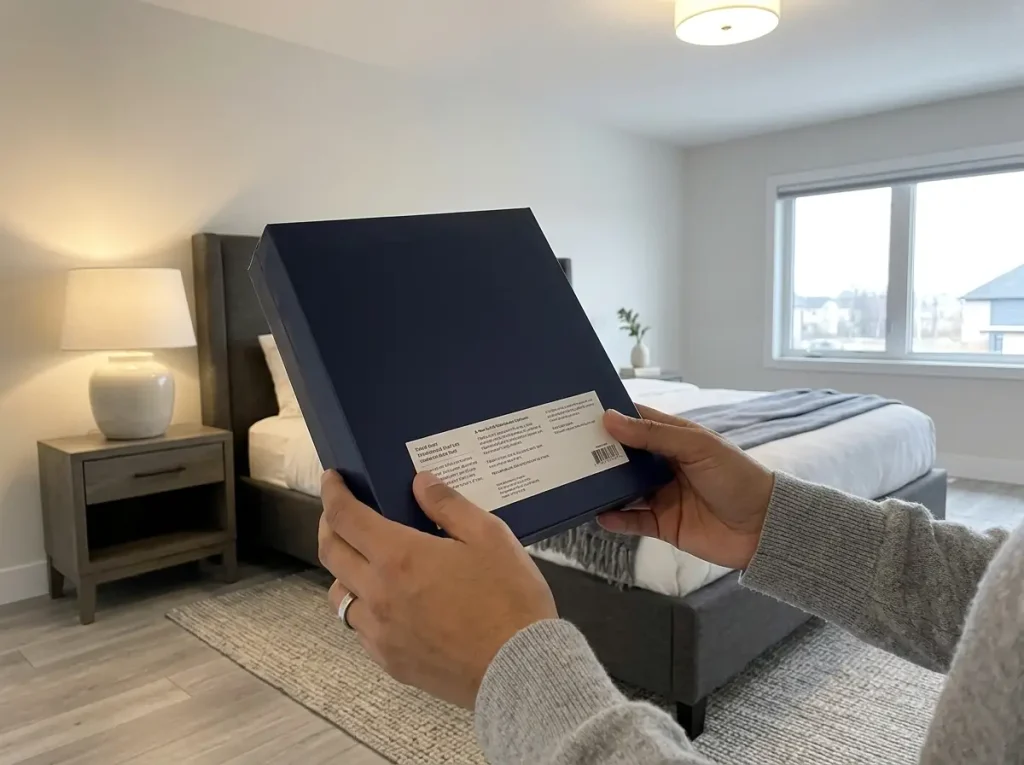
Under the FTC Textile Fiber Rule, there is no generic fiber name “bamboo.” A fabric made by dissolving bamboo pulp in a chemical bath and extruding it back out as filament has to be labeled rayon, or viscose, made from bamboo. A fabric made through the closed-loop NMMO route has to be labeled lyocell. A hangtag that just says “100% bamboo” and stops is not telling you which of those you bought, and per the FTC’s own rule on bamboo textile labeling it is not compliant either.
This is not a forum suspicion. In August 2009 the FTC fined Macy’s, Sears/Kmart, Bed Bath & Beyond and Leon Max a combined $1.26 million for selling rayon-from-bamboo as “100% bamboo,” with unverified antibacterial claims bundled on top; the FTC’s bulletin on bamboo-labeling enforcement is the paperwork. Seventeen years later the same tag is still on shelves, which tells you the fine was cheaper than the honesty.
Two Processes, Two Completely Different Sheets
Viscose is the open-loop route, and the cheap one. The pulp goes into carbon disulfide and caustic soda, comes out as a spinnable solution, and unless the mill has built controls for it, most of that chemistry leaves with the wastewater.
Lyocell uses a different solvent in a closed-loop system that recovers over 99% of it and puts it back into the next batch. That is the actual sustainability gap between two bags that both say bamboo, and it is worth being blunt about where it sits: not in the plant, which grows fast and needs few pesticides either way, but in the chemical processing after it. A brand selling eco-friendly bamboo without naming the process is describing the grass, not the factory.
Cotton has its own version of this argument. The water usage in growing it is the number its critics reach for, and organic cotton is the answer the industry sells back. But cotton skips this entire chapter — spun from the fiber the plant already grew, never dissolved and rebuilt, which is exactly why “100% cotton” is a fiber name and “100% bamboo” is a marketing word.
The two routes also produce physically different filaments, and that is the part that shows up on your bed rather than in a wastewater report. Lyocell filaments come out longer, smoother and more uniform; viscose filaments are shorter and more variable, and short variable filaments are what work loose and ball up under friction. So whether a bamboo set lasts or goes fuzzy by spring comes down to which process made it, not to the plant, the brand or the price.
A second variable hides under the first, and almost nobody controls for it. Most bamboo on the market is woven sateen; most cotton sold on a durability argument is woven percale. So the person comparing “bamboo” against “cotton” from their own bed is usually comparing two fibers and two weaves at once, then handing the whole verdict to the fiber.
A few other names show up on the same shelf and belong to the same family. Bamboo rayon is simply the American label for what Europe calls viscose, the identical process under a different word. Bamboo modal is another regenerated cellulose, spun to be stretchier and softer. Bamboo linen, the rare one, is the only genuinely mechanical route, retted and combed like flax rather than dissolved, and it feels nothing like the rest.
The community shorthand for how all this ends is buying premium bamboo and finding out later it was viscose all along. The premium bought a brand. It did not buy a process.
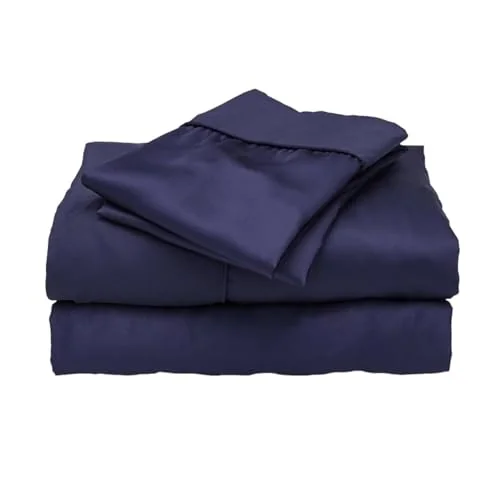
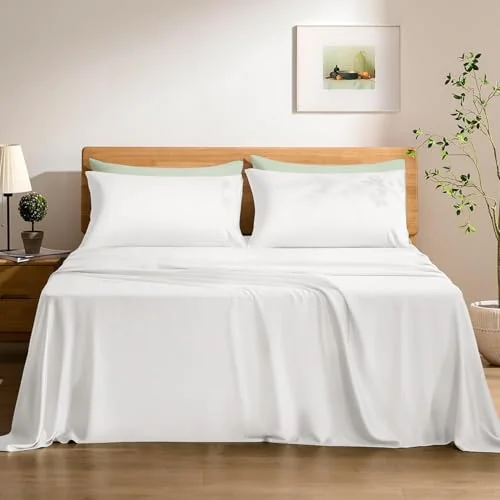
And here is the other side of the same label, so you can see what the majority case looks like when it is at least labeled honestly.
What Each One Does When It Gets Wet
With the label sorted, the two fabrics can be compared as materials. The honest place to start is not how they feel dry on night one, but what happens the moment sweat, humidity or a washing machine gets into them, because that is where they stop behaving alike.
Moisture Regain, and Why Bamboo Feels Like It Wicks
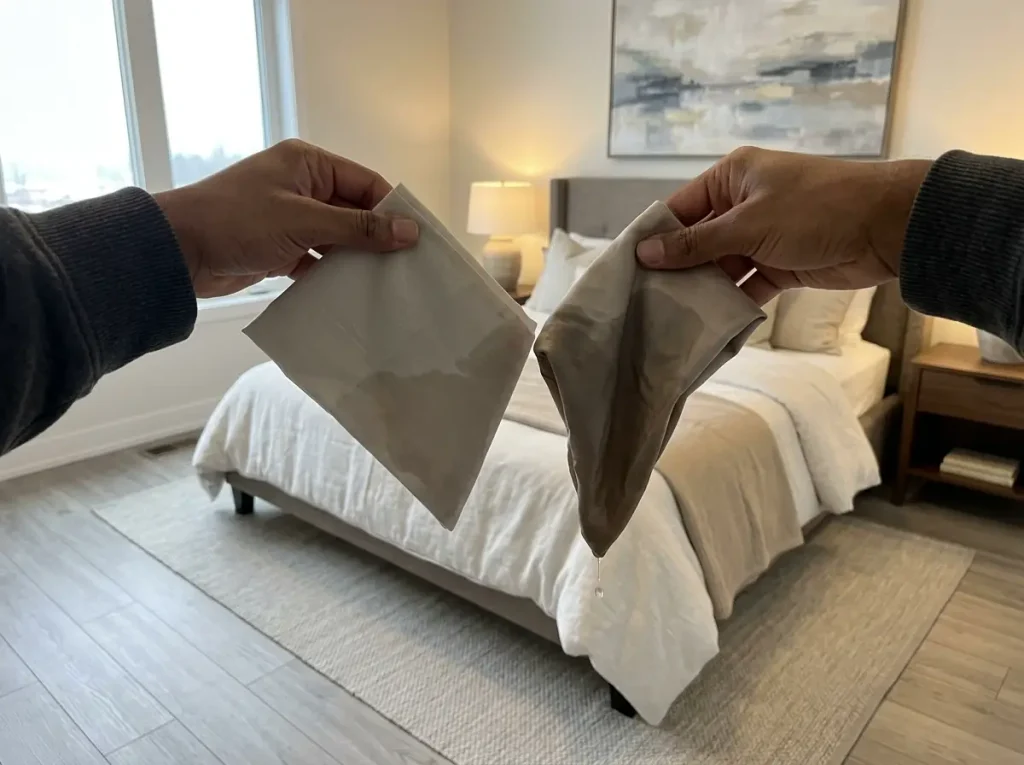
Every fiber holds some water at room conditions without feeling wet, and the number has a name: moisture regain. Cotton sits at roughly 8%, viscose at roughly 14%. Soak both and the gap widens: cotton takes up around 30% of its own weight in water, viscose can swell to around 70%.
That is the whole mechanism behind the moisture-wicking claim on the front of the bag. No special plant property, no residue of the grass it used to be, just a regenerated cellulose that holds more water and therefore pulls moisture off skin faster. It is worth being precise about what that buys you, because the packaging is not: moving moisture is not the same as moving heat. Breathability is a matter of how much air the weave lets through, and temperature regulation over a whole night depends on the whole bed, so a fiber that handles sweat well can still sleep warm under a heavy sateen.
Which is genuinely useful, and I would not talk anyone out of it. But the same number makes it slow to dry, and nobody prints that part: a damp viscose sheet feels cool because the water is inside the fiber rather than on the surface, and water inside a fiber takes far longer to leave. Hang both sets on the same line on the same day and the percale is ready hours ahead.
The Sentence the Durability Section Is Built On
Cotton fiber gains roughly 20% tensile strength when it is wet. Viscose loses strength when it is wet, because the swollen cellulose weakens internally. A wet cotton sheet in a drum is stronger than a dry one; a wet viscose sheet in that same drum is at its weakest point of the week, being tumbled and wrung.
That is why the durability verdict below is not really a verdict about sleeping. It is a verdict about laundry.
And the Weave Is Doing Half of It
Percale is a plain 1/1 weave, one thread over and one under, leaving regular small gaps. It also has no wrinkle resistance to speak of, which is the trade nobody mentions: it will never look ironed.
Sateen floats four threads over one, which is why it is smoother and why those long exposed floats abrade first. A cotton sateen and a bamboo sateen fail in the same place for the same reason, so it is worth knowing what the weave is doing underneath the fiber before assigning any of it to the plant. Jersey, knitted rather than woven, is a third thing again and does not enter this comparison.
The community’s split is simple: some want the slippery drape against bare skin, others want a sheet that does not need babying. Both are legitimate, and they are not the same purchase.
The Wash Is Where the Comparison Actually Resolves
Almost every verdict on these two fabrics was written from the unboxing, and the unboxing is the one moment when both are telling the truth. Everything feels good after the first wash. The disagreement starts a few months later, in the machine, long after the review went up.
The Numbers, Once the Set Has Been Slept In
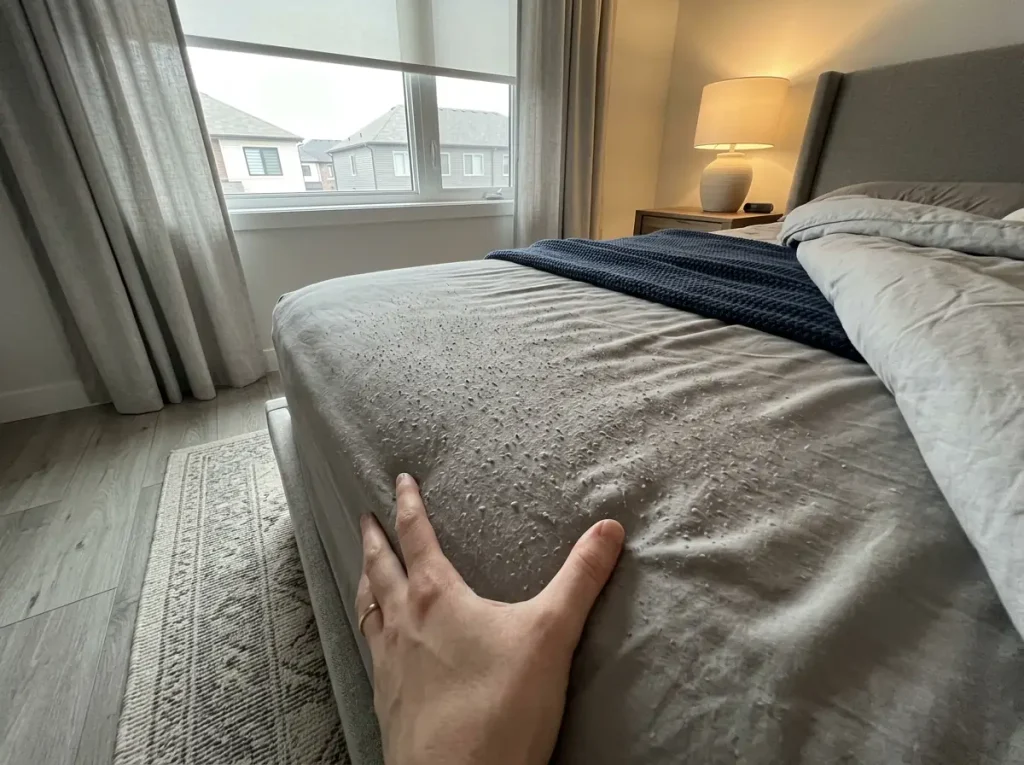
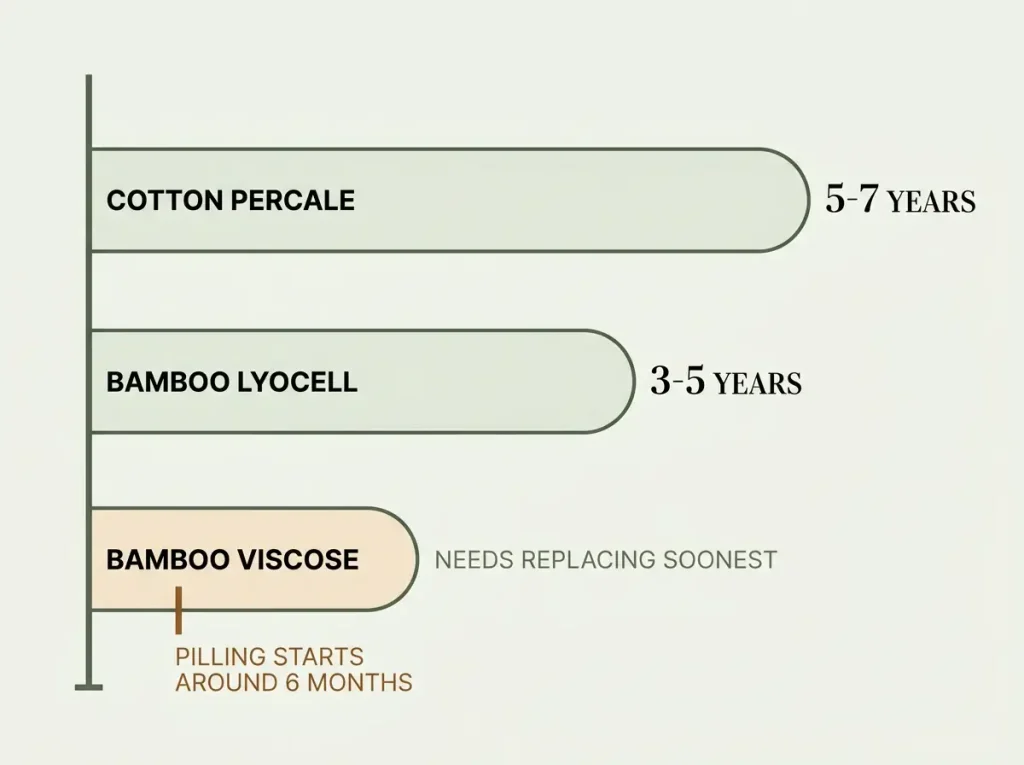
Bamboo viscose is widely reported to start pilling within about six months of regular washing. A quality cotton percale set runs roughly five to seven years before comparable wear. Bamboo lyocell lands closer to cotton than to its own family name, at roughly three to five years of daily use, because longer uniform filaments have less loose end to work free.
The cause is the wet-strength fact above: the damage happens while the set is soaked and being agitated, not while you sleep on it. And it does not arrive evenly, which is why people notice late.
Pilling shows up first on the fitted sheet under the hips and on the strip of flat sheet pushed back every night. Friction points. The pillowcase, oddly, is often the last piece to go, which is why a set can look fine folded and be finished on the bed. By the time it looks tired all over, those patches have been fuzzy for months.
The Complaint Is Not a Budget-Brand Problem
r/Bedding, 174,000 members, carries a live thread asking half-defeatedly whether anyone else has seen pilling on their Cozy Earth bamboo sheets: a premium brand, thirteen comments, nobody saying no. The community calls it a pilling nightmare, and the useful part is not the complaint but who is making it. Price bought no immunity, because the weakness is in the wet cellulose rather than the price tag. Sateen’s floats are the first thing to pill, and most bamboo is sateen.
The Free Fix, Before Anyone Buys Anything
Nothing you can buy will extend a viscose set as far as changing how you wash it, and washing it differently costs nothing. A cold water wash, always, on a gentle cycle. Skip the fabric softener entirely, because it coats the fibers, and a coated fiber has more surface catching on itself: softener quietly accelerates the exact fuzz it is sold to prevent.
Low heat drying, and take the set out while it is still slightly damp so the last of it happens on the bed instead of in a hot drum. Line drying or air drying does the same job better if you have anywhere to hang it.
None of this is fussiness for its own sake. It is the difference between a viscose set reaching its second summer and not.
Rotate two sets rather than washing one twice as often. The pilling clock on viscose runs on wash cycles, not on calendar months, so two sets alternating weekly reach month twelve with roughly the wear of month six. It is the cheapest thing you can do for a fabric that fails in the machine — and it works on percale too, it just matters less there.
On Temperature, Briefly
If you came specifically to find out which one sleeps cooler, the honest answer is that the weave decides that one, not the fiber: since almost all bamboo is sateen and most cotton sold to hot sleepers is percale, the fiber contest people think they are running is a weave contest in disguise. That is argued properly over there. Everything below stays on durability, money and the shared bed.
The Money Only Makes Sense Over Years
A cheaper set that gets replaced twice as often is not a cheaper set. That is the arithmetic this comparison usually skips, because sticker price is easy to write and cost per night takes a paragraph.
Running the Math Without Naming a Number
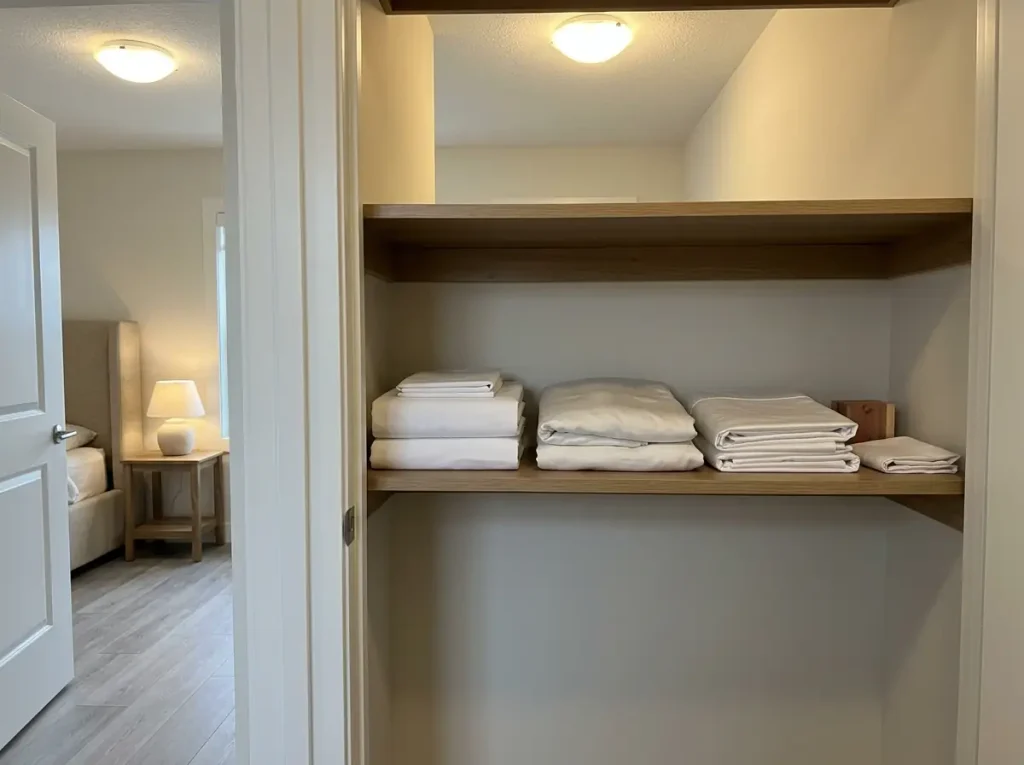
Bamboo lyocell carries a real premium over viscose of the same size, visible the moment you put two listings side by side. But it also runs several times longer before it looks worn, and that lifespan largely cancels the premium out, landing lyocell close to cotton percale on cost per night. Viscose goes the other way: its lower upfront price is mostly erased by needing replacement roughly twice as often as percale, so the set that felt like the sensible buy is the one you buy twice.
Which means percale wins the multi-year math by default, unless you specifically want what lyocell does and would rather pay once than pay for viscose repeatedly.
The Trap Nobody Expects
The set most likely to get replaced early is not the cheapest one. It is the premium viscose one: the price made its owner expect it to last, so it stays in rotation months past the point where it looks tired. Nobody retires a sheet set they felt clever about buying.
And before any of this becomes a purchase, if what is on your bed still has a season left in it, the move is the wash routine above, not a checkout page.
Above about 400, thread count stops being a quality signal and starts being ply arithmetic — two thin strands twisted together and counted as two. The result is a denser, heavier, warmer sheet, not a finer one. A 270-count single-ply percale outsleeps most 800-count sets, and the number on the front of the bag is the one spec that reliably tells you the least.
What the Percale Side Actually Looks Like
For the durability argument in a specific set rather than in the abstract, the Brooklinen Percale 4-Pc Sheet Set for Hot Sleepers is 100% cotton in a percale weave at 270 threads, OEKO-TEX certified, and the percale is what makes it the honest comparison point: it is being judged on how it survives, not on how it drapes. Its flaw is that same crispness. It will never feel slippery and it will never look ironed, and some people read that as a hotel bed they did not ask for.
The Linen Home 100% Cotton Percale Sheet Set does the same job at 200 threads with a 15-inch pocket and the same certification, and it earns its place by printing weave and certification on the label instead of hiding the spec behind an adjective. Its flaw is small and honest: at 200 threads you feel the weave more than at 270, especially in the first few washes before it breaks in. Staple length is the cotton spec that actually predicts this, and it is the number no package prints.
When Two People Want Different Answers
Everything above assumes one person deciding for one bed, and a good share of the time that is not the situation. One of you wants the cool slide of viscose against bare skin. The other wants a sheet that survives being washed like a towel.
Stop Looking for a Winner
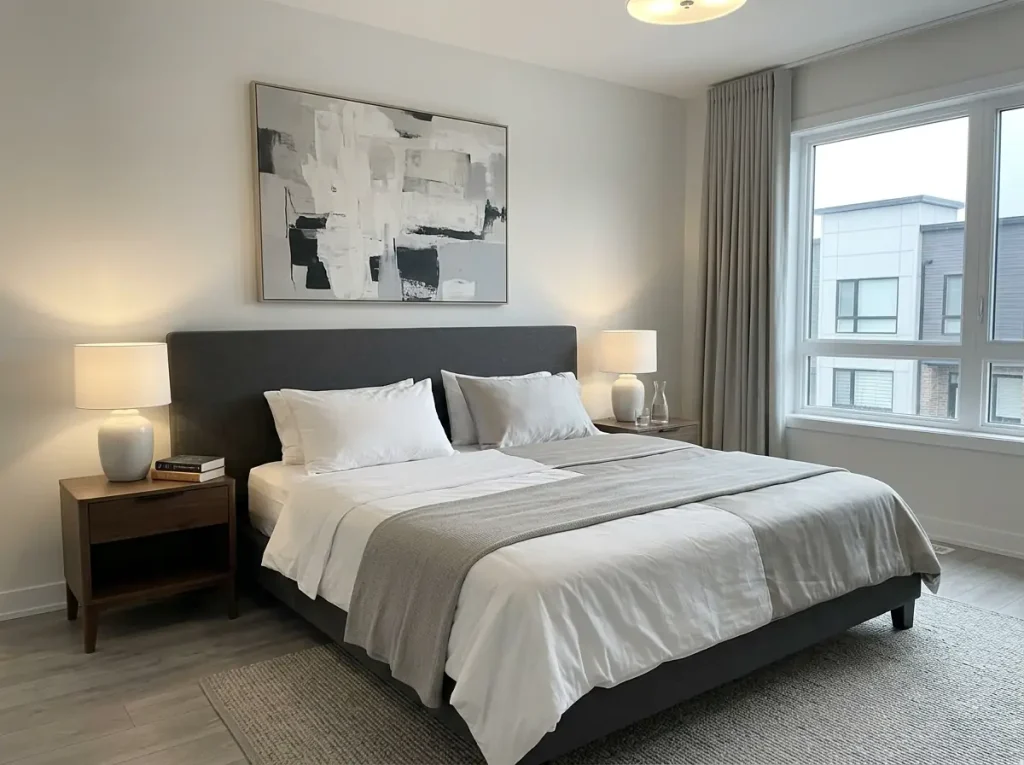
The honest answer here is not a fabric, it is a fork. It is the same argument as two duvets under two separate duvet covers: when two sleepers want opposite things, one item chosen for both is wrong for both, in opposite directions at once. Applied to the top layer, the sleeper who runs hot gets the moisture pull, and the cold sleeper on the other side, who wants predictable crispness and a set that shrugs off the machine, keeps the percale.
And cool is not one property. There is the immediate cool of a fiber pulling moisture off skin and the sustained cool of air moving through a weave: two kinds of cool, and they are not interchangeable. A partner who says the bamboo felt cooler and a partner who says the percale slept cooler can both be telling the truth about the same night.
What the Fork Looks Like on an Actual Bed
One shared fitted sheet, since it is under both of you and rarely the layer anyone has feelings about. Two separate top layers, each person’s own fabric, each washed on the routine that fabric wants.
That last part is the real friction, and not the one people expect. The bed works fine; the laundry is where the compromise breaks. Viscose wants cold water and low heat, percale does not care, and one shared load run on the percale’s comfortable settings is exactly what ends the viscose side early. A household that cannot run two loads should pick one fabric and be honest about it.
Which is still better than the alternative. The compromise set, one mid-range sateen bought to satisfy both, is how couples end up on a fabric neither of them chose: warmer than one wanted, less durable than the other did.
How to Read the Tag Before You Buy Either One
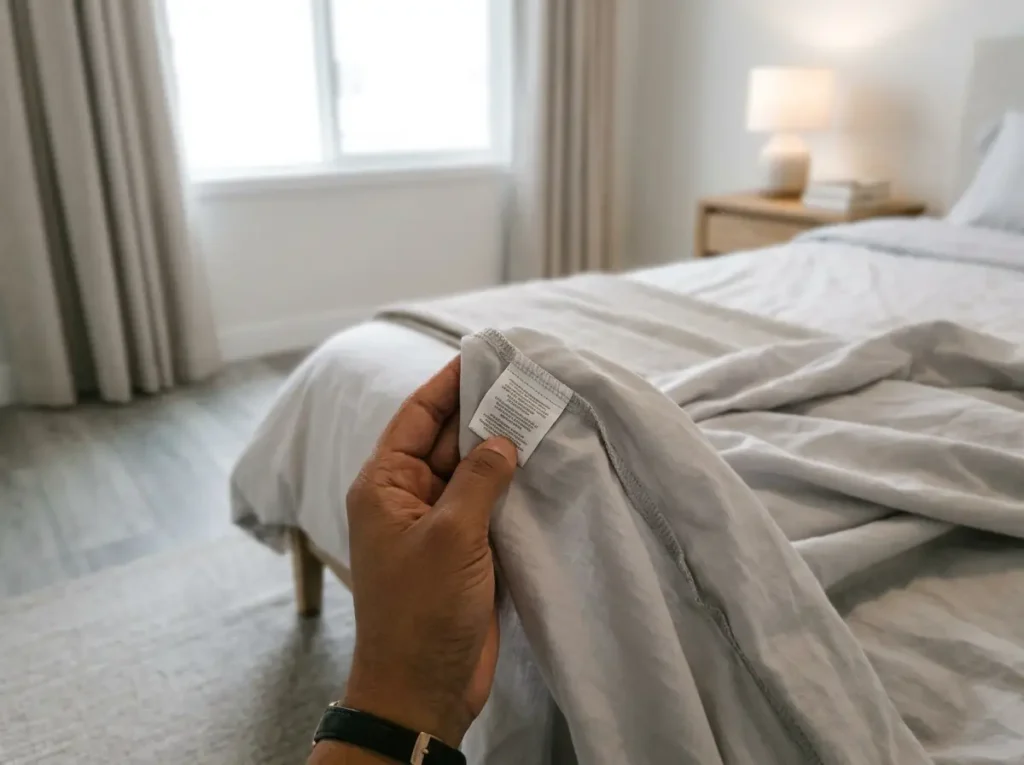
All of this collapses into about thirty seconds of reading, once you know which three words to look for and which one is missing on purpose. Turn the package over: the front is written by marketing, the fiber content line by the legal department, and the legal department is the one telling the truth.
The Three Words, in Order
Find the fiber content line, not the front of the package. You want one of three phrasings: rayon from bamboo, viscose from bamboo, or lyocell. If it only says bamboo and stops, the seller is either careless or hoping you do not check, and the same trick runs on cotton labels with different vocabulary.
Then find the weave, percale or sateen, and treat it as a separate decision from the fiber. Two variables, two answers. And while the package is in your hand, read the care label on the back of it: a set that asks for a cold water wash, a gentle cycle and low heat drying is telling you it is viscose before the fiber content line does.
On a product page, skip the description and use the browser’s find function on the word viscose, then on lyocell. If neither appears anywhere on a page selling bamboo sheets, that absence is your answer — the process is the one detail a seller with lyocell always mentions, because it is the one thing that justifies the price. Silence means viscose.
What a Certificate Does and Does Not Cover
An OEKO-TEX Standard 100 tag is worth having and worth understanding narrowly: the finished fabric was tested for 350-plus harmful substances and came back clean. That is what an OEKO-TEX Standard 100 certificate actually tests for, and it is a real test, not a licensed logo. What it does not tell you is which process made the fiber, what the weave is, what the fabric weighs, or whether it will look like this in a year. It certifies the cloth, not the cotton, and reading it as a durability signal is how a good certificate gets misused.
Two phrases to read as marketing and nothing else: “naturally antibacterial” and “hypoallergenic” on a bamboo package are the exact claims the FTC’s 2009 action covered as unverified, and any antimicrobial wording belongs in the same bin. Whatever property the living grass had did not survive being dissolved in a chemical bath and extruded as filament. And ignore thread count above 400 entirely.
One thing genuinely worth trusting: a brand printing “lyocell” where “bamboo” would have sold better is giving up a marketing word to be accurate. That is the one signal on the package a seller has no incentive to fake.
The Short Version
Read the fiber content line before anything else. “Bamboo” alone is not a fiber, and which process made it decides whether the set lasts years or starts pilling by spring.
Compare weave to weave, not fiber to fiber. A percale and a sateen are two different sheets even when the fiber matches, and most of these comparisons are quietly comparing weaves and blaming the plant.
Cotton percale wins the multi-year math by default. Lyocell earns its premium if you want what it does. Viscose is the one you buy knowing it is a shorter-lived set, which is reasonable with your eyes open.
After a season of washing, check two places: the fitted sheet under the hips and the fold line of the flat sheet. Pilling starts there long before the set looks worn anywhere else. Count the wash cycles rather than the months, because a wash count is the clock longevity actually runs on. And note which way the fabric is moving: cotton is the one that keeps softening with age, while viscose only gets fuzzier.
Tonight, turn over whatever is on your bed and find the fiber content line. If it says viscose, drop the fabric softener and the hot dryer this week and see how much further it gets before you spend anything.
Frequently Asked Questions
01What is the downside to bamboo sheets?
Pilling. Bamboo viscose loses strength when wet, so it typically starts pilling within about six months of regular washing, well before a cotton percale set shows comparable wear. Bamboo lyocell is the exception, and it costs more for exactly that reason.
02What is healthier, cotton or bamboo?
Neither fiber is healthier on its own. What matters is the finished fabric’s chemistry, which an OEKO-TEX Standard 100 tag tests for on both. “Naturally antibacterial” on a bamboo package is a marketing claim the FTC has already acted on.
03Do bamboo sheets pill more than cotton?
Bamboo viscose does, clearly. Most bamboo sheets are also woven as sateen, whose long floats abrade before a plain percale weave would, so the fiber and the weave are working against it at the same time.
04Are bamboo sheets worth the extra money?
Bamboo lyocell often is, because its longer service life offsets the premium. Bamboo viscose usually is not: its lower price is erased by needing replacement roughly twice as often as cotton percale does.
05How can I tell if bamboo sheets are viscose or lyocell?
The fiber content line has to say it. US labeling rules require “rayon from bamboo,” “viscose from bamboo” or “lyocell,” so a package that only says bamboo is not telling you which one you are buying.




Tried it on your own bed?
No comments yet. Tell us what you changed, and what the sheet did after a few washes.