
What’s in here8 sections
You are standing in front of two sheet sets, one says bamboo and one says cotton, and the question feels like a fiber question. It is not. Almost every bamboo set on the shelf is woven sateen and almost every cotton set sold for hot sleepers is woven percale, so the bamboo vs cotton comparison you think you are making is a weave contest in a fiber costume.
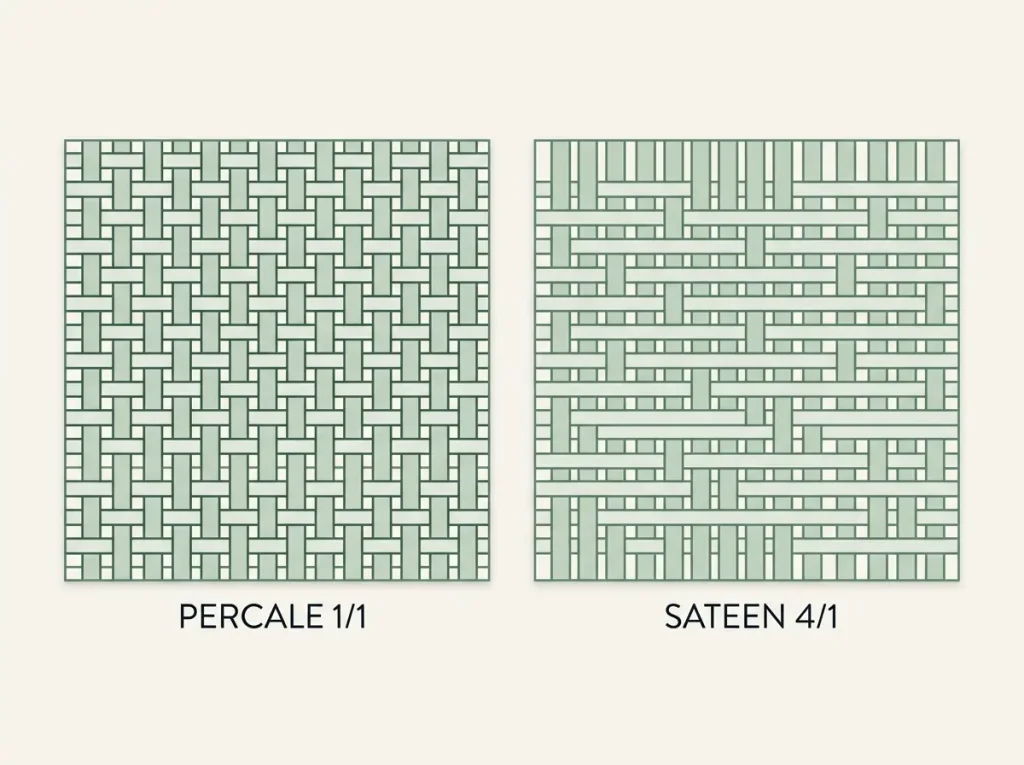
Percale goes one thread over and one under, which leaves gaps the air moves through; sateen floats four threads over one, which is why it has a sheen and why it closes the surface. Below: what bamboo actually is on a tag, what each weave does to a hot sleeper, what to change before you spend anything, what happens at wash twenty, how to handle a bed with two people in it, and who should buy which.
Here is the short version, laid out by how these fabrics are actually sold rather than by what the packaging calls them.
| How it is actually sold | Weave | For a hot sleeper | By wash twenty |
|---|---|---|---|
| Cotton percale | One over, one under | Coolest of the five | Softer than it started |
| Cotton sateen | Four over, one under | Warm, and it pills | Sheen goes patchy where you lie |
| Bamboo viscose (rayon) | Almost always sateen | Cool on contact, warm by 2 a.m. | Pilling on the slept-on side |
| Bamboo lyocell | Also sateen | Better process, same closed weave | Holds up better than viscose |
| Linen | Loose plain weave | Cool, and rumpled forever | Keeps softening for years |
What Bamboo Sheets Actually Are
Bamboo the plant is a hard, woody grass. You could not sleep on it. To become a sheet it has to be dissolved in a chemical bath and rebuilt as a filament, and the industry name for that rebuilt material is cellulose fiber in its regenerated form, sold under the words viscose and rayon. So the honest description of the mainstream bamboo sheet is a rayon sheet whose raw material happened to be bamboo pulp.
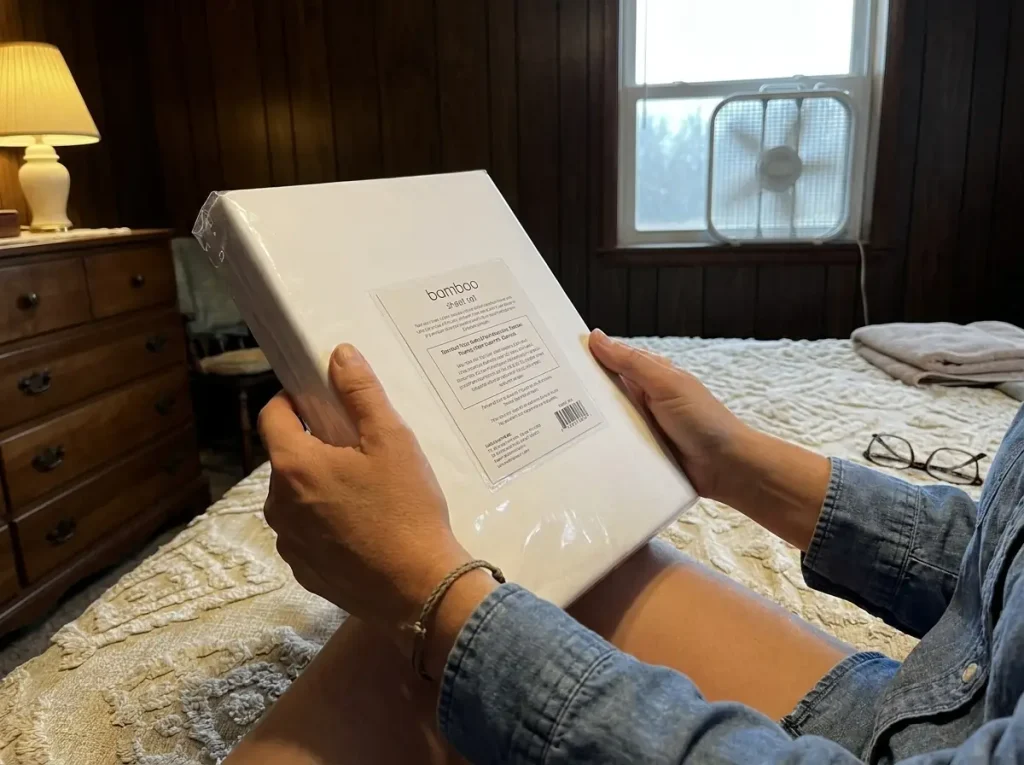
That is not a hot take. It is the position of the federal regulator: the FTC put it plainly in 2010: rayon is rayon, even when bamboo was used somewhere along the way, in warning letters sent to 78 retailers, Walmart, Target and Kmart among them. The Federal Trade Commission’s plain-language version of the same finding is blunter still: once bamboo is processed into rayon, no trace of the original plant is left. Many buyers of bamboo sheets had bought them for years without once reading the word rayon.
Worth knowing what the viscose process actually involves, because it explains both the price and the eco argument. Bamboo pulp is steeped in caustic soda, treated with carbon disulfide, aged, and then forced through a spinneret into an acid bath that hardens it back into thread. That is heavy chemical processing by any measure, and in conventional plants a good deal of the solvent does not get recovered.
Three different things show up on tags and they are genuinely not the same product. Viscose or rayon from bamboo, sometimes printed as bamboo rayon and sometimes as bamboo modal, is the mainstream case, the one you will find in nine sets out of ten. Lyocell from bamboo is made with a closed-loop solvent process, more traceable and less chemically brutal, and it is the version worth checking a tag for.
Bamboo linen, sometimes called bast bamboo fiber, is the only one where the plant is mechanically broken down rather than dissolved, and it is genuinely rare and genuinely rough. One tag can compress the whole chain into a single string, Bamboo-Viscose-Rayon-Cellulose-Lyocell, which is five words for one tag and is the problem in miniature. If you want the chemistry rather than the shopping consequence, it lives in what viscose actually means on a tag.
Which is where the eco-friendly claim needs handling, because it is half the reason bamboo sells. The plant genuinely grows fast and needs little irrigation, and that part is true.
But sustainable is a property of a supply chain, not of a fiber, and the fast-growing grass tells you nothing about what happened in the chemical plant afterward. Lyocell’s closed-loop process is the version that can actually back the claim, because recapturing the solvent is the whole point of it. Plain viscose mostly cannot.
There is a detail here that the marketing and the complaints both trace back to. A viscose filament comes out of that process smooth and uniform in a way a cotton staple never is: no twist, no scale, no short ends sticking out. That is exactly where the slick, cool-on-first-touch hand comes from.
It is also why the surface has nothing to grip with, which is why it goes slippery and then pills on the side that gets slept on. The feel that sells it and the wear that disappoints later are the same property, viewed at two different times.
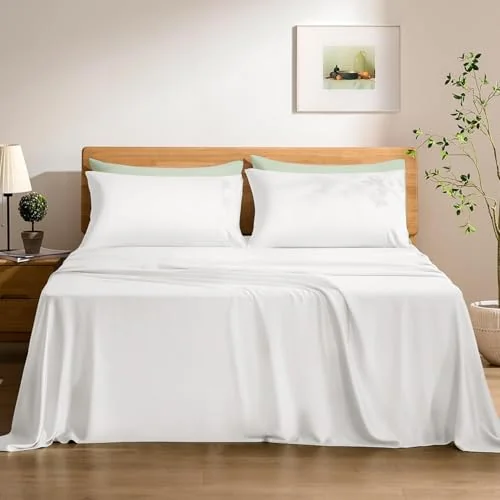
None of this makes rayon a scam. It is a real fiber with real properties, it moves moisture well, and plenty of people are happy on it. It is simply not the plant, and the plant is what the marketing is selling you. The broader question of whether bamboo sheets are worth it at all is its own argument; the narrow one here is whether it will keep you cool, and that turns out to be decided somewhere else entirely.
One more thing belongs in this section because it belongs to the finish rather than the fiber. Skin reactions that do not clear after several washes are one more reason to read the whole label.
Chemical finishes on new bedding are a real thing, and a wash or three usually settles them, which is why anyone with sensitive skin is better off washing a new set before it ever reaches the bed. A reaction that does not resolve after you have switched sheets is a dermatologist, not a fabric decision. That is the whole of what can be said here.
Breathability, Weave by Weave
Hold a percale sheet up against a lit lamp. You will see pinholes of light in a grid, thousands of them, because a plain weave goes one thread over one under and leaves a small gap at every crossing. That structure is also why percale has a matte finish rather than a shine: there is no long stretch of thread lying flat to catch the light, so it reads as chalky and airy instead of glossy.
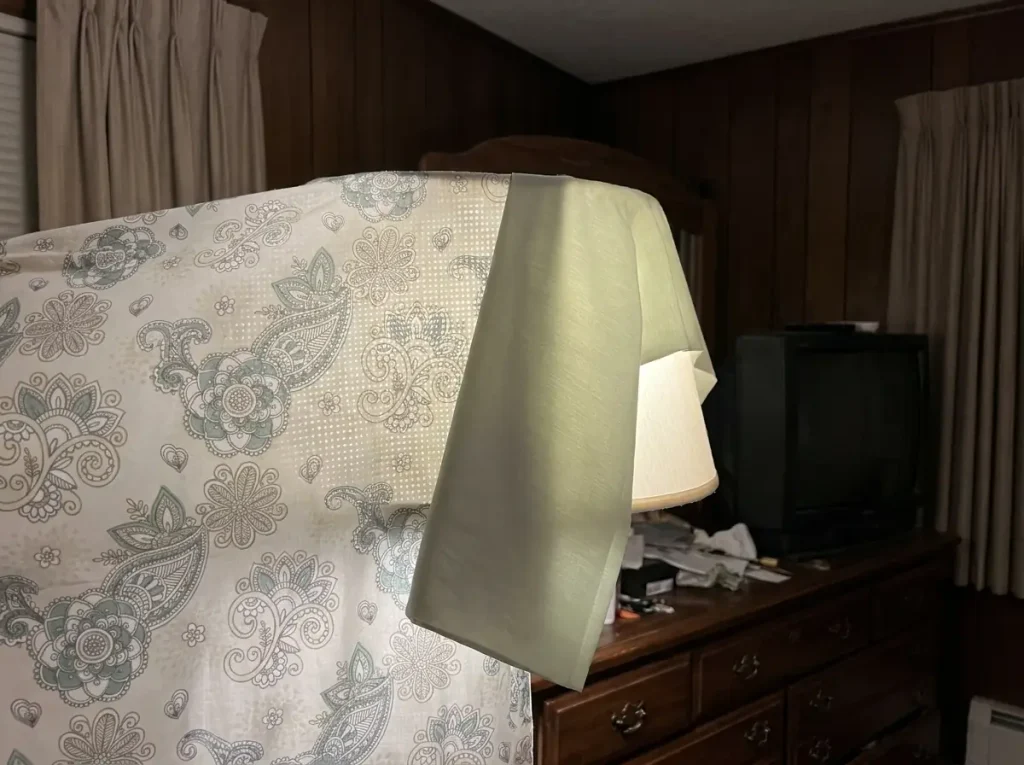
Now do it with a sateen. It glows solid. Sateen floats one under and three or four over, which puts more thread on the surface, gives you the sheen, and closes those gaps.
That is the entire argument in one gesture, and it costs nothing to try tonight on the sheets already on the bed. The long version, if you want it, is percale against sateen, in full.
So four things decide how hot a sheet sleeps, and for a sheet they rank roughly in this order: the weave, whether there are gaps; the fiber, whether it takes moisture in or shoves it off; the weight, in grams per square meter, which almost nobody prints so you judge it by lifting the set; and the finish, whatever was sprayed on to make it feel good in the store. That weight figure has a name, GSM, and apparel fabrics list their grammage as a matter of course while bedding almost never does. Sheets in the 110 to 140 range sleep light; past about 180 you are carrying a blanket you did not ask for.
The tag leads with the fiber because the fiber is the only one of the four that sounds like a feature. Weave sounds like a manufacturing detail. It is the one that decides, and it is doing more for thermoregulation on your bed than any word printed on the packaging.
Take the flat sheet off the bed, hold a single layer up to a bare lamp, and look at it from six inches away. Grid of pinholes means percale. A solid glow with a faint diagonal grain means sateen. You now know more about your own bed than the product page told you when you bought it.
Thread count runs against the hot sleeper, which is the opposite of how it is sold. Above roughly 400, the number is often reached by twisting two or three thinner threads together and counting each ply. Denser, not finer. A 600-count sateen breathes worse than a 200-count percale, and both can be pure long-staple cotton with nothing wrong with either of them. The number is a measure of how much yarn is packed into a square inch, and packing yarn into a square inch is precisely what you do not want on a July night.
What the number cannot tell you is staple length, which is the one cotton spec that genuinely predicts how a sheet ages. Long fibers twist into smoother yarn with fewer loose ends to work free and pill. That is the real difference behind Egyptian cotton, pima cotton and ordinary upland cotton, and it is the property the thread count is standing in front of. Note that Egyptian on a package means grown in Egypt and occasionally not even that, so a long-staple upland cotton from anywhere beats a short-staple Egyptian one.
Which is where cotton is cooler turns out to be half true at best. Cotton-as-percale is cool. Cotton-as-sateen sits on the warm, pill-prone side, and even the major sleep-health guides admit cotton sateen retains more heat than percale, whichever fiber sits under the weave, often in the same document that recommends cotton without qualifying which one.
Cotton is not one thing. It is at least four: percale, sateen, flannel, and jersey, which is knitted rather than woven and is essentially T-shirt fabric on a bed. Two of them will cook you.
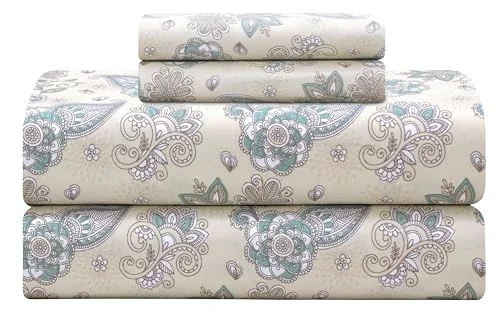
And bamboo viscose does move moisture off skin well. That property is real, not invented by a copywriter. It is just doing that job through a closed weave, and on a hot night the closed weave wins the argument.
Moisture-wicking and airflow are two different jobs, and a bamboo sateen does one and blocks the other. You feel it as a sheet that is cool to the touch the second you get in and then holds a warm, slightly damp patch under you an hour later. The next stage is often clingy, with the sheet sticking to a damp back instead of sliding off it. The moisture came off your skin exactly as advertised, and then had nowhere to go.
What to Change Before You Buy Anything
There is a decent chance the sheets already on your bed are cotton. Which means the fix might not be a purchase at all, it might be finding out what you already own.
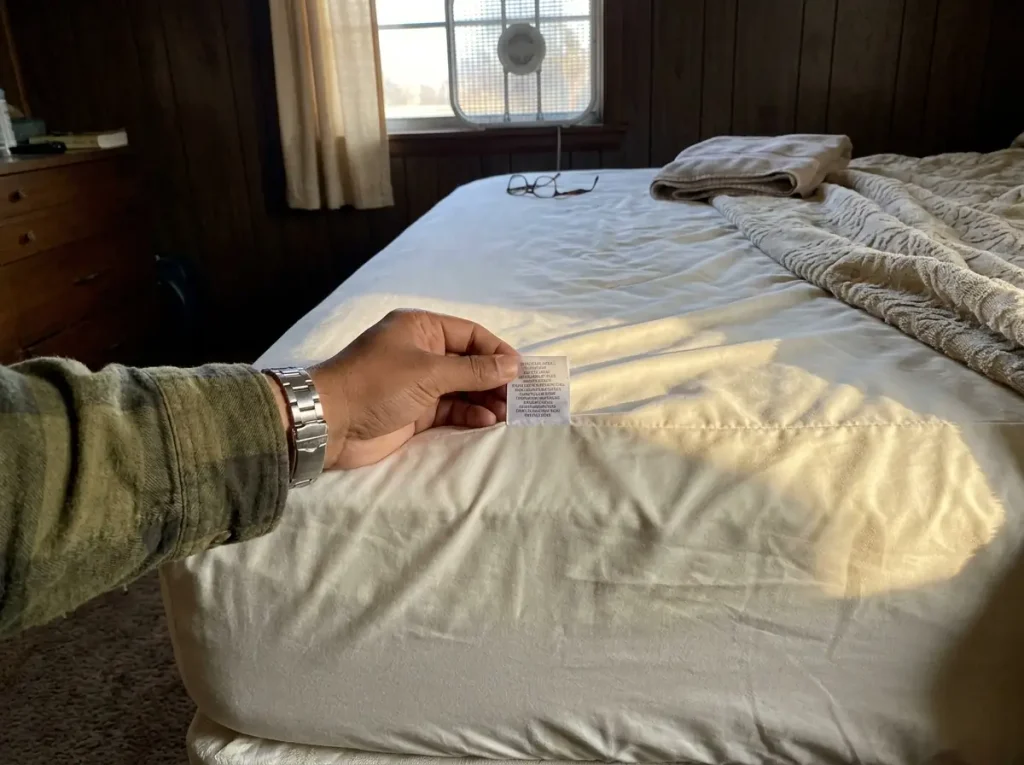
Go read the tag, then look at the surface in daylight. Cotton with a sheen is a sateen, and you have spent months blaming a fiber for a weave problem. That FTC thread is full of people whose reflex, on learning bamboo means rayon, was just buy cotton, and a good number of them were already sleeping on cotton and still hot.
Check the pillowcase separately from the sheet. It is the piece nobody thinks about and it spends eight hours against a face. A sateen pillowcase on an otherwise percale bed keeps your head warm all night while the rest of the bed behaves, and because it came with the set and matches perfectly, nobody ever suspects it.
Then take a layer off. Remove the top sheet, or keep the top sheet and lose the duvet. Either way you have removed a trapped pocket of air, and trapped air holds more heat than any weave choice moves. That change costs nothing and works tonight.
The usual advice on where money matters points the same way. In a much-quoted post from a hot sleeper who spent roughly the price of a mattress fixing her bed, the sheet and the pillowcase were the two purchases that changed anything, and the wool topper and the all-season duvet insert were rated the weakest of the lot. Spend on the layer that touches skin before the layers that do not.
Wash the percale you already own before you judge it, too. Cotton percale runs the opposite curve to bamboo: it arrives stiff and improves from there, and a set that was nearly returned unopened can become a favorite after one wash and one night. And move some air in the room. A fan changes a bed more than a fiber swap does, and it is already in the house.
If, after all of that, you do want percale and do not want to spend, the Linen Home 100% Cotton Percale Sheet Set is 200-count cotton percale with a 15-inch pocket and an OEKO-TEX tag, and it proves the section’s own point: the weave does the cooling, not the price. Though at 200 threads it feels noticeably coarser in the hand than the pricier percales and it stays that way, so buy it for the mechanism and not for the hand. The rest of the cheap end of bedding for hot sleepers follows the same logic layer by layer.
What Each One Is Like at Wash Twenty
Week one lies. Bamboo viscose is at its absolute best out of the package and cotton percale is at its worst, which is exactly backwards from how the purchase decision gets made, and both of those facts reverse over a season. The two fabrics run opposite curves: viscose starts slick and soft and degrades; percale starts stiff and papery and softens every time you wash it.
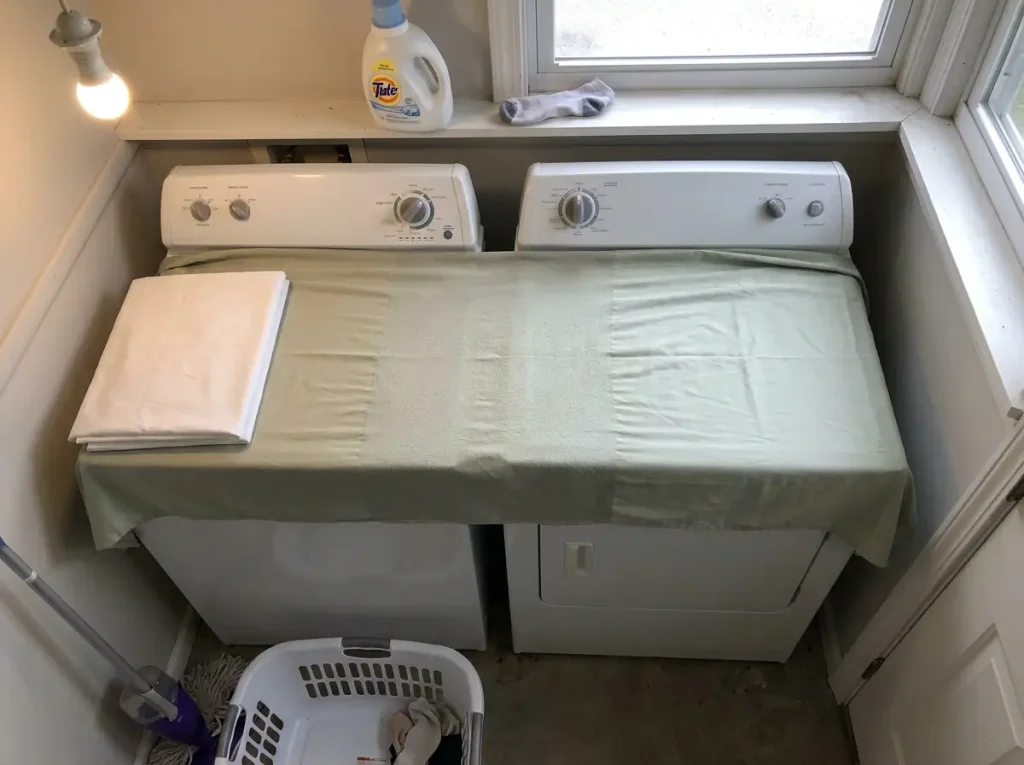
Viscose sheets are often described more bluntly than any brand will print. Some buyers say viscose sheets feel softer than cotton at first but wear out far sooner, and they do not buy them again.
Several separate users in that same thread report their bamboo-labeled sheets running hot and not breathing, which is not a fiber failure. It lines up exactly with the weave. If the specifically bamboo side of that question is what brought you here, whether bamboo cooling sheets work at all takes it apart on its own terms.
Now the honest part, and it is the reason this section exists. Nobody publishes a wash count for when bamboo viscose starts to pill. Not the competitors, not the sleep-health authorities, not the threads.
The durability complaint is consistent and repeated and it comes from people who followed the care tag, but the number does not exist, and I am not going to invent one to make this section look more authoritative than the evidence is. What the community gives us is a proportion, wore out in 5% of the time as cotton, and a proportion is not a wash count. Treat it as a direction, not a date.
When you check a set for wear, look at the middle third of the flat sheet, not the corners and not the hem. That is the band your shoulders and hips move across all night, and it is where pilling and thinning show up first by a wide margin. A set can look perfect at the edges and be finished in the middle.
So what should you look at after a season? Three things: pilling in that middle third, the elastic casing on the fitted sheet going wavy instead of snapping flat when you pull it, and on a sateen, the sheen dulling unevenly in patches that match where you lie.
How you wash the set decides how fast it gets there, and this is the part where bamboo is genuinely the fussier of the two. Viscose loses a chunk of its strength while wet, so a cold water wash on a gentle cycle is not a suggestion on that fabric, it is the difference between four years and one. Cotton percale forgives almost anything, warm water included.
Both do better on a low heat dry, and if you tumble dry either one on high you are cooking the fibers and setting the wrinkling into the cloth at the same time. Pull the set out slightly damp and the percale comes out of it far flatter.
Two more things belong here. Skip the fabric softener on both fabrics, permanently: it works by depositing a waxy coating on the fibers, which is exactly the coating that fills in a percale’s gaps and turns a breathable sheet into a warm one, and on viscose it accelerates the pilling by gumming the surface. And if you can line dry, do, because it is the single gentlest thing available and it costs nothing. On colorfastness, dark sets of either fiber give up dye for the first three or four washes, so wash them alone until the water runs clear.
Hot water and high dryer heat are what strip a fabric fastest, and any resin finish that made a sheet feel smooth in the store is gone within a few washes either way. Follow the care tag, because it is the authority on the specific set you bought and this article is not.
There is a difference in how the two fail, and it is worth knowing before you pick. A sateen fails visibly and a percale fails invisibly. When a sateen’s long floats break, the surface goes patchy and dull in exactly the spots a sleeper touches, and you can see it from the doorway.
A percale just gets thinner and softer and better until one day a corner gives out. It never looks worn. Right up until it is.
Two People, One Bed
The $1,500 hot sleeper who fixed her own bed added a detail at the end of her post that almost nobody quotes: her boyfriend then found the same bed too cold under the same covers. Solving one side of a shared bed created a problem on the other, which is what happens when two sleepers are treated as one thermostat.
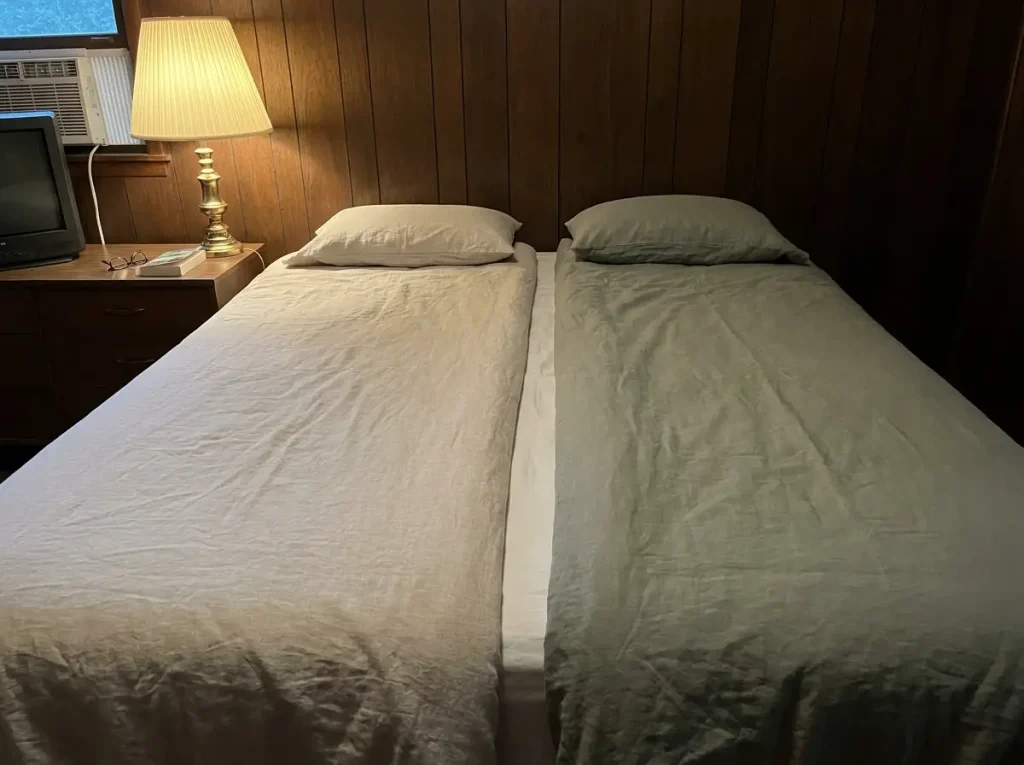
Start from the constraint, because two people one bed is a different problem from one person shopping alone and almost nobody writes it that way. The sheet cannot be split. It is one piece of cloth stretched across both of you, so it gets chosen for the hot sleeper, and it is percale. That is the one decision the cold sleeper does not get a vote on, and it is worth saying out loud at the start rather than negotiating it for three weeks.
One boundary before the fixes. Everything here is about a bed that runs warm for one of you and cool for the other, which is a bedding problem with a bedding answer. Night sweats that show up every night regardless of what is on the bed are a different category, and that is a conversation with a doctor before it is a shopping decision.
Everything above the sheet can be split, and that is where the argument actually gets solved. Two separate duvets at two different weights, rather than one compromise duvet that is wrong for both of you in opposite directions, is the Scandinavian arrangement and it is the whole fix. If you are rebuilding the stack from there, the full bedding set for a hot sleeper, layer by layer goes through it piece by piece. Pillowcases split too, and nobody thinks of it: the hot sleeper’s is percale, the cold sleeper’s can be whatever they like, same set, two cases, no argument.
Buy the percale set, then buy two extra pillowcases in whatever the cold sleeper prefers. Sheet sets ship with matching cases and everybody assumes that is a rule. It is a packaging decision. Two pillowcases is the cheapest temperature compromise available on a shared bed and it needs no discussion after the first night.
Where does the split-by-weave idea come from? To be straight about this: the accounts of the mismatched-partner problem stop at temperature-zoned pillow layers. Splitting a bed by weave above the sheet is this site’s own synthesis, not something a competitor or a thread already proposes. It follows from the mechanism rather than from anyone’s testimony, and you should weigh it that way.
What not to do is buy a bamboo set as the compromise because it sounds cooler than cotton and therefore feels like meeting in the middle. It gives the hot sleeper a closed weave and gives the cold sleeper a fabric that feels cold on contact. The worst of both, bought deliberately.
One more thing about the two-duvet setup, since it puts people off: there is a visible seam down the center of the bed, and for the first week it reads as a flaw somebody ought to fix. It is not a flaw. It is a vent, and it is doing a share of the cooling on the hot sleeper’s side.
Which One to Buy, by Sleeper Type
Not the winner is. The honest shape of the answer is that one of these is right for most hot sleepers, one is right for a narrower case, and the most common version of bamboo is right for almost nobody who sleeps hot.
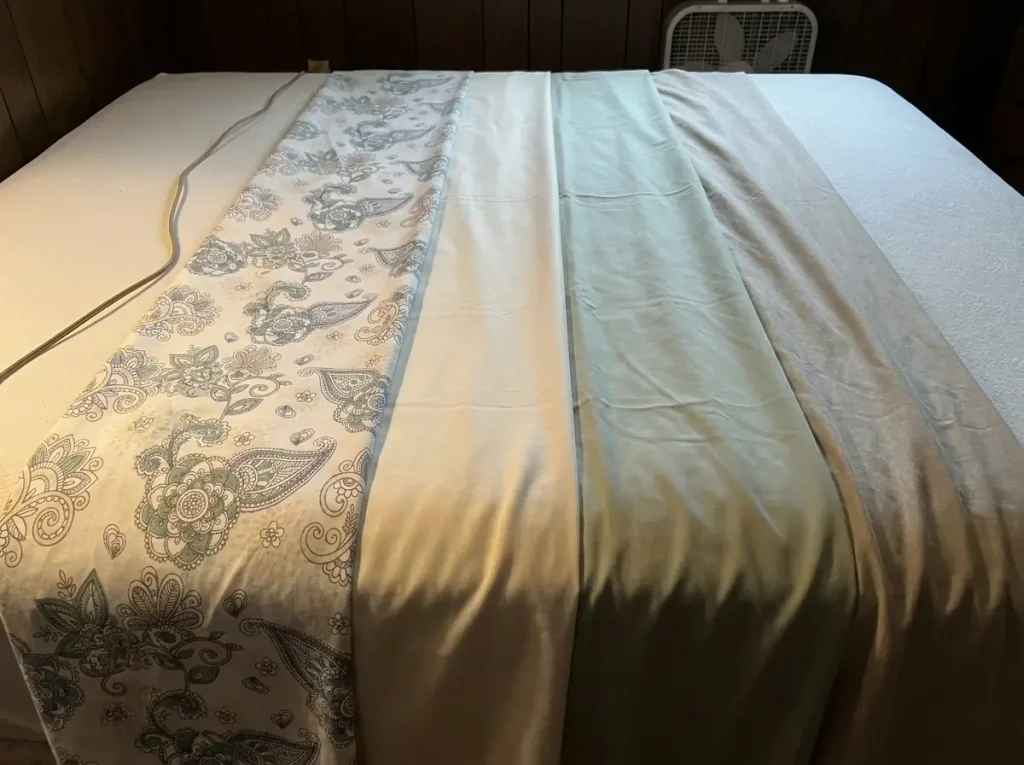
Sleep hot and want a cooler bed: cotton percale. That is the answer most of the time, and the reason is the weave and not the fiber. If you want a set built and marketed for exactly this, the Brooklinen Percale 4-Pc Sheet Set for Hot Sleepers is 100% cotton percale at 270 threads with an OEKO-TEX tag and the use case in its own product name, though the name carries more of the premium than the cloth does, and it does nothing over a plain percale that the cheaper sets in this article do not already do. The same question approached from the other fabric is the same question from the percale side.
Want the slick drape and accept the tradeoff: check the tag for lyocell. Lyocell from bamboo runs a closed-loop solvent process, more traceable and less chemically aggressive than plain viscose, and it is the one version where the marketing and the fabric roughly agree. The ettitude 100% Lyocell from Organic Bamboo Sheet Set is the concrete example, with a 17-inch pocket and OEKO-TEX Standard 100 Class 1, and it is still a sateen, so it still closes the weave. Lyocell fixes the process, not the airflow, and that is the honest limit of the exception. Both of these sets carry certification marks, so it is worth saying what they mean: an OEKO-TEX Standard 100 tag means the finished fabric cleared a chemical safety threshold — not that it’s the better-made sheet, and what OEKO-TEX and GOTS actually certify is a shorter list than most shoppers assume.
Sleep hot next to somebody who does not: percale on the sheet, two duvets above it, two pillowcases. The section above has it.
Sleep cold, or somewhere in the middle: this whole comparison matters much less to you, and a cotton sateen is a perfectly good sheet with a nicer drape and a better photograph. The argument here is about heat. Take the heat away and the sheen becomes a preference rather than a cost, which is also why whether cotton sheets are good for hot sleepers at all depends entirely on which cotton somebody means.
And skip either fiber’s premium tier if it is being sold to you on thread count. The number is not the quality, and above 400 it is usually working against the thing you are trying to buy. If linen is the next fabric on your list, bamboo against linen is the same comparison with a very different answer. Everything in this article is one application of the four levers (fiber, weave, weight, finish) applied to a single question, and bedding for hot sleepers, layer by layer applies them to the rest of the bed.
The Short Version
Three things to carry out of this.
The tag names the fiber, and the fiber is the least useful of the four things that decide how hot a sheet sleeps. Weave first, then fiber, then weight, then finish. Read the weave and you have read most of the answer.
Bamboo on a sheet is almost always rayon woven as sateen, and a closed weave beats a good fiber on a hot night. Cotton percale is the right answer most of the time, and it is right for a structural reason rather than a brand one.
Whichever you buy, judge it in a season and not in a week, because these two fabrics move in opposite directions from the moment you open the package.
The wash-twenty check: after a season, look at the middle third of the flat sheet where your shoulders and hips move across it, and at whether the elastic casing on the fitted sheet still snaps flat instead of lying wavy. Those two spots are where both fabrics stop performing and tell you the truth.
Tonight, before buying anything: go read the tag on the sheets already on your bed. If it says cotton and it has a sheen, you have found your problem. Take the top sheet off and sleep a week without it before you spend a cent. And if your question was never really about temperature, cotton against bamboo without the heat question covers the rest of it.
Frequently Asked Questions
01What is the downside to bamboo sheets?
Most bamboo sheets are rayon woven as sateen, so the closed weave traps heat, and long-term users consistently report they wear out faster than cotton. No source publishes a wash count for when the pilling starts, so treat the durability complaint as a direction rather than a deadline.
02Are cotton or bamboo sheets better for cooling?
Cotton, when it is percale — which is how cooling cotton is almost always sold. But a cotton sateen sleeps warmer than a bamboo percale would, so the weave is the variable doing the work here, not the fiber name on the tag.
03What type of sheet material is best for hot sleepers?
A percale weave first, in cotton or linen, because the one-over-one-under structure leaves gaps that move air. Weight and finish matter more than the fiber name, and a thread count above 400 usually works against you rather than for you.
04Are bamboo sheets good for hot sleepers?
Usually not, because the mainstream version is viscose woven as sateen, and sateen closes the gaps air would move through. The exception is lyocell from bamboo, a cleaner and more traceable process — but it is still a sateen, so it is still a closed weave.
05Is bamboo viscose the same as rayon?
Yes. The FTC’s 2010 warning to 78 retailers stated that rayon is rayon even when bamboo was used in the process, because nothing of the plant survives it. Only bamboo linen, also sold as bast fiber, is mechanically processed plant material.


Tried it on your own bed?
No comments yet. Tell us what you changed, and what the sheet did after a few washes.