
What’s in here8 sections
Both packages say cooling. One of them is telling the truth about the first minute and the other about the next eight hours, and nothing on the box tells you which is which. A smooth, dense surface pulling heat off your skin the second you lie down is not the same physical event as an open weave moving air across you for hours, and bamboo vs linen is really a fight between those two mechanisms wearing one word. Below: what each fabric physically is, which kind of cool each one delivers, the head-to-head, what a season of washes does to both, what changes when only one of you sleeps hot, and the free change to make before buying either.
Quick Answer
For staying cool all night, linen. Its open weave keeps moving air and releasing moisture for hours, while bamboo viscose absorbs sweat faster than it gives it back and turns clammy. Bamboo wins one real thing: the cold-to-the-hand hit at the moment you get in.
What You Are Actually Buying
You have a bamboo set in the cart and you have filed it under natural, next to the linen. That filing is the problem, and it is not the shopper’s fault.
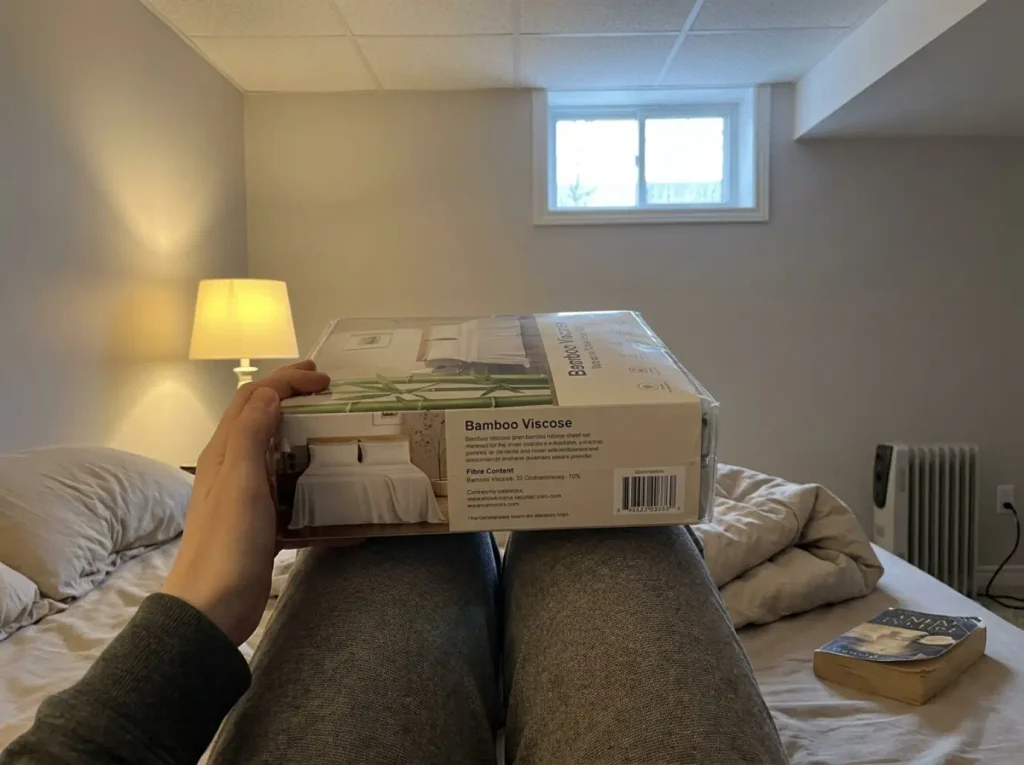
One of these two words on a label describes a plant. The other describes a fiber. Nobody has ever told you to check which is which, and the tag is where it shows.
Linen is flax, and the process is mechanical
Linen comes off a flax plant and stays flax the whole way. The stalks are retted so the woody parts rot away from the usable fiber, scutched to beat those parts off, combed straight, and spun. Nothing is dissolved and nothing is rebuilt. What ends up on the bed is the plant’s own fiber with its structure intact, and that structure is hollow along its length, which matters enormously later.
The number worth carrying forward is moisture regain, the share of its own weight a fiber will pull out of the air. Flax runs around 12.4 percent, the highest of the three fibers in this conversation. Cotton sits near 8.5 percent. That is the ceiling on how much sweat a fabric can take on before it has nowhere to put any more.
Bamboo is almost always viscose, and the process is chemical
Bamboo the plant is a woody grass, and you cannot spin a woody grass into a sheet. So it gets pulped, dissolved in a bath of sodium hydroxide and carbon disulfide, extruded through a spinneret and re-solidified into thread. The industry name for the result is regenerated cellulose, sold as viscose or rayon.
Bamboo rayon and bamboo viscose are the same material under two names, and neither is a natural fiber in the sense flax is. Semi-synthetic is the honest word for it.
If that reads as an accusation, it is not meant as one. Viscose from bamboo comes in at roughly 11.0 percent moisture regain, comfortably above cotton, and it is genuinely good at moisture-wicking. The fiber is not a fraud. The label is.
Here is the rule, and it is a rule rather than an opinion. Under the FTC’s own bamboo textile labeling rule, a textile may only be called bamboo if it is made from actual bamboo fiber; anything made from rayon or viscose sourced from bamboo plant material has to be labeled rayon (or viscose) made from bamboo. A tag reading plain bamboo is very likely out of compliance.
And the federal enforcement behind that is not theoretical. The FTC’s bamboo program, which also polices the antimicrobial and sustainability claims that ride along with the word, has produced over three million dollars in fines since 2021, including separate actions against Kohl’s and Walmart. If you want the chemistry rather than the shopping consequence, that lives in what viscose means once it is on the bed.
One more label to take apart while we are here. Organic bamboo describes the farm, not the sheet. No widely recognized organic certification exists for finished bamboo viscose or lyocell fabric, so the word is doing its work several steps upstream of anything you will sleep on. Most of the sustainability language on a bamboo package works the same way: it is describing a grass, not a process, and the gap between those two is what FTC greenwashing enforcement exists to close.
The one bamboo worth separating out
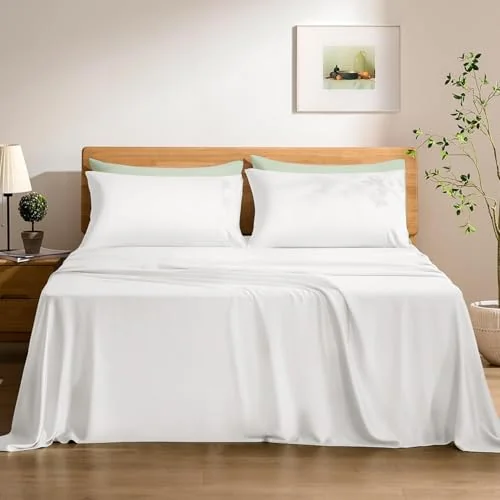
There is a version of bamboo that deserves to be pulled out of the pile, and it is bamboo lyocell. Same plant, different chemistry: the closed-loop process behind lyocell captures the solvent and reuses it instead of discharging it, which is the entire environmental argument, and the resulting fiber behaves somewhat better under wear than open-loop viscose does. The ettitude 100% Lyocell from Organic Bamboo Sheet Set, sateen woven with a 17-inch pocket and an OEKO-TEX Standard 100 Class 1 tag, is the closed-loop version made concrete rather than theoretical. It sits well above the viscose sets on price, and at the time of writing the listing shows only a handful of units left.
But it does not become flax by being made more carefully. It is still a regenerated cellulose, still woven sateen, and the pilling pattern that arrives on viscose arrives here too, just later. Better process, same fiber family.
Turn the package over before you read the front of it. The fiber content panel is the only part of a bedding box that is legally obliged to be accurate, and it is on the back in six-point type. A listing whose own copy says viscose from bamboo has read the rule. A front that shouts 100% BAMBOO in large letters is telling you something too.
Two Kinds of Cool
Everybody has done the store hand-test. Palm flat on the folded set, and the cold-to-the-touch one wins. That test is not wrong, exactly.
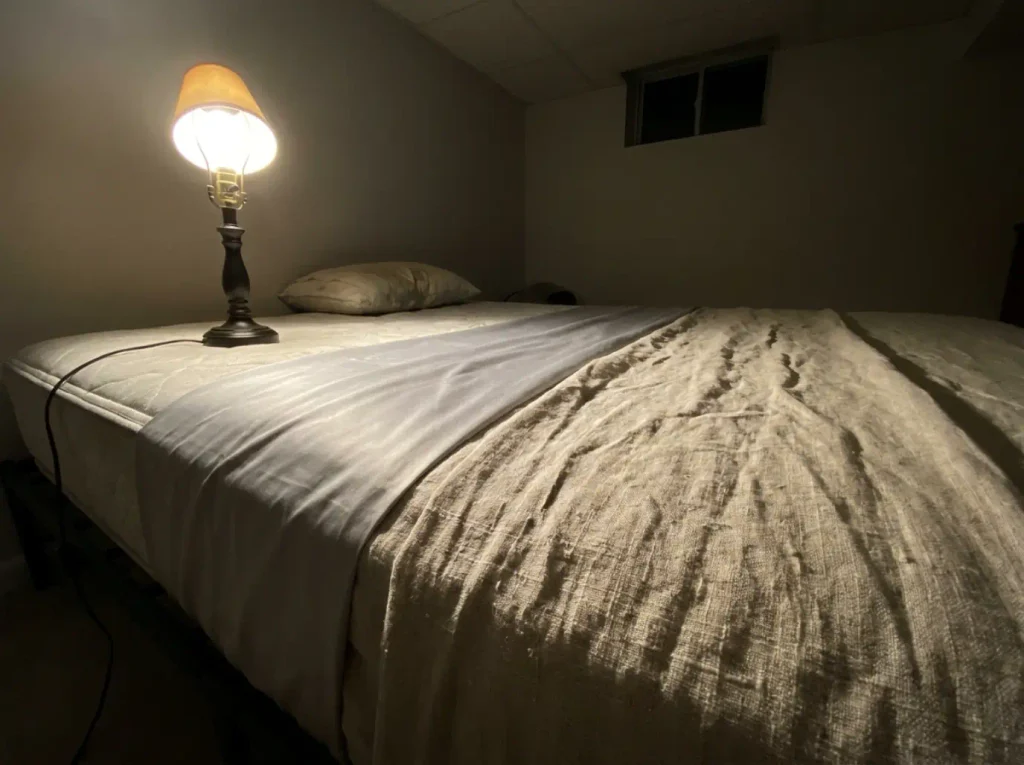
It measures first-touch cool, which is one of the two mechanisms in play, and it happens to be the one that stops mattering about forty seconds after you lie down. The other one is thermoregulation, and no hand on a folded set has ever measured it.
The first minute is surface conduction
Bamboo viscose is smooth. The filament comes out of that chemical bath with no twist, no scale and no short ends sticking out, and when it is woven sateen the surface sits flush against skin with almost nothing between the two. Heat moves out of you into it fast, by straight conduction, and that cold hit is real, immediate and measurable. It is not marketing.
The softness people buy it for and the cold they feel are the same property: a surface with nothing standing up off it. Linen’s hand-feel is the opposite (crispness, texture, a fabric you can feel the structure of), and that difference is not a quality gap. It is two different surfaces doing two different jobs.
It is also self-limiting, which is the part nobody prints. Conduction runs on the difference in temperature between two surfaces, so the moment the sheet has warmed to roughly your temperature the effect is spent. That takes minutes. What you felt in the shop was the fabric’s first minute, on a cold shelf, against a warm hand, and that is precisely the frame the marketing photograph is selling.
The night is structural airflow
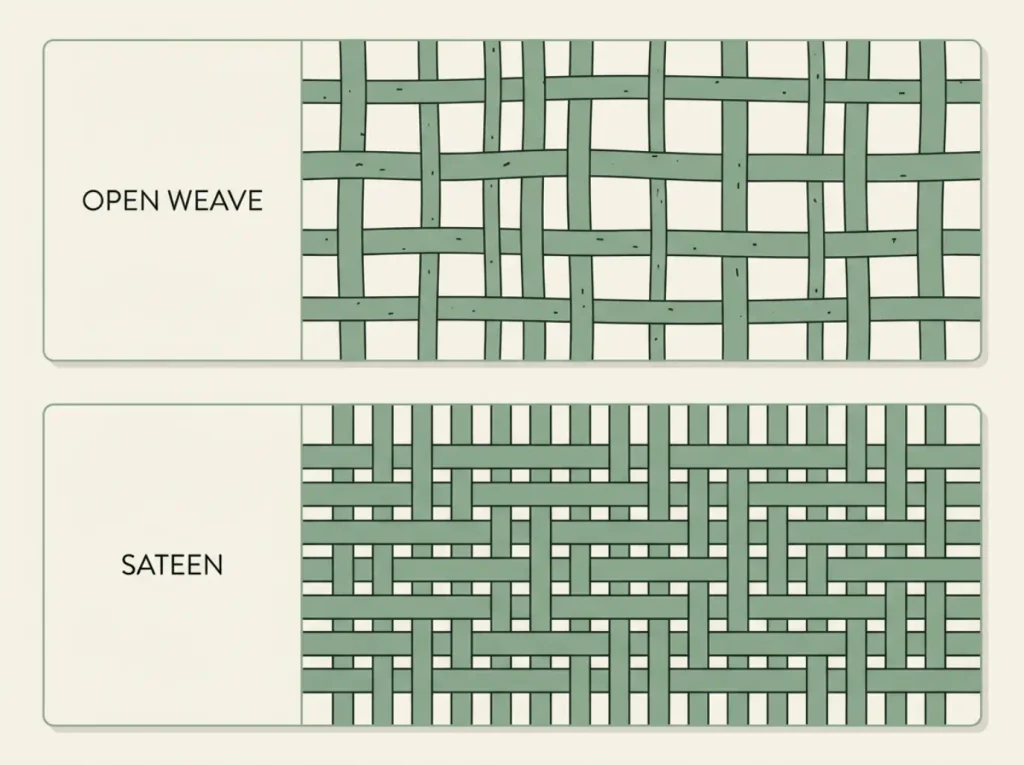
Linen works on a different principle entirely. The flax fiber is hollow, and linen is characteristically woven loose and open, so air moves through the cloth continuously rather than sitting trapped against you. Moisture goes in and comes back out quickly, and the fabric does that all night without needing a temperature difference to run on. All-night cooling is structural rather than thermal: the cloth is not taking heat off you, it is refusing to hold your own back against you.
Bamboo viscose takes moisture on perfectly well. It is slower to hand it back. So once the fabric is saturated it goes from cool to clammy, which is the usual word for it, and an exact one: cool on contact, damp an hour later. That difference in release rate is why linen feels unremarkable at ten at night and completely correct at three in the morning, and why a lot of people who bought bamboo for the first-touch feel end up describing the same night in reverse.
Why the weave undercuts bamboo’s own claim
Bamboo sets are almost always woven sateen, a mostly-over float that puts long stretches of thread on the surface. That is deliberate, because the float is where the silky hand comes from, and the silky hand is what people are buying. The problem is that a float also closes the gaps a plain weave leaves open, so the same structure that produces the feel traps the heat. If you want to see the two structures side by side, that is percale and sateen, side by side.
Which means the silky feel and the cooling claim are fighting each other inside the same sheet. Bamboo does not lose that fight because of what the fiber is. It loses it because of the weave the fiber is nearly always sold in, and that argument runs further than this comparison needs: the weave does more of the work than the fiber does is the whole of the case against bamboo on the cotton side too.
Both fabrics feel cool when you first get into bed. The one you actually notice is the one you are still not sweating in at three in the morning, and by then nobody is thinking about how the sheet felt on the way in.
Bamboo vs Linen, Head to Head
Everything the last two sections established, in the shape a person uses when they are deciding tonight.
How to read this table
Half of these rows are mechanism and half are ownership, and which half matters depends on who you are. The mechanism rows are the ones that decide it for a hot sleeper: all-night breathability, moisture regain, typical weave. Those are the rows about what happens at three in the morning.
The ownership rows are care, lifespan and cost per year, and those decide it for whoever runs the washing machine and whoever pays for the replacement. Somebody choosing on feel in a shop is reading exactly one row, first touch, and it is the row that expires soonest.
| What you are comparing | Bamboo viscose | Linen (flax) |
|---|---|---|
| What it actually is | Regenerated cellulose, chemically processed | Flax fiber, mechanically processed |
| Label should read | Viscose (or rayon) made from bamboo | 100% linen, or 100% flax |
| First touch | Cold and slick immediately | Dry, textured, cool but not cold |
| All-night breathability | Slows once saturated; turns clammy | Keeps moving air, releases moisture continuously |
| Moisture regain | ~11.0% | ~12.4% |
| Typical weave | Sateen — silky, denser, holds more heat | Open plain weave — airflow is structural |
| Wet strength | Weakens when wet | Strengthens when wet |
| Wash routine | Cold only, gentle cycle, no softener, low heat | Warm or cold, normal cycle, tumble low or line dry |
| First impression | Best on day one | Stiff for the first several washes |
| Softens or degrades | Pills at the contact points | Softens with every wash |
| Realistic lifespan | 2 to 3 years | 10 to 20 years |
| Cost per year of ownership | Roughly 3x higher | Roughly 3x lower despite the higher sticker |
The two rows nobody else puts in a comparison table are wet strength and cost per year, and between them they explain almost every other row above. A fiber that weakens the moment it is soaked is a fiber that degrades on the one occasion it gets soaked every week, and that is the whole of the pilling story and the whole of the lifespan story, which in turn is the whole of the cost story.
What Twenty Washes Does to Each One
Almost everything feels good after the first wash. That is the problem with every list you have read: week one lies, and week one is where the reviews are written. You have bought sheets that felt right in March and looked tired by September, and nobody told you in advance what tired was going to look like.
Bamboo pills, and it pills somewhere specific
Take the mechanism first, because it makes the rest predictable. Bamboo viscose loses significant strength when it is saturated, and it is saturated on every single wash. That is the moment of maximum mechanical friction, applied to the fabric at its weakest. Repeat weekly.
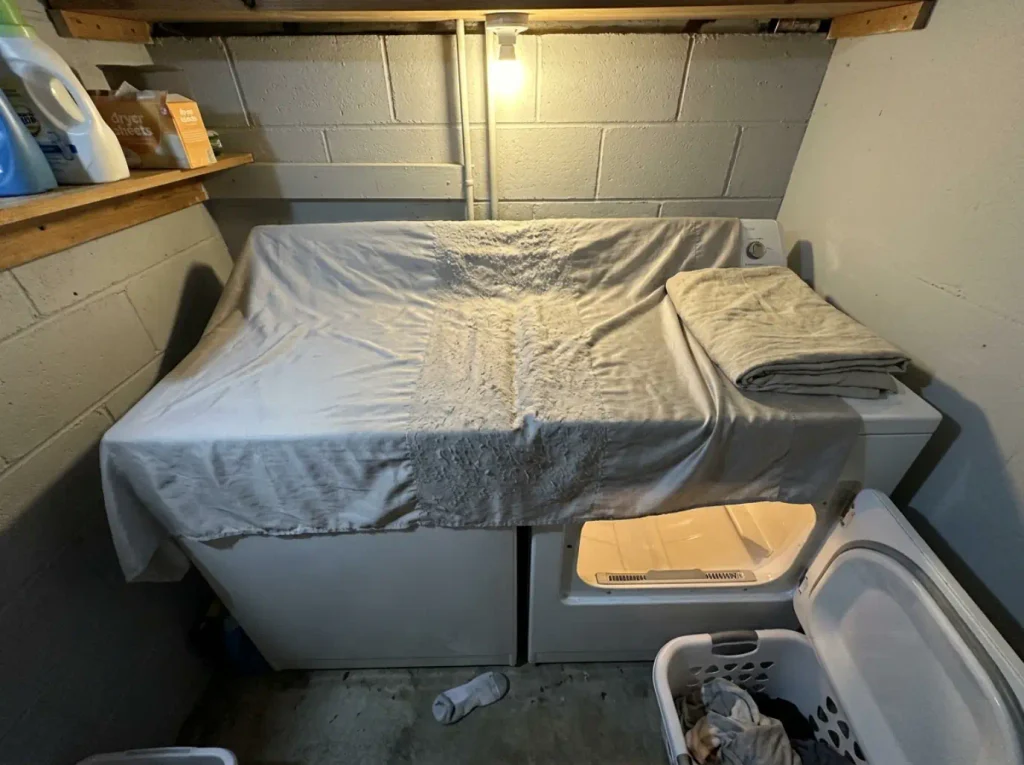
So the pilling is not evenly spread, and this is where the generic advice falls apart. The small balled-up fibers show up first where a shoulder or a hip presses every night, because that is where the friction concentrates between washes as well as during them. On a shared bed, one side can look noticeably worse than the other with the same set and the same laundry routine, which reads like a manufacturing defect and is not one.
The community traffic on this is not subtle. Bamboo pilling comes up often, and the pattern across the middle-star reviews on bamboo listings compresses to one repeated sentence: loved it at first, then it started pilling. The line people draw is roughly this: sets that keep their texture through many washes get kept, and sets that pill early get returned.
Linen does the opposite, and it does it slowly
Flax gets stronger wet. Read that against the paragraph above and the whole picture inverts: the wash that degrades bamboo is the same wash that softens linen. If you want the arithmetic on that, how long a linen set actually lasts is the version with the years attached.
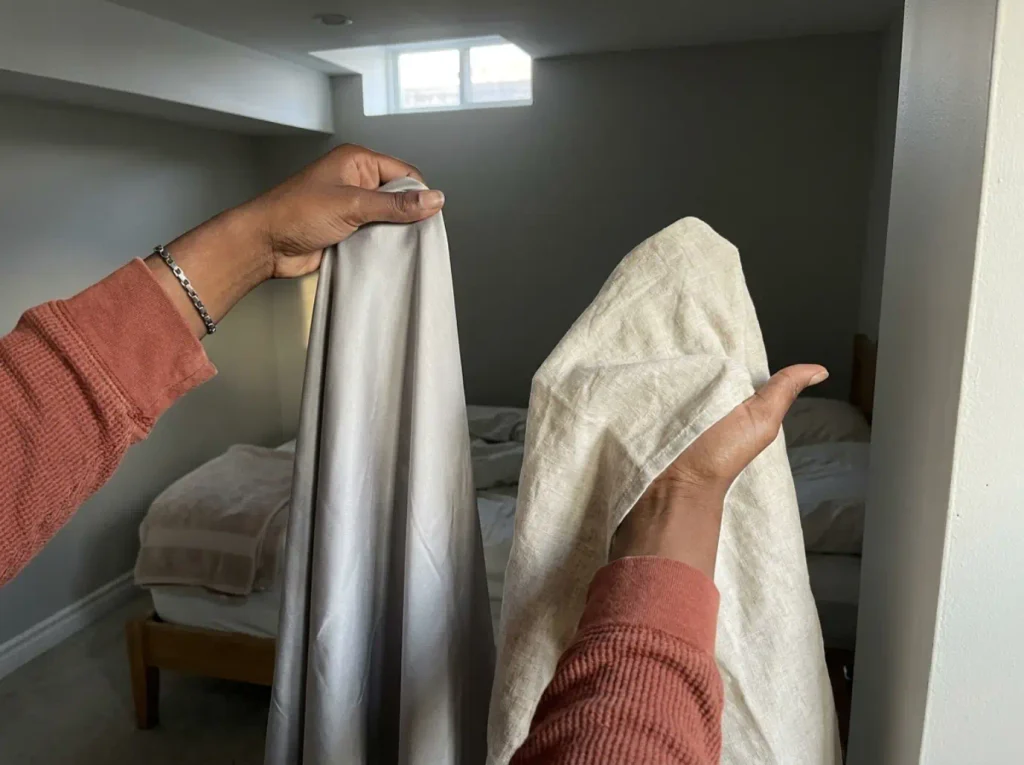
Straight out of the packet, linen is stiff enough that first-time buyers genuinely message a friend to ask whether they got a bad batch. They did not. That stiffness was never a defect, it was the starting point, and by wash ten the set is the softest thing on the bed.
The honest cost sits right next to that advantage, though, and it never leaves. Linen has no wrinkle resistance to speak of and it never will: it creases permanently, and the set that softens beautifully is the set that will never look ironed. That is the creasing you are agreeing to, and it is a decision to make before the box arrives rather than after.
One more thing worth naming as what it is. Linen does not appear in the pilling threads. Not rarely, not less often, it simply is not there. That is an absence rather than a study, and it should be read as one, but an absence across the discussions about this exact failure mode is still information.
What the care label is really telling you
Bamboo’s care instructions are a warning wearing a different hat. A cold wash only, gentle cycle, no bleach, no fabric softener, low heat or hang dry. The sellers’ own care pages spell out why: a hot wash temperature and normal agitation degrade the fiber and weaken the elastic in the fitted sheet. That is the manufacturer telling you, in the smallest type on the package, what the fiber cannot take.
Linen’s label is forgiving by comparison. Warm or cold, normal cycle, tumble low or line dry, and the fabric improves under the treatment rather than surviving it. Longevity here is not a claim on a box, it is the arithmetic of a fiber that gets stronger every time it goes through the thing that wears the other one out.
The honest framing is not that one label is good and the other bad. A fabric that needs a delicate cycle to survive is a fabric telling you what it is, and whether that matters depends entirely on whether your household actually runs a delicate cycle. Plenty do not. If yours is one sheet set in with the towels on a Sunday, the care label has already decided this comparison for you.
You will feel the pilling before you see it. Run a flat palm across the middle third of the sheet, slowly, from the pillow toward the foot. The fabric stops sliding under your hand in one patch about the size of a dinner plate, roughly where your shoulder lands, while everywhere else still feels new. Do that at the end of the first summer and you will know exactly which fabric you bought.
When Only One of You Sleeps Hot
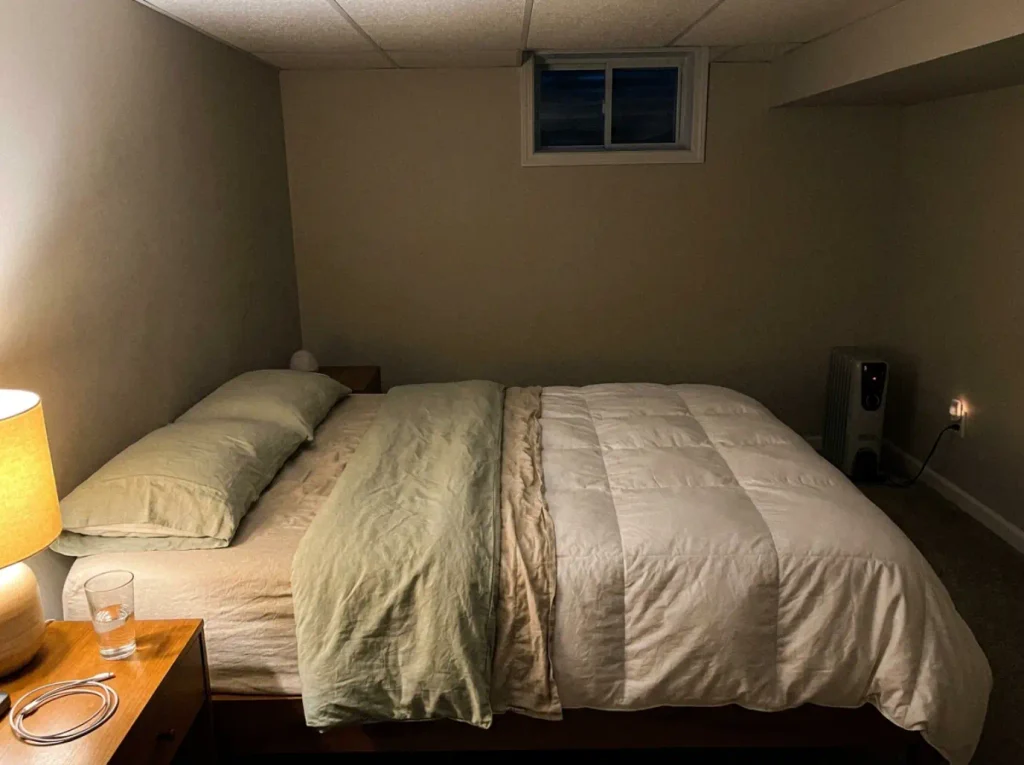
The usual advice picks a fabric for a person. After enough of these decisions get made for a bed rather than for one sleeper, the framing has to change: you are not choosing sheets for yourself. You are choosing sheets for a bed where one person kicks the duvet off at two and the other pulls it back at four.
Why the fabric choice gets harder, not easier
A sheet is shared, and that is the structural problem. You can run two duvets. You cannot run two fitted sheets on one mattress, so unlike every other layer on the bed this one has to be a single decision for two different thermostats.
Linen’s texture is where the argument usually starts. The partner who is not the hot one reads that dry, slightly coarse hand as scratchy rather than cool, and reads it that way most strongly in the first few weeks, which is exactly the window before it softens. Bamboo runs the opposite way and causes the opposite complaint: the cold sleeper likes the slick hand immediately, and the hot sleeper is the one waking up clammy at three while their partner sleeps through it perfectly happy.
Split the layers you can split
The free move comes first, and it costs nothing. The sheet is shared, but the layers above it are not. Two separate duvets on one bed is the standard fix for a thermostat mismatch, and it works because it stops the shared layer from having to be a compromise at all. The full layer-by-layer version of this lives in the rest of the layers on a hot sleeper’s bed, and it is worth reading before you spend anything on a sheet.
Do that and the sheet decision gets easier, because it stops being thermal. With the top layers split, each person is already running their own temperature, and the sheet can be chosen on durability and feel instead of as a thermal treaty between two people who want different things.
If you have to pick one sheet for two people
Linen, once past the break-in period. Not because it wins every row, but because it is the fabric that stops being an argument: it is not cold against a cold sleeper the way slick sateen is, and it is still doing its job for the hot one at three in the morning. That is a fairly rare combination in a single fabric, and it is the reason this section does not end in a compromise.
The caveat is real and it has to be said out loud before the box arrives, not after. Those first weeks are genuinely stiff. A partner who hates the hand-feel on night one and has not been told there is a timeline will conclude the set is wrong, and they will conclude it about three weeks too early.
Tell them wash ten. Then the answer to what comes next is building the rest of the bed around it.
Do This Before You Buy Either One
A sheet is the layer people replace, because it is the layer they can see. It is rarely the layer doing the damage.
Three changes that cost nothing
Drop a layer. Sleep a week with no top sheet, or with the comforter swapped out for the flat sheet alone. A large share of hot-sleeper complaints are a fill and a duvet cover problem wearing a sheet costume, and the sheet takes the blame because it is the thing touching you. The same goes for the pillowcase, which is the fabric your face spends the night against and the one nobody thinks to change first.
Check the room. A degree or two on the thermostat and some moving air do more than any fiber swap will. Room temperature is the layer nobody counts as a layer, and it is the one doing the most work. The fabric cannot outrun the room, and no weave ever built compensates for a closed bedroom at 72 degrees in August.
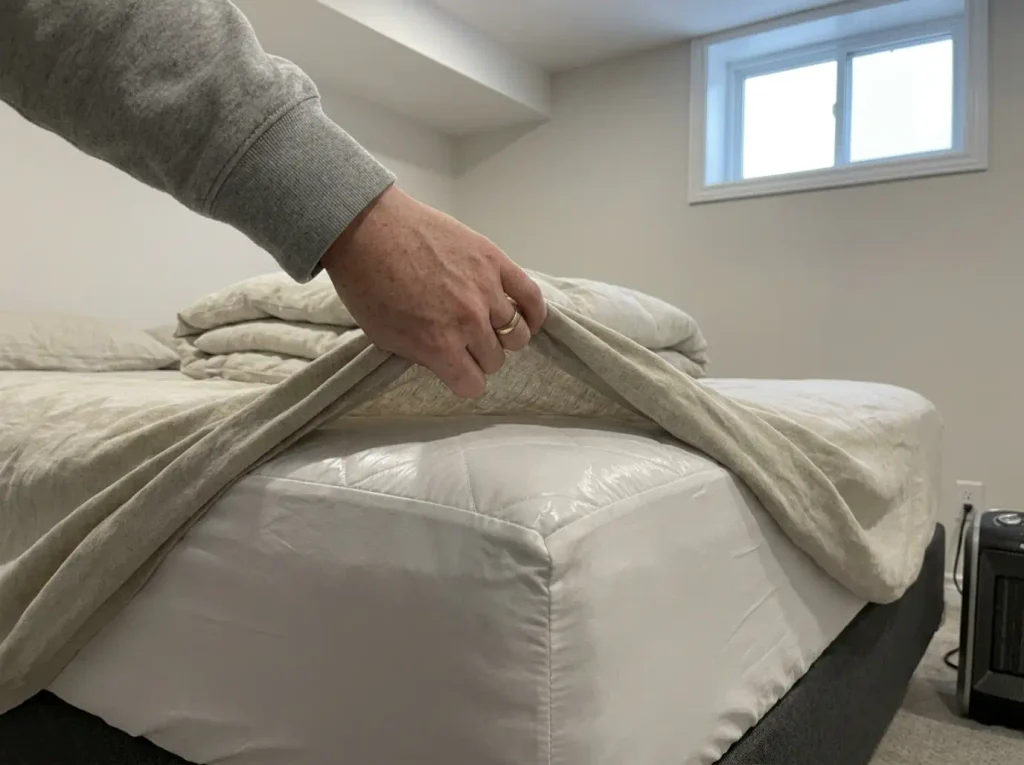
Look under the fitted sheet. A waterproof mattress protector with a plastic-backed membrane is a sealed layer running under your entire frame, and it will beat any sheet you put over it. Most people never think to look, because they installed it once, years ago, for a reason that had nothing to do with heat. If the answer turns out to be spend nothing, that is also where the cheaper end of a hot sleeper’s bed picks the thread up.
Give each one a week. A change you cannot feel after a week is a change that was not the problem, and knowing that costs you seven nights instead of a purchase.
If you are still hot, then buy — and buy on the second night, not the first
Here is the decision rule the whole article has been building toward, and it is one question. Which kind of cool do you need? If the complaint is falling asleep hot, bamboo’s first-touch conduction genuinely delivers it, and I would not pretend otherwise. If the complaint is waking at three, linen is the one still working by then, and no amount of first-touch cold gets you there.
Then the money, stated the only way it stays true. The linen set with the higher sticker price is the cheaper one per year of ownership, by roughly three times, because it lasts five to eight times as long. That is not a bargain-hunting argument, it is arithmetic, and why linen costs what it costs explains where that sticker comes from in the first place. One thing a certificate cannot do for you, though, is answer this question: what an OEKO-TEX STANDARD 100 tag actually tests for is harmful substances in the finished textile under the class covering direct skin contact, which is genuinely useful and says nothing whatsoever about whether the fiber is organic, how the plant was grown, or how the sheet will sleep.
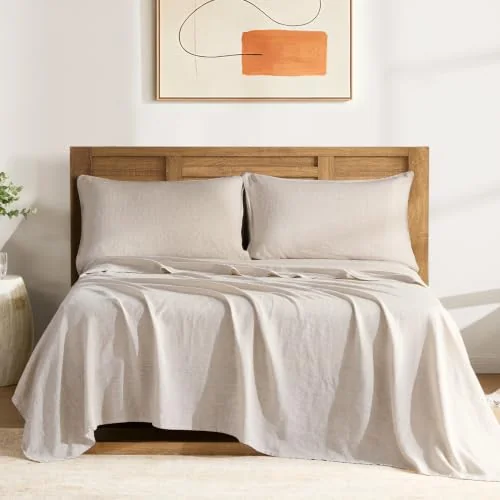
Judge a new linen set on the second night, not the first. The first night you are sleeping on the finish and on whatever the packing did to the fabric; the second night the set has been on the bed long enough to relax and you are sleeping on the weave. And if you are judging it after one wash, wash it twice more before you form an opinion — linen at wash three is not the fabric you signed up for, and neither was linen at wash one.
Conclusion
Bamboo viscose wins the first minute by conducting heat off your skin, and linen wins the night by moving air through the cloth. Those are two different mechanisms, not two grades of the same one, so pick the one that matches when you actually get hot. If the trouble is falling asleep, they are not the same answer as if the trouble is three in the morning.
The label is supposed to say viscose from bamboo. A bare bamboo on the front of a package is not a shortcut somebody took with the wording; it is a tell, and there are federal fines behind that distinction. And the higher sticker price is not the higher cost: linen outlasts bamboo viscose by five to eight times, which makes it roughly three times cheaper for every year you sleep on it.
At the end of the first summer, run your hand flat across the middle third of the sheet where your shoulder lands. Bamboo will have stopped sliding there while the rest of the set still feels new. Linen will simply be softer than it was.
Take the top sheet off tonight and sleep a week without it. If you are still waking at three, then the fiber is the thing to change.
Frequently Asked Questions
01Is it better to sleep on linen or bamboo sheets?
For staying cool all night, linen. For feeling cool the moment you lie down, bamboo. They are two different mechanisms: bamboo conducts heat off your skin on contact and then warms up, while linen keeps moving air and releasing moisture for hours.
02What is the downside to bamboo sheets?
Pilling at the contact points within two to three years, a wash routine that punishes a normal cycle, and a sateen weave that works against the cooling claim printed on the package. The fiber weakens when wet, which is every wash.
03Do bamboo sheets or linen sheets last longer?
Linen, by a wide margin: 10 to 20 years against 2 to 3 for bamboo viscose. The reason is wet strength. Flax gets stronger when it is soaked and bamboo viscose gets weaker, and both fabrics get soaked every wash.
04What are the healthiest sheets to sleep on?
The useful version of that question is a certification question. An OEKO-TEX STANDARD 100 tag means the finished sheet was lab-tested for harmful substances under the class covering direct skin contact. It does not mean organic, and it says nothing about how the plant was grown.
05Do bed bugs like bamboo sheets?
No sheet material deters them, bamboo included. Bed bugs live in the mattress, the frame and the seams rather than in the fiber of a sheet, so the fabric on top is not the variable. Changing sheet material is not a pest measure.


Tried it on your own bed?
No comments yet. Tell us what you changed, and what the sheet did after a few washes.