


What’s in here7 sections
- Where the 3-to-6-Month Number Comes From
- How Often to Wash the Case, the Protector and the Pillow
- What Moves the Count: Sweat, Pets and Eating in Bed
- What Each Wash Costs the Fill
- A Wash Schedule for One Real Bed
- Strip the Case and the Protector Together, Then Watch the Pillow
- Frequently Asked Questions
Think of the pillow under your head tonight and try to remember its last wash. Most people can date the sheets and cannot date the pillow, and the number they were handed for it, three to six months, sounds like a standard.
It is a spokesperson’s rule of thumb, repeated until it hardened, and what really sets how often to wash pillows is what lands on the fill and what sits between the fill and your face. This article follows the number back to its source, splits pillow washing frequency into three clocks (case, protector, fill), shows what moves the count and what each wash costs, and ends on a schedule for one bed. If you only want to know how often to wash a pillow, the Quick Answer below settles it.
Quick Answer
Wash the pillowcase every week, the protector on its own slower schedule, and the pillow itself roughly every three to six months if it is fiberfill, down or polyester. Wash sooner when sweat, pets or eating in bed load it. Slab memory foam and latex stay out of the machine, and the care tag overrules every number here.
Where the 3-to-6-Month Number Comes From
The useful question about three to six months is who said it first and what they measured, so start with the people who put their names to it.
One sentence, three outlets
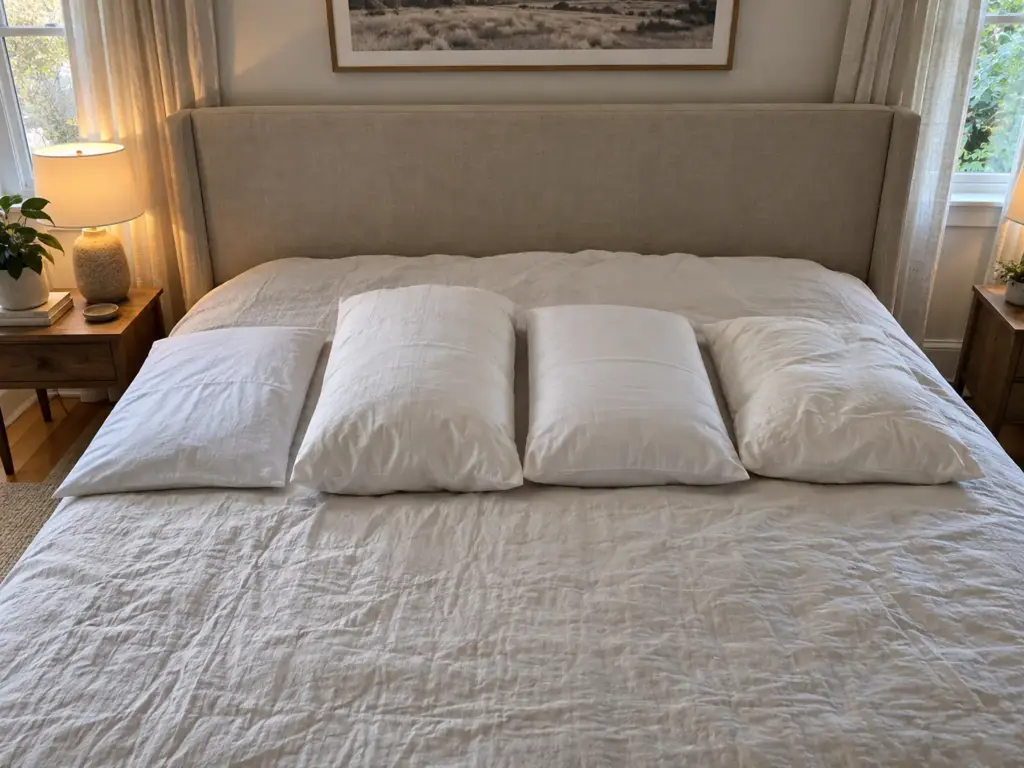
Martha Stewart’s pillow guide credits the figure to Brian Sansoni of the American Cleaning Institute: “Pillows should be cleaned at least every three to six months.” That is a rule of thumb from a trade-association spokesperson, and no test, no count of nights and no fabric comes attached to it.
The same range then comes back under other names. The Spruce prints “Generally, it’s best to wash your pillows every three to six months” and credits Becky Rapinchuk, who runs Clean Mama, a cleaning blog and franchise. Consumer Reports’ experts land on the same interval in nearly the same words, “try to wash your pillows every three to six months.”
Three outlets, three different people, one range, and nothing that shows a pillow being washed on a schedule and then compared with one that was not. A sentence heard three times starts to feel like evidence. It is still one sentence.
What the cleaning institute’s own page lists
The institute does publish a laundry guide of its own, and it is more careful than its quotes. According to the American Cleaning Institute’s own laundry guide, “Bed sheets should be washed at least every two weeks, more often if you sweat a lot at night.” The same page covers sheets, pajamas, towels and underwear, and has no line for pillows.
Read that twice, because it is the easiest place to start distrusting the range. The layer that sits beside the pillow gets a shorter interval and a reason, which is sweat. The pillow gets a number from a spokesperson and no reason at all. If sweat is what moves the sheet’s schedule, it moves the pillow’s too, and the calendar alone cannot tell you how much.
A range, not a measurement
Step outside those sources and the number loosens. A bamboo-bedding retailer suggests washing a pillow every six to twelve months, and other sources say twice a year. The distance between three months and twelve is the finding: none of these figures was measured, so each one is an opinion. Part of the spread may simply be fill, since down, polyester and foam take water and wear differently, and what each fill does by month six is a separate subject.
So hold the range the way it deserves to be held. It is a reasonable middle for a pillow on an average bed with an average load, and it is the wrong number for a bed that is not average. Everything below is about which way your bed leans, and about the two layers that take the load before the fill ever does.
How Often to Wash the Case, the Protector and the Pillow
The number above counts the pillow as one object. On the bed it is three layers, the outer two take the load first, and so each one runs on its own clock.
The case: weekly, because it touches your face
The case is the layer pressed against skin and hair every night, so it picks up sweat, skin oil and whatever face cream is left at bedtime. Consumer Reports says to launder the pillow cover and the pillowcase regularly, “say, once a week.” A pillowcase weekly is the one interval in this article that sits next to a mechanism: the layer closest to the head takes the load first, which makes its wash the pillow’s wash, postponed.
That makes washing the layers the free fix, and it comes before any new pillow or any new protector. The Sunday that most households know goes like this: the case goes in the machine, the sheets go in the machine, and the pillow underneath goes back on the bed exactly as it came off.
The protector: the layer most people never wash
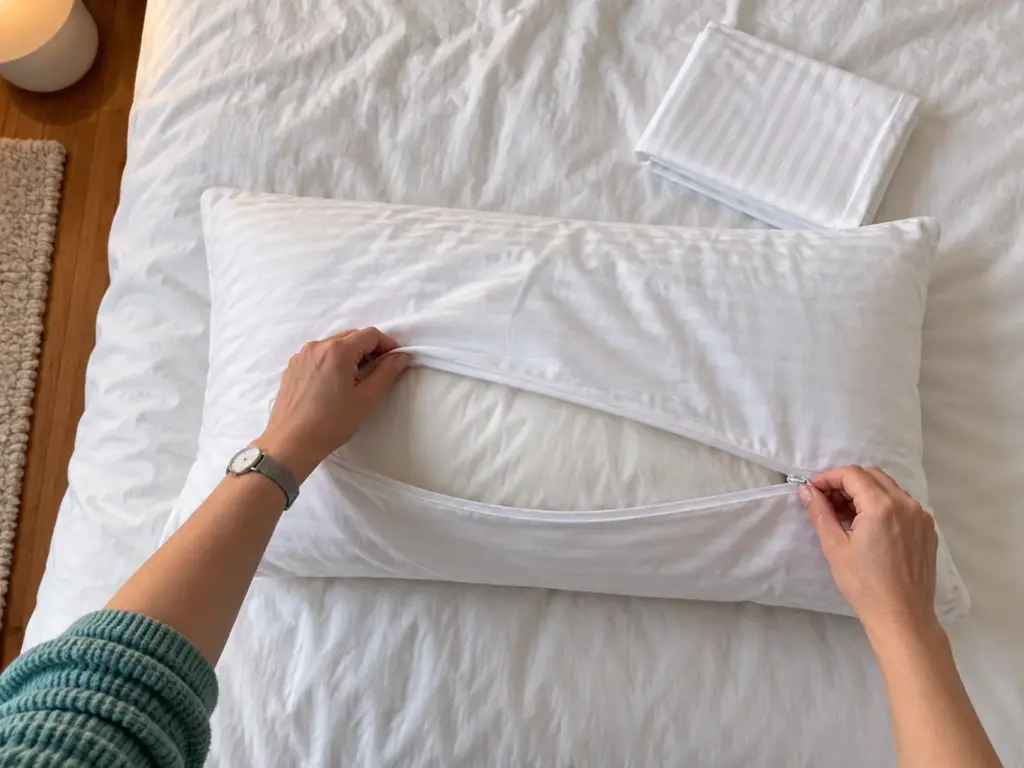
A protector is a zippered cover under the case, and it has a bad habit of being forgotten because it stays on the pillow. Whether you need a protector at all depends on whether the pillow can be washed, but once there is one, it needs a protector wash schedule of its own. A common routine is to wash the pillowcase often, the protector less often, and the pillow itself when it starts to smell.
Take that as one household’s habit and not a rule. What it gets right is the order, case first, protector second, pillow last, and the mechanism behind it is the same one as above: whatever gets past the case lands on the protector.
A pillow cover exists so you never have to wash the pillow, and some people argue that the answer is never. The logic is half right. A cover does spare the fill, and it does it by taking the sweat itself, so a protector that is never washed is only a postponed wash with a longer wait.
If you want a protector that goes in the machine with the case, the FAUNNA 600TC cotton pillow protector is a four-pack of 100 percent cotton with a zipper, sized 20 by 26 inches. The listing describes no waterproof layer, so what reaches it comes out in the same wash as the case. The 600 on the label is a thread count with no ply given, which is a label and not a measurement of the yarn. It also shrinks: the listing’s own Q&A says “slight shrinkage upon the first wash is expected,” and one buyer found theirs “wrinkled and stiff” after washing, so expect a snugger fit and a less soft hand than out of the bag.
Zip the protector closed before it goes in the drum. An open zipper drags on the rest of the load, and buyers’ complaints about protectors keep landing on the zipper and the lining, not on the fabric.
The cotton one is built to be washed and not to block anything, which leaves the waterproof route.
The Guardmax jersey knitted pillow protector comes in a four-pack with a polyester-faced jersey over a TPU lining and a nylon coil zipper, and it is the pick when the goal is keeping sweat out of the fill rather than washing it out of the cover.
Waterproof is the listing’s word, not a test. The review summary says water resistance and zipper quality get mixed reviews, with some buyers reporting failing zippers, and one lists “not 100% waterproof” among the cons. Waterproof is the obvious choice for a heavy sweater, and it stops being the obvious one when the lining or the zipper is the weak point, because a protector that leaks lets you assume the fill is safe while it is not. Check both at every wash.
The pillow itself
The pillow’s own interval is set by its fill, covered in the next two sections, and by how well the two layers above it are kept. A pillow wearing a case and a protector washed on time reaches the machine later than one wearing a case that has been on since last month. That is the whole case for washing the outer layers first.
What Moves the Count: Sweat, Pets and Eating in Bed
The calendar is the same for everyone and the load is not. Three to six months suits an average bed that no one in particular sleeps in, and the real count belongs to what lands on the pillow.
Sweat and oil build up over the nights
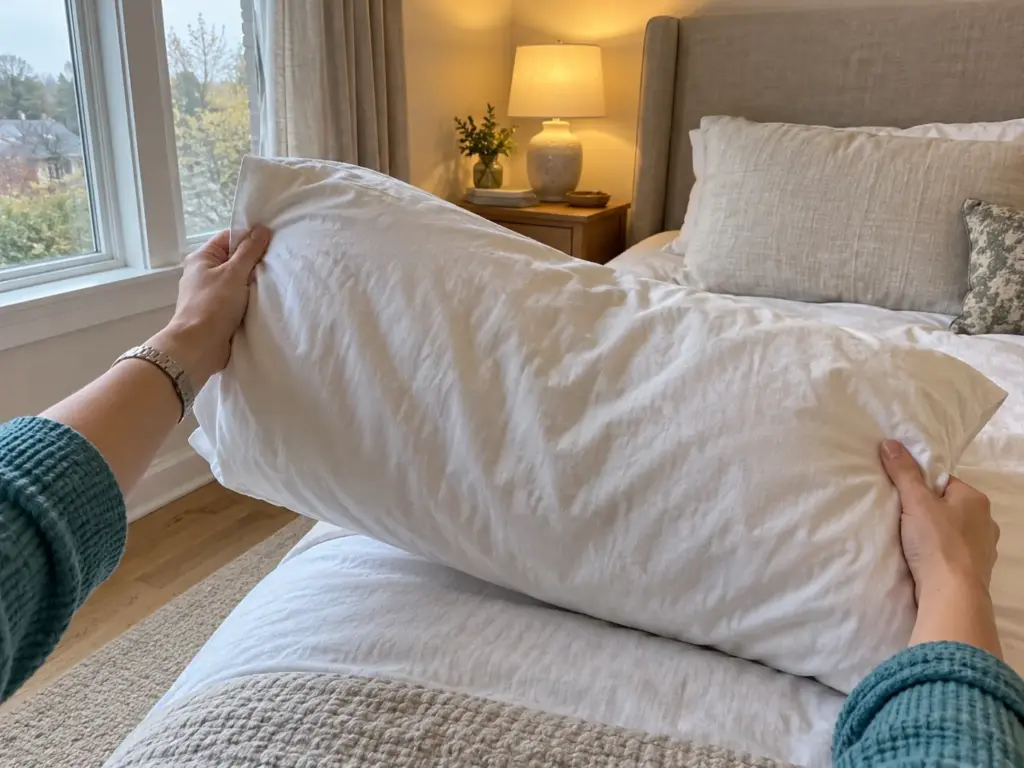
Consumer Reports describes the mechanism in one sentence: “hair, dead skin cells, sweat, and drool build up on the pillow” over time. Nothing in that sentence is dramatic, and that is the point. The build-up is slow, it happens inside the fill and not on the surface, and it comes in so gradually that you never see a night when it got worse. A pillow on a bed where one sleeper runs warm collects more of it than a pillow on a bed where no one does, and the calendar treats the two identically.
When the cause is a hot week or a bout of illness, the wash comes sooner. The Spruce names “after illness or extensive sweating” as a reason to wash extra, so wash after sweating and wash after illness both move the pillow ahead of its date, and the bedding side of an illness has its own article on bedding after being sick. One boundary belongs here: sweat that shows up whatever is on the bed, and does not change when the layers do, is a question for a doctor and not for the washing machine.
Pets and food in bed
Consumer Reports quotes an executive at a cleaning franchise on who should wash more often than twice a year: “quarterly if you sweat a lot, eat in bed, or have pets.” The direction is sourced and the size is not. The source gives no figure for how much a dog on the pillow shortens the interval, or how many breakfasts it takes to matter, so the quarterly figure is one voice’s judgment and not a threshold.
That is the point where the calendar fails and the load takes over. A bed with a pet and a habit of eating in it cannot run on the middle of a range built for an average bed, and a range that was never measured cannot be shifted by a measured amount either. Two sleepers add one more wrinkle: they load their pillows at different rates, so two pillows on the same bed can be on two different schedules.
The signs: a smell, a stain, a pillow that will not stand up
When to wash pillows is a question the pillow itself can answer when the calendar can’t be trusted. The Spruce lists the signs: visible stains, an odor, a loss of fluff, and the time since the last wash. The blunter version is the sniff test: wash the pillow when it starts to smell.
That is a decent signal with one catch, which is that a pillow smells late. A pillow that smells before it looks dirty has been taking the load in the middle, where neither the case nor your hand ever reaches.
Run the sniff test with the case and the protector off, and press your nose to the middle of the pillow, not the edge. The case keeps the surface fresh for weeks after the fill has started to hold the load, so a smell on the bare pillow means the wash was due a while ago.
A flat pillow is the third sign, and the least clear: a pillow that will not stand up may be dirty, or it may be finished. Wash first, then see what comes out of the dryer.
What Each Wash Costs the Fill
More washing is not automatically better. A schedule has a floor and a ceiling, and the ceiling is set by what the water and the drum do to the fill. Four fills answer to the machine differently: down and feather, polyester and fiberfill, shredded memory foam, and slab memory foam and latex.
| Fill | In the machine? | What the wash costs |
|---|---|---|
| Down and feather | Yes, on cool water with mild detergent, dried on low heat | Heat damages the down |
| Polyester and fiberfill | Yes, on cold water | The filling clumps in hot water |
| Shredded memory foam | Only if the care tag says so | Agitation, so the tag decides |
| Slab memory foam and latex | No | Agitation can break the slab apart |
Down and feather: cool water and low heat
Consumer Reports is plain about down: most down pillows can go in the machine, on cool water with a mild detergent; dry it on low heat or let it air dry, because “High temperatures can damage the down.” Heat is the damage that matters.
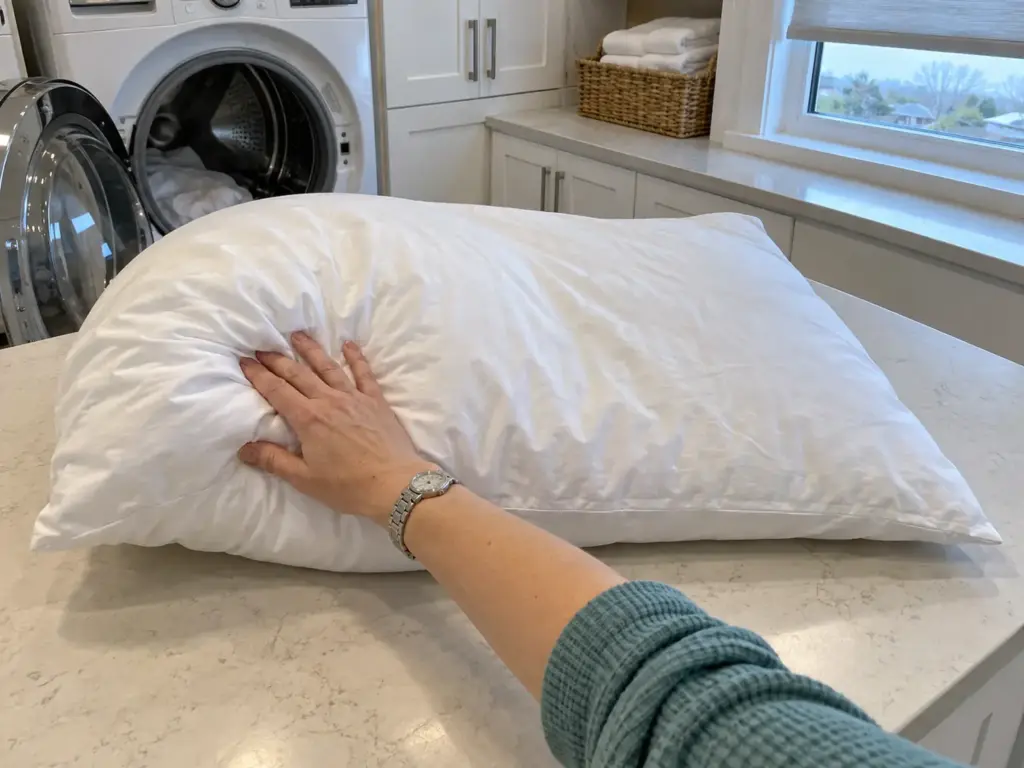
The drum is the second cost, since “the agitator on conventional top-loaders can be tough on pillows,” and the advice is the gentle cycle for only a few minutes. A wash that is gentle, cool and short moves the fill and does not harm it. A hot one does the harm.
The drying step belongs to the same cost. Low heat protects the down, but it also leaves the middle damp long after the outside feels dry, which is covered in why the dryer stops before the middle dries. Rushing that step trades one problem for a worse one.
Polyester and fiberfill: the clumps
Martha Stewart’s instruction for synthetic fill is “Use cold water to prevent the filling from clumping,” and it shows what the machine is doing: the wash moves the fill, and warm water makes the fill hold onto itself. A polyester pillow that comes out with its fill gathered at one end has usually been washed hard once, not worn out. The shell keeps its shape and the fill moves inside it, which is why the gentle setting is not a cosmetic choice. The cycle that suits each fill is its own article, and it matters more here than the interval does.
None of these instructions comes with a wash count a fill survives, so the ceiling is a direction, not a number. Washing by the calendar alone, with no sign or load behind it, is the way to spend washes the pillow did not need.
Wash two pillows per load. A single pillow rides alone in the drum and knocks against the wall, while a pair balances the load and spares the fill the extra tumbling. If only one is due, wash it alone rather than washing its partner on schedule alone.
Memory foam and latex: why the drum is out
Slab foam does not survive a washing machine. Consumer Reports puts it simply, “Washer agitation can break up slab-style foam pillows,” and Martha Stewart says latex and memory foam “aren’t machine washable.” Shredded foam is the exception, since some shredded foam pillows are machine-washable, and the care tag settles which one you own.
A memory foam pillow is not machine washable, and latex pillow care follows the same rule. To hand wash memory foam, how to wash a memory foam pillow by hand covers it without soaking the core.
Everything on this page is about a pillow that is still good. A pillow whose fill has gone flat, lumpy or tired is a separate decision, and when a pillow is finished rather than due for a wash is where it gets made.
A Wash Schedule for One Real Bed
Put the three clocks on one calendar and copy the order, not the numbers: the layers on the clock they take the load on, the pillow on its own rhythm, and the care tag ahead of all of it.

The weekly strip and the slower layers
On the day the sheets come off, the case comes off too, every week. The protector, if there is one, goes into the same load as often as the bed leans. A warm sleeper’s protector runs shorter than a cool sleeper’s, and a month or two is a starting point to bend, not a rule to obey. In a house with two sleepers the strip is the same job done twice, and the two pillows may not come due together.
Between washes, Martha Stewart and The Spruce both point to the same plain habits: air out pillows on a dry day, let the case act as the barrier, and try spot cleaning a mark without soaking the fill. Neither takes a minute, and both stretch the interval. And keep the order straight: the sheets and the case sit on the faster clock for a reason.
Put the next pillow wash on the calendar the day you put the pillow back on the bed. A pillow washed when it needs it is a pillow washed when it smells, and a date on the calendar moves the wash ahead of the smell.
When the pillow itself goes in
Read the care tag and the washability gate first. The schedule bends to the care label, as Martha Stewart and The Spruce both begin by saying. For a machine washable pillow, wash pillows every three to six months, the range quoted above, and sooner when the load is heavy or the signs are showing. Slab memory foam and latex never go in the drum, whatever the calendar says.
Give the pillow a date, because that is what turns a rule of thumb into a routine. Without one, the sniff test decides, and the sniff test is late. A pillow that has stopped bouncing back, or has taken on the color of weak tea, is not a wash problem at all, and the last question below points to where yellowing is answered.
Strip the Case and the Protector Together, Then Watch the Pillow
Three things hold up out of all of this. The three-to-six-month figure is a range quoted by cleaning voices and not a test, so treat it as a middle and not a deadline. The case weekly and the protector on its own slower schedule carry the pillow’s load, which is why they go first. And the load and the care tag set the pillow’s own interval, while the wash has a ceiling: cool water, a gentle cycle, and nothing hot for down.
The check for later is the fill itself. After a few washes, press the pillow flat and let go: if the loft comes back even, the cycle is doing its job, and if the fill stays gathered at one end, that is the cycle or the age of the fill speaking, not the calendar.
This week, take the case and the protector off on the same day, wash them together, and put them back on a dry pillow. Then notice what the pillow smells like at the middle and how it holds its shape through the next few nights. That is the whole experiment, and it costs nothing.
Frequently Asked Questions
01How often should pillows be washed?
Machine-washable pillows are usually washed every three to six months, a range quoted by cleaning voices and not measured, and sooner when sweat, pets or eating in bed load them. The care tag comes first.
02How often should a pillow protector be washed?
A protector runs on its own slower schedule than the case, because it takes the sweat and skin oil before the fill does. Washing every month or two is a routine, not a rule. When in doubt, wash it with the case.
03What happens if you never wash a pillow?
Hair, skin cells, sweat and drool keep building up in the case and the fill over the nights, according to Consumer Reports. The pillow ends up smelling of that load, which is why the case and the protector go in the wash first.
04Can you wash a pillow too often?
Yes, in the sense that every wash moves the fill and heat damages down, so a schedule has a ceiling as well as a floor. Use cool water and a gentle cycle, and wash by load and by sign, not by habit alone.
05Why do old pillows turn yellow?
Yellowing is a separate question from a wash that is due, and it has its own full answer in why pillows turn yellow. This article covers only how often to wash.





Tried it on your own bed?
No comments yet. Tell us what you changed, and what the sheet did after a few washes.