

What’s in here6 sections
The tag says machine washable and the dial offers a dozen programs, and nothing on either one connects the two. Which cycle for pillows? Machine washable only promises that the fill survives water; the wash cycle itself is written in a row of small care symbols on the care tag that most people take for decoration.
A program name tells you the water and the motion inside the drum. The spin is a separate fact, and it is the one the dryer ends up paying for. This page follows that order: the tag’s cycle line, the three programs, the spin, and what the fill does over the washes that come after.
Quick Answer
Choose gentle or delicate for a pillow, then let the tag’s cycle line and your washer’s manual overrule that if they say otherwise. The program name sets the water and the motion. The spin is its own setting, and it decides how much water the dryer still has to pull out of the core.
Read the Tag’s Cycle Line Before the Word on the Box
Machine washable on a pillow is a promise about the tag, and the tag is a short row of symbols most people take for decoration. It is also the one place that speaks for your pillow in particular, where the dial speaks only for a machine. Read it first and the three programs on the dial stop being a guess. The load, the dose and the water belong to the full wash path for pillows; this page reads only the cycle line and follows it into the drum.
The Number Is a Heat Ceiling
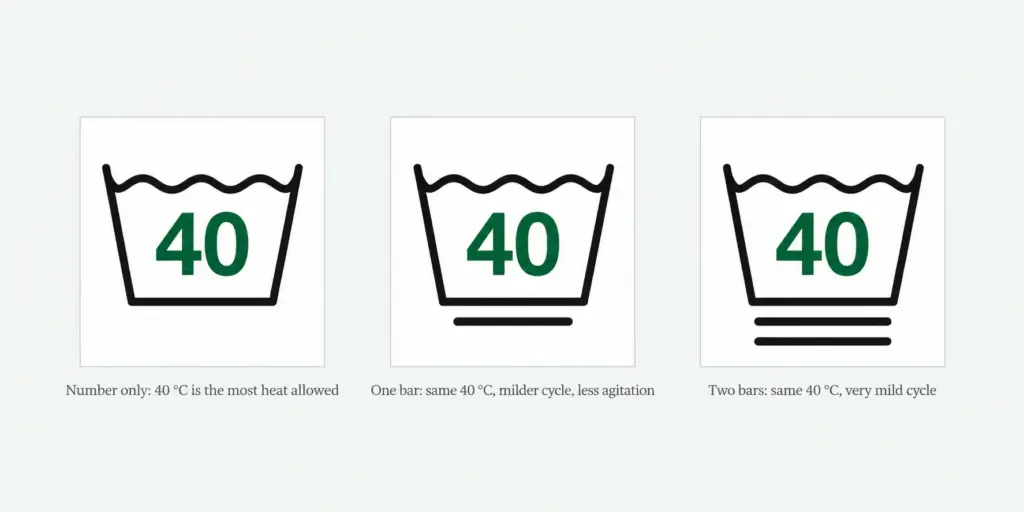
The figure inside the wash-tub symbol is a temperature in degrees Celsius, and it is a ceiling. GINETEX, the association behind the ISO 3758 care-label symbols, defines it as the maximum wash temperature that must not be exceeded. A 40 means nothing hotter than 40 °C, which is 104 °F. Plenty of people read it as the setting to use, and it never said that.
A key printed in some places claims a 2 in the tub means a normal cycle and a 6 means gentle. That is not the convention. The number is the temperature, full stop, and the cycle is written somewhere else on the symbol.
The Bars Are the Cycle
The cycle is the line under the tub. One bar beneath it marks a milder cycle with reduced mechanical action, and a double bar marks a very mild one. Put the two together and the symbol reads like a sentence: a 40 with one bar is 40 °C on a gentle cycle, while a 40 with no bar underneath is 40 °C on a normal one. On a pillow, a bar under the tub is the maker asking the drum to go easy on the fill.
Temperature is the half you can lower at any machine without thinking about it. The motion is the half that a program name chooses for you, and that is the subject of the next section.
When the Tag Is Missing or Says Nothing
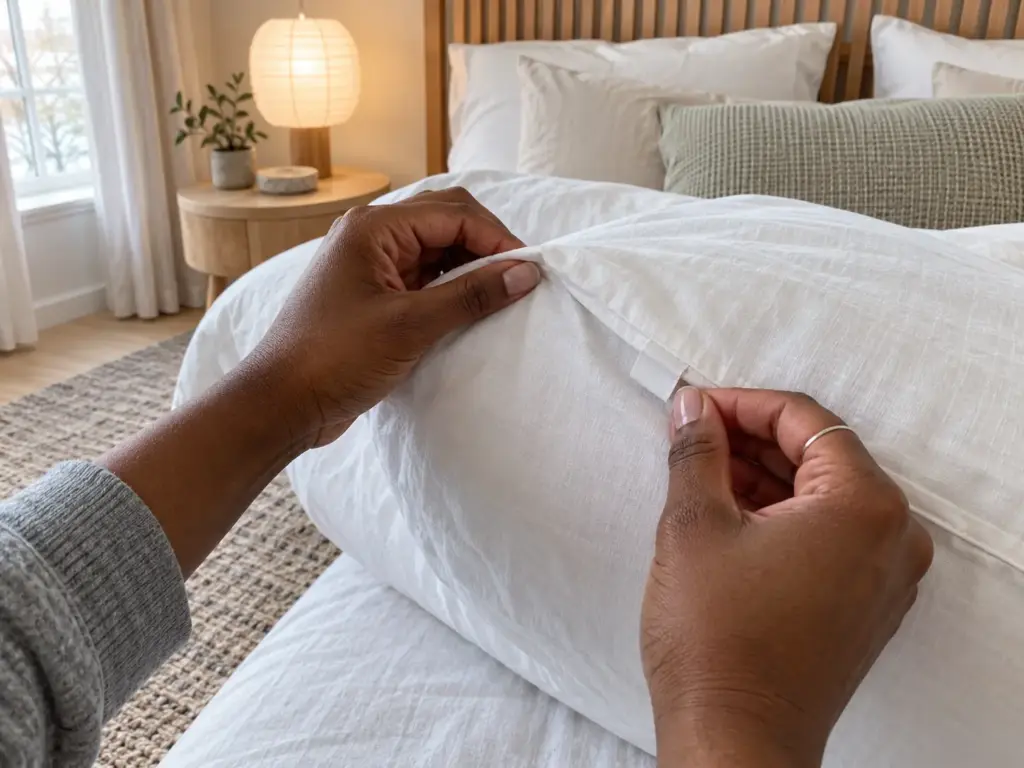
Pillow tags live in a seam. They get cut out, washed to a blur, or buried under a cover the day the pillow comes home. The symbols tend to outlast the printed words, so a faded tub with a bar can still be read after the fiber content is gone. If nothing is readable, drop to the gentle default in the next section and take the load rule from the pillar rather than inventing one.
Foam is the exception to everything above. Machine-washed memory foam can end up lumpy and hard to dry, and the shape of the fill explains why: a block of foam holds on to its water. Memory foam, whether shredded or solid memory foam, stays out of the drum, and latex and buckwheat stay out with it.
Photograph the tag before the first wash, with the symbols in focus. A phone picture outlasts a seam tag, and it saves you from reading the dial from memory the next time a pillow goes in.
Gentle, Delicate or Bulky: Three Programs, One Drum
The three names read like a ladder from soft to rough, and they are not one. Each machine fills in the names its own way, so the label on the dial tells you less than it appears to. What decides a program is three things: the water temperature, the water volume and the motion. The spin is not on that list.
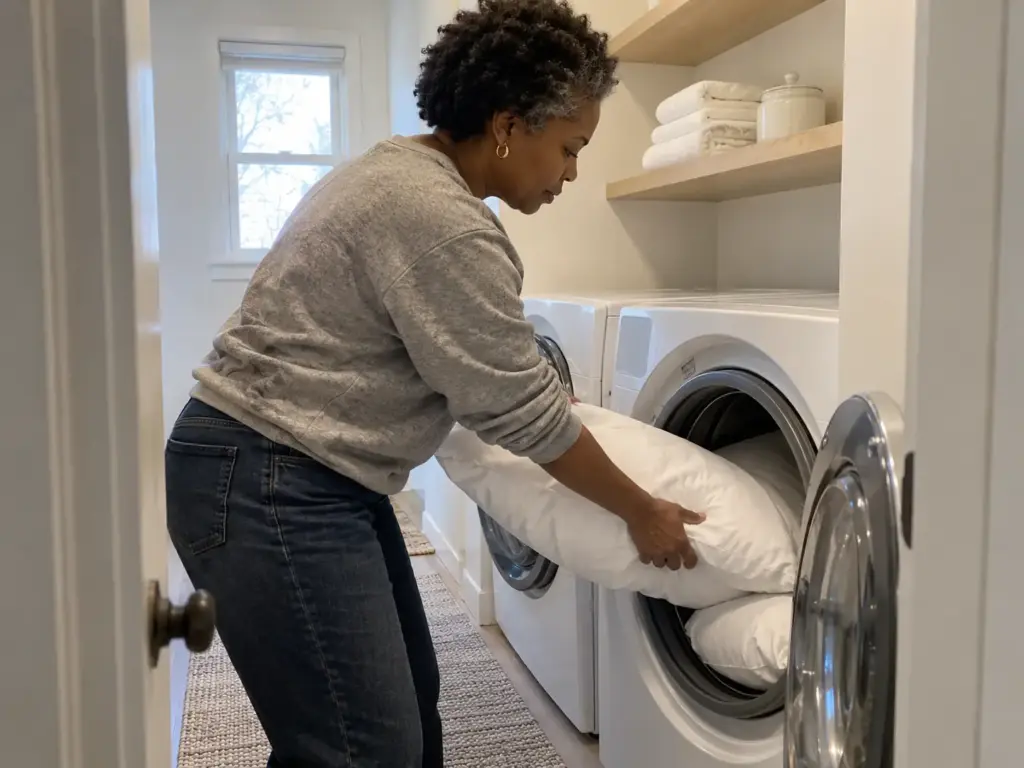
What Gentle and Delicate Change in the Drum
According to Consumer Reports’ laundry guide, the delicate cycle works by “using cold water and light agitation while washing at 65° to 70° F.” That is the gentlest motion on the dial. Whirlpool’s cycle guide describes its Delicates program the same way, with high levels of cold water and a low spin speed.
Light agitation matters to a pillow for a simple reason: the fill is loose inside a thin cover, and every tumble is a chance for it to move. A machine that offers both gentle and delicate lists them side by side in its cycle chart, and the chart is where you learn which one is milder.
What a Bulky or Bedding Program Changes
It is easy to assume the bulky cycle is the rough end of the ladder. Whirlpool’s guide reads otherwise: its Bulky/Sheets cycle “uses warm water and a low spin speed,” with extra water to soak a large load through. Set that beside Delicates and the two differ in water temperature and water volume, not in spin.
The same page says its bedding wash action is designed to keep large items such as pillows, comforters and sheets from tangling or balling up. That is a program built against the very problem a pillow has.
So bulky is not the villain here, and a bedding program can be a sound choice. Hot water is out and warm is the one to watch. It has to stay under the number in the tub from the first section, and it has to suit the fill, which is the same overlap that matching the water to the fiber works through for the rest of the bed.
The Pick, and the Manual That Outranks It
Gentle is the pick that needs no extra reading: cool or cold water, light motion, a low spin, and nothing in the program that can contradict the tag. A bedding or bulky program is just as reasonable when the machine’s manual names pillows in its cycle chart. That one page in the owner’s manual is the only place the question gets settled, because the same word on two dials is two different programs. Read the chart before trusting the name.
Lost the owner’s manual? The model number sits on a sticker inside the door frame or under the lid. Search it with the word manual and go straight to the cycle chart, then look for the row that mentions pillows or bedding.
Then there is the drum itself. A single pillow gives the spin nothing to balance against, so the washer stops mid-spin or shakes its way through it.
Washing two at a time is the usual answer, and it is a habit, not a maker’s spec. On some machines only one pillow fits at a time, so the right number depends on the size of the drum. Watch what yours does with one, and add a second when it struggles.
The Spin Is the Dryer’s Bill
Whatever program ran, the pillow leaves the drum with some water still in the core, and from there that water is the only thing the dryer has to deal with. The cycle name controls how the pillow was treated in the water. The spin controls how much of the water leaves with it. Those are two settings, and the second one sets what you pay later.
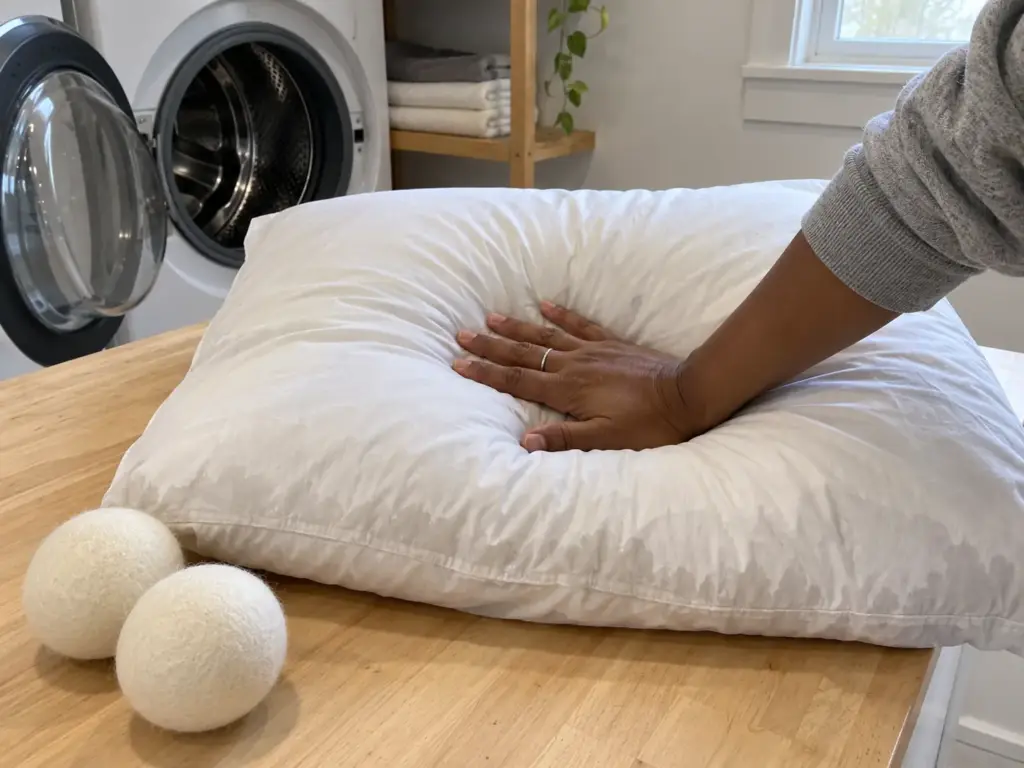
Why the Spin Matters More Than the Name
A dense fill takes on water and gives it back slowly, and a low spin speed leaves more of it behind. Both Whirlpool programs above carry a low spin, so neither name is a promise of a dry core. That is why dense fiberfill pillows can take a long time to dry, and the dryer time may not be worth it.
The outside of the pillow dries first and gives a false report. What the dryer is really working on is the middle, where the fill is thickest and the water has the farthest to travel. What the dryer does with that water, and at what heat, is a question for its own step. The part that belongs to the washer is how much is left when the drum stops.
The Extra Spin, and the Larger Machine
The free fixes come before anything you buy. Wash two on a gentle cycle, then run an extra spin before the dryer, which helps them dry faster. A large laundromat machine gets more water out, because a bigger drum spins a heavier load without complaint, and a second spin costs nothing but a few more minutes on the washer.
A tennis ball or a set of wool dryer balls in the dryer helps keep the filling from clumping.
The LEVIBASIC wool dryer balls are that version, a pack of six made of 100 percent New Zealand wool. A ball breaks up the fill as the pillow dries, and that is all it does. It takes no water out of the core, so it works after the extra spin and never in place of it. A tennis ball already in the house does the same job for nothing.
If the washer halts the extra spin with an unbalanced-load signal, open the door and move the pillows to opposite sides of the drum. One pillow alone does it more often than two, and a folded towel or two will often give the machine enough weight to balance against.
A Damp Core Is the Smell
Some pillows come out of the wash smelling moldy, and drying them fully is the first thing to check. The program had nothing to do with it. A fill dries from the outside in, so the middle is the last place to lose its water, and the longer the core stays wet the more it smells like it.
The check takes five seconds. After the spin, press the middle of the pillow with your palm. The outside always feels wet, so ignore it; the core tells you. If your hand comes away with water in it, the pillow goes back for another spin before it goes anywhere near the dryer.
Where Lumps Come From, and What to Check on Every Wash
One wash proves little in either direction. A pillow can look right after the first wash and still shift by the next, and the shape is the complaint that comes up most, more than the smell. Understanding where lumps come from tells you what to look for.
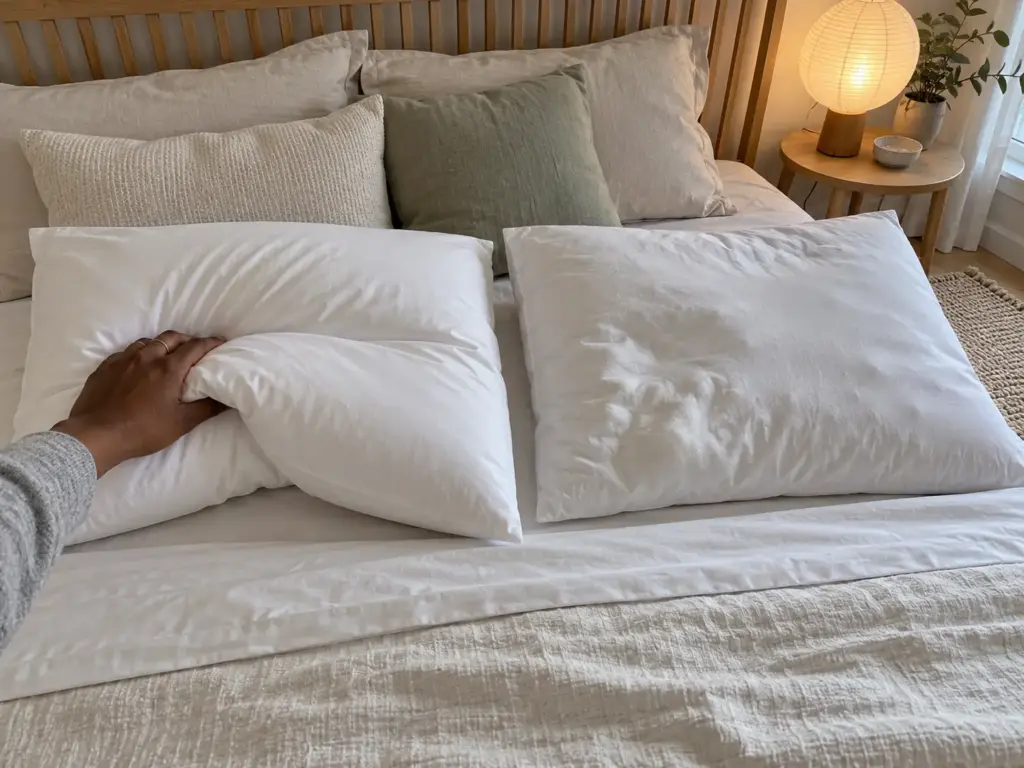
What a Wet Fill Does in the Drum
Dry fill, whether polyester fiberfill, down or feathers, stays put because friction holds it in place. Wet fill is heavy and slippery, so it drifts with every tumble and bunches against the seams. Whatever shape it is in when the water leaves is the shape it dries in. Add a drum thrown off balance by a single pillow and the fill gets shoved harder and less evenly.
This is why a program’s name explains less than its water and its load. Whirlpool builds its bedding action against tangling and balling up, yet pillows still tend to come out of the wash uneven. The program helps; the wet fill is the cause, and the cause is there on every wash.
Run the lump check on a dry pillow, on the same days of the week, and press the same spots each time. A pillow compared with itself shows a trend; a pillow compared with your memory of it shows nothing.
A Hand Check After Every Wash
Lumps arrive as small firm knots at the edges first, and then the center goes flat. A damp pillow hides both, so wait until it is fully dry and run the same three checks each time:
- Press the middle with a palm and feel for any damp spot.
- Roll the pillow between your palms and feel along the edges for knots.
- Fold it in half and let go, then see whether it springs back.
Each of these takes seconds, and together they catch a shift in the fill before it shows up as a flat pillow on the bed.
When It Stops Being a Laundry Problem
A pillow that fails the fold test after a wash is a replacement question, not a cycle question, and replace pillows by fill, not by year sorts out when. No cycle makes an old pillow new, and a gentler program only slows a fill that has already given up its loft. What the drum can do depends on what is inside the cover, and what each fill does by month six is where to start when you are choosing one.
Tag First, Manual Second, Then Press the Middle
Read the cycle line off the tag: the number is the heat ceiling, the bars are how hard the drum may work. Treat gentle as the default that needs no extra reading, and let the machine’s manual decide whether a bedding program is fine for pillows. The spin, not the program name, sets how long the dryer runs, so give it the extra turn it needs.
On later washes, feel for the shape rather than the smell: small knots at the edges that were not there last time, a center that has flattened, a fold that stays folded. They are the fill telling you where it is heading.
Tonight’s free change is to run one extra spin on the next pair of pillows before anything goes near the dryer, then press the middle of each with your palm. Notice how much less water is left at the core, and how much less the dryer has to do.
Frequently Asked Questions
01What washer setting is best for pillows?
Gentle or delicate, with two pillows at a time, is the safe default for most pillows, because the motion stays light and the water stays cool. The tag’s cycle line and your washer’s manual outrank it. Foam, latex and buckwheat pillows stay out of the drum.
02Should I wash pillows on delicate or bulky?
Delicate or gentle is the safe default, and a bulky or bedding program is fine only when the washer’s manual names pillows in its cycle chart. The same program name means different things on different machines, so check the chart.
03Do pillows need an extra spin cycle?
Yes, an extra spin before the dryer is worth running, because the water left in the pillow’s core is exactly what the dryer has to remove afterward. Press the middle with your palm to see whether it was enough.
04Can you wash just one pillow at a time?
You can, but a single pillow often throws the drum off balance, and the washer may stop mid-spin before the water is out. Washing two at a time is a habit, not a maker’s spec, and a large machine may take one calmly.
05Why do pillows come out lumpy after washing?
A wet fill drifts and bunches as it tumbles, then dries in whatever shape it ended in, and an unbalanced drum makes that worse. Press, roll and fold the dry pillow after each wash. One that stays flat after the fold test is a replacement question.





Tried it on your own bed?
No comments yet. Tell us what you changed, and what the sheet did after a few washes.