Cooling Sheets That Are Soft — Washed Percale Wins
The r/Bedding question about soft percale has come back five times in three years. The weave is why, and Cotton Incorporated's 20-wash testing shows it.
 Alfredo Ramses Textile engineer · 2 September 2026 · 20 min read
What’s in here 7 sections
Somebody on r/Bedding asks whether soft percale actually exists, and the thread gets answers, and then eighteen days ago somebody asked it again. That question has come back in one form or another at least five separate times in three years inside the same subreddit, which tells you it was never really answered.
It keeps coming back because the two things being asked for pull against each other inside the fabric itself: percale runs one thread over and one under, sateen floats four threads over one, and that float is simultaneously the smooth hand your palm reads in the store and the closed surface that holds warm air against you at three in the morning. So the search for cooling sheets that are soft is not a shopping problem with a brand answer. It is one structural decision wearing two names.
Here is what decides feel, what decides heat, why they are the same lever, and the two constructions that get out from under it.
Quick Answer
Soft and cool fight each other structurally: the long floats that make sateen smooth are the same floats that close the weave and trap heat. Two constructions escape it: an enzyme-washed cotton percale, softened at the mill without closing the weave, or a lightweight Tencel lyocell, whose softness lives in the fiber instead.
Why the Sheet That Felt Best in the Store Sleeps Worst
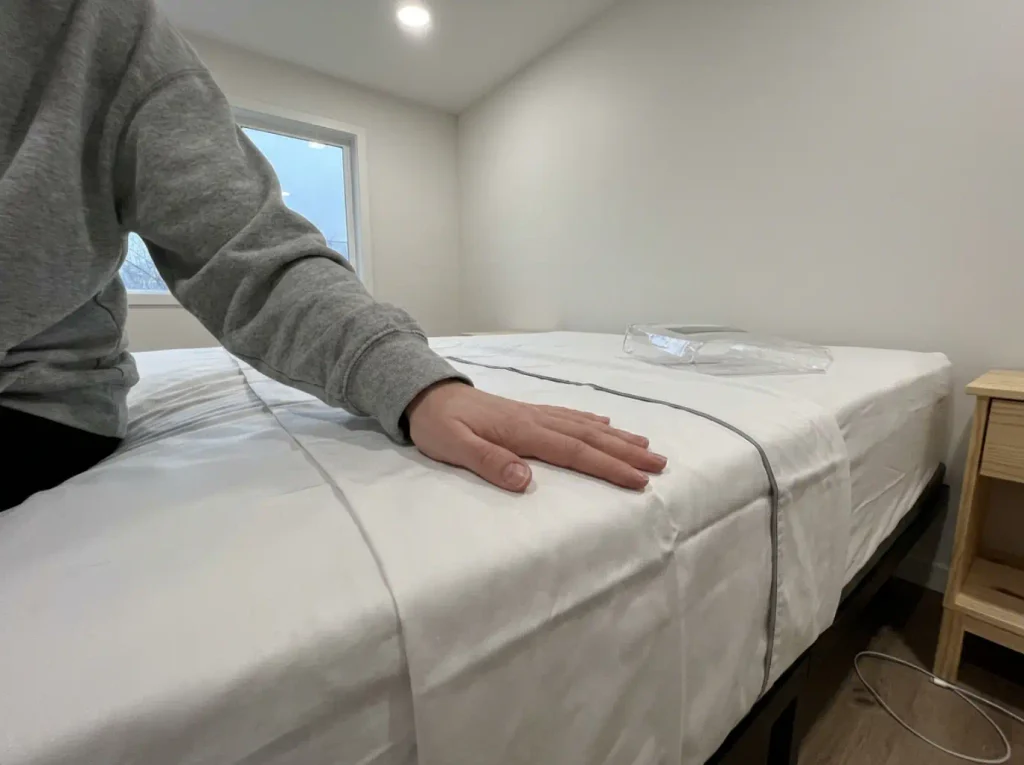
You ran your hand over both stacks on the shelf. One felt like paper and one felt like water, you took the one that felt like water home, and you woke up hot. The natural conclusion is that you bought a bad set.
You did not. You ran a test that measures one thing and then slept on a property it never measured. Hand-feel and overnight temperature are two different measurements, and shopping for soft sheets on the first one tells you almost nothing about the second.
A hand across folded fabric measures surface friction and nothing else. Heat retention needs a sleeper, a duvet and six unbroken hours, and a shelf provides none of them. What your palm read as smooth on that sateen was its floats: four threads riding over one, sitting exposed on the surface with nothing interrupting them.
Fewer interlacing points means fewer interruptions for your hand to catch on, and it means a closed surface with no path through it. Those two facts are not related by coincidence. They are the same fact described from two sides.
That is why as Sleep Foundation’s side-by-side breaks down, the standard sateen cons are “may retain heat” and “prone to pilling” — both traced back to the exposed float, not to a manufacturing defect anybody could fix.
Percale does the opposite and takes the consequences. Every warp thread crosses every weft thread, which maximizes interlacing points and leaves the surface matte, slightly toothy and full of tiny gaps. In the store it feels like nothing. In the bed those gaps are a route for air, which is the entire mechanism.
And the shopper in that r/Bedding thread titled “Not impressed with cotton percale. What am I missing?” was not wrong about what they felt. They were judging a fabric out of the bag, which is the one moment percale always loses.
There is a level of detail here that the shelf actively hides. You test a folded stack, and a folded stack is two or four layers thick, sitting cool because it has been in a warehouse, with none of the tension a fitted sheet has once it is stretched over a mattress. Stretch that same cloth flat and the surface opens differently under your hand.
The fabric you touched in the aisle is not in the state you are going to sleep on, and no amount of careful touching fixes that. Before any of the picks below make sense, it helps to have settled what the word cooling is actually doing on a package, because the answer is usually less than the font size suggests.
Float Length Decides Both, and You Only Get One Dial
People shop as if the fabric had two independent controls, a softness slider and a coolness slider, and the job was to find the set where somebody had pushed both up. Inside a single cotton weave there is one slider. Moving it toward soft moves it toward warm, in the same motion, by the same amount.
One over one, four over one
The plain weave is the simplest interlacing there is. Warp goes over weft, then under, then over, alternating on every single crossing. That gives you the maximum possible number of interlacing points per square inch, a matte surface with no directional sheen, and a grid of tiny gaps where the threads cross. It also gives you the papery hand that costs percale so many first impressions.
The sateen weave breaks that alternation on purpose. Three or four threads float over one before the interlacing happens, so the surface is dominated by long uninterrupted lengths of yarn. Fewer crossings, more thread lying flat, a low sheen where the light runs along the floats, and a closed face. Everything people like about sateen and everything they complain about six months later is that one geometry.
There is a floor underneath the word, too, which is worth knowing because listings abuse it. Percale’s textbook definition puts the floor around 180 threads per inch, and the floor exists for a structural reason rather than a marketing one: below roughly that density the plain one-over-one interlock does not hold its character, and a listing calling itself percale under that number is either mislabeled or describing something else.
Why the closed surface holds heat
Airflow needs a path, and a path needs holes. The interlacing gaps in a plain weave are those holes, small enough to be invisible and numerous enough to matter across a whole flat sheet. Close them by floating threads over the top and the air has to go around the fabric rather than through it. Weave density, not thread count, is what decides whether that path exists, so the warm layer sitting against your skin stays where it is.
The size of the difference is the part that surprises people. Cotton percale in the ordinary 200 to 400 thread-count range measures roughly 8 to 12 percent higher breathability than sateen in comparative fabric testing, and that gap holds even when the two are matched for thread count. Which means thread count is not the temperature variable. The weave is.
A 600-thread sateen and a 300-thread percale are not two points on one scale; they are two different structures, and the denser number is on the warmer one.
The number the label never prints
GSM, grams per square meter, is the honest figure nobody puts on a package. It is measured by cutting a fixed-size swatch, weighing it, and converting, which makes it a real, comparable number across fibers in a way thread count never is. Cotton sheeting generally runs 110 to 170 GSM. Percale typically lands between 100 and 150, with some as low as 90.
Lower GSM means lighter, cooler and faster-drying, and here is why it earns its own subsection: it is the one lever that buys softness without buying density. A lighter fabric drapes more, sits less rigidly against skin, and reads softer to the hand without any float length being added to get there. It is the only way inside cotton to move one dial without dragging the other along.
Almost no listing prints it. Sijo’s published 130 GSM was the only such figure on any competitor page in this research, which tells you how rare the disclosure is rather than how rare the measurement is.
Meanwhile the number that does get printed is mostly noise past a point. Thread count above 400 in a percale usually means multi-ply: two or three thin, weak threads twisted together and then counted individually. A single ply count built from long-staple cotton is the honest version of the same number, and it is almost always the lower one. The result is denser, not finer, and it is the single most common way a sheet becomes both more expensive and hotter at the same time.
The Tencel listings make the same point from the other direction, running anywhere from 320 to 600 on a fiber whose softness has nothing to do with the count. Worth knowing what thread count actually tells you before paying for a bigger one.
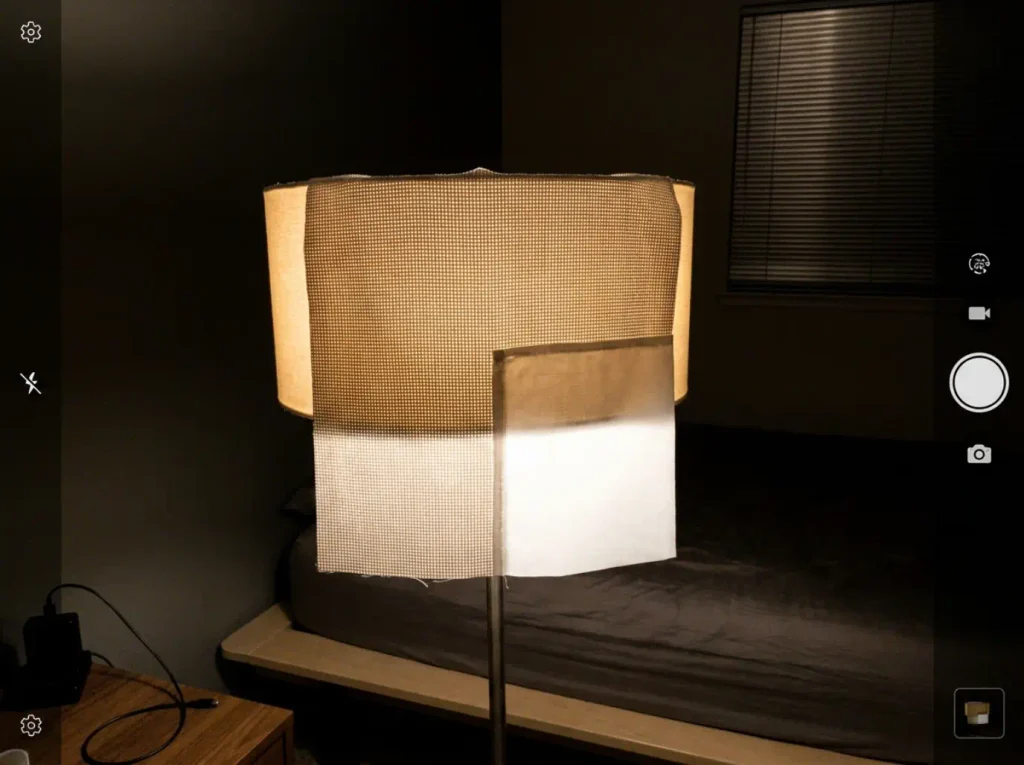
Hold a flat sheet up against a lit lamp shade. A percale shows the grid as a fine pinhole texture, like very tight graph paper. Do the same with a sateen and the light stops at the cloth. That is the airflow difference, made visible in about four seconds, and it works in a store as well as at home.
The Two Constructions That Deliver Both
There are exactly two exits from a one-dial problem. Either you soften the percale before it reaches you without touching its structure, or you change the fiber so the weave stops being the thing that decides. Both are real, both are buyable, and neither of them is a sateen with the word cooling printed on the bag.
Washed percale: the softening done at the mill
Enzyme washing and stone washing break down the fiber surface mechanically before the set is ever packed. It is, in a fairly literal sense, the factory doing in one controlled process what twenty of your own wash cycles would do slowly over a year. The finished sheet reads soft in the store, and this is the whole point, it keeps the plain weave’s airflow, because nothing about the interlacing has changed.
The gaps are still gaps. Only the hand is different. Mattress thickness is the other half of that fit: a deep mattress with a topper on it needs the pocket depth stated on the package, or the corner you just softened will not stay on.
Before any of that becomes a purchase, though: if you already own a percale set, you probably do not need to buy anything at all. You need washes. That is free, it takes a few weeks of ordinary laundry, and for a lot of people it ends the search. The wash timeline in the last section is the one to read before your card comes out.
If you are buying anyway, the useful version of this is a listing that publishes its whole spec instead of hiding behind an adjective.
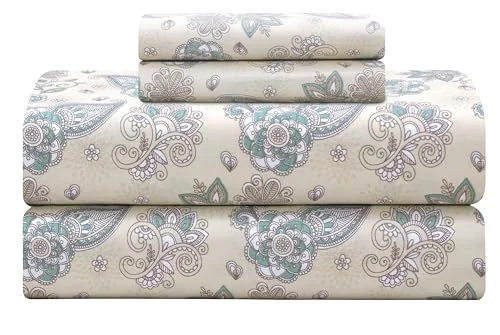
The pre-softened version of the same idea is rarer than it should be, because most brands would rather sell you the word than the process. The ALPHA HOME Deep Pocket King Sheet Set in washed cotton percale says “enzyme stone washed” on the listing without dressing it up, which is the exact mechanism this section is about, and it carries the same 16-inch pocket and an OEKO-TEX certification alongside it. Its flaw is availability rather than construction: only the King listing is still alive, the Queen and Full variants in the same family come back unavailable, and stock on this one is thin enough that it may be gone before you finish reading about it.
Here is the detail that separates a real enzyme wash from a chemical shortcut, and it is audible. An enzyme-washed percale loses the papery rustle immediately but keeps its matte look. A resin-softened one feels smooth and very slightly slick from the first night, looks a bit more finished than it should, and then goes back to crisp somewhere around wash twenty when the finish has left the building.
The rustle is the honest signal. Silence plus slickness on day one is a coating, and a coating is temporary.
Lyocell: soft at the fiber, not at the weave
The other exit changes the raw material. Tencel and other lyocell fibers are produced from wood pulp in a closed-loop solvent process, and the resulting filament is smooth at the individual-fiber level. Not smooth because of how it has been woven, smooth because of what it is. That single fact rearranges the whole tradeoff.
Because the softness is already in the fiber, lyocell can be woven in a sateen construction and still not carry cotton sateen’s heat penalty in the same way. The fiber is doing the job the float was doing in cotton, so the weave no longer has to close itself to deliver a smooth hand. And the mechanism underneath “feels cool overnight” is not a coating at all. It is moisture leaving the surface.
Cotton Incorporated’s own lab testing, using a 20-wash baseline, backs this up, measuring dry time against skin with an instrument and a protocol rather than a reviewer’s opinion. What you feel as cool is water moving off you, on a schedule you can measure. That is what moisture-wicking actually describes, and it is worth separating from cool-to-the-touch, which is a momentary surface sensation a finish can fake and a wash can remove.
This is also where it pays to know whether Tencel and eucalyptus are the same thing, since the two names get sold as if they were different fibers.
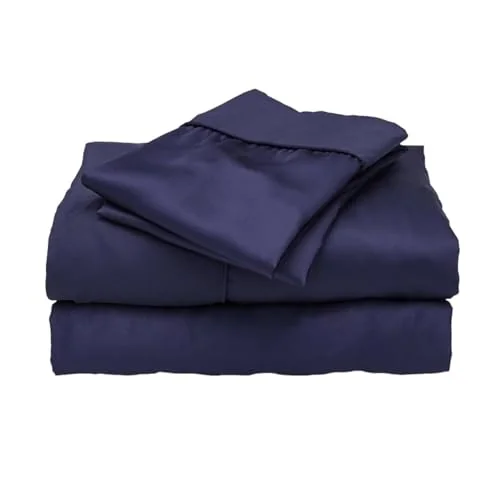
One caution about the shelf next to it, because the two get filed together and they should not be. Lyocell and bamboo viscose are both wood-pulp fibers and they behave differently in the wash, which is exactly where bamboo viscose and lyocell part ways. Buying on the word bamboo alone will get you either one.
When Two of You Share the Bed and Disagree
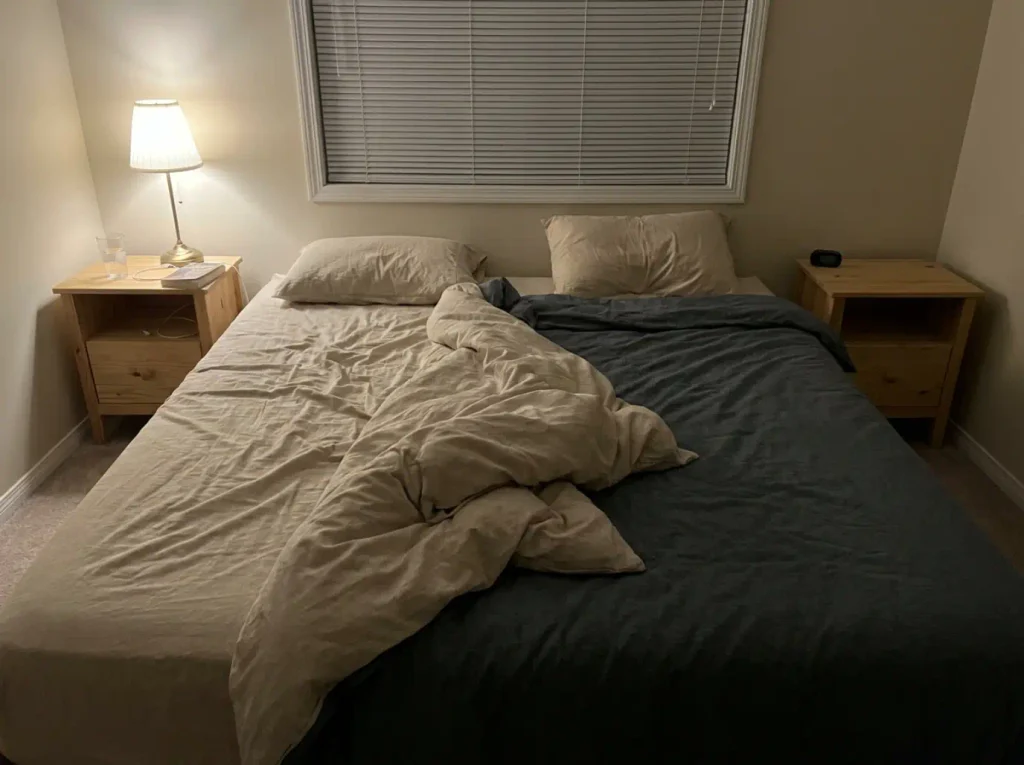
One of you wants the sheet to feel like something under a hand. The other wants to stop waking up damp at two. And you are buying one set, because a bed has one fitted sheet.
Start with an admission, because it matters for how much weight to put on what follows. Nothing in the sourced material addresses the shared bed on this specific axis. Not one competitor page, not one community thread, not the roundups and not the Reddit archive. What follows is reasoned from the weave and the grammage, not reported from anybody’s bedroom, and you should read it as mechanism rather than as testimony.
With two sleepers on one set, the fabric has to answer to both. From the mechanism, the compromise that costs the cool sleeper least is a low-GSM enzyme-washed percale. The reasoning is straightforward once the two variables are separated: the enzyme wash closes most of the softness gap without touching the interlacing, and the low grammage closes a little more of it by making the fabric lighter and more drapey against skin. Neither of those changes takes airflow away, which is the whole reason to prefer this direction.
The hot sleeper gives up nothing structural. The soft sleeper gives up sheen and a little of the slip, which is a smaller loss than six warm hours.
What does not work is the arrangement most couples try first, which is buying the sateen and compensating with a lighter duvet. The duvet is a separate layer with its own governing physics, and it can be thrown off at two in the morning. The sheet cannot. It is against skin all night for everyone in the bed, so it is the wrong layer to lose the argument on.
Sorting out which layer is actually doing the cooling is worth doing before you spend anything, because the honest answer is that the temperature argument is winnable on the top layer and mostly unwinnable on the bottom one. Two duvets settle temperature. The sheet only has to stop making it worse.
And if one of you sleeps hot enough that no fabric is moving the needle, the variable is not the sheet. A foam mattress holds heat that no weave can route around, and a bedroom above about 68°F fights every layer on the bed at once. Those are the questions to answer before the fabric one.
There is a wear pattern here that shows up by the end of a season and gives the whole thing away. On a shared sateen, the hot sleeper’s side pills first, because more movement means more friction landing on the same exposed floats. You end up with a bed that is visibly asymmetric, one side hazed and one side still smooth, which is a fairly good argument, made by the fabric itself, about which surface was holding up.
Judge It at Wash Twenty, Not Out of the Bag
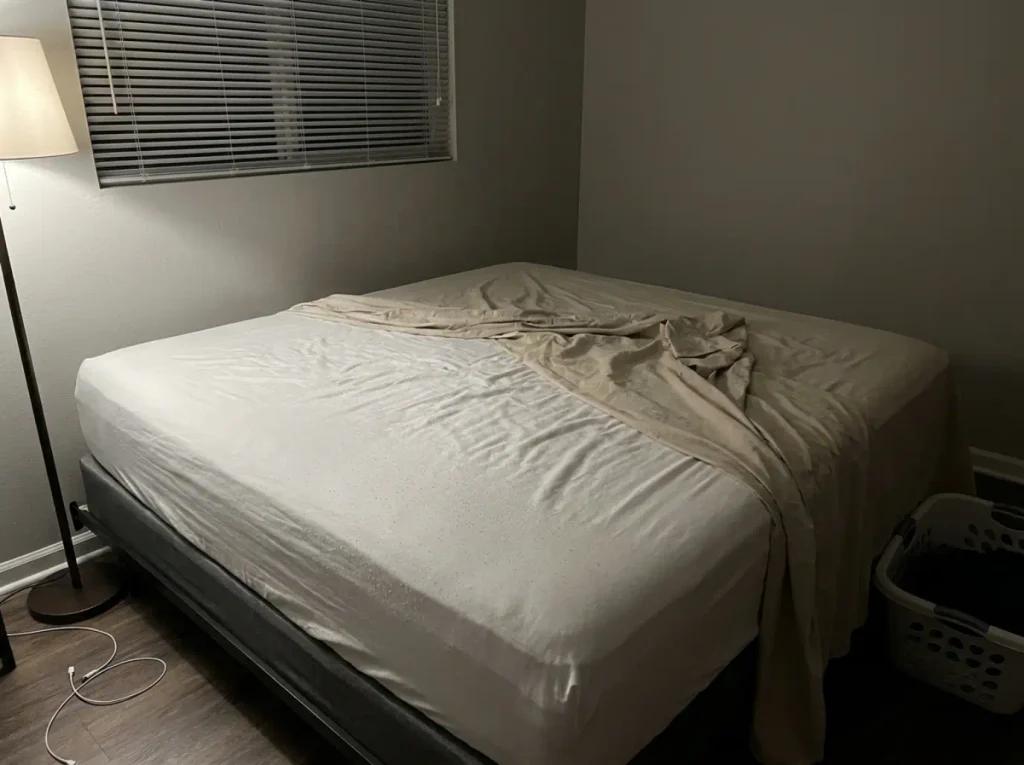
Read the three-star reviews on any cooling sateen listing and notice what they are dated to. They almost never talk about the first week. They talk about the third month. That is the review that is actually about the sheet, because week one is mostly about the finish.
Percale’s curve goes up
The initial stiffness relaxes after the first three to five washes, which is when most people decide whether they made a mistake. Crispness fades noticeably by wash ten. By wash twenty and onward the set is fully relaxed and genuinely soft, and it stays there through wash fifty.
That softening with washing is not wear and it is not luck: the whole arc is manufacturing starch and finish leaving on a schedule. It is not the fabric wearing out — nothing structural has changed, and the weave you bought is the weave you still have.
Which means the single most common percale complaint is a timing error rather than a product error. The set was judged at the exact point in its life when it had the least to offer.
Sateen’s curve goes down
The floats that make the surface feel smooth sit exposed, which makes them the first thing to abrade under friction. Washing does some of it. A sleeper moving on the fabric for six hours a night does more. As those floats break down the hand goes first slippery, then hazy, and the sheen fades in patches rather than evenly.
The honest part: no sourced material puts a wash number on when that decline starts. Percale’s improvement is documented in wash counts by multiple sources. Sateen’s decline is described only as something that “may develop over time,” and nobody has published the point where the two lines cross.
Anyone who gives you that number is guessing. What can be said is the shape: one trajectory rising, one falling, both starting from opposite ends.
What to look at, and when
At wash five, listen to the sheet as you shake it out. A percale that has been enzyme-washed goes quiet early and stays matte. One that still sounds like paper at wash five was resin-finished rather than washed soft, and that finish is coming off around wash twenty, taking the smooth hand with it and leaving the crispness you were told you had escaped.
Three checkpoints are enough to know what you actually bought. At wash five, use the rustle test above. At wash ten, hold the sheet to a lamp again: the grid should still show. If it has closed up, the yarn was multi-ply and the fabric has fulled: the threads swelled and filled their own gaps.
At wash twenty, run a hand across a sateen under raking lamp light, low and from the side, and look for a fine haze catching the light. That haze is the floats beginning to pill, and it will be on one side of the bed before the other.
The failure mode worth naming, because it gets mistaken for good news: a sheet that got noticeably softer and noticeably warmer between wash five and wash twenty did not break in. It fulled. The threads swelled, the gaps closed, and the airflow left along with the crispness.
You traded the property you were buying for the property you were complaining about, and it happened slowly enough that it felt like the set improving. That mechanism is the same reason which of the two actually lasts longer has a less obvious answer than the store hand-test suggests.
Wash cold and skip the fabric softener entirely. Softener works by depositing a thin waxy coating on the fiber, which is a slower, self-inflicted version of exactly the finish problem this article is about: it closes the gaps you paid for and it makes a percale feel soft by making it breathe worse. If the set needs help, a half cup of white vinegar in the rinse does the softening without the coating.
Once the wash arc makes sense, the last thing worth settling is what the cooling label adds on top of the weave, which by this point you can probably guess.
The Verdict
Softness and coolness are one decision, not two. Float length sets both at once: a smooth surface is a closed surface, and a closed surface holds warm air. No brand escapes that geometry inside a cotton weave, and no amount of thread count changes which side of it a sheet is on.
Two constructions get out of it, and only two. An enzyme-washed percale, softened mechanically at the mill while the plain weave stays open. Or a lyocell, where the softness lives in the fiber so the weave never has to close to deliver it. Everything else marketed as soft and cooling is one of those two, or it is a sateen with a finish and a deadline.
And the cheapest possibility is the one worth checking first: the percale already on your bed may not be wrong, it may just be short on washes.
The check to run after a season is the lamp test. Hold the sheet up against a lit shade, and if the grid that used to show has closed up, the fabric fulled and the airflow went with the crispness. That is a set that got softer by getting worse at its job.
So before you buy anything: wash the percale you already own three more times. If it still sounds like paper at wash five, then it was the finish rather than the weave, and then go shopping.
Frequently Asked Questions
01What is the softest sheet material that still sleeps cool?
Lyocell, because its softness comes from the individual fiber rather than from a closed weave, so it can be smooth without trapping air. An enzyme-washed cotton percale is the close second and costs a good deal less.
02Do cooling sheets actually work?
The weave does. Cooling as a word has no standard behind it and nobody certifies it. A plain percale weave or a lyocell fiber moves air and moisture; a claim printed on the packaging, on its own, does nothing.
03Is percale or sateen softer?
Sateen is softer in the store and percale is softer after twenty washes. Sateen’s smoothness peaks the day you buy it and declines as the exposed floats abrade; percale starts stiff and improves on a documented schedule.
04Why do my percale sheets feel stiff?
Manufacturing starch and finish, not the weave itself. It relaxes over the first three to five washes and is usually gone by wash ten. Skip the fabric softener while you wait, since it coats the fiber and closes the gaps.
05What GSM should cooling sheets be?
Roughly 100 to 150 for percale, with cotton sheeting generally running 110 to 170. Lower GSM sleeps cooler and dries faster, and it is the one softness lever that does not close the weave to get there.
Leave a comment
Slept on something we got wrong, or found a set that held up? Say so here. Your email stays private.