
What’s in here7 sections
- “Cooling” Is Not a Measurement, and It Means Two Different Things Here
- The Sheet Wins on Contact, and Contact Is the Whole Argument
- What a Cooling Comforter Actually Does, and When It Stops
- Which One to Change First
- The Shared Bed, the Cases Where the Comforter Is Worth It Anyway, and Wash Twenty
- The Verdict, in Three Lines
- Frequently Asked Questions
A cooling comforter is sold on a sensation you get in the first second of touching it, and that sensation has a number behind it. The number is maximum instantaneous heat flux, read over roughly two tenths of a second of contact, and it stops meaning anything the moment the fabric reaches your own temperature. A sheet is the only layer that stays against skin for the whole seven hours, which is why the cooling comforter vs sheets question has a mechanical answer rather than a matter of taste. Below: what the word “cooling” is doing differently on each of the two, which one decides more of the night, and the order to buy them in.
Quick Answer
The sheet does more, because it is the only layer in continuous skin contact all night, while a comforter’s cool-to-the-touch is a first-contact shell effect that fades in seconds. Buy the comforter first only if you sleep with no top sheet, run one comforter year round, or share a bed with someone whose temperature is nothing like yours.
“Cooling” Is Not a Measurement, and It Means Two Different Things Here
You have two tabs open. One is a cooling sheet set, one is a cooling comforter, and both packages use the same word with the same confidence. Nothing on either box tells you the word is doing a completely different job in each case, because nobody certifies it and nobody has to define it.
What Q-Max Measures, and for How Long
There is one number in this field that is actually measured, and it is Q-Max: maximum instantaneous heat flux, in watts per square centimeter, taken over about two tenths of a second of contact. That is the cool-touch test textile labs actually run, and it is a real instrument reading, not a slogan. Above roughly 0.4 W/cm² a fabric reads as instantly cool to the hand. Plain cotton and flannel sit around 0.1 to 0.2.
Read the units again, because they are the whole trick. Q-Max describes a first-contact event, not a night. Heat flows out of your skin and into the fabric until the fabric reaches skin temperature, and then the gap driving the flow is gone and so is the sensation.
It is self-limiting by physics, not by build quality. A shell with a spectacular Q-Max reading is telling you exactly one true thing: the first two tenths of a second will feel great. Initial contact cooling is a real property, honestly measured. It is simply not the property you spend a night inside of.
In a store, test the cool-touch claim by leaving your hand still on the fabric and counting to thirty instead of patting it. Patting keeps finding fresh cold fabric, which is why every display bed feels cool. A hand that stays put tells you what your shoulder will find out at 1 a.m.
The Sheet Is One Cloth; the Comforter Is Two Systems
On a sheet, four things decide how hot it sleeps, and all four belong to a single piece of cloth you can inspect with your hands: the fiber and whether it takes moisture in or shoves it off, the weave and whether it leaves gaps for air, the weight in grams per square meter (the grammage), and the finish sitting on the surface. Those are the four levers that decide whether a sheet sleeps cool, and on a sheet they are all one decision.
A comforter is not one cloth. It is a shell you touch and a fill you never see, and they are independent purchases sold as one. A cool-touch shell wrapped around a dense heat-trapping fill is a comforter that reads brilliantly in the store and sleeps hot at two in the morning, and the box will still say cooling in the same font. That split is the reason this comparison is not simply “which fabric is coolest.”
It is also why a hot sleeper can buy two products with the same word on them and have only one of them help: the sheet is judged on its breathability as a single cloth, the comforter on two materials that were chosen separately.
Here is the part of the split nobody prints. A cool-touch finish and a cool-touch fiber are not the same purchase. A finish is applied to the surface of the cloth and it leaves over the wash cycles; a fiber that conducts heat is conducting it on day one and on day four hundred. The package rarely says which one you bought, but a shell described by its treatment rather than by its fiber has already told you.
The Certifications on the Box, and What They Cover
Both products in this comparison carry the same certification, and it is worth knowing what it does. What the OEKO-TEX Standard 100 label actually certifies is that the textile has been screened for roughly a hundred regulated substances at every stage of production. That is a real and useful thing. It is also, entirely, a chemical safety claim.
It says nothing whatsoever about temperature, and it appears on cooling comforters and ordinary flannel alike.
The community has arrived at the same conclusion without the paperwork. Some sleepers say every cooling bedding they have tried was marketed that way and nothing was actually different, and that anything labeled cooling with manmade materials is just a gimmick. That is too harsh as a general rule, and it is not worth repeating as one. But it is a very accurate description of what happens when the only evidence on offer is the word itself.
The Sheet Wins on Contact, and Contact Is the Whole Argument
Think about where your skin actually is for seven hours. It is on the fitted sheet, the entire time, without a break, at whatever pressure your shoulder and hip apply. The comforter is somewhere above you, and for a good part of the night it is touching one leg.
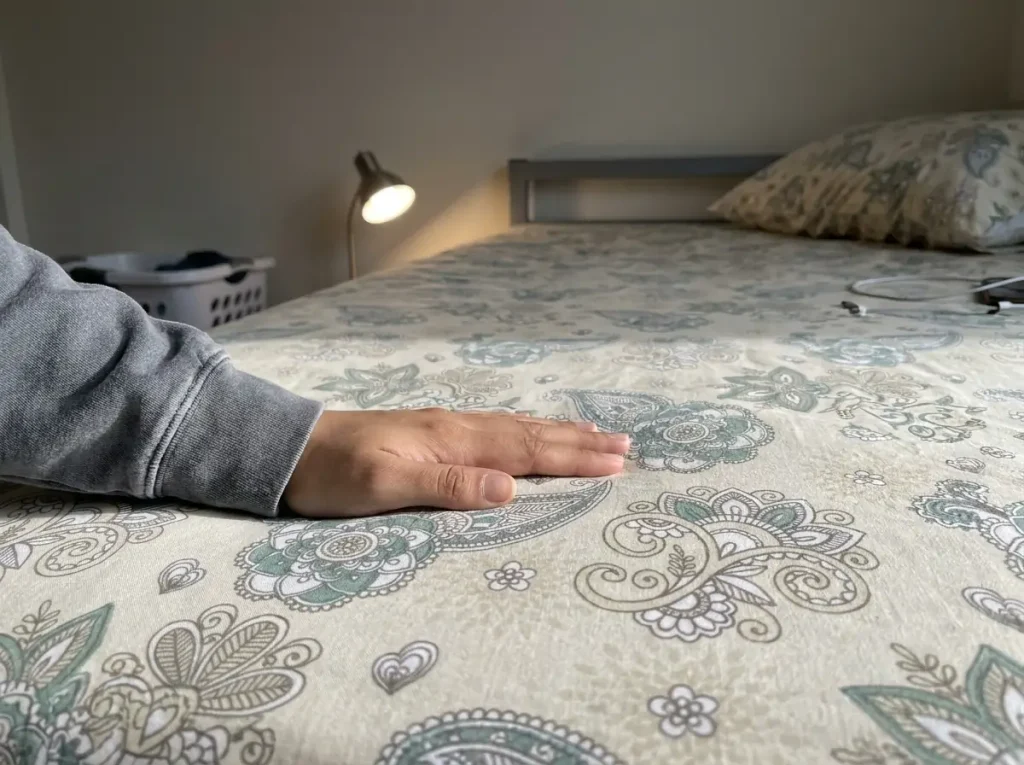
Where Your Skin Actually Is for Seven Hours
Your own thermoregulation is doing most of the work here; bedding only decides how easily the heat you shed can leave.
And conductive heat transfer needs contact, scaling with how much contact there is and how long it lasts. The fitted sheet and the top sheet are in continuous, direct, pressure-loaded contact all night. A comforter is an insulating layer with partial, shifting contact, and it is doing radiant and trapping work far more than conductive work. Nobody in this search result set states that difference, and it is the entire mechanism that decides the question.
Which means the sheet is not simply the cheaper first move. It is the layer with the most physical opportunity to move heat away from you, and the one you can inspect completely before buying: fiber, weave, thread count and pocket depth are all on the label of a good set, and each of them is checkable.
Percale, Sateen, and Why the Float Length Matters
Percale is a plain weave, one thread over and one under, every crossing interlaced. That constant interlacing is what leaves the small regular gaps air moves through, and it is also why percale has that matte, dry, dress-shirt hand instead of a shine. Sateen floats four threads over one before it interlaces. Longer float, smoother surface, more thread lying flat against you, fewer gaps.
It feels better under a hand in a shop and it sleeps warmer in July. That is how a one-over-one weave compares with a four-over-one float, and the choice is made before you get to any brand name.
Before you spend anything, do the free move. Take the top sheet off and sleep under the comforter alone for a week, or move the best woven cotton set you already own onto the bed. A surprising number of people find out from that alone which layer was the problem, and it is worth knowing what the cooling label actually adds to a sheet before paying for the word.
Then, if the sheet is genuinely the thing to replace, the set to look for is one that tells you what it is. Weave, thread count, ply, pocket depth, printed where you can read them.
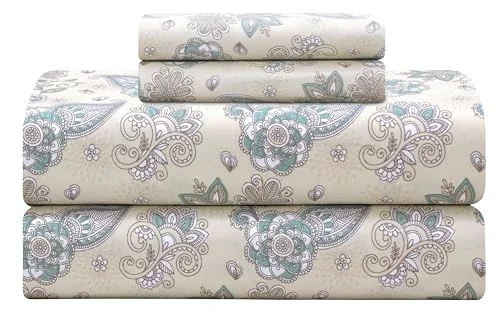
A percale set does not feel dramatically cool when you first get in. It feels dry. That is the tell that it will still be working at four in the morning, because the sensation you notice at first contact is the one designed to fade, and the one you notice at hour four is the one that came from the weave.
Linen Takes a Different Route to the Same Place
Cotton percale gets there through the weave. Linen gets there through the fiber: a thick, irregular flax fiber with high moisture regain, meaning it takes a lot of water into the fiber itself before it feels wet against you, and then gives it back to the room quickly. Its irregularity also holds the cloth slightly off the skin instead of laying flat on it, which is why linen feels airy rather than cool.
The DAPU 100% French Linen Sheets declare 170 GSM, which is the number that actually predicts how a linen sheet behaves and the one almost nobody prints. The flaw is not negotiable: linen creases hard and permanently, it will never look pressed, and that rumpled texture is the fabric, not a bad night.
Two fibers, two mechanisms, one outcome. That is the sheet side of this argument, and neither route depends on a word printed on a box.
What a Cooling Comforter Actually Does, and When It Stops
You put your hand on it in the store and it was genuinely, unmistakably cool. That was real, it was measurable, and nobody lied to you. The question is what happens forty minutes later.
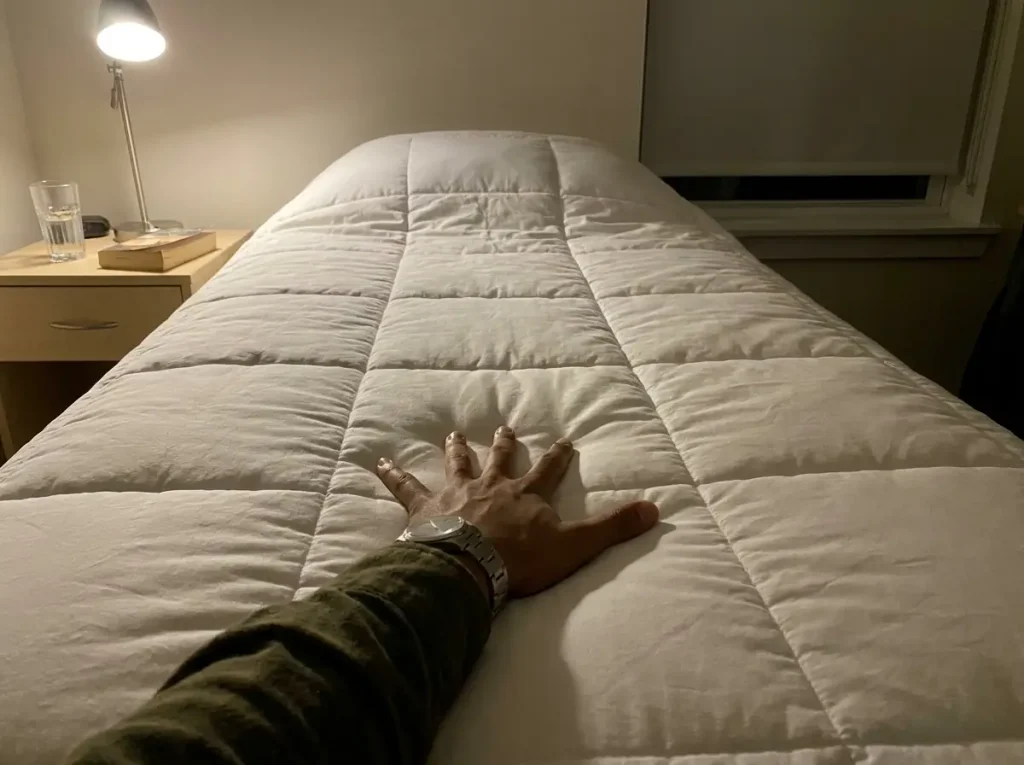
Where the Cool Touch Goes
The cool-touch sensation ends when the fabric reaches your temperature, and that takes seconds to a couple of minutes for the patch of shell your shoulder is on. After that the shell is at skin temperature, the flux is near zero, and the comforter is doing what comforters do: trapping.
A phase-change cooling fill can hold its effect for a short while next to a warm body, and then the fabric goes thermally neutral and stays there until the heat source is removed. That is a bed owner with a stopwatch in his head arriving at exactly the same place as the laboratory method, from the opposite direction. When the manufacturer’s own measurement and the person who bought it agree, you can stop wondering.
Fill Power, Fill Weight, and Which One Predicts Warmth
Fill power measures loft: how much space a given weight of down occupies, roughly 400 to 900. It is a quality figure, not a warmth figure. What predicts warmth is fill weight, the total mass of stuffing in there, or the summer/all-season weight class that stands in for it. Down alternative is normally sold by GSM instead, which is why a fill power figure on a synthetic comforter is a translation rather than a native measurement, and should be read as one.
This is where a comforter can genuinely help, and it has nothing to do with the shell’s first-touch reading. A summer-weight fill inside a breathable shell beats a spectacular cool-touch shell over a dense one, every single time. Weight beats sensation.
It also matters what the room is doing while the fill works. Most beds fall apart in the second half of the night for the opposite reason people expect. The room drops, the sleeper has already thrown the layer off, and the four-a.m. reach for a blanket happens.
The room temperature range sleep researchers point to is the baseline you should be choosing fill weight against, not the temperature at the moment you get into bed.
Weigh the comforter on a bathroom scale before you decide it is too warm. Stand on the scale, then stand on it holding the comforter, and subtract. Manufacturers list fill power far more often than fill weight, and fill weight is the figure that predicts the night — it is the one measurement you can take at home in ten seconds.
Reading a Comforter Shell the Way You Read a Sheet Label
Everything in the section above about sheets applies to the shell, because the shell is a sheet. It has a fiber, a weave, a weight and possibly a finish, and those four decide what it does with the heat that reaches it. So read it the same way: a comforter that names its weave and its thread count is telling you something checkable, and one that names only a technology is not.
The corner loops are the quiet tell on a comforter meant for a hot bed. Eight of them means the thing was designed to live inside a cover you can strip and wash often, and a comforter you wash often is one whose shell finish you will find out about early, in month two, rather than in year two when you have forgotten what it used to feel like.
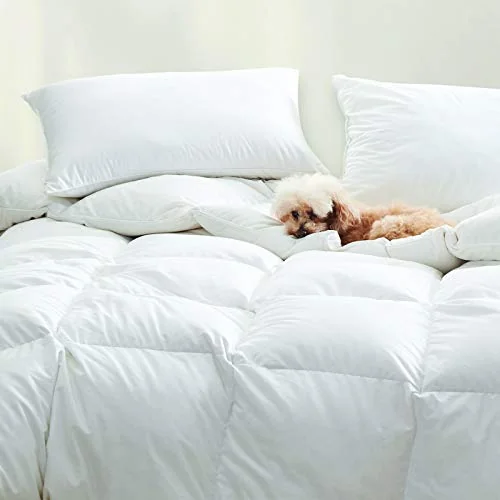
The other honest construction is one where the shell and the fill come from the same fiber family, instead of a bamboo-viscose shell sold as cooling over a plain polyester core that nobody mentions. The DOZ All Season Cooling Comforter does that, with viscose derived from bamboo in both the shell and the fill, eight corner loops, at a fraction of the Cuddledown. Its flaw comes from the same decision, because a fill that is entirely viscose holds moisture more than a down-alternative core does, which makes it the wrong pick for someone who sweats heavily. It is worth reading what bamboo viscose does and does not do in a weave before deciding that part.
Which One to Change First
If you have one purchase in you this season, this is the section that tells you which one. It also tells you the two things to try first that cost nothing, and I would genuinely rather you did those before you bought either.
The Two Free Nights That Answer It
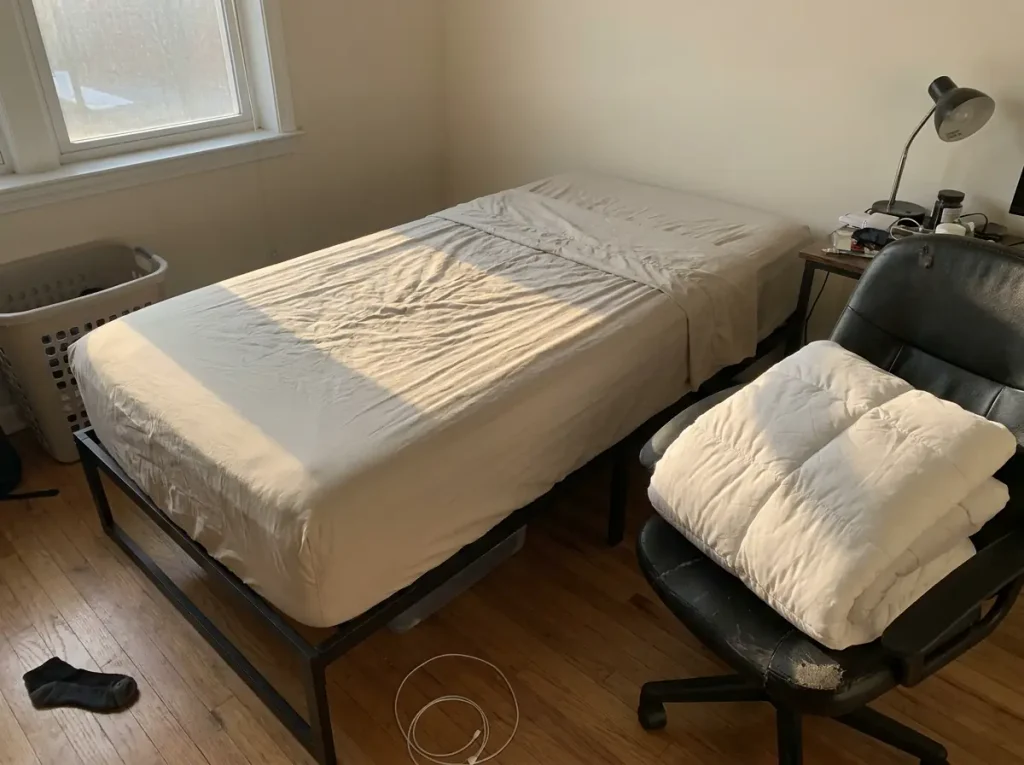
Take the top sheet off and sleep under the comforter alone for a week. Then put the top sheet back and take the comforter off for a week. That is the whole diagnostic, it costs nothing, and it isolates the variable in a way no amount of reading can.
Most people finish those two weeks knowing which layer was the problem. The cheaper route is to skip the branded cooling comforter and pair a plain woven cotton quilt with the sheet you already own.
One sleeper who used an ordinary woven cotton blanket over a cooling top sheet got a mixed result: waking cold in the early hours and reaching for a second blanket, but no longer waking up feeling like the bed is on fire. That is what a solved heat problem actually looks like. Not perfect. Solved.
The Order, and Why It Is Always the Sheet First
The sheet first, always. It costs less, it touches your skin the entire night, and every claim on its label can be verified before you hand over any money, and there is a whole article on a percale set at the bottom of the price range if budget is the constraint. The comforter second, and only after the sheet is sorted, because otherwise you are testing a new comforter over a sheet that was the actual culprit and you will draw the wrong conclusion from a good product.
| What it is | What the label states | What it actually controls | What it will not do |
|---|---|---|---|
| Feather & Stitch percale sheet set | 100% cotton, percale, 300 TC single ply, 16-inch pocket | Sustained contact heat and moisture, all night, from the weave | Look shiny — it stays matte and dry |
| Cuddledown Dreamstead comforter | 235 TC cotton percale shell, synthetic fill at ~500 fill power equivalent | Airflow through the shell plus an all-season fill weight | Hold its loft like real down — it flattens faster |
| DOZ All Season comforter | Bamboo viscose in shell and fill, 8 corner loops, OEKO-TEX Class 1 | One fiber family throughout, so the shell is not hiding a mismatched core | Suit a heavy sweater — viscose fill holds moisture |
| Hotel Grand Tencel summer comforter | 300 TC Tencel lyocell/polyester blend shell, summer weight class | A named shell fiber and a light fill class, stated openly | Stay available — stock was down to a handful of units when this was written, so treat it as a comparison point rather than a buying link |
When It Is the Room, Not the Bed
The third suspect is the loudest one, and it is not on the bed at all. A mattress that stores heat under a perfect sheet cancels the sheet, and a foam core is the usual offender; if that is your situation, the layer worth looking at is the protector, and a cotton-terry-faced one like the Nestl Premium Cotton Terry Mattress Protector at least breathes better than old vinyl, though the TPU backing is still a plastic layer between you and the mattress. A room that sits above the range is fighting every fabric on the bed at once, and no weave wins that fight, which is really the whole question of which fabrics run cool, framed one level up.
And a sweat that shows up the night you switch to a synthetic comforter is bedding. A sweat that shows up every night regardless of what is on the bed is a doctor before it is a shopping decision. Everything here assumes the second one is ruled out.
The Shared Bed, the Cases Where the Comforter Is Worth It Anyway, and Wash Twenty
One of you is throwing the comforter off at one in the morning and the other is pulling it back at two. That is not a comforter problem in the sense the shops mean it, and no single product solves it, because the requirement is contradictory.
Two Sleepers, One Comforter, and the Layer You Both Share
In a shared bed the sheet is the layer both people are lying on, which makes it the only purchase that helps both of you at once. It is also the only one where your preferences do not conflict, because nobody has ever wanted a damper sheet.
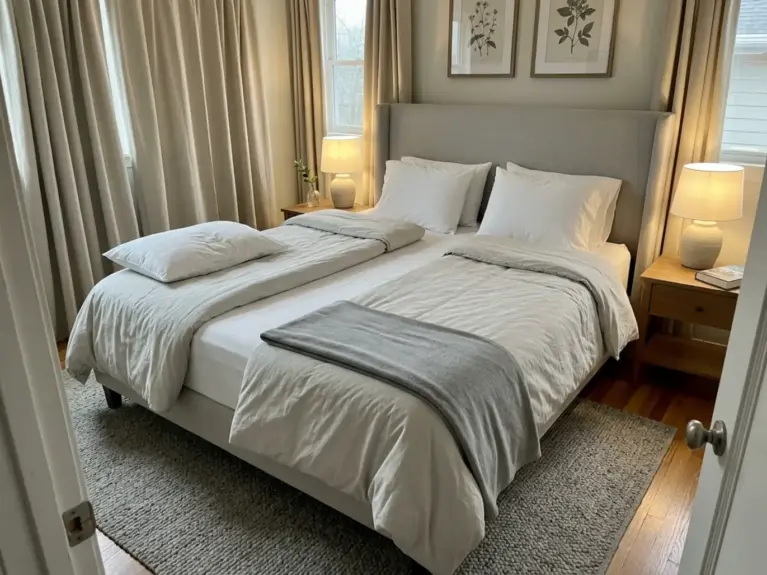
The comforter is exactly where the two of you diverge, and the honest fix is two separate ones rather than a compromise weight that is wrong for both in opposite directions. A compromise weight is not a middle ground; it is two disappointments. Half of Europe already sleeps this way and it looks strange for about four nights.
This is the one case where the European answer beats the American one outright: two separate duvets on one bed, each at the weight its sleeper wants, instead of a single comforter that suits neither. The usual advice is to buy the heavier sleeper’s preferred weight and let the hot one throw it off. After enough of those “bed is on fire” threads, I would rather split the layer and keep the shared sheet good, which is also the cheaper of the two routes. If the layering gets complicated from there, building the whole stack for a bed that runs hot is the next thing to read, and if hormonal sweats are the reason one of you is shopping at all, layering a bed around night sweats sits closer to that case.
Three Times the Comforter Is the Right First Purchase
The sheet-first rule has three real exceptions, and they are not edge cases:
- You sleep without a top sheet. With just a fitted sheet under you and a comforter over you, the comforter is your contact layer, and the whole mechanism of this article now points at it.
- You run one comforter all year, with no summer swap and no second lighter option in the closet. Then the comforter is doing twelve months of work and its weight class is the single biggest lever you have.
- The sheet is already percale or linen and the heat has not moved. You have spent the cheap purchase, it did not settle it, and the next variable up is the fill.
That first exception is bigger than it looks. The week you spend sleeping under the comforter with no top sheet is not just a diagnostic. If it works, it is also the answer, and for the people who sleep that way permanently a good cooling comforter is a genuine purchase rather than a consolation one.
What Twenty Washes Do to a Finish, a Weave and a Fill
Wash twenty is where this niche stops writing and this is the part worth staying for. On a sheet, percale softens and keeps working, because the cooling was the weave and a weave does not wash out. Pilling is how a percale set ends, usually first on the side that gets slept on, and warmth is not what changes. That is also true of the shell of a comforter, and it is which weave holds up longer over a season of washes that decides it.
On a comforter shell, the split from the first section finally shows itself. An applied cool-touch finish leaves with the washes; a conducting fiber does not.
And here is a real gap, stated plainly: nobody in this search result set re-tests cooling performance after the first wash. Good Housekeeping checks shrinkage post-wash, Forbes re-checks its panel at three months for durability, and neither revisits the cooling claim itself. The data on how long a cooling shell stays cooling essentially does not exist in the wild, which is its own kind of answer.
Which is also why the two layers want different laundry. A sheet is washed weekly and survives it, because a weave has nothing to lose in a machine; wash it in cold water and the fiber keeps doing what its structure does.
A comforter shell finished for cool touch is the opposite case, and the care label usually says so quietly: cold water, hang dry in the shade, and skip the fabric softener, which leaves a film across exactly the surface you paid for. That last one matters more than it sounds. Softener coats the fiber, and a coated fiber moves less moisture, so the product marketed on moisture-wicking is the one softener quietly ruins first.
None of that is a problem for a percale sheet, and all of it is a standing chore for a cool-touch shell.
Fill migration is the comforter’s real aging story, and it is quieter than any finish. Baffle-box construction holds the fill in its compartments; simple box quilting lets it drift toward the edges over a season, and a thin patch directly over your torso makes for a warm night regardless of what the shell is made of.
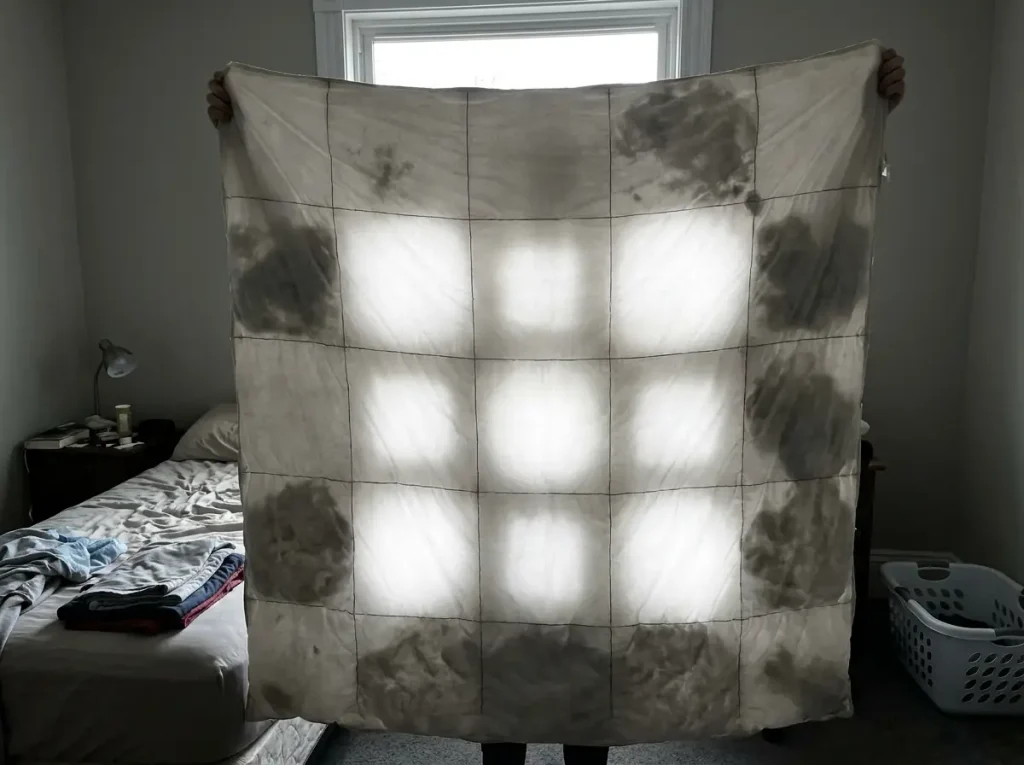
After a season of washes, hold the comforter up flat against a window instead of feeling it. If light comes through the middle of the panel more than through the edges, the fill has walked outward and your torso is under the thin part. No shell finish and no new cover will make that bed cooler.
The Verdict, in Three Lines
The sheet decides more, and it decides it for a mechanical reason rather than a marketing one: it is the layer against your skin all night, while a comforter’s cool-touch is a first-contact effect that ends the moment the fabric reaches your temperature.
Buy in that order. Sheet first, because it costs less and every claim on the label is checkable; comforter second, unless you sleep without a top sheet, run one comforter year round, or already fixed the sheet and the heat stayed.
And read a comforter shell the way you read a sheet label. A shell that names its weave and its fiber is telling you something you can verify; one that names only a technology is telling you what it wants you to feel in the store.
After a season of washes, hold the comforter up to a window — if the middle passes more light than the edges, the fill has migrated, and no shell will fix that. On the sheet, look for pilling rather than for lost coolness, because a weave does not wash out.
Take the top sheet off tonight and sleep under the comforter alone for a week. Then put the top sheet back and take the comforter off for a week. Whichever week you slept better tells you which layer to spend on, and it cost nothing to find out.
Frequently Asked Questions
01Do cooling comforters actually work?
Yes, briefly. The cool-touch shell reads genuinely cool for the first seconds of contact, then stops once it reaches skin temperature. What keeps working overnight is a lighter fill inside a shell with an open weave, not the surface sensation.
02Do cooling sheets actually work to cool down the bed?
They work by moving heat and moisture away all night, which is sustained rather than instant. A percale weave or a linen fiber does more of that than any marketing term, and neither effect washes out.
03Should I buy cooling sheets or a cooling comforter first?
Sheets first. They cost less, they touch your skin the entire night, and every claim on the label can be checked before you buy. Add the comforter only if the sheet alone did not settle it.
04Why does Gen Z not use top sheets?
Many sleep under the comforter alone with just a fitted sheet and a washable cover. It changes this comparison completely — with no top sheet, the comforter becomes your contact layer, and it is worth spending on first.
05What should I look for on a cooling comforter label?
The shell weave and fiber, the fill material and its weight or GSM, and whether the cooling comes from a finish or the fiber itself. A finish leaves over the washes; a conducting fiber does not.



Tried it on your own bed?
No comments yet. Tell us what you changed, and what the sheet did after a few washes.