






What’s in here7 sections
It is three in the morning, the sheet is soaked in one patch under your shoulder blades, the duvet is somewhere on the floor, and you are lying there deciding whether the answer is new sheets or a phone call. Polyester holds under one percent of its own weight in moisture, so on a polyester sheet there is nowhere for that sweat to go except back against your skin, which is why the same amount of sweat feels catastrophic on one bed and unremarkable on another. That is the whole question this article settles: whether the bed can be the reason, then a three-night test that tells you for certain, then what to do when the test says it was never the bed at all.
Quick Answer
Bedding can trap heat and moisture until you wake up soaked, but it does not start the sweating. It changes how bad an episode gets, not why it happens. Three controlled nights will tell you which one you are dealing with before you spend anything.
Can bedding actually cause night sweats?
You have probably read a list by now where “bedding” sits as item number five, treated as one interchangeable answer among several, as if what is on the bed and what is going on inside you belonged in the same column. That flattening is why you are still confused. Somebody who has stripped a lot of beds would put it differently: the sheets did not start it, they decided whether you woke up.
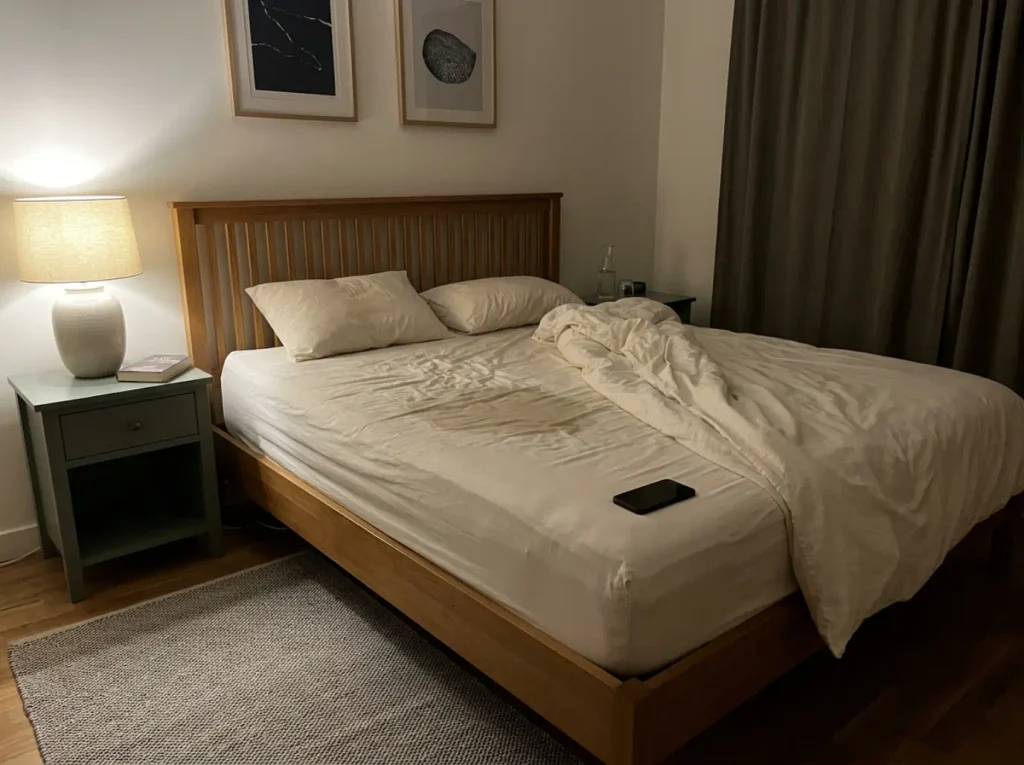
Here is the distinction the rest of this article runs on. A sweat episode starts somewhere in the body. The bed decides whether that moisture leaves or sits there. Bedding turns a warm night into a soaked one, and it does that quietly, because the layer doing it usually costs nothing to change.
The mechanism is not mysterious, and it is not even a malfunction. That core body temperature drop is about two degrees Fahrenheit overnight, starting roughly two hours before you fall asleep, because the body’s core temperature drops overnight on its own as part of how sleep works. Heat has to leave for that to happen, and it leaves through the bedding by two routes: air permeability, which is how much air the cloth lets through, and thermal conductivity, which is how readily it carries heat away from the skin. A closed weave, a heavy fill or a waterproof layer is not a neutral bystander in that process, it is standing in the way of normal physiology.
And there is a second piece that explains the timing. During REM, active thermoregulation largely shuts down. You cannot sweat or shiver your way out of a bad layer during the stretch of the night when most people wake up damp, which is exactly why the bed matters most in that window and why 3 a.m. keeps showing up in the search box.
One poster on r/Bedding put the sensation better than most articles manage: that hot and cold clammy feeling is really common, because sweat gets trapped and then cools on the skin, so it feels like both at once. That is the thing nobody explains. You are not sweating and freezing in some contradictory way. You are wearing your own evaporated sweat, and the fabric is holding it there.
Look at where the wet patch is before you strip the bed. Moisture pooled in one place, under the shoulder blades or the small of the back, is contact-point moisture with nowhere to go, and that is a bedding pattern. Sweat spread evenly across the sheet and the pillowcase is a different signal, and no sheet swap will change it.
So the honest verdict, stated up front rather than buried: bedding alone can take somebody who runs slightly warm and make them wake up wet. It cannot manufacture a drenching night in somebody sleeping under linen in a 65 °F room. Between those two poles is where most people actually live, and that is why the test in the next-but-one section exists instead of a list of possibilities. If you already know the bed is part of it and you want the build rather than the diagnosis, the full layer-by-layer guide to bedding for night sweats starts at the mattress and works up.
What on the bed actually holds the moisture
You own three things with “breathable, cooling” printed on the package and you are still waking up soaked. That is not bad luck. Two of those words describe a finish, one describes a weave, and only one of the three survives the laundry.
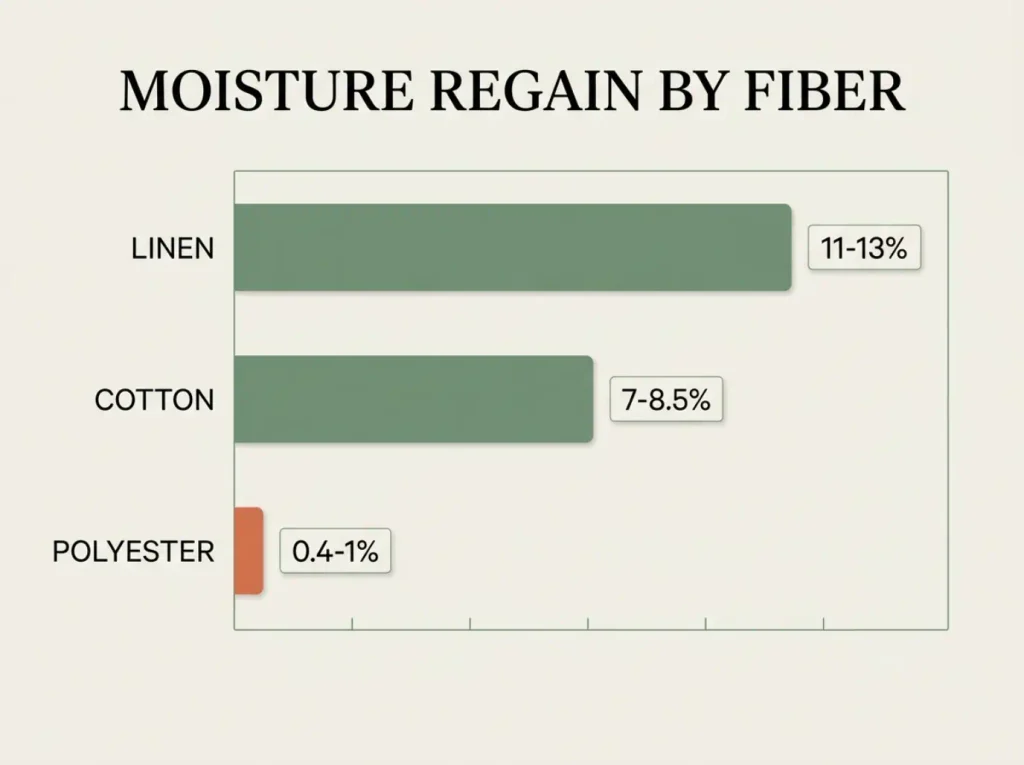
Start with fiber, because it is the number nobody prints. Moisture regain is how much water a fiber takes into itself under standard conditions: cotton sits at 7 to 8.5 percent, linen at 11 to 13, polyester at 0.4 to 1. Linen pulls nearly twice what cotton does into the fiber itself, and polyester barely absorbs at all. That is not a small difference in degree, it is a different relationship with your sweat.
Linen is also the clearest way to feel that gap in one night. The DAPU 100% French Linen Sheets at a declared 170 GSM are the version of it that shows up in most hot-sleeper threads, though new linen arrives stiff and takes several washes to soften, so the first few nights feel more like canvas than like a sheet.
The mechanism behind the marketing word matters more than the word. Cotton and linen absorb moisture into the fiber, which is why a natural sheet feels like it is drying against your skin. Polyester is hydrophobic and moves liquid by capillary action between the fibers instead, so it relocates sweat rather than taking it in.
“Moisture-wicking” describes that second thing and gets sold as if it were the first. Another r/Bedding poster skipped the vocabulary entirely and said synthetics are like sleeping with plastic bags, which is a fair summary of what capillary action feels like at 3 a.m.
Weave is the next layer down, and it is the one that cannot be undone. Percale is a one-over-one-under weave, and that open interlace is why it moves air. Sateen floats four threads over one, which is where the sheen comes from, and also the pilling, since long floats catch on friction. Breathability lives here, in the structure, far more than it lives in the thread count printed on the front of the package.
This is structural. It cannot wash out, which is more than can be said for the third thing on the label, and the pillar on why percale and sateen behave differently has the full comparison if you want it.
That third thing is finish. A cooling finish, like a wrinkle-resistant one, is a topical coating, usually a resin, a silicone or a phase-change treatment, sitting on top of a fabric that would behave differently without it. Coatings wear off.
If your “cooling” sheets stopped cooling somewhere around month four and you assumed you had adapted to them, you had not. The coating left.
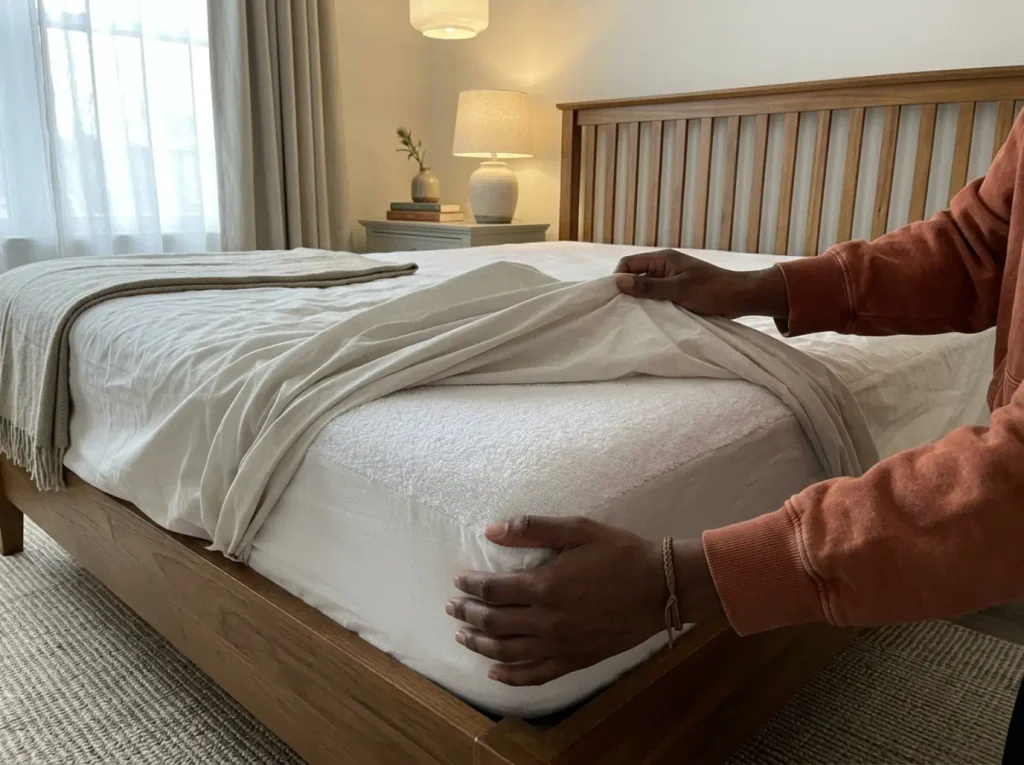
Now the layer nobody names, and it is the one that decides the ceiling for everything above it. The least permeable thing on the bed sets the limit for the whole stack, and on most beds that is the mattress protector. A vinyl waterproof membrane blocks vapor and air together, while a TPU-backed one is a breathable membrane: it passes water-vapor transmission, measured against ASTM’s own standard for water vapor transmission, and still blocks liquid. Moisture evaporation is the whole point, and the best percale ever woven cannot out-breathe vinyl underneath it.
If you want the breathable-waterproof version rather than no protector at all, a cotton-terry face over a TPU back is the shape to look for, and the Nestl Premium Cotton Terry Mattress Protector is that build at the affordable end of it. It does crackle when you move for the first few weeks, until the TPU relaxes with a few washes.
Here is the part that makes the protector the quiet culprit: most people bought theirs once, years ago, and have not thought about it since. It lives under the fitted sheet where nobody looks, it outlasts three sets of sheets, and it gets blamed for none of them. You will replace the sheets twice before you ever lift them to see what is underneath.
Check the protector by feel, not by the label. Hold it up to a lamp and pull it taut: a TPU film is thin and slightly stretchy and lets light through as a haze. A vinyl backing is stiffer, glossier, blocks the light flatly, and creases into permanent lines. If it has been on the bed for more than three years and creases like a shower curtain, it is the ceiling.
The three-night test
Every article on this subject tells you to identify the cause. Almost none of them tells you how. This is how, and it costs nothing, which is the whole reason to run it before you buy anything.
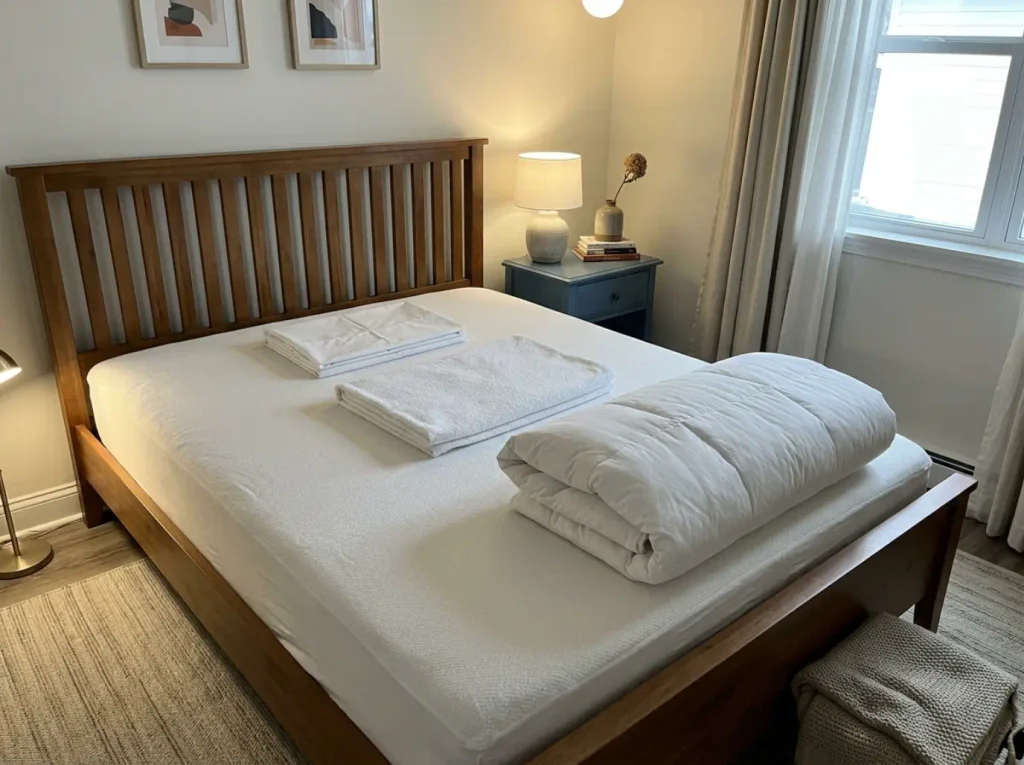
One rule makes it a test rather than a shuffle: change one variable at a time. Swap the sheets, the duvet and the thermostat on the same night and you have learned nothing except that something changed.
Three nights, one change each, in the same week. Not spread across a month, because sleep varies enough night to night that a slow test measures the weather instead of the bed. And do not run it during a heat wave.
Control the room first, since it is free and it is the single biggest variable in the experiment. The Sleep Foundation’s range is 65 to 68 °F. If your room sits above it, no sheet swap will fix the night and the test will lie to you, because you will have proven that a fabric cannot beat an overheated room, which was never in question.
- Night 1, subtract. Take the duvet off entirely and sleep under the flat sheet alone. If the sweating stops, the problem was insulation, not fiber, and the fix is free and permanent.
- Night 2, strip to the ceiling. Take the waterproof protector off the mattress. If night 2 comes back dry and night 1 did not, the membrane was capping the whole bed.
- Night 3, swap the fiber. Put on the most absorbent set in the house. Linen if you own it, plain cotton percale if you do not. Never a microfiber set and never anything sold as “cooling” for this night, because a finish is exactly the variable you are trying to see past.
If you have to buy something for night 3 because there is genuinely nothing absorbent in the cupboard, buy the weave, not the promise. The Feather & Stitch 100% Cotton Percale Sheet Set is a 300-count single-ply percale with a 16-inch pocket, which is the spec that matters on all three counts, and it will never look ironed: it comes out of the dryer visibly creased and stays that way.
A step cheaper, the ALPHA HOME Washed Cotton Percale Sheet Set gives you the same weave-level fix with an enzyme wash that softens it faster, though that same wash accelerates pilling on the side that gets the most friction, so after a few months of heavy use it looks bobbled where the Feather & Stitch still does not. It is the budget slot, not the better set. And if you want the reasoning behind why the weave outlasts the marketing word, what actually makes a sheet sleep cool separates the structure from the finish properly.
Reading the result is the easy part. Any night that comes back dry has named the layer that was doing it. One poster on r/Bedding arrived at the same conclusion from the other direction, noting that percale is a simpler, lighter, more breathable weave than sateen, and that somebody who sleeps hot should stay in the lower half of the 200 to 400 thread-count range rather than climbing it. That is the fix for a bedding-shaped problem, arrived at by somebody who slept on both.
Three wet nights in a controlled 65 to 68 °F room is also a result, and a clean one. It means the bed is not the variable. That is the next section.
Write one line on your phone each morning before you get out of bed: which layer you removed, where the wet patch was, and whether you woke up. Three mornings later that note is the whole result. Try to remember it on Thursday and every night will have blurred into the same night, which is how most people end up buying sheets on a feeling.
When the test says it was never the bedding
Three controlled nights, three wet mornings, and nothing changed. That is not a dead end and it is not a wasted week. You have ruled out the bed, which is worth more than another sheet set, because the money was about to be spent in the wrong place.
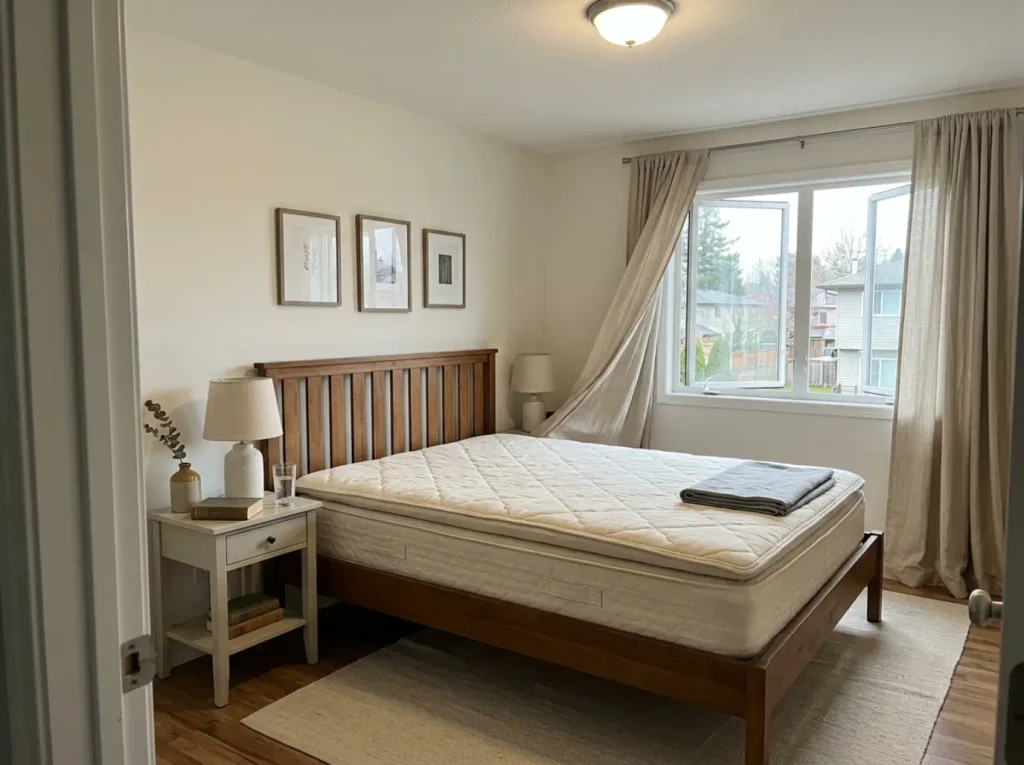
Two things in the room are still not bedding and are worth checking before you conclude anything. The mattress itself is one: memory foam heat retention is real, there is nothing between you and it except the layers you have already tested, and no sheet fixes a mattress that stores your warmth all night. A dense mattress topper does the same thing one layer higher, which is worth knowing if you added one and the sweating started afterward.
Airflow is the other. A closed door and still air will beat any fabric you put on the bed, and a fan moving air across the room does more for evaporation than a fiber swap does, whatever the room temperature reads on the thermostat.
Past that, the honest answer is that this is where a bedding article stops. Mayo Clinic’s guidance is to book a visit when night sweats happen on a regular basis, interrupt your sleep, or come with other symptoms, and that threshold is the entire content of this paragraph: when night sweats are worth a doctor’s visit is a question with a real answer and this is not the place that answers it. If the frequency itself is what you are trying to gauge, how often is too often takes that question on directly.
What this article will not do, said plainly: it will not tell you what is causing the sweating. Any page that puts a list of conditions next to a sheet recommendation is guessing at something it cannot see in order to sell you fabric, and the guess is free for whoever wrote it and expensive for you. Fiber, weave, fill, temperature and how the bed gets made are answerable here. What a body is doing is not.
The r/Bedding threads land in the same place, for what it is worth, and they get there without any prompting from a site that sells sheets: check the fabric first, then talk to someone if nothing changes. That sequence is right, and it is the sequence this article has just walked you through.
If you have already replaced your sheets twice chasing this, you are exactly the person who most needs to hear that a third set will not work either. Two failed purchases is itself a data point. It says the bed was never the variable, and it said so before this test did.
When one of you sweats and the other is cold
Two people, one duvet, opposite thermostats, and every roundup either of you has read recommends a single best duvet for you both. That advice is not wrong so much as impossible. With two sleepers under one layer, a hot sleeper and a cold sleeper are being asked to average themselves into a single tog, and a shared layer is a compromise before it is a fabric, which means neither of them is actually on the bedding that suits them.
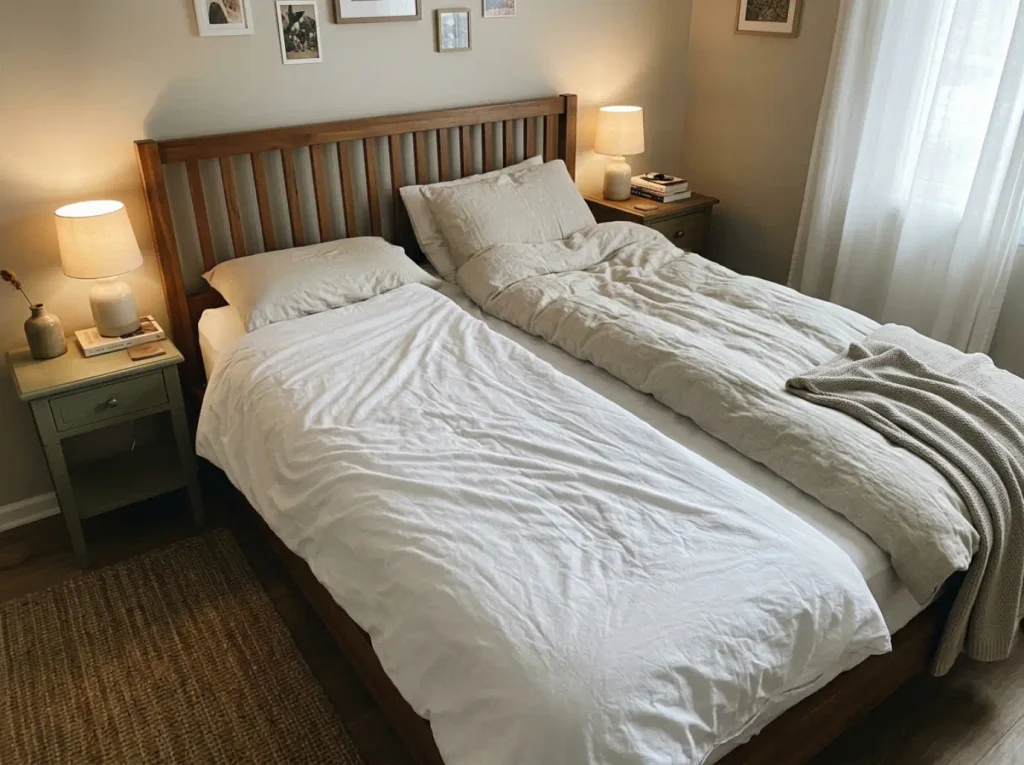
That also breaks the test. Run the three nights on a shared bed and what you measure is the negotiation, not the bed. So run it per side, or run it on the nights you have the bed to yourself, and treat a result from a compromise layer as no result at all.
The structural fix has been standard across half of Europe for decades: one shared fitted sheet, two individual twin duvets. Each sleeper picks their own weight, each one can throw theirs off at 2 a.m. without stripping the other side of the bed, and the tug-of-war stops being a nightly event. A poster on r/Bedding laid out the full version in a thread about exactly this problem: keep whatever fitted sheet you can both agree on, then each of you takes your own top sheet and your own duvet insert and cover, chosen to suit you rather than averaged between you.
Before buying two of anything, there is a cheaper first move, and it comes from the same thread: separate top covers over the shared fitted sheet. One person can push a blanket down to their feet without dragging it off the other. It is free if you already own two blankets, and it tests the idea before you commit to two duvet covers and the laundry that comes with them.
But the layer you cannot split is the one underneath. The fitted sheet and the protector are common to both sides of the bed and neither of you argues about them, which is precisely why they get away with it. If the protector is capping the bed, it is capping it for two people, and the partner who sweats gets told to change their duvet while the actual ceiling sits under both of them, unexamined for years. The how the four layers stack up breakdown covers that stacking order in full, and it is worth reading with a shared bed in mind: the layers nobody argues about are the two that affect both people.
The three things worth keeping
Bedding does not start a sweat episode. It decides whether you wake up in it, which is a smaller claim than the internet makes and a more useful one.
Run the three nights before spending anything. Subtract the duvet, strip the protector, swap the fiber, one change per night, in a room held between 65 and 68 °F. The night that comes back dry has named your layer.
Three controlled wet nights means the bed was never the variable, and that is the moment to stop shopping rather than the moment to try a fourth set.
One thing to check after a season of washes: whether the fix still works. A weave will still be doing its job at wash twenty, because one over one under is not a coating and cannot leave. A finish will have thinned out by then, and the sweating comes back around month four looking like a brand-new problem when it is really the same one with the marketing worn off.
Tonight, take the duvet off and sleep under the flat sheet alone. That is night one. It costs nothing and it rules out the single most common layer on the bed.
Frequently Asked Questions
01Why do I keep waking up at 3am drenched in sweat?
The bed traps heat your body is trying to shed in the first sleep cycles, so a non-breathing layer shows up as a 3 a.m. wake-up rather than a gradual one. Run the three-night test to find which layer. If all three nights come back wet, the bed is not the variable.
02Do I need to wash my sheets after night sweats?
Yes. Sweat leaves salts and skin oils that stiffen the fiber and hold odor, and both build up faster than a weekly wash clears them. The routine matters more than the frequency, and how to wash bedding after night sweats covers the one that stops the smell setting in.
03Can a mattress protector cause night sweats?
A vinyl-backed one can, because it blocks vapor and air together and sets the ceiling for every layer above it. A cotton-faced, TPU-backed protector passes moisture vapor while still blocking liquid. See which protectors actually breathe.
04Do cooling sheets stop night sweats?
They can lower how hot the bed runs, which changes how an episode feels, but they cannot stop sweating that starts in the body. And when cooling is a finish rather than a weave, it washes out in a matter of months. A percale weave does not.


Tried it on your own bed?
No comments yet. Tell us what you changed, and what the sheet did after a few washes.