






What’s in here8 sections
- Four Layers, and One of Them Is Undoing the Other Three
- The Sheet: the Weave Decides Before the Fiber Does
- Take a Layer Off Before You Buy One
- The Protector: the Layer Nobody Looks Under
- The Pillow: Your Head Sits on the Closed Layer
- The Comforter, and the Second Person Under It
- Conclusion
- Frequently Asked Questions
You did the homework. You read the roundups, you skipped the sateen everybody photographs, you bought the percale set with the good reviews, and you are still waking up at two with the covers on the floor and the small of your back damp.
The sheet was never the only thing between you and the mattress. There is a layer under it that came with the bed or got bought once during a move, and it is either a membrane that lets water vapor through or a sheet of plastic that does not. The package almost never says which one you own.
This is the full bedding set, layer by layer: what each one does to heat, which one to suspect first, what to take off the bed for free before you spend anything, and what the four of them look like after a season of washes.
Quick Answer
A hot-sleeper set is four layers, and the least permeable one sets the ceiling: an open-weave sheet, a protector with a fabric face over a vapor-permeable membrane, a light comforter or none in summer, and a pillow with an open fill. One wrong layer undoes the other three.
Four Layers, and One of Them Is Undoing the Other Three
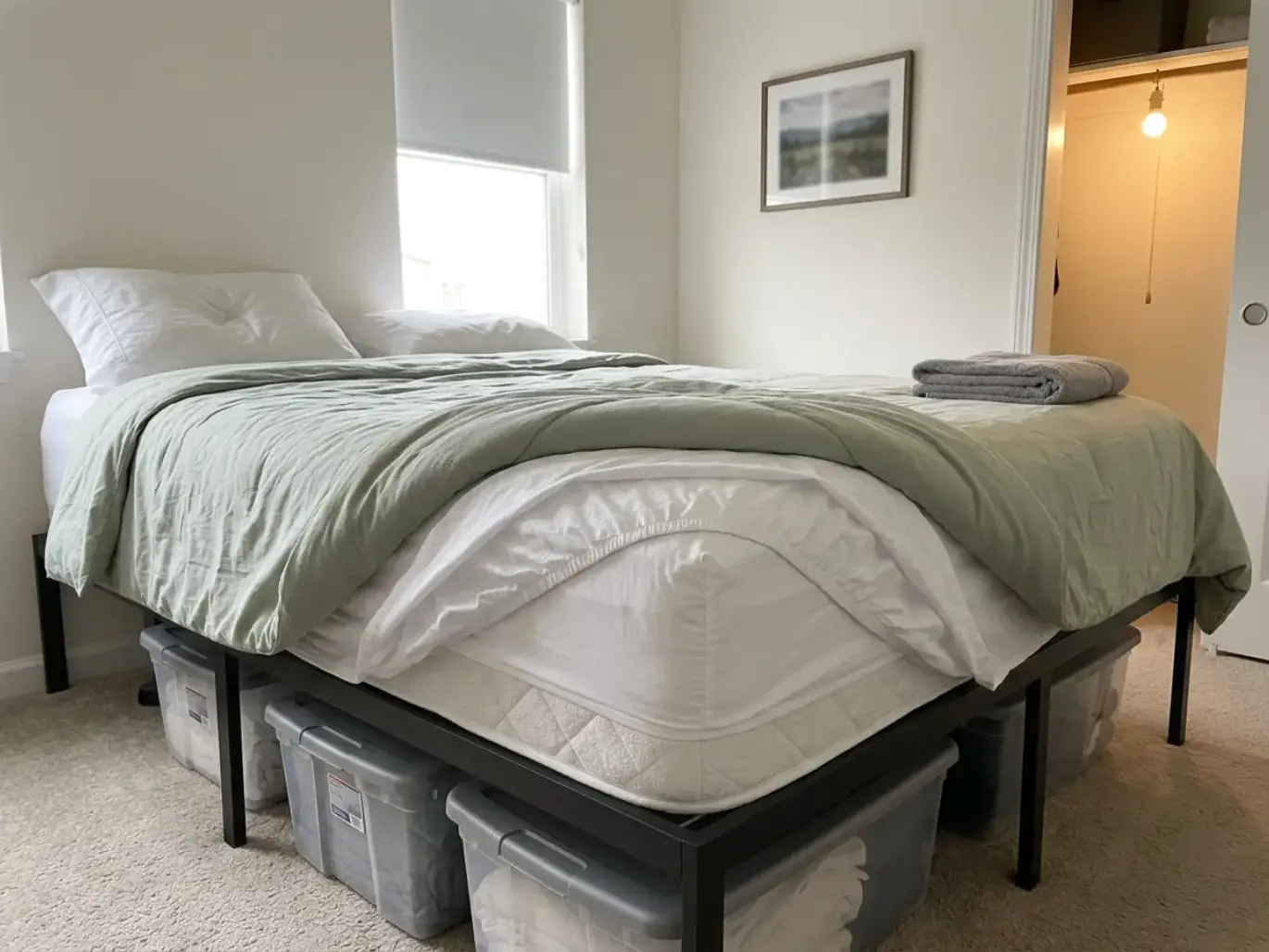
Count what is actually on your bed, from the mattress up: the mattress itself and a topper if there is one, then the mattress protector, then the fitted sheet, then the flat sheet, then the comforter or the duvet in its cover, and finally the pillow with its protector and its case. That is six things between you and the mattress, and most people can name three of them from memory. The two they forget are the two closest to their skin all night. If you arrived here without the basics, the whole hot-sleeper picture, from the room down to the fiber is the version one level up.
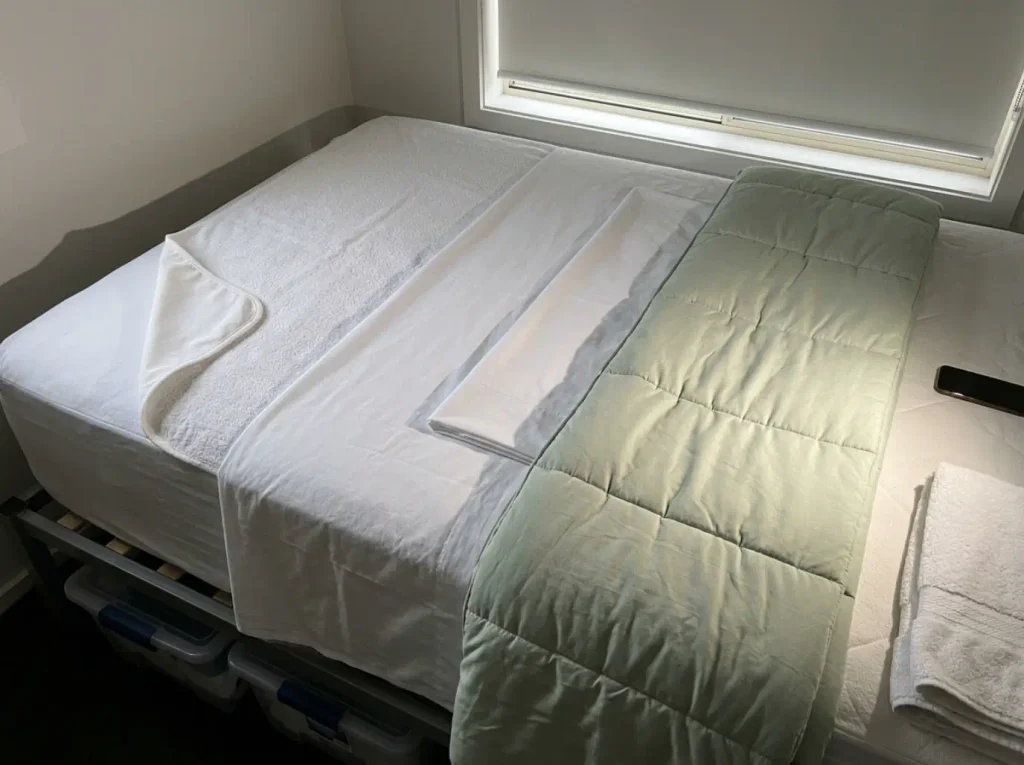
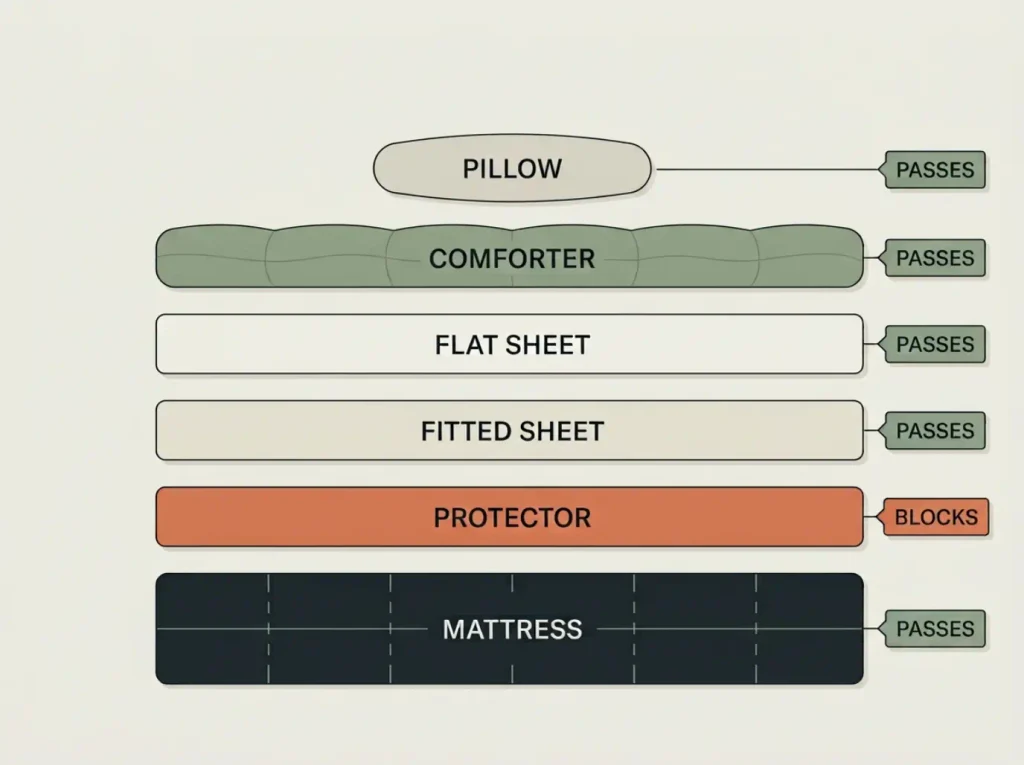
Here is the part every roundup skips, because a roundup only sells one category at a time. Heat and moisture leave your bed in series, not in parallel. They have to cross every one of those layers in order, and the least permeable one sets the ceiling for the whole stack.
It works exactly like a room with four windows where one is painted shut. The other three do not compensate, they just move air up to the limit the shut one allows. A sheet cannot pass moisture down into a layer that will not take it.
Which is why the failing combination is so common and so invisible. A breathable percale sheet, a comforter with a synthetic shell, a vinyl-backed protector, and a solid memory foam pillow is a hot bed, even though every box in that list carried the word “cooling” or “breathable” on the front. Three of those four choices were right. The set still fails, and the reader who bought all four has no way to tell which one betrayed them, because they all felt fine in the store.
Nobody in the search results makes this argument, and the reason is structural rather than lazy. Every one of those pages sells a single category. A sheet roundup compares sheets to other sheets, a comforter roundup compares comforters to other comforters, and neither is set up to say that the winner of its own list can be cancelled by an item on somebody else’s. So the reader assembles the bed out of four separate first-place finishes and ends up with a stack nobody ever evaluated as a stack.
There is a second reason this stays hidden, and it is timing. Every layer in that list feels correct in week one, because in week one you are feeling a finish, a fresh loft and a sizing, not a fabric. The stack does not report on itself until the finishes have washed out and the fills have settled, which is somewhere around the third month for most sets. That is why a bed can get worse without anything visibly changing, and why the honest verdict on any layer here arrives at wash twenty rather than on the first night.
So suspect the layer you cannot see first. The mattress protector sits under the fitted sheet, gets replaced maybe once a decade, and is the only item in the set that almost nobody chose for temperature. It was chosen for spills, or for a warranty, or it came in the box with the mattress. The community has a name for what it feels like when it goes wrong: the r/Bedding threads keep landing on “the plastic bag feeling,” a phrase people reach for independently of each other, and every time, it describes the protector rather than the sheet everyone blames.
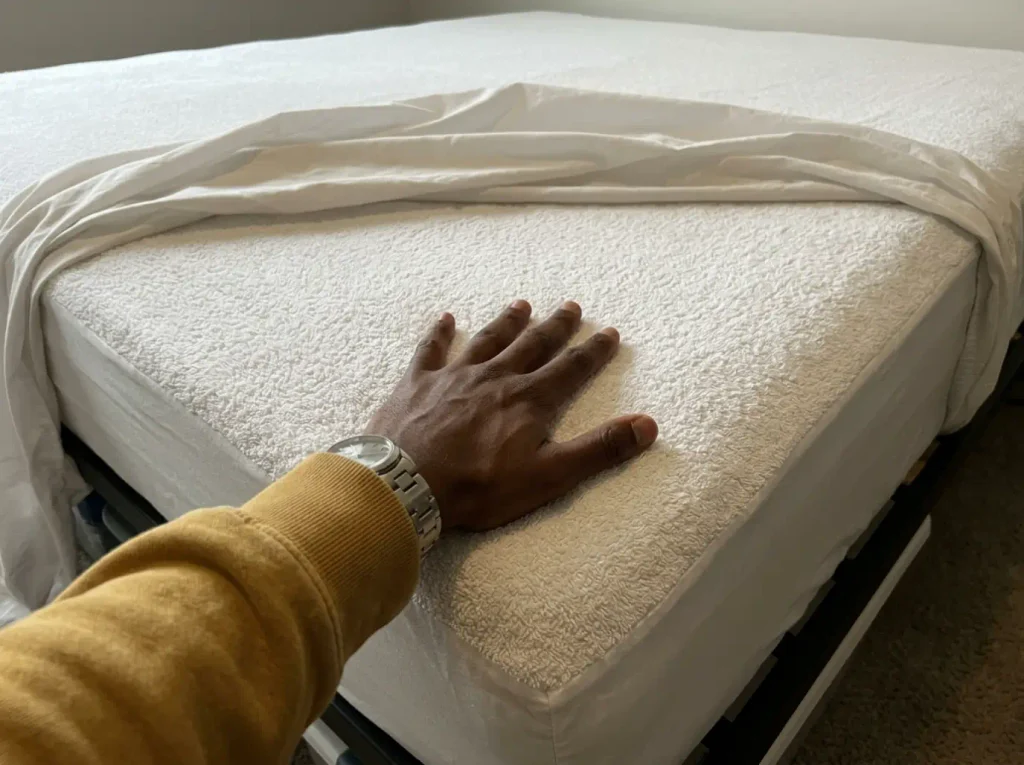
Find the culprit at the corner, in the morning, before you make the bed. Peel the fitted sheet back off one corner and put a flat palm on whatever is underneath. If that surface is cool and dry, it was never your problem. If it is warm and slightly damp while the sheet above it is dry, the moisture stopped there, and you just identified the layer without buying anything.
That is the diagnosis in ten seconds. What follows is not a shopping shortlist and not a repeat of the answer above it: it is an audit sheet for the bed you already have. One row per layer, with the shape its closed, heat-trapping version takes on the left and the words to look for on the package on the right, so you can go through your own stack and mark which layers pass.
| Layer | What its closed version looks like | What to check on the package |
|---|---|---|
| Mattress protector | Vinyl or PU backing, smooth and slightly shiny, crinkles when you flex it | A named membrane material and a fabric face, not the bare word waterproof |
| Fitted and flat sheet | Sateen, four threads floating over one, heavier and closed | Fiber, weave and ply, printed as three separate facts |
| Comforter or duvet | Synthetic shell and an unnamed fill weight sold as all-season | Fill weight in ounces and a cotton shell |
| Pillow | Solid memory foam core, the one you flip all night | Shredded or open-cell fill, and a cotton protector rather than a coated one |
The Sheet: the Weave Decides Before the Fiber Does
Percale is one thread over, one thread under, repeating. That leaves gaps between the threads, and gaps move air. Sateen floats four threads over one before it dips, which is why it looks smoother and photographs better, and also why it is heavier and closed. For a hot sleeper the weave has already made the decision before the fiber name gets a vote, and if you want that argument in full, one of those two words names a fiber and the other names a weave is where it gets settled properly.
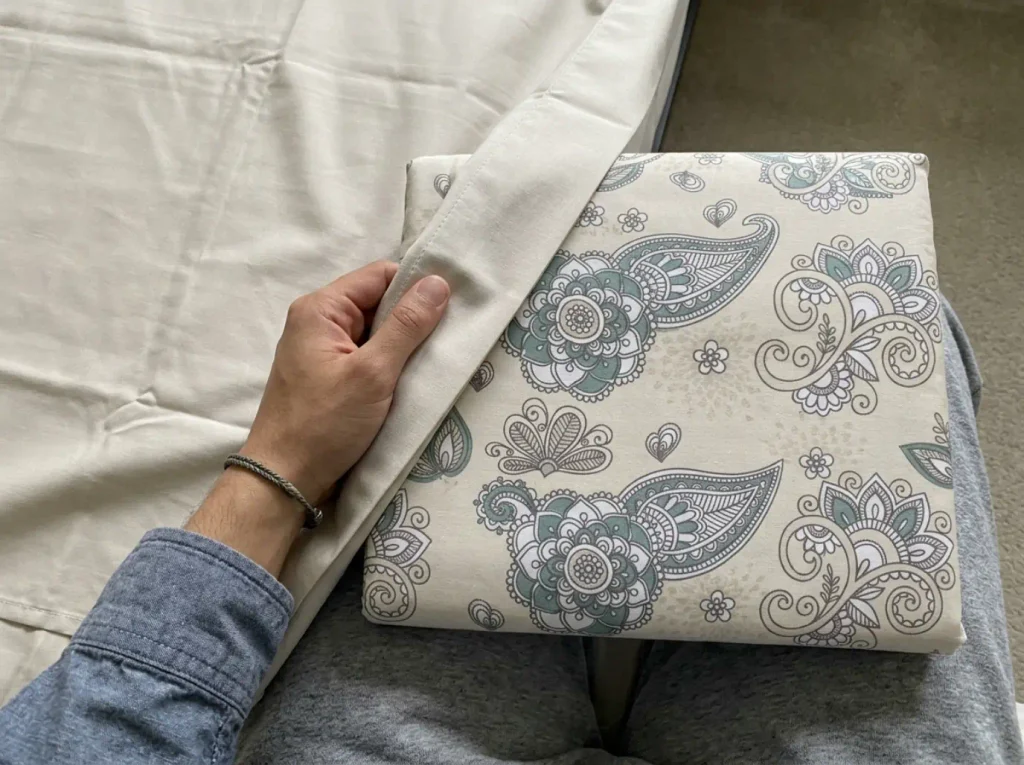
Now the word on the other package. “Cooling” is not a measurement and nobody certifies it, so any set of cooling sheets can carry it and nothing has to be true underneath. What is strange is that measurable versions of the property exist. Breathability and moisture-wicking are real, testable behaviors with standardized lab methods textile labs use to measure air permeability and moisture transport, and no product is required to have run any of them before printing the adjective.
Most of what gets sold as cooling bedding is either polyester with a finish or a cotton with a finish. The finish is what feels cool in the store. It survives roughly ten washes. The polyester is there for good.
Several r/Bedding respondents have arrived at the same rule from the other direction. They distrust “cooling” on principle and buy against plain fiber-and-weave claims they can verify themselves, which is the community reaching the mechanism without being told it.
Weight matters as much as weave, and this is the number nobody prints. GSM, grams per square meter, would settle half the arguments in this niche, and since the package will not give it to you, lift the folded set in the store.
At the same size, a heavier set is a denser fabric with less air in it. That is a crude instrument. Well, it is a crude instrument for judging a fabric and a perfectly good one for catching a package that is hiding something, and it is still better than the front panel.
Which fibers are worth putting in an open plain weave is a shorter list than the store suggests. Cotton, including Pima cotton and organic cotton carrying a GOTS certified tag. Linen spun from flax. And the two regenerated cellulosics sold under softer names, bamboo viscose and lyocell.
Each of those wears differently over a year, and each has its own node on this site rather than a paragraph here. What they share is that the fiber name is one fact and the weave is the other one. A set that gives you both is telling you more than a set that gives you an adjective.
Measure the mattress with the topper and the protector already on it, then add two inches. That is your minimum pocket depth, and it is not the number on the mattress box. “Fits up to 18 inches” means the elastic will reach 18. It does not mean it will still be there in the morning.
That pocket problem is one this article creates for you, which is worth saying out loud. Adding a protector under the fitted sheet adds height to the mattress, so the set that fit fine last year can start popping off the corner once you fix the layer underneath it. The arithmetic of a fitted sheet that stays on at mattress plus two inches is a whole problem of its own.
You will find out at the corner where you sit to put your shoes on, because that is the one that gets loaded and unloaded twice a day. Buy the deep pocket version if the arithmetic lands anywhere near the limit, since a pocket with two inches to spare costs nothing extra and a pocket two inches short is unusable. The size on the bag matters here too, and it is the one place a shared bed changes the shopping list: two twin sets on one bed is a real configuration, not a mistake, and it is the sizing the two-duvet answer further down runs on.
Read the back panel before you buy. Fiber, weave, ply and pocket depth are four facts, and a set that prints all four is telling you something a set that leads with an adjective is not.
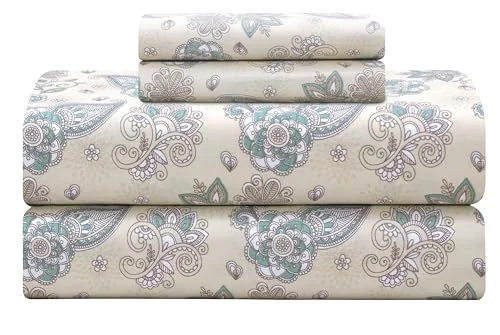
One last thing about sheets, and it is the reason week-one reviews are worthless here. A new percale is stiff because of sizing, not because of quality, and the sizing is gone by wash three. Judge the set at wash five, when the starch has left and only the weave is holding it up. That is the sheet you actually bought.
Take a Layer Off Before You Buy One
The bed most hot sleepers are lying in has more on it than it needs, in July, out of habit. The comforter is on because it has always been on. Before anything on this page costs you money, the cheapest fix available is subtraction.
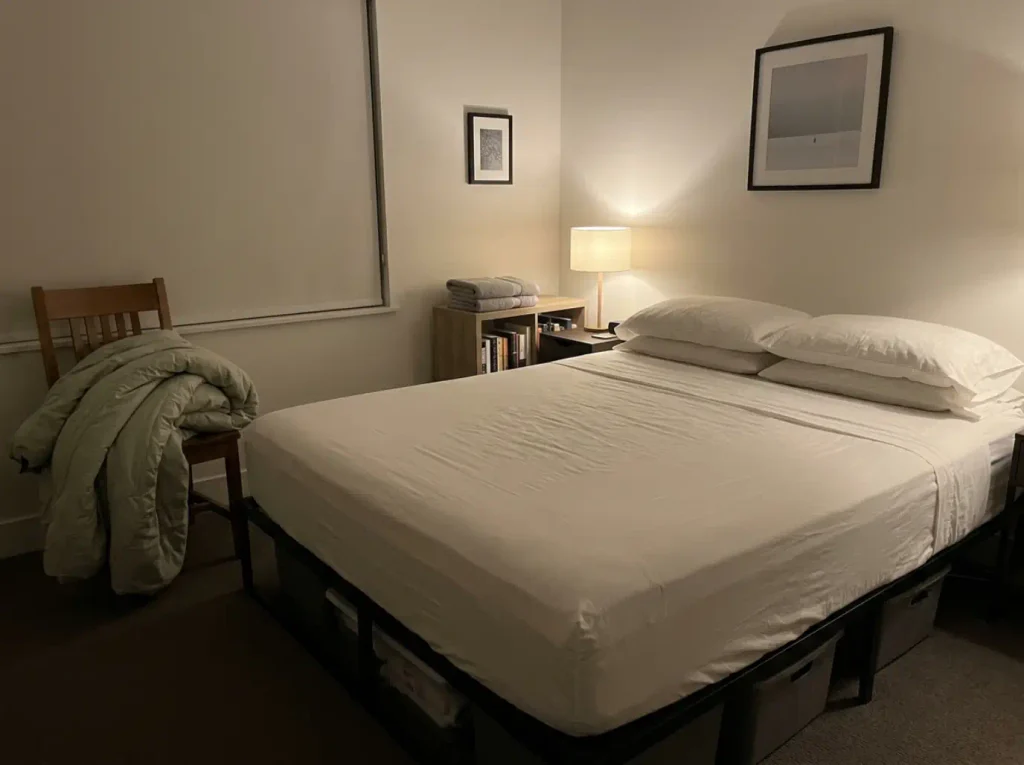
It works for a reason that is not obvious: layers trap air between them. Two thin layers with a gap between them hold more heat than one layer of the same total weight, which is why “add a lighter blanket” so often makes a bed warmer rather than cooler.
No layers is the rule the r/Bedding regulars keep landing on, and they land on it by trying the opposite first. People add and are surprised. The mechanism was always going to punish them for it.
Take things off in this order, one at a time, and give each change a full week. First the comforter: sleep under the flat sheet alone. Then the top sheet, if you sleep under a duvet in a cover, since the cover washes just as often and the sheet is doing nothing the cover is not.
Then the mattress topper, if there is one, because a foam topper holds heat that no fabric above it can release. Most people stop after the first step. Honestly, most people should: if the comforter was the problem, you have your answer and the rest of the list is somebody else’s homework. If you want the comforter-versus-sheet priority argued out properly, which of the two layers is worth changing first takes it apart from the cooling side.
None of this is a contrarian pose. These are working strategies people already use: one r/Bedding respondent keeps the comforter on the bed mostly for show and sleeps under a top sheet most nights, and another uses two cotton top sheets plus a small fan and buys nothing marketed as cooling at all.
The second one is doing something clever without naming it. Moving air is what turns sweat into cooling instead of dampness, and a fan changes the physics of the bed in a way no fabric swap can. A third respondent reports keeping a wool duvet insert under a plain cotton cover straight through summer instead of swapping to a lighter one, which is the same principle from the other end: one honest layer, chosen once, beats two hedged ones.
What is happening when you strip the bed is worth understanding, because it explains why the result surprises people. The still air held between two fabrics is the insulation. Fabric itself conducts heat reasonably well; the trapped pocket next to it does not, and that is the whole design of every warm thing you own, from a comforter to a coat.
So when you take a layer out of the stack you are not removing a thin sheet of cotton. You are removing the air gap it was holding open, and the air gap was doing most of the insulating. That is why subtracting one light blanket often does more than replacing a heavy one, and why the swap that felt like the obvious move rarely delivers what the removal does.
There is also a version of the removal that costs nothing and changes nothing about what you own: make the bed differently. A comforter folded down to the foot of the bed instead of spread over it is available to pull up at four in the morning when the room finally cools, and it is not sitting on you at midnight when it is the problem. Half of what a hot sleeper buys is an attempt to solve a timing issue with a material, and a folded comforter within arm’s reach solves the timing issue directly.
One good night proves nothing and one bad night proves nothing either. Change one thing, then sleep on that same bed for seven nights before you decide. A week is the smallest honest test, and it is the only way to tell a real improvement from a cool Tuesday.
And the room sets the ceiling for everything above it. Room temperature above roughly 68°F means the bedding is fighting the air and losing, no matter what the fitted sheet is made of. That is worth knowing before you spend anything, because the room is the variable with the most authority over the whole bed and the cheapest one to move.
Three things act on it, in rising order of cost. Ventilation first: two windows open on opposite walls if you have them, so air actually crosses the room instead of sitting in it. Then a fan, which is doing something a window is not, since it moves air across your skin rather than just exchanging the air in the room. Then air conditioning, which is the only one that lowers the number rather than making it more bearable, and the only one with a bill attached.
The order matters because people usually run it backwards. They buy a sheet set, then a comforter, then finally get around to the window, and it is the window that was going to do the most. One r/Bedding regular puts it flatly: you need a cold room first, and nothing on the bed helps much without one.
Here is the detail that reorders most people’s priorities: the layer that gets thrown off at two in the morning is the top sheet, not the comforter. Watch what your hands do next time. The layer you are actually fighting is usually the one you would have kept without thinking about it.
The Protector: the Layer Nobody Looks Under
Almost nobody chose their mattress protector. It came with the mattress, or it was bought once during a move and has been under every sheet since. It is also the only layer in the whole set that can be, functionally, a sheet of plastic, and the word on the front of both versions is identical.
The mechanism, stated plainly. A TPU membrane blocks liquid water while letting water vapor pass through it, which is the same trick a rain shell uses. A vinyl or PVC backing blocks both. Both get sold as a waterproof protector, and the word is honest in both cases; it just does not mean the same thing on your back at three in the morning.
This is why a good percale over a vinyl-backed protector still sleeps hot. The sheet does its job, passes your moisture straight down, and hands it to a layer that will not take it, so it stops there, condenses, and comes back up into the fabric you are lying on.
The usual advice is to buy a “cooling” protector, and it is the wrong shape of answer. After enough of these threads it is clear the question is never how cool a protector claims to be, it is what the back of it is made of, and that single fact separates the good ones from the ones causing the problem. A protector that costs pocket change and names its membrane beats a premium one that says nothing.
Check what you already own before you replace it, and it takes two seconds. Peel the fitted sheet off one corner and look at the underside of the protector. A cotton or terry face means a fabric face. A smooth, slightly shiny, slightly stiff surface is a membrane doing the entire job with nothing softening it.
Then flex the corner in your hand and listen. A vinyl-backed protector crinkles, and once you have heard that sound you will hear it every time you roll over for the rest of its life.
If you are replacing it, read the package in this order. A fabric face, cotton or cotton terry, against your sheet. A stated membrane material rather than the bare word “waterproof.” And a certification that tests the finished textile rather than the marketing copy.
Certification that tests the finished textile, fabric, thread, zippers and labels, against more than a hundred regulated substances is a chemical-safety claim and worth having. But it is not a temperature claim, and no honest reading of it turns it into one.
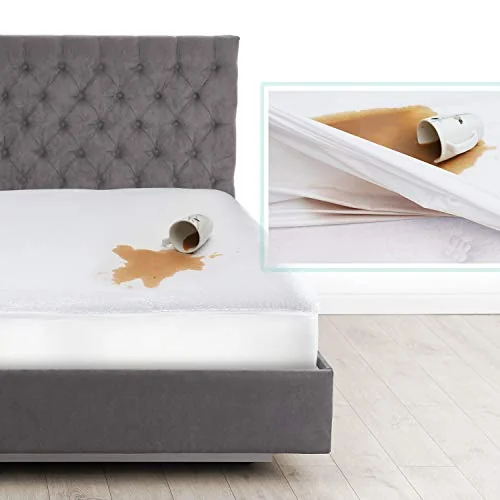
A protector that traps moisture does not announce itself as heat, which is why it stays hidden for years. It announces itself as a bed that smells faintly of the sleeper two days after wash day, no matter how often the sheets go through the machine, because the moisture never left the stack. It stopped at the layer that would not pass it and stayed there. If that turns out to be your problem, the same membrane question from the night-sweats side goes deeper into what separates the membranes than this article needs to.
The Pillow: Your Head Sits on the Closed Layer
Every roundup in this search covers sheets and comforters and then stops. Nobody covers the layer your face is pressed into for eight hours, and it is the one people flip all night hunting for a cool side. That flipping is not a habit. It is a diagnosis: a fill you have to escape every hour is a fill that is not passing heat, and no pillowcase on earth fixes that from above.
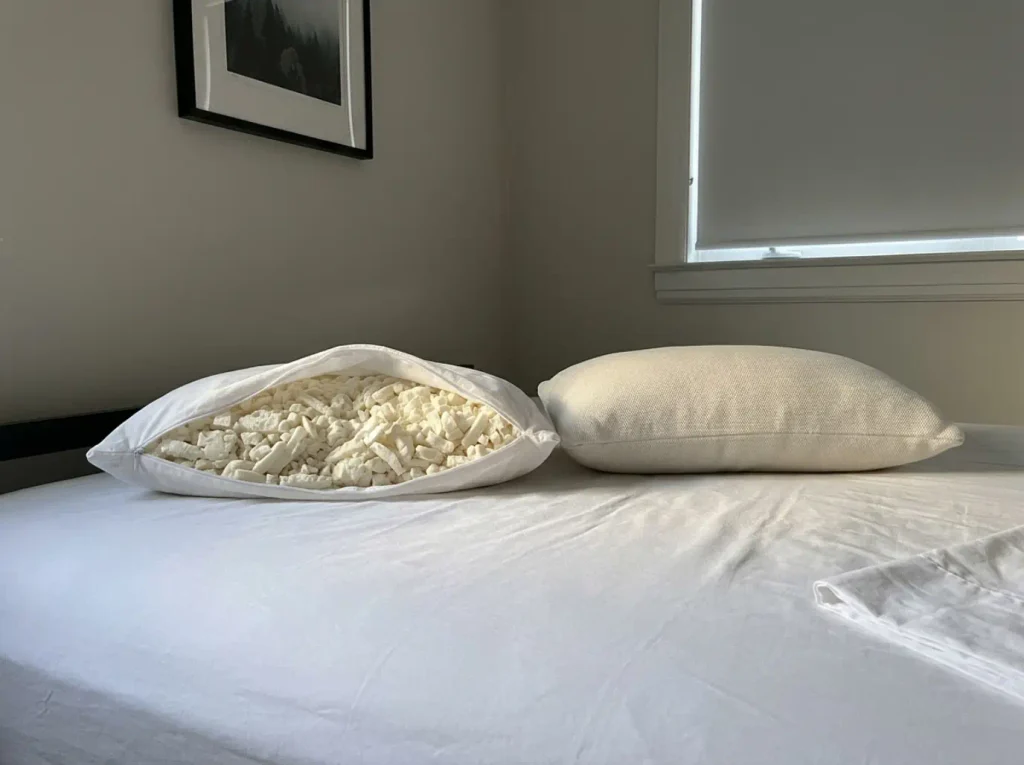
Solid memory foam is a closed cell. It takes the heat your head puts into it and holds it, which is the same structural story as sateen against percale told in foam instead of thread: mass with no channels through it.
Shredded fills work the other way. Broken into pieces, whether that is shredded foam or shredded latex, they leave air paths between the fragments, and the heat has somewhere to go. That is the whole mechanism, and it is why a shredded natural latex pillow, which comes as a set of two is the structural opposite of a molded memory foam core rather than a slightly better version of it. Open cell, with the fill loose enough to move around your head instead of sealing against it.
Its flaw is real and you should know it before ordering: shredded latex feels firmer and lumpier under the hand than a molded foam, and if you like sinking your head into something soft, this fill will feel wrong for the first few nights. The set of two is the honest shape of the recommendation anyway, because the next section is about the second person in the bed.
A shredded fill has to be shaken back into shape before it sleeps right. It packs down under a head overnight and stays packed, so the pillow you judge on night three is a pillow nobody ever fluffed. Grab it by two corners and shake it out every morning when you make the bed. That single habit is the difference between a pillow that works and a pillow that gets returned in week one.
The pillow has its own stack, and it repeats the mattress mistake at small scale: fill, then a pillow protector, then the pillowcase. A vinyl or PU-backed pillow protector is the same raincoat as a vinyl mattress protector, except it is six inches from your face instead of under your back. Cotton is the entire requirement here, and a 600-thread all-cotton zippered protector that comes four to a pack is the version the r/Bedding thread keeps asking for: no membrane, a quiet zipper, and enough of them that you can wash one while another is on the bed. Its flaw: at 600 threads the hand is denser than an ordinary pillowcase, so under a very thin case you can feel the protector underneath, and it pairs best with a cotton or linen case of similar weight.
What the protector is actually for is worth being clear about, because it is not temperature. Sweat and skin oils are what end a pillow’s life, and a zippered cotton protector keeps both out of the fill. The pillowcase on top of it is the layer that gets washed weekly.
The community’s working routine is the protector washed every one to two months, the case changed every week regardless of season, and the pillow itself aired out from time to time. One commenter calls the cotton protector non-negotiable, and given that the fill is the expensive part, that is just arithmetic.
Since the whole set ends up in the same machine, the care rules are worth stating once for all four layers. Wash temperature is the one people get wrong in both directions. Hot enough to matter for hygiene is also hot enough to shrink a cotton percale and to cook a membrane, so warm rather than hot, and cold for anything with elastic in it.
Then tumble dry low and take it out slightly damp, because the heat at the end of a long dryer cycle is what hardens a TPU backing and what sets the wrinkles into linen. Wool dryer balls do the job dryer sheets pretend to do, and that matters here more than usual: dryer sheets leave a coating on the fabric, and a coating on a sheet is the one thing you have spent this entire article trying to avoid. And the shredded pillow does not go in the dryer at all.
The Comforter, and the Second Person Under It
Fill power and fill weight are two different numbers doing two different jobs, and almost every comforter listing collapses them into the single word “warmth.” Fill power is how much space a given amount of fill occupies: the loft, the puff, the look. Fill weight is how much fill is in there, and that is the warmth.
Higher fill power reaches the same visual fullness at a lower weight, and that is the entire mechanism behind a lightweight comforter that still looks full. It is also why a couple hunting for a plush-looking duvet keeps finding that the good high-loft options “look surprisingly thin” in the photos: they are seeing fill weight and expecting fill power.
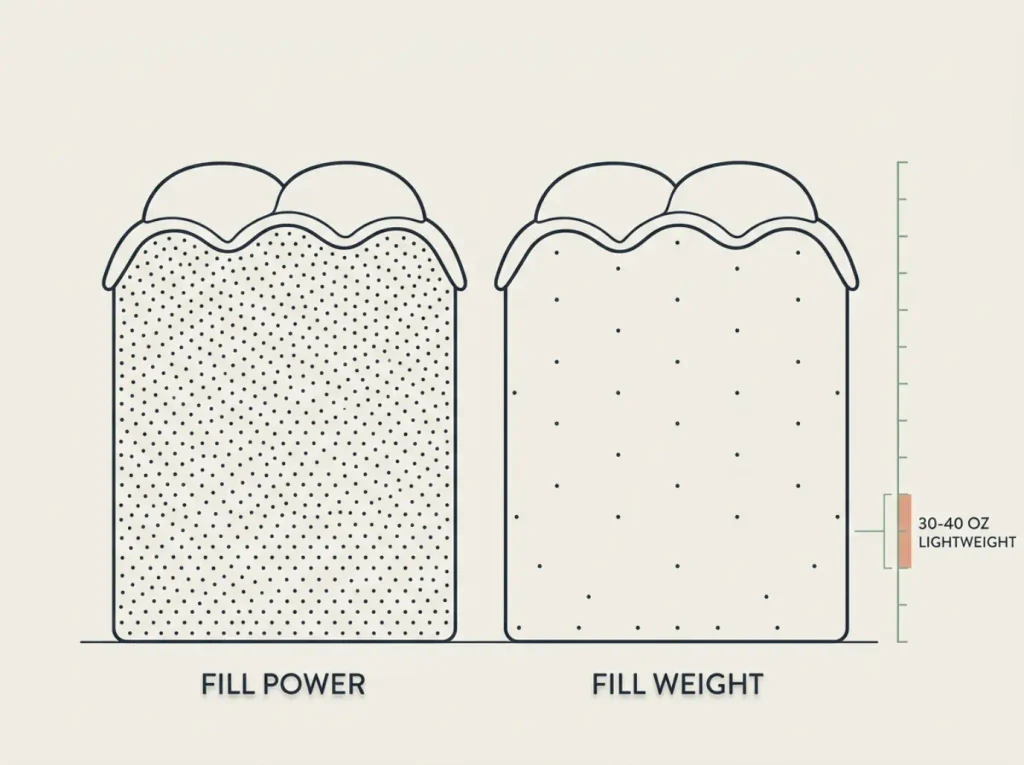
The number to look for on a queen is the fill weight, and roughly 30 to 40 ounces is the lightweight or summer tier. A comforter that names its fill weight is telling you something checkable. One that only says “all-season” or “breathable” is telling you nothing at all, and the gap between those two packages is the gap between a decision and a guess. For the fill-type question from the warmth side, what down does that a synthetic fill does not, and the other way around argues it out properly.
The shell is a layer too, and it is the one touching the duvet cover, which means it is one more permeability checkpoint in the series. A cotton percale shell passes moisture. A synthetic shell on a comforter sold as “cooling” is a closed layer wearing the right adjective, the same contradiction as the vinyl protector, moved up the stack to the top of the bed. Before you replace anything up here, though, remember the free move from earlier: a week under the flat sheet alone, with nothing over it, tells you whether the comforter was ever the problem.
Which brings us to the person on the other side of the bed. A shared bed with two sleepers is a different problem, and the SERP treats it as if it were not one at all. If one of you sleeps hot and the other is a cold sleeper, no single comforter is right. It is wrong for both of you, in opposite directions, and the compromise you are shopping for does not exist at any weight.
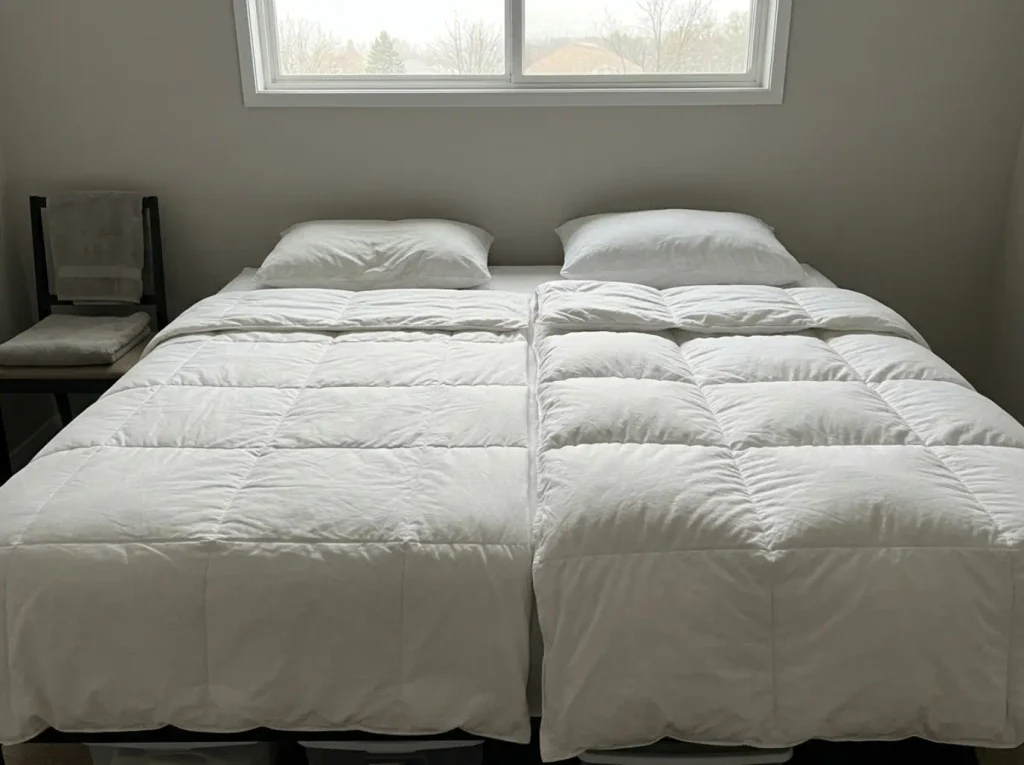
The answer is two individual duvets on one bed, each sized and weighted for one sleeper. That is the Scandinavian method, and it is how a good part of northern Europe has slept for a very long time. In practice it means two twin duvets across a queen, one light and one not, bought separately and never negotiated over again.
The rest of the set stays shared: one fitted sheet, one flat sheet if you use one, one protector. Only the top layer splits, and it splits because it is the only layer whose right answer differs by person.
Now the part no unboxing photo can show you. One r/Bedding poster’s oversized down comforter went flat and lumpy over a few years, with the fill migrating toward one end of its baffle boxes and feathers starting to work through the shell. That is a multi-year report, and it is the failure mode that decides whether a comforter was worth buying.
It shows up at the middle of the bed first, where the weight of two people compresses the fill nightly and pushes it outward. So the section that goes thin is the part over your legs, while the corners stay full enough that the thing still looks fine when it is folded at the foot of the bed.
Conclusion
Count the layers before you buy a layer. Six things sit between you and the mattress, and the one you cannot see is the one to suspect first, and it is the only one you almost certainly did not choose for temperature.
Take something off before you put something on. A week under the flat sheet alone costs nothing and settles more than a new sheet set will, and if it fixes the problem you have saved yourself the entire rest of this page.
Buy the layers in the order they fail: check the protector, then the sheet weave, then the pillow fill, then the comforter’s fill weight. Read the shell and the membrane, not the adjective on the front.
After a season of weekly washes, look at three things. Whether the percale still has its hand now that the sizing is long gone. Whether the protector still flexes silently or has started to crinkle where it stretches over the corners. And whether the comforter’s fill has begun to move out of the middle of the baffle boxes toward the ends.
None of those shows up in week one, and all three decide whether the set was worth it.
Tonight, take the comforter off the bed and sleep under the flat sheet alone. In the morning, before you make the bed, peel the fitted sheet back off one corner and put your palm on what is underneath. Give it a week. Whatever you buy after that, you will be buying it for a reason you found yourself.
Frequently Asked Questions
01What is the best bed setup for hot sleepers?
A protector with a fabric face over a breathable membrane, a plain-weave cotton or linen sheet, the lightest cover you can sleep under, and a pillow with an open fill. All of it in a room the bedding is not fighting. Above roughly 68°F the air wins.
02What type of bedding is best for sweaty sleepers?
The same four layers, chosen so every one of them passes moisture rather than holds it, starting with the mattress protector. One closed layer sets the ceiling for the whole set, so the sheet cannot rescue a stack that stops at the membrane underneath it.
03Does a mattress protector make you sleep hotter?
A vinyl or PU-backed one does. A fabric face over a TPU membrane does not, meaningfully, because vapor still passes through it. Both are sold as waterproof and the package rarely says which you are holding, so check the underside of the one you own.
04What type of comforter should I get if I am a hot sleeper?
The lightest fill weight you can sleep under, in a cotton shell rather than a synthetic one. Roughly 30 to 40 ounces is the lightweight band for a queen, and a comforter that prints its fill weight is telling you more than one that says all-season.
05Do you need a top sheet if you sleep hot?
No, and removing it is one of the cheapest changes available. The top sheet is the layer most people throw off at two anyway, and if you sleep under a duvet in a cover, that cover washes just as often as the sheet did.



Tried it on your own bed?
No comments yet. Tell us what you changed, and what the sheet did after a few washes.