


What’s in here7 sections
You washed the sheets Sunday night. By Wednesday the sweat smell is back, and only on his side of the bed, and yours is fine. That is not a fluke and it is not a weak detergent: sweat lands close to odorless, and what you are smelling is the odor-causing bacteria already living on the body oils and dead skin cells the fabric absorbed the night before that one. So washing bedding after night sweats is a question of sequence, not of effort, and the sequence most people run locks the residue in instead of lifting it out.
A wash routine changes what the bed smells like; it does not change why you sweat, and sweating that soaks the sheets every night or that started recently is a question for a doctor first and for why the bed is sweating in the first place second. Everything below is about the laundry routine: the order, the water temperature the fiber can actually take, what fabric softener is doing to the weave, and the one layer nobody puts on its own schedule.
Quick Answer
The order matters more than the temperature. Run it like this:
- Rinse cold first, before any heat touches the load.
- Wash at the hottest temperature the care label allows.
- Skip the fabric softener on bedding, every time.
- Measure the detergent instead of pouring by eye.
- Dry completely, then check the elastic hem by hand.
- Wash the mattress protector on its own separate cycle.
Why the Smell Comes Back Three Nights After a Wash
A household where one partner sweats heavily can follow a routine that reads like a checklist of everything you are supposed to do.
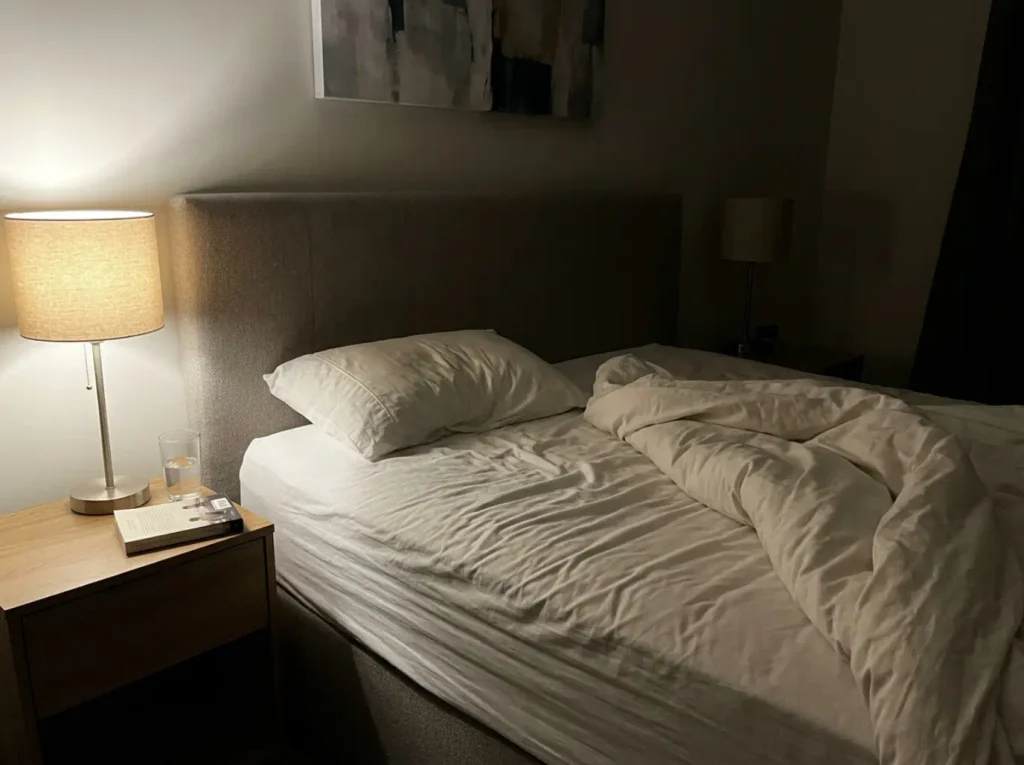
A weekly wash at 90°C, air-dried. A premium detergent, and a mattress protector with pillow protectors too.
The verdict on such routines is plain: the sweat and oil just soak through. When a household doing all of that still loses by midweek, the problem is not that they are trying too little.
Sweat Lands Odorless. The Bacteria Do the Rest
Here is the fact that reframes the whole thing: sweat itself rarely smells, and the odor comes from skin bacteria breaking it down into volatile compounds. What lands on your fitted sheet at three in the morning is mostly water and salts. What smells is a colony of Corynebacteria and Staphylococci working through the sebum and the dead skin cells that went into the same fabric the night before, turning it into things like isovaleric acid. That gap between the event and the smell is why the timeline never adds up for people: the sheets smell on Wednesday because of what went into them on Sunday.
Bacteria growth needs three things and a slept-in bed supplies all of them: warmth, moisture, and the body oils and dead skin cells worked into the weave. Remove any one of the three and the colony stalls. The wash is how you take away the food, and the drying is how you take away the moisture.
Why the Fabric Holds the Smell and Not Just the Moisture
Cloth is not a passive surface that sweat sits on top of. Those odor compounds cling to fabric, and fabric absorbs the bacteria along with the moisture, which is why a shirt or a sheet can smell strong even after it has dried completely. The bed is a reservoir. That distinction decides what a wash has to accomplish: it is not enough to remove water, because the water was never the problem.
And this is where the wash order earns its place. The salts and the water-soluble part of sweat come out easily in any temperature. The oil-bound residue does not, and heat is what fixes it into the fiber.
Wash a load straight on hot and you have set the exact fraction of the soil that the bacteria are going to eat next week. That is one reason the same load, at the same water temperature, in the same machine, comes out smelling clean one week and sour the next.
Do the smell test on a warm pillowcase, not a folded one. Fabric that has been sitting in a linen closet at room temperature reads clean to anyone. Put your face against the pillow after somebody has slept two hours on it, because that is the temperature at which the residue you did not remove starts giving itself away again.
The Side of the Bed That Smells First
Strip the bed yourself a few times and you learn the geography of it. The smell is never even across the sheet. It concentrates at the shoulders and the small of the back, which are the two places a sleeper actually rests against the cloth for six or seven hours without moving much, and on a shared bed it is one side and not the other.
The top sheet goes before the fitted one, because it is trapped between a warm sleeper and a duvet and dries the slowest of anything on the bed. Somebody who has only ever read about this assumes the bed smells as a unit. It does not. It smells in patches, and the patches tell you where the routine is failing.
Precise words help here. Sheets soaked with sweat and oil are not just dirty sheets. They say sweaty sheets, and the difference is real: nothing is visibly soiled, nothing looks like it needs washing, and the whole complaint is sweat odor. A wash designed to remove visible soil is solving a problem you do not have.
Which is not to say the visible half never arrives. Left long enough, the same oil-bound residue that feeds the bacteria oxidizes into sweat stains and a general dinginess on white cotton, most often at the pillowcase and the top edge of the top sheet. Same cause, slower clock. If you have reached that stage, the routine below is the fix for both.
The Weave Decides How Long the Bed Stays Damp
You upgraded to the high-thread-count sateen because it felt like the better sheet in the shop, and the bed has smelled worse ever since. That is not bad luck and it is not your imagination. The label sold you a number; the structure of the cloth is what decides how long your bed stays wet, and nobody put that on the package.

Absorbent Is Not the Same as Fast-Drying
Cotton has a trade-off the textile industry has never hidden from itself: cotton soaks up moisture efficiently but doesn’t move it away or dry itself quickly. Cotton Incorporated says so on its own page for a patented finish it developed specifically to fix that problem, which tells you how well established the trade-off is. Absorbency is why cotton feels good on a sweaty night. Slow drying is the price, and on a bed that gets remade at seven in the morning, that price is a sheet that goes back into service still holding last night’s moisture.
Damp sheets are not just uncomfortable. Warm and humid is the exact environment dust mites prefer, and mites feed on the same shed skin the odor-causing bacteria are working on. Incomplete drying feeds two problems from one cause, which is why the drying half of the routine matters as much as the washing half.
Why High Thread Count Stays Wet Longer
A percale is one thread over, one under. That leaves gaps, and gaps move air, so water evaporates out of the structure. A sateen floats four threads over one, which is what makes it smooth and shiny, and it also closes the structure down.
Higher thread counts tighten it further, often by twisting two thin threads together and counting both, so what you buy is weave density rather than fineness. A tight weave is warmth and a tight weave is slow drying. It is a weave decision dressed up as a quality decision.
Many people land on the same practical point without the vocabulary. High-thread-count sateen is often named as the sheet that stays damp and holds the smell longest, and a cotton blend with under 50% polyester is sometimes recommended simply because it dries faster. Note the reasoning: not which fiber is best, but which one is dry by morning.
That is the right question, and it is worth reading which weave survives the washing better before you replace a set. The same logic explains why cotton sleeps hot when the weave is wrong: the fiber gets the blame and the structure did it.
Here is the detail that only shows up on a real bed. A sateen fitted sheet can feel bone dry to your palm across the whole top surface and still be cool and heavy at the elastic hem, where the fabric folds double under the mattress and nothing reached it. That is the part nobody checks. That is also the part that goes back on the bed wet.
The Free Fix: Leave the Bed Unmade
The cheapest answer to a partner’s heavy night sweating is not a product. It is this: leave the bed completely unmade every morning and let it breathe, and put a fan on it if the room is humid. Pull the duvet back to the foot of the bed so the fitted sheet is fully exposed to the room, and give it the hours you are at work.
It costs nothing, it takes four seconds, and for a lot of people it does more than a detergent change will. Making the bed neatly at seven in the morning seals a warm, damp fitted sheet under a duvet for eight hours, which is a good description of an incubator. Tidy is not the same as clean. If you only do one thing from this article, do this one, and give it a week before you decide it did not work.
Pull the fitted sheet’s corners off two of the mattress corners when you strip the bed to air it. The hem is folded double under there and it is the last part of the whole set to dry, whether it is drying on the bed or in a machine. Unhooking it takes two seconds and it is the difference between a sheet that is dry and a sheet that feels dry.
The Order That Actually Gets the Residue Out
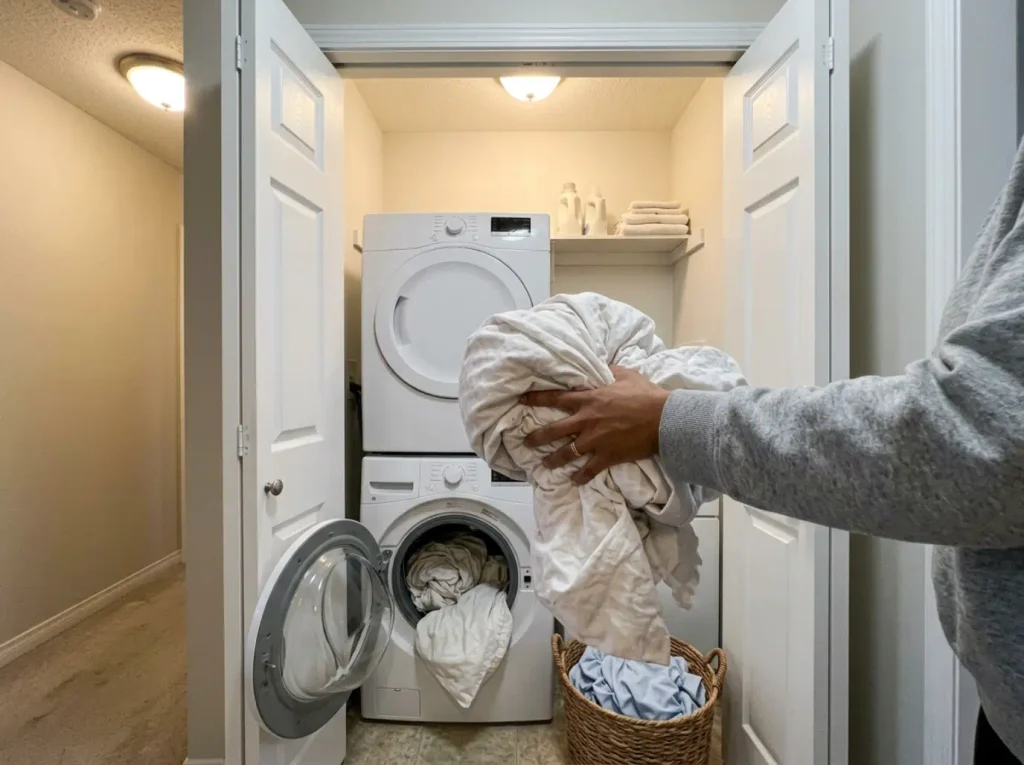
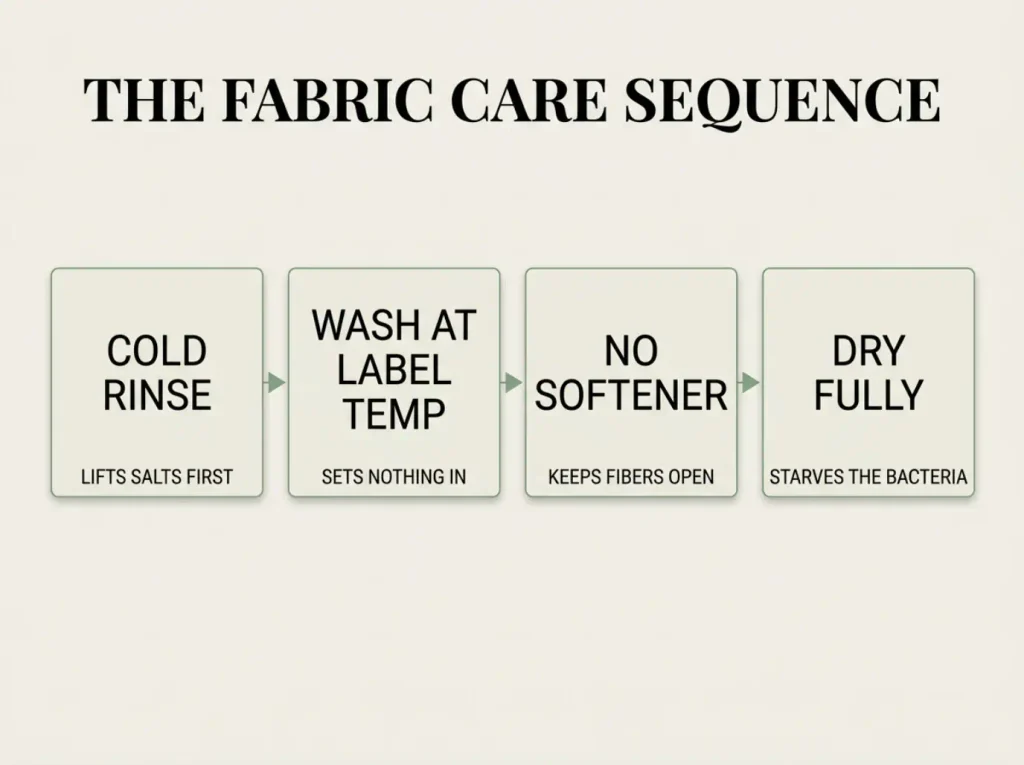
Everybody already knows to wash hot. Nobody gets told that going straight to hot is the step that locks the residue in. This is the section you came for, so here is the whole sequence before the reasoning: cold rinse, then the wash at the temperature the care label allows, no fabric softener, detergent measured rather than poured, and a full dry. Five steps, and four of them are free.
Rinse Cold Before You Wash Hot
Run a cold rinse cycle on the load before the actual wash. It lifts the water-soluble salts and the surface residue while they are still loose, before any heat gets a chance to set the oil-bound part into the fiber. This is ordinary laundry sequencing rather than anybody’s proprietary method, and it costs you about fifteen minutes of machine time and nothing else.
If your machine has no separate rinse cycle, a short cold wash with no detergent does the same job. The point is that the first water through the fabric is cold water. Everything after that is easier because of it.
The Temperature the Label Allows
Now the real wash, and now heat is useful. The Asthma and Allergy Foundation of America says to wash bedding weekly at a minimum of 130°F, the threshold allergy specialists use for dust mites, and that is a genuine target rather than a round number somebody guessed.
It is also a ceiling for some fabrics and not a universal setting. Repeated washing at that water temperature strips a resin finish out of a finished sateen and takes most of the crispness with it, and it is hard on elastic. A plain-weave cotton percale takes it in stride for years. A warm wash is the compromise for anything the label caps below 130°F, and it is also the setting an enzyme booster needs, which the next section gets to.
So the care label is the authority here, not this article and not the allergy body. Read it, wash at the hottest number it gives you, and accept that a fabric which cannot take 130°F is telling you something about how often it should be on a sweaty bed in the first place.
Why Fabric Softener Works Against You Here
Fabric softener deposits a cationic coating on the fibers, and ordinary rinsing does not remove it. It builds. Each cycle adds another layer, and that layer reduces how well the fabric takes on water, which means it is blocking exactly the penetration you need: the hot water and detergent trying to reach residue sitting inside a tight weave that already resists them.
You are sealing the surface of the thing you are trying to flush out. On towels people notice this within a month, because the towel stops drying them. On sheets it shows up as a bed that smells sour faster after every wash.
Skipping it is not a corner cut, either. The American Cleaning Institute’s own wash sequence lists softener as an optional booster, not a required step. If you want the sheets to feel less stiff, wool dryer balls and a shorter dry do that without the coating.
Dose It and Dry It All the Way
Under-dosing is the quiet failure that gets blamed on the detergent brand. A full load of king bedding needs the full dose, and a concentrated formula needs its own smaller measure rather than the same glug you were using before.
Overdosing is not the fix either, because surplus detergent that does not rinse out becomes its own residue and its own smell.
Then give it a full drying cycle, not most of one. A load pulled out slightly damp restarts the cycle the same night, and the two places it is always damp are the fitted sheet’s elastic hem and the closed end of the pillowcase, both of which fold double and both of which sit at the center of a packed drum. Bedding folded away damp is also how mold and mildew get into a linen closet instead of just a sour bed.
Pull the load out, find those two spots with your hand, and if either is cool to the touch put the load back in. Air drying does the job as well as a dryer when the room actually moves air, and it is gentler on elastic. Between washes, the answer stands: airing out the bed every morning, with a fan on it if the room is humid. Half of this routine happens outside the machine.
What to Add When the Sequence Alone Is Not Enough
You have fixed the order. You are still catching a trace of it on the pillowcase by the third night, and there is a tub of powder on the shelf you are not sure is doing anything. This is where products belong in this article and nowhere earlier, because the sequence above is free and it solves this for most people on its own.
Dose and Formula Before Brand
Formula outranks brand, and dosage outranks both. What you want for odor is a fragrance-free, dye-free formula, because a heavily perfumed detergent masks rather than removes and masking is precisely what produces a sheet that smells clean at the fold and sour again under body heat two hours later.
The Seventh Generation Concentrated Laundry Detergent, Free & Clear is the type to reach for: nothing in it is there to cover a smell, so what comes out of the machine is either clean or it is not, and you find out honestly. Its flaw is a real one and it bites people: it is concentrated, so pouring it the way you poured your old detergent overdoses the load and leaves residue behind. Use the marked cap and read the line on it.
The unscented wash has a psychological problem worth naming. It smells like nothing at the fold, and to anybody used to a perfumed detergent, nothing reads as failure. The test is not the folded sheet. It is that same pillowcase after two hours of body heat.
Oxygen Boosters, for Odor That Already Set
An oxygen cleaner works by oxidation, either in the wash or in a soak beforehand. These are chlorine-free, which is why they are safe on cotton, linen and blends where bleach would not be. This is the category for odor that has already set into a set you are not willing to replace.
The vinegar soak deserves a straight answer here, because half the internet suggests it. It is a mild acid, so it strips some fabric softener buildup and it will neutralize a light staleness, and for that it is worth an occasional cup in the rinse. What it does not do is break down the oil-bound residue, which is the actual food source. Treat it as a way to un-coat a fabric before a real wash, not as the wash itself.
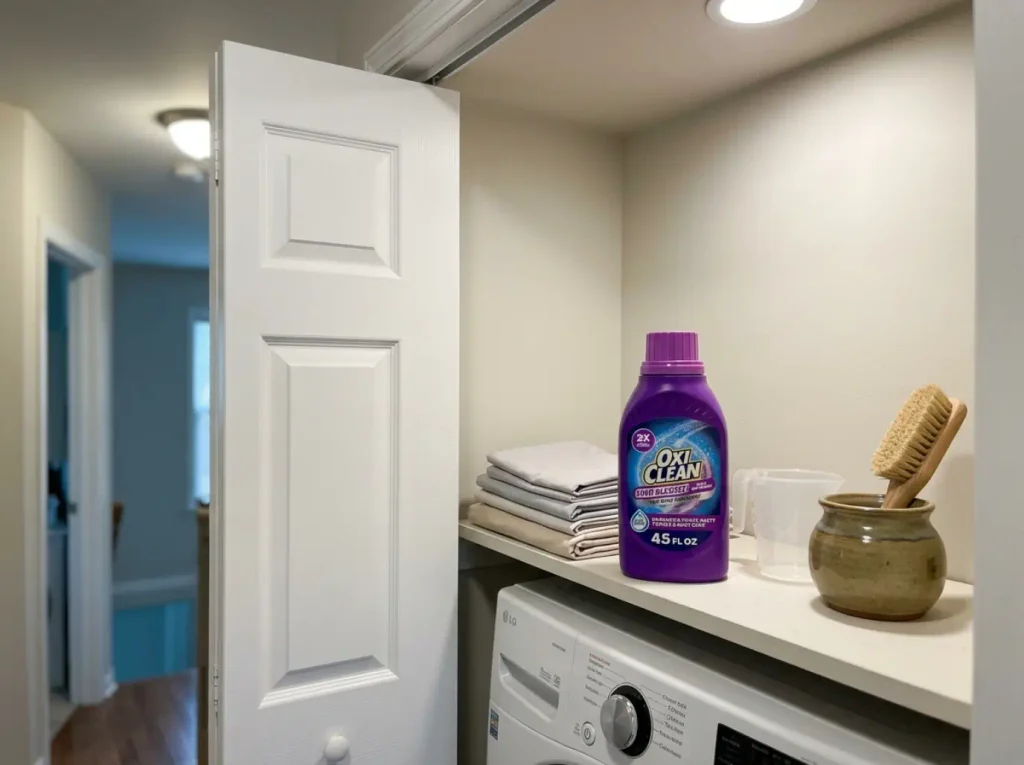
OxiClean Odor Blasters is the common example and it is formulated for sweat specifically rather than for general stains. Two caveats, both from its own limits: it is an additive and not a replacement, so you still run detergent alongside it, and a long soak can lighten very dark colors slightly. Soak the white and light bedding overnight if you want; give the charcoal set an hour and no more.
Enzymes, for the Residue the Bacteria Feed On
Enzymes are a different mechanism entirely, and knowing the difference is what stops you buying the wrong tub twice. Oxidation attacks the odor compounds. An enzyme detergent or enzyme booster instead breaks down the protein and oil residue that the bacteria are eating in the first place, which is the upstream problem: remove the food and the colony has nothing to work with next week. For a bed that smells again three nights after a wash, that is usually the more useful of the two.
A single-purpose powder like the Enzyme Laundry Booster Odor Remover makes the mechanism concrete. And its flaw matters more here than most, because it contradicts the step above: enzymes deactivate in very hot water, so an enzyme booster goes in a warm pre-soak and never straight into the 130°F cycle the last section just told you to run. Soak warm, then wash hot. In that order or it does nothing.
Neither one replaces detergent and neither one is a weekly requirement. Use them to reset a set that has gone sour, then go back to the plain sequence. And know what the frequency costs you: twice-weekly hot washing wears bedding out on a schedule of its own, which is worth reading about in what twice-weekly washing wears out first before you commit to it forever.
The Layer Nobody Puts on Its Own Schedule
The sheets go through the machine twice a week and they feel fine. The mattress protector underneath them has been on the bed since spring, quietly taking the share of every night’s sweat that got past the sheet. That is roughly a hundred nights of it, sitting two inches under where you sleep, and no amount of washing the layer above will touch it.

Why the Protector Outlasts Every Wash Cycle You Run
The protector sits closest to the mattress and absorbs a large share of the nightly load before the sheet ever sees it, which is exactly what it was bought to do. Its wash cadence is therefore independent of the sheets’, and when allergy bodies write wash bedding weekly they are talking about sheets, blankets and pillowcases. Nobody is writing that line with the protector in mind, and almost nobody reads it that way.
So the protector needs a wash frequency of its own, decided separately from how often you wash sheets. That is the whole argument of this section, and it is the one thing no competitor separates.
That is how the failure happens: a household can have a protector on the mattress and protectors on the pillows and still lose, because owning a protector is not the same as maintaining one. A saturated protector is a reservoir of old sweat parked directly under a freshly washed sheet, and the fresh sheet loses that argument by the second night.
Write the protector on a calendar, not on a feeling. It never looks dirty and it never asks to be washed, so it gets skipped indefinitely by people who are otherwise strict about their sheets. Once a month for an average sleeper, every two weeks if one of you sweats through the summer, and a note on the phone so it is a date rather than a decision.
Giving It Its Own Cycle
The backing decides the drying behavior, and this is the part people get wrong. A breathable membrane is still a membrane.
It dries far slower than the cotton around it, so throwing the protector in as a corner of the sheets’ load means the sheets come out dry, the protector comes out looking dry, and the membrane side is still wet. It goes straight back on the bed like that.
The free fix comes first and it applies to whatever protector you already own: give it its own cycle, its own dry, and check it by hand afterward. If you are buying, a breathable TPU backing rather than vinyl is what makes a protector worth maintaining at all, which is the argument for something like the Nestl Premium Cotton Terry Mattress Protector, with a cotton terry face over a TPU membrane.
Its flaw doubles as the reason for that separate cycle: TPU breathes better than vinyl but it is still a membrane, so washed alongside heavy cotton sheets it takes noticeably longer to dry and can come out of the dryer still damp inside. The SafeRest Waterproof Mattress Protector does the same job for less, with an 80/20 poly-cotton face that feels slightly less soft than cotton terry, and you notice that most in a room that is already warm. Either way the mechanism to understand is the protector backing that traps the sweat instead of letting it go, because that single choice decides whether the layer helps or hurts.
The hand test after the dryer: press the protector flat between both palms for a few seconds. The cotton face will feel dry. If the membrane side reads cool through it, it is not dry, and cool through the middle is the whole tell.
When Only One Side of the Bed Needs It
This situation usually has the same shape. One person sweats and the other does not, and the household’s response is to escalate the entire bed’s routine: everything washed twice a week, everything hot, everything treated. That is twice the wear on a set of linens for a problem living on half of them.
Treat the side that sweats. Two fitted sheets in rotation, the sweaty side’s pillowcase changed on its own faster clock, and, if you want the real answer, separate top layers so one of you is not sealing the other one’s damp side under a shared duvet. The wash routine and the layer stack are the same problem seen from two angles, and one wrong layer undoes the three above it whether the failure shows up as heat or as smell.
Conclusion
Three things carry the rest. Rinse cold before you wash hot, because the order is what keeps the oil-bound residue from setting where the bacteria can find it later. Skip the fabric softener on bedding entirely, because the coating is the thing blocking your wash from reaching that residue. And put the protector on its own cycle and its own calendar, then leave the bed unmade every morning so the fitted sheet gets the hours it needs to dry.
The wash-twenty check: after a season of twice-weekly hot washing with a booster, look at the fitted sheet’s elastic hem before you look at the fabric. That is where the fatigue shows first, and a hem that has gone slack pops the corner off a tall mattress long before the cloth itself is worn out. Expect the finish to soften and any crispness to be gone by then too. That is the cost of the routine, and it is worth saying out loud because nobody else does.
Tonight, strip the bed and feel the elastic hem and the closed end of the pillowcase before you fold anything. Then leave the bed open every morning for a week and see whether Wednesday still smells.
Frequently Asked Questions
01Do I need to wash my sheets after night sweats?
Not necessarily after every episode, but the bed has to dry completely before the next night or the smell compounds instead of resetting. Pull the duvet back to the foot of the bed every morning and let the fitted sheet air out for a few hours. That single habit stretches a set further than any detergent will.
02Why do my bed sheets smell like sweat after washing?
The wash removed the water-soluble part of the sweat and left the oil-bound residue the bacteria feed on. Check three things: fabric softener buildup coating the fibers, a detergent dose too small for the load, and whether the sheets came out of the dryer fully dry at the elastic hem.
03How long is too long without washing sheets?
Weekly is the standard baseline, and twice a week is realistic for a heavy sweater. Households dealing with heavy night sweating often report changing sheets every two to three days before they find a routine. Airing the bed unmade every morning is what stretches that interval without the smell setting in.
04How often should you wash a mattress protector?
On its own schedule, far more often than most people do it, and never as a corner of the sheets’ load. Monthly suits an average sleeper and every two weeks suits a sweaty one. Its waterproof backing dries much slower than cotton, so it needs a separate cycle and a hand check afterward.
05Does fabric softener make sheets smell worse?
Over time, yes, because the coating it leaves behind builds up and blocks water and detergent from reaching the residue inside the weave. The American Cleaning Institute lists softener as an optional booster in its own wash sequence, so dropping it from bedding loads costs you nothing.





Tried it on your own bed?
No comments yet. Tell us what you changed, and what the sheet did after a few washes.