






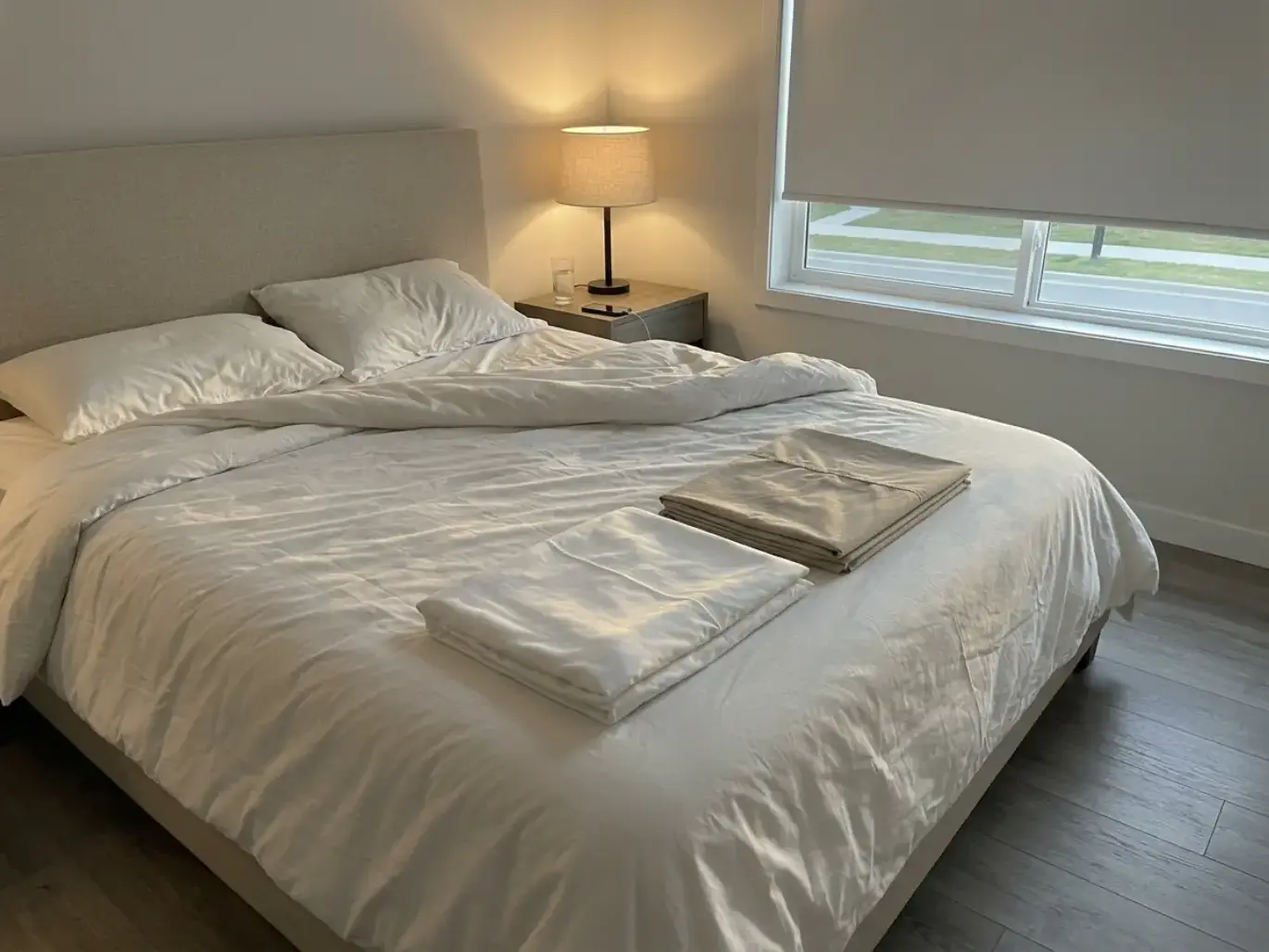
What’s in here7 sections
Two cotton sheet sets can sit in the same closet, go on the same bed in the same month, and sleep at completely different temperatures. Both say 100% cotton on the package. Neither package explains the difference, because the word both of them lead with is the word that does not decide it.
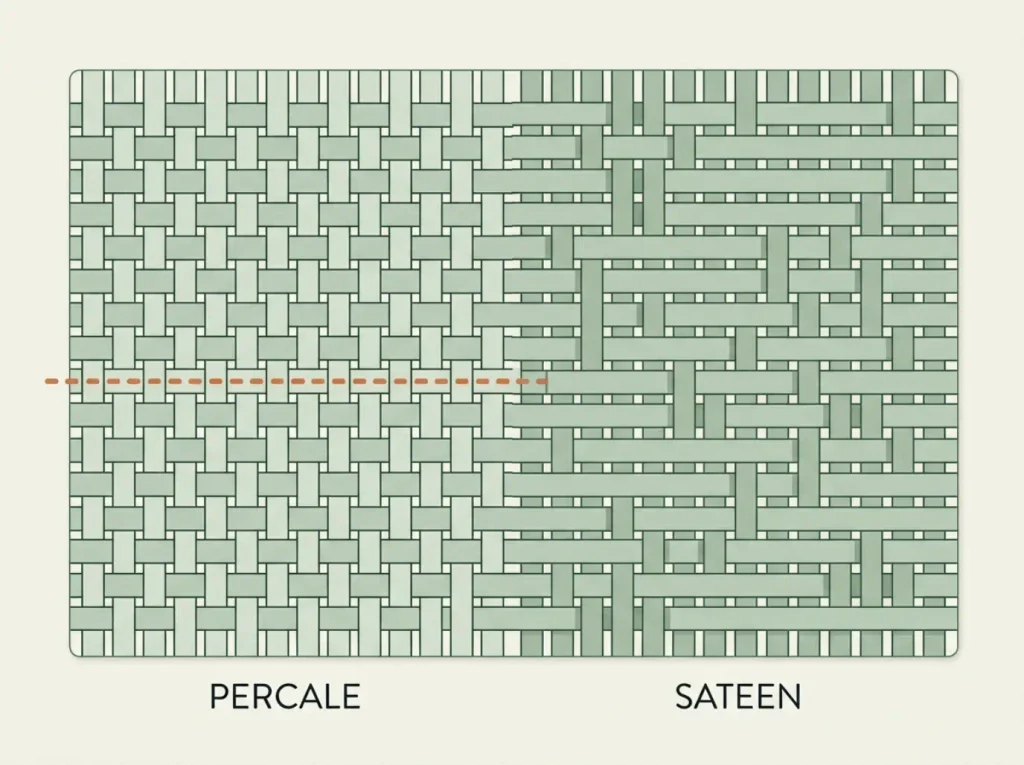
One thread over and one thread under leaves a grid of gaps for air to move through; four threads floating flat over one closes that surface off. Same cotton, two different nights. So the honest version of are cotton sheets good for hot sleepers takes a few thousand words rather than a yes, and here is what gets settled: what the cotton fiber actually does with your sweat, which weave to look for, what “Egyptian” and a four-figure thread count are really buying, and what a cotton set looks like at wash twenty.
Quick Answer
Yes, cotton sheets are good for hot sleepers, but only in a percale weave. The same cotton woven as sateen sleeps noticeably warmer, because the float weave closes the air gaps percale leaves open. “Cotton” is not the answer to the question. The weave is.
“Cotton” Is a Fiber, Not a Sheet
Most people who own two cotton sets already know this without having the word for it. There is the set that gets put on in July, and the other one, bought the same way from the same kind of shop, that somehow only comes out in November. Both labels say the same thing. The hand tells you they are not the same cloth, and the hand is right.
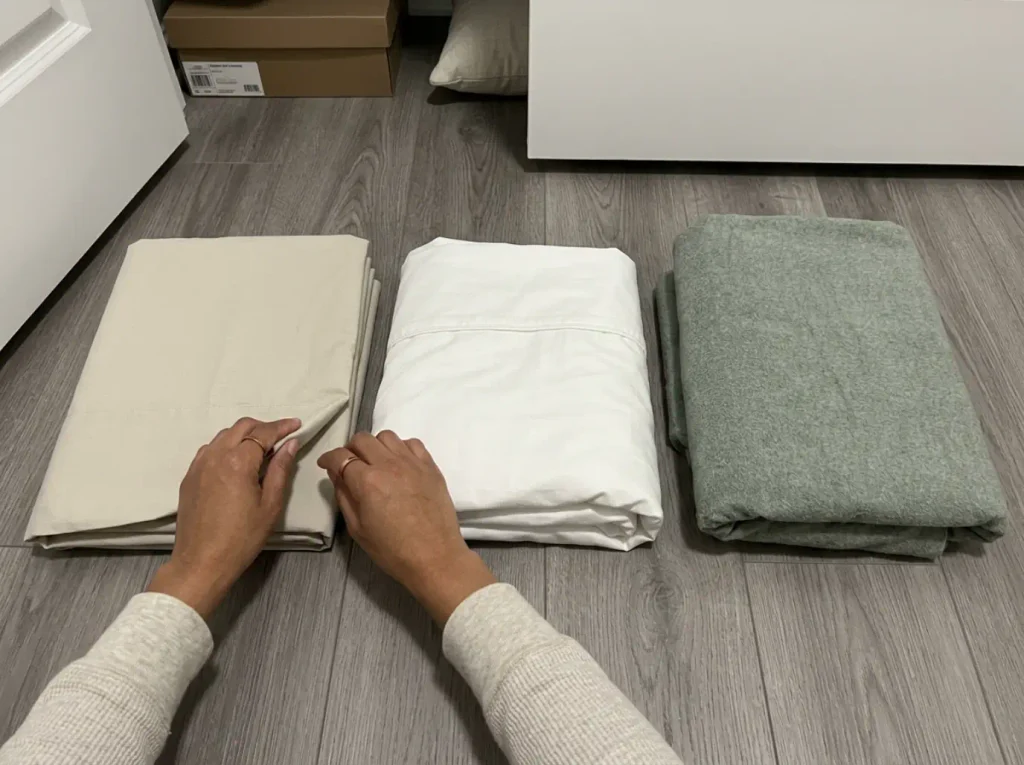
Give cotton its due first, because the fiber genuinely earns half of the yes. It pulls a meaningful share of moisture into the thread itself and releases it back to the air. Cotton fiber’s own moisture regain, as Cotton Incorporated documents it, runs around seven to eight and a half percent at standard conditions. That is why a cotton sheet does not go clammy the way a sealed synthetic does, and it is the half of the answer the roundups get right.
It is also what the moisture-wicking claim on the package is pointing at, badly: cotton holds the moisture rather than shoving it along, and cool to the touch describes the first ten seconds of contact, not the fourth hour.
But the fiber’s job ends at the fiber, and fiber vs weave is the whole decision this article turns on. Moisture regain tells you the thread can take up sweat and give it back. It says nothing about whether that sweat can get out through the cloth, whether there is any path for warm damp air to leave the two inches between you and the sheet. That second question is decided entirely by how the threads cross each other: a breathable weave leaves gaps, a closed weave does not, and the fiber name on the front tells you which one you are holding exactly never.
And they cross in very different ways. The same fiber becomes percale (a plain weave, crisp and matte), sateen (a float weave, smooth with a low sheen), and the knits and napped versions most people own without thinking of them as a cotton decision: jersey, knitted rather than woven, and flannel, woven and then brushed until the surface holds a layer of still air. Four constructions, four sleep temperatures, one word on the label.
| Same cotton, woven as | What the structure does | How it sleeps |
|---|---|---|
| Percale | Plain weave, one over one under, a balanced grid of gaps | Coolest of the four, crisp and matte |
| Sateen | Float weave, four threads over one, closed smooth surface | Warmer, silkier, pills at the floats |
| Jersey | Knitted, not woven: loops that stretch and trap air | T-shirt warm, clings when damp |
| Flannel | Woven and then brushed, a nap that holds still air | Warmest by a distance, a winter cloth |
Which is why every readable page on the first results page quietly narrows to “percale” within three paragraphs while still filing the whole article under “cotton.” The narrowing is the answer, and nobody says it out loud at the top. A reader who leaves after the first screen takes away the wrong lesson: that they bought the right fiber, when what they actually bought was one of four very different fabrics. If you are still weighing cotton against bamboo, that comparison runs the same law across two fibers.
There is a tell for sorting your own closet without reading a single tag. Pull a folded set out and drop it flat on the bed. A percale set holds its fold creases square and stands up a little, like paper folded once. A sateen set slumps, and the crease rounds off instead of holding an edge.
That is the weave doing it, and it is the same structural difference you will feel at three in the morning.
People who sleep on cotton worked this out already. On r/Bedding, the cotton threads that draw real discussion are not fiber arguments at all. They are set-against-set arguments, and the titles say so before you open them: one weighing The Company Store against Brooklinen, Quince and Target Threshold pulled 55 votes and 134 comments.
The question in the title is not whether cotton works. It is which cotton, which is the argument this article is for.
The sheet is also only one layer of four, and the rest of the bed does at least as much of the work.
Percale: What One Over, One Under Actually Does
You can settle the argument between two sheet sets in ten seconds without a tag. Lay a bedside lamp flat on the mattress and look along the surface of each one, almost at eye level with the cloth. Under raking light a percale throws thousands of tiny shadows in a regular grid. A sateen throws almost none, just a soft sheen where the light slides across it.
That is the cheapest textile lab in the house.
Here is the mechanism those shadows are showing you. Percale is a plain weave: one warp thread over, one weft thread under, alternating across the whole cloth in both directions. That regular crossing leaves a grid of microscopic gaps, evenly distributed, and that grid is the air passage under a warm sleeper at three in the morning.
It is not a metaphor for breathability. It is a physical path with a beginning and an end.
Sateen does the opposite on purpose. A float weave lays four threads flat over one before dipping under, so more thread surface faces up and the crossings, along with their gaps, get pushed to the back of the cloth. The result is a smoother, denser-feeling surface with a low sheen, and a closed one.
The silky hand and the warmer night are the same structural fact, which means you are not imagining that one of your sets runs hot. You are feeling the weave.
Percale and sateen set out side by side runs longer, but the short version is that everything people like about sateen and everything they complain about in July come from the same floats.
Thread count enters here as a construction requirement, not a quality ladder. Percale needs roughly 200 threads to hold its structure at all, and well-regarded percale sits between 200 and 400. Below that the cloth goes thin and loose; far above it, the weave cannot stay balanced without tricks.
A 200-count single-ply percale out-breathes a high-count sateen every night of the week, which sounds like heresy until you remember that the number counts threads and the weave decides where they go. The measure that would actually settle it is grammage, the GSM, and no sheet package in the country prints it, which is why you end up lifting the set in the shop instead of reading it. On the cooling shelf generally, weight and weave decide, not the number on the front.
Before buying anything, do the free version first, because it works often enough to be embarrassing. Take the top sheet off and sleep under the flat sheet alone for a week. Well, take the duvet off and sleep under the flat sheet alone, which is the same instruction said properly.
Move the fan so it crosses the bed rather than pointing at it, since air moving across a whole mattress does more than a jet aimed at one shoulder. Drop the room a couple of degrees before midnight rather than at bedtime, so the walls have time to follow.
If the bed is still hot after that week, the cloth is genuinely the variable, and only then is it worth spending anything.
Lay a lamp flat on the mattress and look along the sheet from the side, almost at eye level with the cloth. A percale grid throws thousands of tiny shadows in a regular pattern; a sateen surface throws almost none and returns a soft sheen instead. Do it with a set you already own before you buy a replacement. You may find you own percale and the problem is somewhere else in the bed.
That test also solves the harder problem, which is a package that names no weave at all. If a listing states plain weave, or gives a count between 200 and 400 with single-ply named, it is percale in everything but the word. If it says nothing about construction and leads with a four-figure number, it is very likely a sateen and the seller would rather you did not go looking.
Listings that name weave, count and pocket depth are telling you what they made. Listings that lead with an adjective are telling you what they want you to feel.
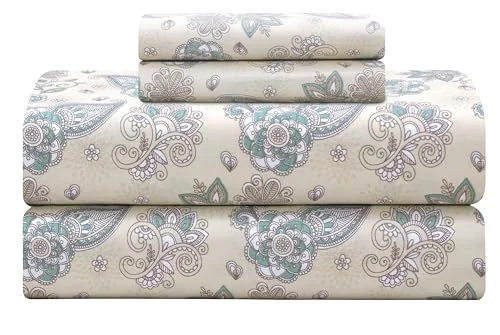
The Feather & Stitch 100% Cotton Percale Sheet Set is what that reading test looks like when a listing passes it: percale weave stated plainly, 300 threads in single ply, and a 16-inch pocket printed where you can find it. That construction sits inside the useful percale band, and disclosing the pocket depth at all puts it ahead of most of the shelf. Its flaw is exactly what it is made of. It is percale all the way through, with none of the silky first-touch hand of a sateen, so a reader hoping to keep that smooth feel and lose the heat will find this set flat and papery on night one, and will need a few washes to come around to it.
One last thing the weave tells on itself about: percale wrinkles, and it stays wrinkled. There is nowhere in a balanced one-over-one grid for a fold to slide out to, so the dryer’s creases sit there until your own weight presses them flat. A cotton set that comes out of the dryer smooth is doing that with floats or with a chemical finish, and both cost you air. The sheet that looks best folded is not the sheet that sleeps coolest.
The Label Taken Apart: Thread Count, “Egyptian,” “Hotel Quality”
Picture the aisle. A 200-count percale in one hand, a 500-count Egyptian cotton sateen in the other, and every signal on both packages pointing you toward the second one: the bigger number, the country of origin, the word “hotel” somewhere on the back. Most people have made that exact comparison and picked the one that sleeps warmer. The packaging worked.
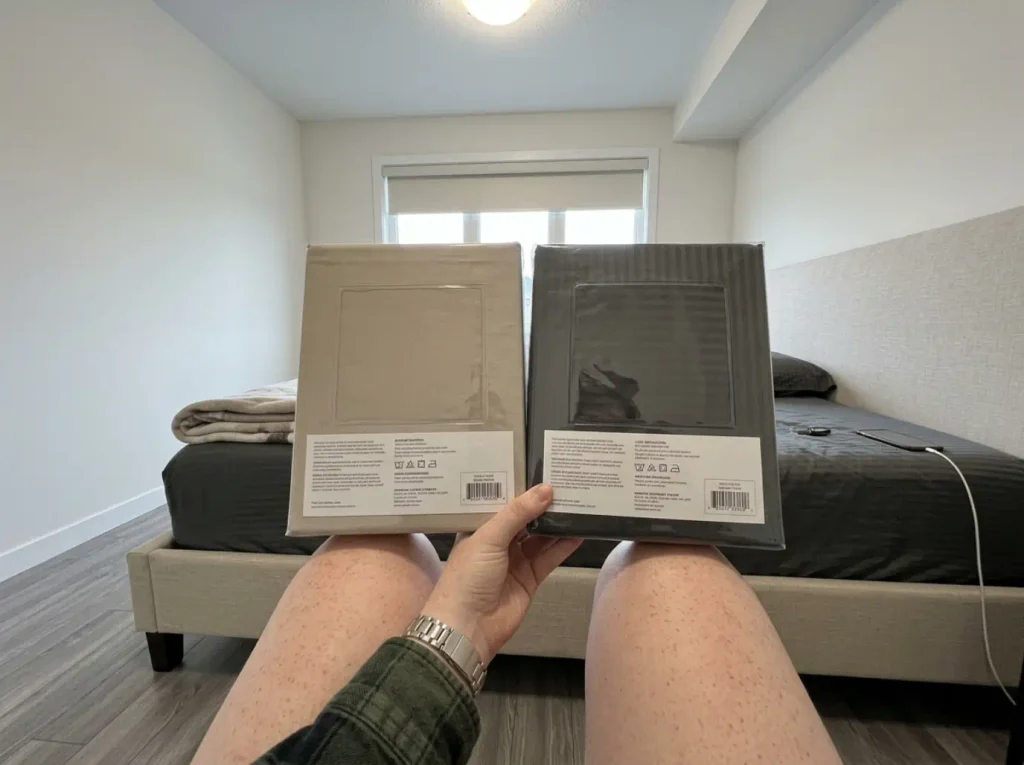
Start with the number, because it is the easiest to take apart once you know what it counts. A two-ply yarn is two thinner threads twisted together into one, and a manufacturer can count that as two threads rather than one.
So a fabric with 300 real threads gets sold as 600. A 400 base becomes 800. Three-ply constructions reach four figures, which is how a bed sheet ends up advertised at 1,200.
Above roughly 500 you are almost always paying for arithmetic rather than for more cotton, and what the thread-count number is actually counting gets the full page it deserves.
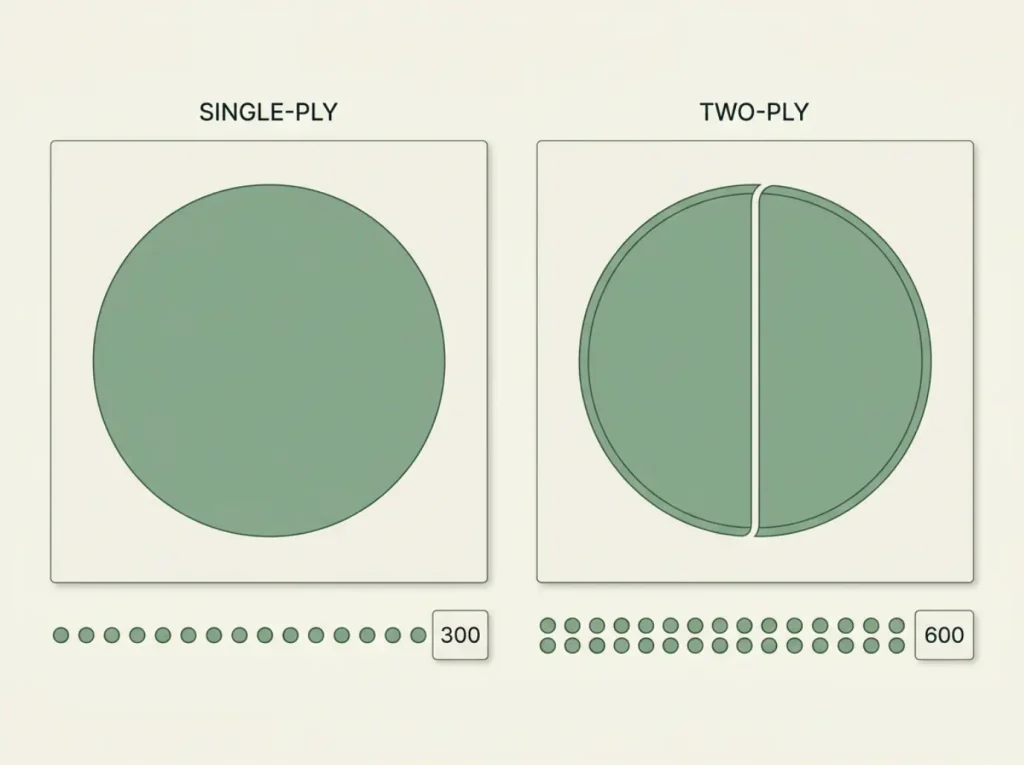
And the trick is not free. Splitting a yarn into two thinner ones to double the count means finer, weaker threads packed denser into the same square inch. The cloth gets heavier and tighter, moves less air, and pills sooner because thinner threads abrade faster.
The number on the front goes up and the night gets warmer. That is not a coincidence. It is the direct physical consequence of how the number was inflated.
Which is what makes a modest count stated honestly worth more than an impressive one. The Linen Home 100% Cotton Percale Sheet Set sits at 200 threads, percale weave, OEKO-TEX certified: the bottom of the useful band, said plainly rather than dressed up as 400 by counting plies. Its flaw is a measurement, not an opinion. The pocket runs 15 inches, short on a 14-to-16-inch mattress the moment a topper goes on.
Measure the mattress depth with the topper in place before ordering, and add two inches to whatever you get. That number is your minimum pocket, and a deep pocket on the label is a claim about how far the elastic corners will stretch, not about where they will stay.
Now the country. “Egyptian” is two different words wearing the same spelling. Egyptian Cotton™ is a registered trademark that the Egyptian Cotton Association manages and licenses, and a manufacturer has to pass accreditation before using the name and the logo, backed by the Egyptian Cotton Association’s own DNA-testing accreditation, not just the word on the tag, which fingerprints the cotton’s genome at several stages of production. Lowercase “Egyptian cotton” on a tag has passed none of that and remains perfectly legal to write.
So the instruction is not “be skeptical.” It is checkable: look for the accredited logo, not the word.
What that accreditation costs a manufacturer is what turns a caution into a test. The paper trail a manufacturer actually has to produce before using the name includes quality-control test reports, either HVI CATGO or Moisture Testing Administration conditioning certificates, plus full production-chain documentation and an on-site auditor visit with DNA sampling.
Nobody goes through that and then hides the logo. If a premium listing leans on the word and never shows the mark, the mark is what is missing. There is more on whether the words on a cotton tag hold up than this section can carry.
Even when the claim is true, notice what it claims. The property behind genuine Egyptian cotton is extra-long staple length: longer individual fibers, which spin into a smoother, stronger, longer-lived yarn with fewer ends poking out of the surface. That is the same property Pima cotton is sold on, and long-staple cotton grown anywhere beats short-staple cotton from the most famous field in the world, because staple length is decided before either one reaches a loom.
That is a durability and smoothness claim. It is not a temperature claim, and it never was. A long-staple sateen sleeps warm exactly the way a short-staple sateen does, because staple length did not change where the threads cross.
The SOHO 100% Egyptian Cotton Sateen Stripe Sheet Set is the whole argument standing in one place, which is the only reason it is named here. It carries every premium signal at once, “Egyptian cotton” on the label, a 500 thread count, the sateen hand, and it is the warmer of the two sets named in this section by a clear margin. The lowercase phrase does not carry the Association’s DNA-accredited mark, and the sateen weave cancels most of what the rest of the label implies for someone who sleeps hot.
If you want that set, buy it for the hand and the stripe, knowing it will sleep warmer than the 200-count percale three paragraphs up. Buying it to sleep cooler is buying the label instead of the cloth.
On a high-count sateen listing, read the three-star reviews and skip the rest. The five-star ones are written in the first week, when everything feels good, and the one-star ones are usually about shipping and packaging. The middle band is where somebody has had the set through a summer, and it is where the word “silky” quietly turns into the word “warm.”
Two marks on a cotton package do mean something, and neither is about temperature. OEKO-TEX says the finished cloth was tested for residual chemistry; GOTS certified means the organic cotton was tracked from field to seam. Both are worth having and, honestly, neither will cool you down by a degree.
That leaves “hotel quality,” which names a feeling and nothing else. No standard sits behind the phrase, nobody certifies it, and hotels themselves buy across both weaves for reasons that have to do with laundry contracts and how a bed photographs, not with how you sleep. Treat it as an adjective and go looking for the construction line instead. If you are curious, what hotels actually put on their beds is a more interesting answer than the phrase suggests.
Here is the contradiction sitting on page one, stated plainly, because nobody selling sheets will state it for you. The same retailers whose education pages describe sateen as the warm, cozy, cold-weather weave are selling 500-count Egyptian cotton sateen two clicks away as their premium pick for people who sleep hot. Both statements are theirs, on the same website. Only one of them is about how you sleep, and it is not the one next to the buy button.
Cotton at Wash Twenty
The Sunday that settles it is the twentieth one. You pull the percale out of the dryer expecting it to have finally turned soft, because the listing said it gets softer with every wash and nineteen previous Sundays have not delivered, and it comes out exactly as crisp as it was in month two. The set is fine. It was the promise that was wrong.
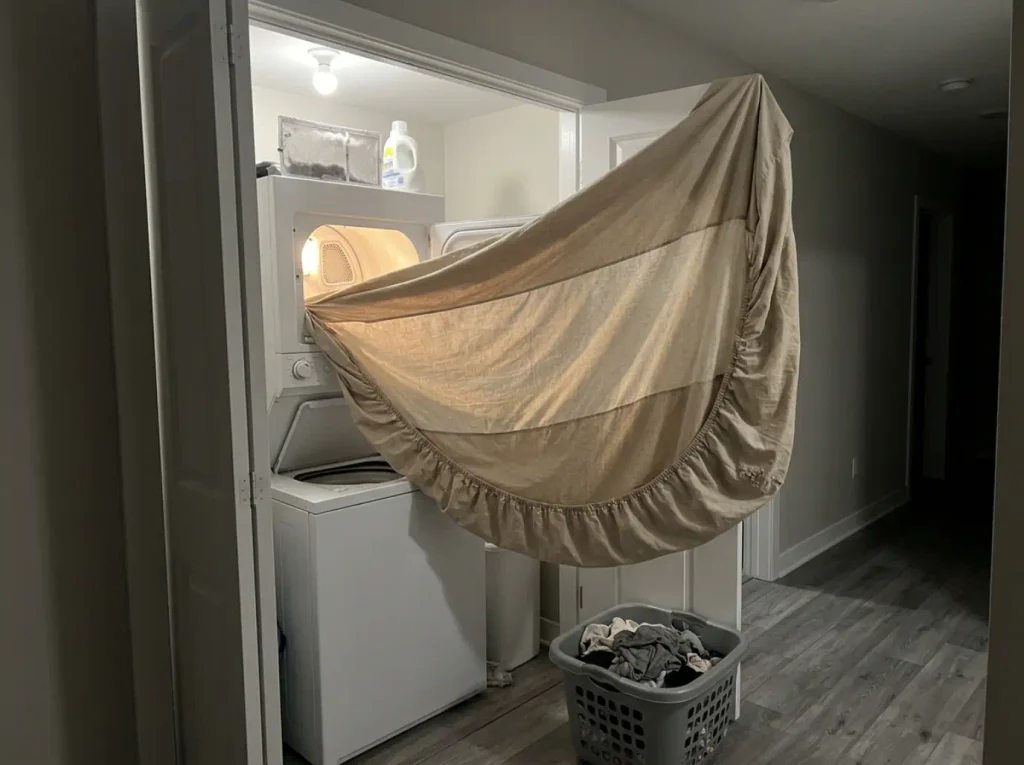
What genuinely changes is front-loaded and then it stops. The softening with washing that the listing promises is real, and it is over by roughly wash five: cotton percale relaxes as the yarns loosen and the mill’s sizing rinses out, a real change from the cardboard-stiff feel of night one. After that the wash count stops buying you anything.
Or rather, it keeps buying you wear, just not softness. Then it settles into a broken-in crisp and stays there. It does not keep marching toward sateen.
That is a feature, since the crispness is the airflow, but it is not what the marketing implies, and the community has noticed. A thread on r/Bedding titled “Percale sheets not ‘getting softer with each wash’ as advertised” drew 58 comments, and the title puts the quotation marks around the advertising rather than around the sheet.
Then there is the thing that changes without anybody telling you, which is the finish. A cotton set sold as wrinkle-resistant is wrinkle-resistant because of a resin finish applied at the mill, a chemistry sitting on the fiber rather than a property of the weave. Wrinkle resistance on a cotton label is almost never the cloth; it is a coating, and a coating on a matte finish is the first thing a hot wash takes off.
So watch the wash temperature and tumble dry low, because the finish you paid for leaves at the hot setting first. Finishes are not permanent. Somewhere in the first season the sheet starts wrinkling like the plain cotton it always was, and the person who chose it for that property has quietly lost what they paid for, usually without connecting the two events.
Nobody on page one mentions this. It is the single most useful thing to know about a cotton sheet past week one.
Pilling follows the weave, which makes the whole decision feel less arbitrary. Pills form where a thread rubs and abrades. Sateen’s long floats sit exposed with nothing holding them down along their length, so they catch and fuzz first. Percale’s balanced grid gives abrasion very little to grab, because every thread is locked down again a fraction of a millimeter later.
So the weave decision you made for temperature also decided your durability, and which of the two weaves actually survives longer is the same answer arrived at from the other direction.
Wear is also not even, and this is where people misread their own sheets. The hip-and-shoulder band of the fitted sheet and the top edge of the flat sheet go long before anything else, because that is where weight, movement and moisture all land together. A set can look new in the corners and be finished in the middle.
Hold a percale fitted sheet against a lamp at wash twenty and the grid should still read evenly across the width. Do the same with a set that has been through a hot wash and a hot dryer every week and the hip band reads brighter, because the threads there have thinned.
Hold the fitted sheet up to a window or a lamp at wash twenty and compare the hip-and-shoulder band against a corner that never gets slept on. If the band lets through visibly more light, the threads there have thinned and you are on the back half of that set’s life, no matter how good the corners still look. Wash cooler and dry lower from that point and you buy yourself months.
The community runs its own version of this test, on a longer clock than any retailer does. A live r/Bedding thread titled “Six Month Percale Sheet Review (various brands)” pulled 94 votes and 38 comments in under a month, because six months is roughly when people feel qualified to have an opinion. Another, “Don’t listen to all the hype.. I regret buying Coyuchi percale sheets,” pulled 49 votes and 64 comments, which is worth reading as proof that percale is a category rather than a guarantee.
The weave gets you the airflow. The brand and the batch still decide whether the set was any good.
One percale-specific annoyance deserves a warning before wash five rather than after it: a pale, matte, open weave shows body-oil and sweat marks on pillowcases more visibly than a denser sheened surface does. It has its own thread on r/Bedding, which is how you know it is not one person’s laundry. The marks come out, they just show first, but a buyer choosing between a pale percale and a mid-tone one deserves to know going in.
Buy the pillowcases a shade darker if it bothers you. The same season-long test run on two other fabrics shows how unusual cotton’s aging curve is.
When Cotton Is Not the Fix
One side of the bed kicks the covers off at two and the other pulls them back at four, and the two of you have been arguing about the sheets for a month when the sheets are the one layer you already agree on. Almost nobody writing about hot sleepers accounts for this, and it changes the answer completely, because the bed has two thermostats and one fitted sheet.

That asymmetry is the whole rule of a shared bed, and it is free to apply. The fitted sheet is shared and cannot be split, so it gets chosen for the hotter sleeper, always, because the colder sleeper can add and the hotter one has nothing left to remove. Percale in the 200-to-400 band under both of you, and then the argument moves upward to the layers that can be separated.
And they separate easily once you stop thinking of the bed as one unit. A flat sheet on one side and a light blanket folded over the other. Two duvets of different weights instead of one shared duvet that is wrong for both people in opposite directions. The top sheet skipped on the hot side, which costs nothing and is usually the first thing to try.
Percale’s light, crisp hand is what makes this work: a flat sheet you can genuinely sleep under alone is what the warm half of the bed needs, and the cold half builds upward from that same base. There is a whole approach to building the rest of the bed around it once the sheet is settled.
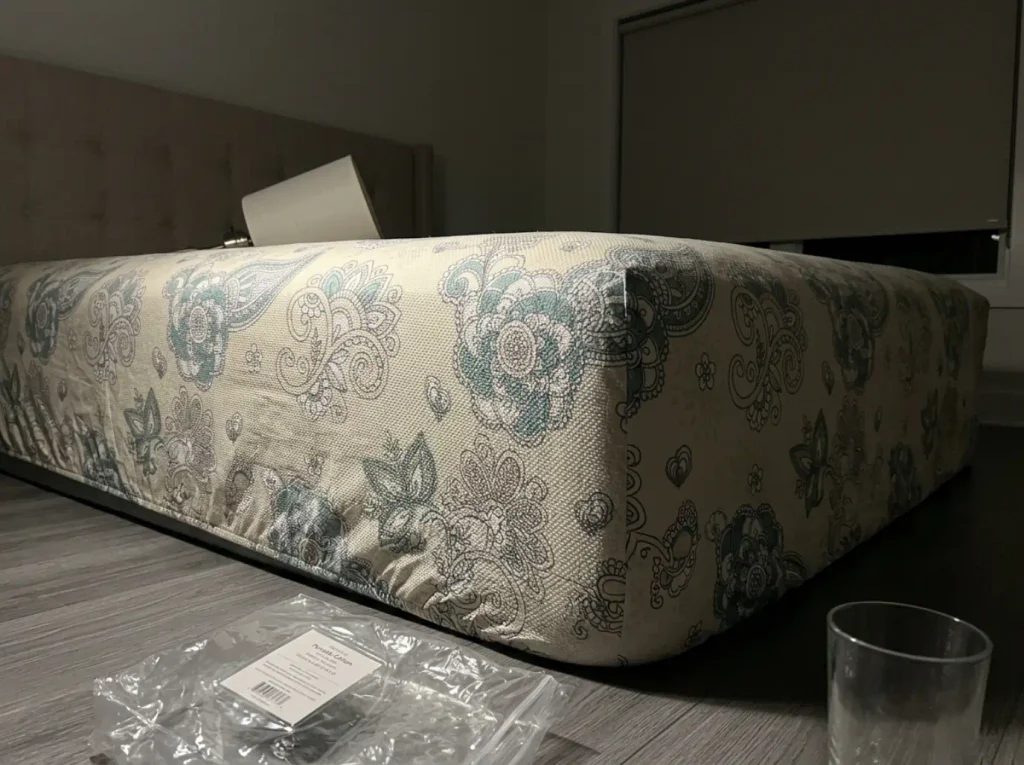
Before any of that, check the three things that are not the sheet at all, because one of them is the answer more often than the cloth is. Foam mattress heat retention is the big one: the block stores your warmth and gives it back all night no matter what is on top of it, and a foam mattress topper does the identical thing one layer higher. Room temperature is the second: a bedroom sitting at 74 degrees will beat every weave ever made. And a mattress protector with a waterproof membrane cancels the airflow of the sheet above it in a single layer.
That last one is the quietest offender in the house. People buy a percale set to sleep cooler and leave a laminated protector on the mattress underneath it, and the sheet never gets the chance to move any air at all. The protector is the sealed layer, and the percale is sitting on top of a plastic bag doing an impression of a cool sheet. Pull it off for a week before concluding anything about the cotton.
Take the waterproof mattress protector off for one week before you buy a single sheet. It is the layer nobody looks under, and a laminated one seals the mattress so completely that the weave above it has nothing to work with. If the week without it changes your nights, you have your answer and it cost nothing. Swap to a cotton-terry protector with a breathable membrane rather than going back to the laminate.
So the order of operations goes: room first, then the protector, then how the two of you layer what goes on top, and only then the sheet itself. Buying is the last step rather than the first, and a reader who does the first three honestly often does not reach the fourth. That is an unusual thing for an article with product links in it to say, and for what it is worth it is still the right order.
Which brings the verdict. Yes, cotton sheets are good for hot sleepers, in a percale weave, in the 200-to-400 band, single-ply, with the count read as a construction detail rather than a quality score. That is the entire answer.
It took this long only because the packages make it take this long, and because “cotton” is the one word on the front that does not decide anything. If you are shopping budget sheets, doing this on a smaller budget is where cotton is kindest: affordable percale is the one corner of this shelf where the cheap answer and the correct answer are the same set.
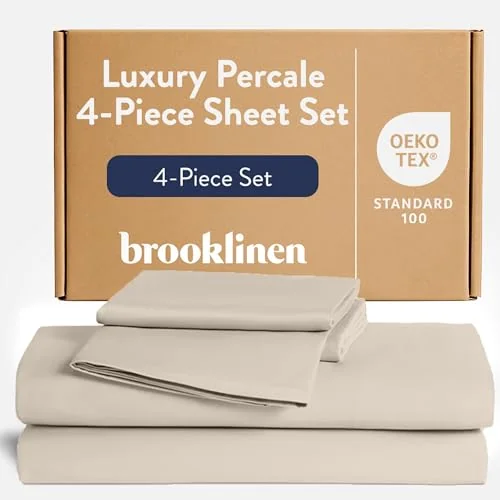
The Brooklinen Percale 4-Pc Sheet Set for Hot Sleepers is that verdict standing up as an object: percale, 270 threads, inside the band this article has spent two thousand words defending, and OEKO-TEX certified. Its flaw is the awkward one. The price does not come down for the lower number, so you will pay more for these 270 threads than for a 500-count Egyptian sateen that sleeps warmer.
That looks like a contradiction and is not: you are paying for construction and certification rather than for arithmetic. The 500-count set has more numbers and less cloth doing the job you bought it for.
What to Take to the Shop
Cotton is a good fiber for someone who sleeps hot, and a bad answer to the question. Buy the weave instead: percale, plain weave, 200 to 400 threads, single-ply named somewhere on the listing. If the page will not tell you how the cloth was made, that silence is the specification.
A four-figure thread count and the word “Egyptian” in lowercase are label work rather than construction. The accredited Egyptian Cotton™ logo means something specific and expensive to earn; the phrase on its own has passed nothing and never claimed to. And even when it is true, it is a claim about staple length, about smoothness and how long the set lasts, not about temperature.
Do the free things first, in order. The room, then the protector, then how the two of you layer the top of the bed. Those three beat a sheet swap more often than the roundups will ever admit, because none of them have anything to sell you at that stage.
At twenty washes, look for two things: whether a set sold as wrinkle-resistant has started wrinkling, which means the finish is gone and it was never the weave doing that work, and whether the hip-and-shoulder band of the fitted sheet reads thinner against a lamp than the corners do.
Tonight, take the protector off and drop the thermostat two degrees. Sleep on the cotton you already own for a week. If it is still hot, go find the package it came in and read the construction line, because there is a decent chance you have been sleeping on a sateen this whole time and blaming the cotton.
Frequently Asked Questions
01What are the downsides of cotton sheets?
Cotton wrinkles, and percale wrinkles hardest, because a balanced plain weave gives a fold nowhere to slide out to. It also pills eventually, shows body-oil marks more visibly on pale pillowcases, and shrinks a little on the first hot wash.
02What material of sheets is best for hot sleepers?
Cotton percale is the safest default, because the one-over-one weave leaves air gaps that a float weave closes. Linen and lyocell also work well. In every one of those cases the weave decides more than the fiber does.
03What are the best sheets for hot sleepers who sweat a lot?
A percale weave in a 200-to-400 thread count, with no waterproof mattress protector underneath it. A laminated protector seals the mattress and cancels the sheet’s airflow more completely than any weave choice can make up for.
04Is a higher thread count better for staying cool?
No. Above roughly 500 the count usually reflects two-ply yarn counted twice, and the denser cloth moves less air than a lower count does. A 200-count percale sleeps cooler than a 600-count sateen, reliably.
05Is Egyptian cotton good for hot sleepers?
Only if it is woven as percale. “Egyptian” describes staple length, not temperature, and most Egyptian cotton sheet sets are sateen, which sleeps warmer regardless of how good the fiber underneath it is.




Tried it on your own bed?
No comments yet. Tell us what you changed, and what the sheet did after a few washes.