







What’s in here8 sections
- What ‘Standard’ Means Changes From One Listing to the Next
- The Pillow Sets the Size, the Bed Only Decides How Many Fit
- Measure the Pillow You Own Before You Buy Anything
- Loft Is Thickness, and No Size Chart Draws Thickness
- A Protector Under the Case Takes Room From Both
- Body, Euro and Oxford Cases Follow Different Rules
- Measure Once Tonight, and Once More After the Wash
- Frequently Asked Questions
The package says standard, the pillow you already own says standard, and on the first night one end of the case hangs empty while the other strains at the seam. Two things carry the same word and do not agree. Pillowcase sizes are a retail habit rather than a standard: no standards group certifies what “standard” or “queen” means on a case, so the pillowcase dimensions printed on the listing are the only real spec you get, and the word in front of them is decoration. This guide settles which number to trust, how to measure the pillow on your bed for free, what a tight or loose case does to the pillow’s loft, and which sizes have no standard at all.
Quick Answer
Size the case to the pillow’s seam-to-seam length, not to the bed. A “standard” case is 20×26 in from one seller and 20×30 in from another, so read the inches, not the word. Leave about 1 to 2 inches of spare length and no extra width. A king case (20×36) is too long for anything smaller.
What ‘Standard’ Means Changes From One Listing to the Next
The Quick Answer leans on one claim: the word on the box is a label, not a measurement. Line up four listings that all print “standard” and you get four different lengths under what looks like one standard pillowcase size, which is why a size chart only gets you halfway. The chart is still worth having, as long as you read it as the most common convention and not as a rule. If you want the bigger picture of how cases and protectors stack on a pillow, the cluster guide on what each layer actually does covers the whole pile; this page is only about the inches.
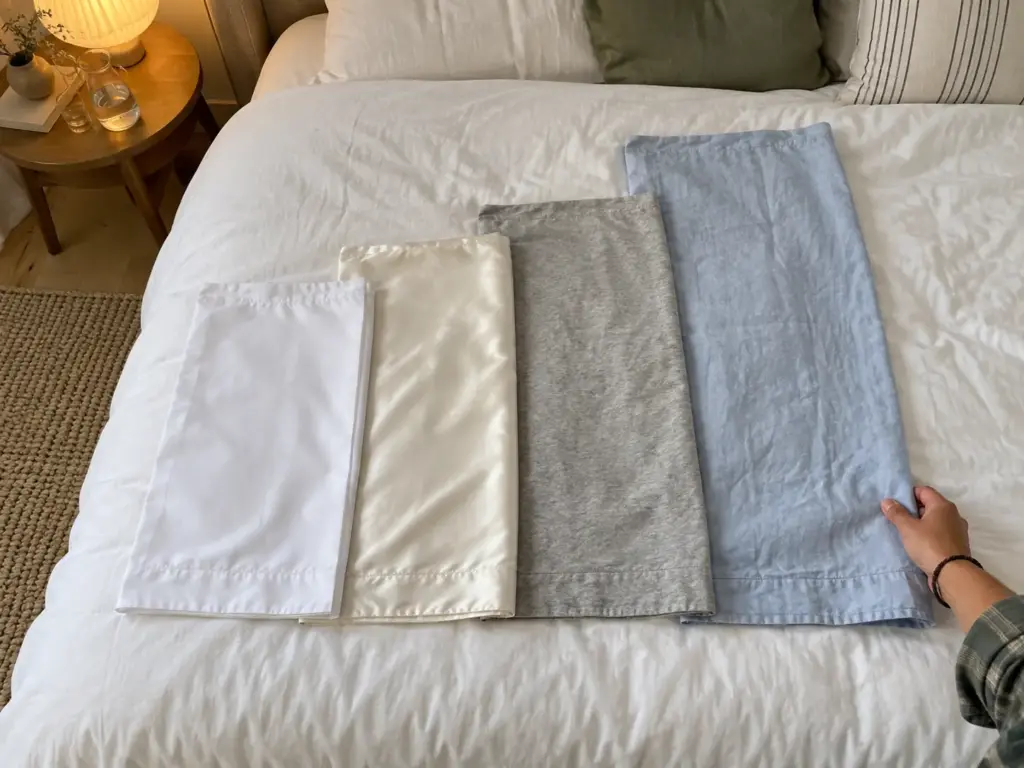
The Chart Most Sellers Share
Most US sellers agree on the table below. Agree is a generous word, though. These are retail conventions that settled over time, not figures any standards group publishes, and every row has sellers who drift an inch or two either side of it.
| Name | Case size (in) | Case size (cm) | Fits which pillow |
|---|---|---|---|
| Standard | 20 x 26 | 51 x 66 | Standard pillow, 20 x 26 |
| Super standard | 20 x 28 | 51 x 71 | Super standard, or a standard with room to spare |
| Queen | 20 x 30 | 51 x 76 | Queen pillow, 20 x 30 |
| King | 20 x 36 | 51 x 91 | King pillow only; too long for the rest |
| Body | 20 x 54 | 51 x 137 | Body pillow |
| Euro | 26 x 26 | 66 x 66 | Square Euro pillow |
Notice that the width hardly moves. Almost every rectangular case is 20 inches across, so the whole decision lives in one number: the length. Thread count, the other number on the box, does not help here: it describes how tightly the cloth is woven, never how long the case is.
Four Things Called Standard
In practice the chart breaks the moment you shop. Take two silk cases sold side by side. The Fishers Finery 25 momme mulberry silk pillowcase lists its Standard at 20 x 28 in, with queen at 20 x 30 and king at 20 x 36 on the same page.
That makes its “standard” the chart’s super standard, and on a true 20 x 26 pillow it runs 2 inches long (the listing’s promotional deal also showed as fully claimed, so what you see on the page may not be what you get at checkout). Its counterpart tells a different story.
The LILYSILK 25 momme envelope silk pillowcase calls 20 x 26 its Standard, which matches the chart exactly. It fits a standard pillow with nothing left over, and that is also its limit: a 20 x 26 case is the one that turns snug and tight on a queen pillow, which the loft section below gets into. Same fiber, same weight, same word on the box, and 2 inches apart.
Then a third reading. Mellanni sells a single case labeled “Standard / Queen” at 20 x 30, folding two names into one size. And a fourth: in the UK, Soak & Sleep lists a standard case at 50 x 75 centimeters, which is about 20 x 29.5 in, the same length as a US queen. That is the UK size of a standard, and if you buy a UK set for a US standard pillow and the case runs about 4 inches long.
So “standard” covers 20 x 26, 20 x 28 and roughly 20 x 30 depending on who printed it. The way out is boring and reliable: read the inches in the product title and ignore the word in front of them. The failure shows up in your own bed before it shows up anywhere else, as a case whose far corners sit flat and empty because the pillow never reaches them. A r/LifeProTips thread describes the extreme version, a sheet set that arrived with king cases and a regular pillow lost inside all that extra length.
Search the listing for the second number, not the name. If a product title says standard but never prints a length, scroll to the size selector or the spec table before you add it to the cart. A case that hides its inches is a case you will be measuring after it arrives.
The Pillow Sets the Size, the Bed Only Decides How Many Fit
Most people size cases by the bed: queen bed, queen cases. That is a fair instinct, because the sheet sets are sold that way and the cases come bundled with them. But the bed has nothing to say about the case. All it decides is how many pillows fit across the mattress, and that is simple arithmetic.

A Pillow’s Length Runs Across the Bed
A pillow lies with its long side across the width of the mattress, so the pillow’s length and the bed’s width are the two numbers that meet. A queen mattress is 60 inches wide. Two 30-inch queen pillows fill it edge to edge, exactly. Two 36-inch king pillows on the same bed add up to 72 inches, which is 12 inches too many, or about 6 inches hanging over each side.
A king mattress is 76 inches wide, so two kings fit with a few inches spare, and two 26-inch standards on a queen leave 8 inches of mattress between them.
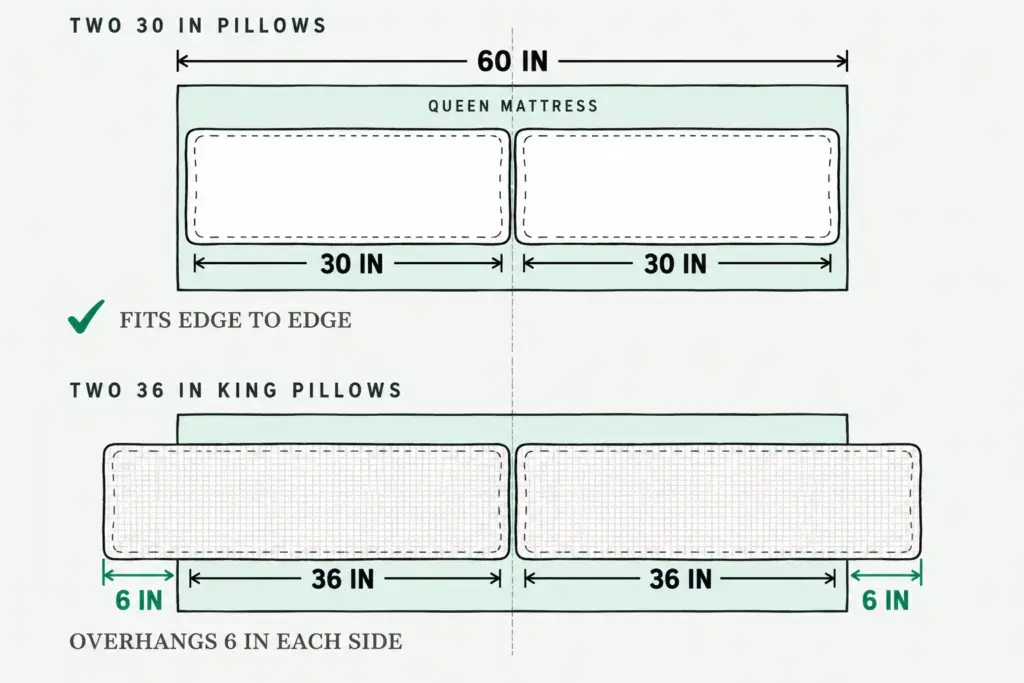
That overhang is where the bed tells you something went wrong. A pillow that sticks out past the mattress edge has nothing under its end, so it tips and slides when you turn over. People blame the case for that. The case is fine; the pillow is the wrong length for the bed, and the case only follows the pillow.
So the rule runs in two steps. The bed counts pillows, and the pillow picks the case.
Two Sleepers, Two Pillows, Two Case Sizes
Shared beds are where the bed-first rule breaks most clearly. One sleeper wants a long queen pillow to hug or to stretch under the shoulder; the other has slept on a 20 x 26 standard for years and has no plans to change. Put both on a queen bed and you have a 30-inch pillow and a 26-inch pillow side by side, which need two different cases.
That is not a mismatch to fix. It is the right answer for two people with two different pillows, and the matching set of four identical cases is what gets it wrong for one of them. If one of you switches positions through the night and changes pillows to suit, the guide to pillows for combination sleepers covers that side; for the cases, buy each pillow’s length separately and let the colors match instead of the sizes.
When the Set Arrives With King Cases
The cheapest fix comes from the r/LifeProTips thread: when a set comes with king pillowcases and your pillows are standard, fold the excess underneath. It is not elegant, but it costs nothing, and a case that is too long is the easier mistake to live with.
The opposite mistake is worse. A case slightly shorter than its pillow leaves the pillow poking out at the open end, and a r/Bedding thread points out that for anyone who rolls around, that short case can work its way off during the night; the same thread concludes it is better for the case to be longer than the insert. Whether a longer flap or a zipper is the answer to a case that keeps escaping belongs to the comparison of which closure keeps a case on. Length comes first, though: a case that is long enough has much less reason to slip.
Measure the Pillow You Own Before You Buy Anything
The pillow already on the bed tells you the case size better than any chart, and it costs nothing to ask it. There is also a second measurement waiting in the drawer: the case that already fits that pillow well. Between the two, you have the number before you open a single listing.

Seam to Seam, Fluffed, Flat on the Bed
The routine takes two minutes with a soft measuring tape if you have one (a steel tape works, it just fights you on the curve):
- Take the case off and fluff the pillow, so the pillow loft is back in the corners instead of packed in the middle. If you are unsure what a fluffed pillow should look like, the guide on how to measure the loft shows it.
- Lay it flat on the bed, not on your lap.
- Measure the length from seam to seam along the middle, then the width the same way.
- Read the tape with the fill settled at the corners, not squashed under your hand.
- Do the same with the case that already fits, laid flat, seam to seam.
Those two numbers tell you almost everything. If the pillow reads 26 and the case that fits it reads 27 or 28, you know your target before any seller has a chance to call it standard.
Measure the pillow you sleep on, not the one in the photo on the label. A pillow that has been slept on for years has settled, and the tape reads what the fill does today, which is the only number a new case has to match.
How Much Spare Length
The sources disagree, and not by a little. Some say half an inch to an inch over the pillow, others one to two, others two to three. One r/Bedding thread uses a rougher rule, that a pillow within about 2 inches of the case is fine, and the person who tried it reported the result: a tight fit at first, with no wiggle room, and it only worked because the pillow was down.
The rule this guide uses is about 1 to 2 inches of spare length and no extra width. Actually, start at the low end and only go toward 2 if the first fit pulls at the seams. Width is different. A case wider than the pillow has nothing to fill it, so the extra fabric just wrinkles under your cheek, and almost every case is 20 inches across anyway.
You can see a good fit from across the room. The corners of the case are filled, and the open end sits close to the pillow instead of hanging empty past it.
If You Do Buy, Read the Title
If the measuring says you need new cases, pick a listing that prints its inches right in the title, so the number and the label sit side by side and you can check one against the other.
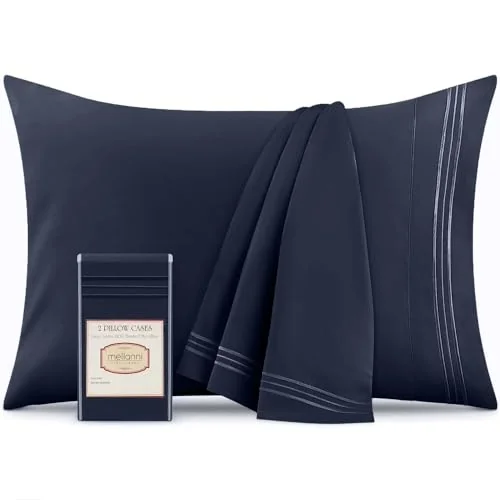
Buy it for a queen pillow, or for a standard only if your measuring said you like a long case. For a 20 x 26 pillow that you want snug, a case printed at 20 x 26 or 20 x 28 is the closer match.
Loft Is Thickness, and No Size Chart Draws Thickness
Every size chart is two-dimensional: a length and a width. A pillow has a third dimension, its loft, and that is the one that decides how a case feels once it is on. The chart leaves it out because the case is sold flat, but the case is worn round.
Too Tight Makes the Pillow Firmer
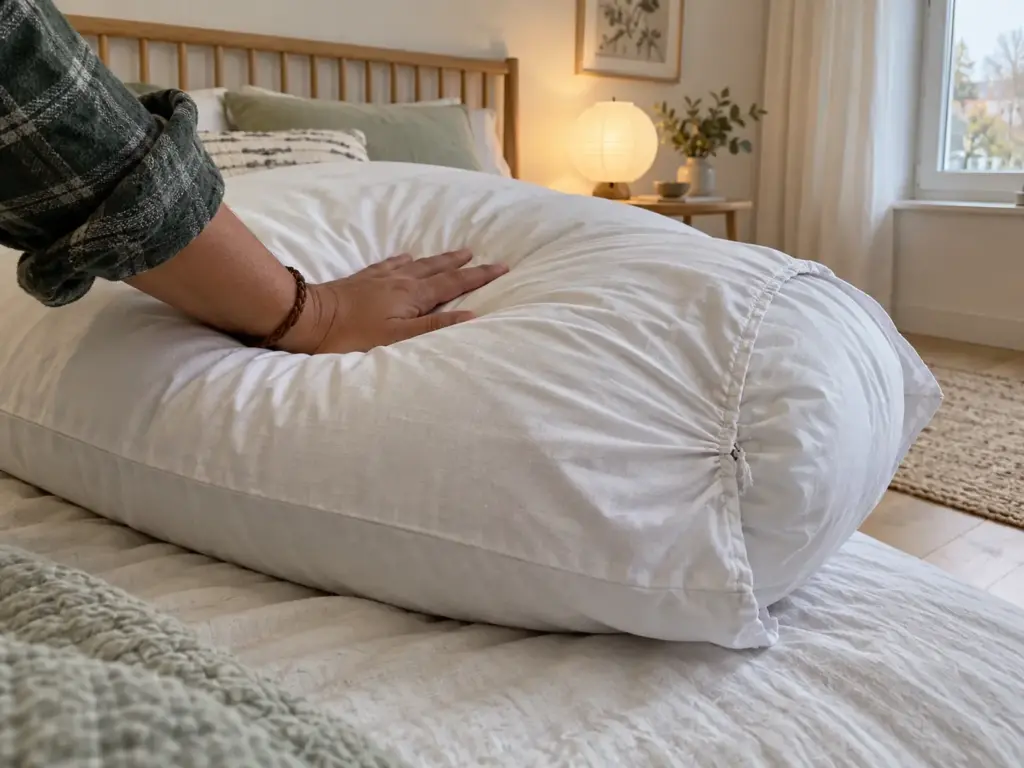
A case that is too small squeezes the fill, and squeezed fill cannot rise to its full height, which matters most on a high loft pillow. Soak & Sleep describes the result plainly: a case that is too small can compress the pillow and make it feel firmer or even lumpy. Some retailer charts put it more gently and call a standard case on a queen pillow snug. A snug fit is the polite word for a 20 x 26 case stretched over a 20 x 30 pillow, where 4 inches of pillow have to go somewhere.
Where they go is the open end and the seams. The first night, you feel the seam pulling along the edge; by morning, the pillow no longer holds the dent your head made, because the case is pressing the fill flat all the time. A r/Bedding commenter has a name for what a down pillow looks like crammed into a case that is too tight, with its top creased in the middle: a decorative karate chop.
Too Loose Bunches Over Your Face
The opposite failure is quieter. A case that is too large leaves loose fabric, and Soak & Sleep notes that this fabric can bunch up during the night. It gathers at the open end or slides around the pillow, and it is the fold you find against your face in the morning. That is the reason the spare length has a ceiling and the width has none to give: past 2 inches or so, the extra fabric stops being room and starts being slack.
Press your palm into the middle of the pillow with the case on, then lift it. If the dent springs back, the case is leaving the fill room to move. If the surface stays flat and hard under your hand, the case is doing the squeezing, and the pillow will sleep firmer than it was built to, a change in firmness that is the case’s doing, not the fill’s.
Which Fills Forgive a Tight Case
The fill decides how much a tight case costs you. Down is the forgiving one: the clusters move and compress, so a down pillow can often go into a case an inch or two shorter and mostly recover, which may be why the r/Bedding commenter’s within-2-inches rule worked for them. That is one person’s report on one pillow, so read it as a sign, not a promise.
Shredded foam and adjustable fills are the opposite. The pieces cannot flow into a smaller space, so a tight case packs them into ridges and the pillow turns lumpy. The Coop Home Goods Original Adjustable Pillow in queen is a good example of the problem. It is a true 20 x 30 pillow filled with shredded memory foam and microfiber, so it needs a 30-inch case, and its adjustable fill is exactly the type that goes lumpy when it is squeezed into a 20 x 26 standard.
The fill you can add or remove helps with height, but it cannot fix a case that is 4 inches short.
So the same tight case is a mild nuisance on one pillow and a bad night on another. Check the fill before you decide a case is close enough.
A Protector Under the Case Takes Room From Both
The pillow in your bed is often more than one layer. A protector sits under the case, and it takes up length and thickness before the case gets its turn. If you are still deciding whether the pillow needs a protector at all, that is its own question; if it already wears one, the case has to be sized for the pair.
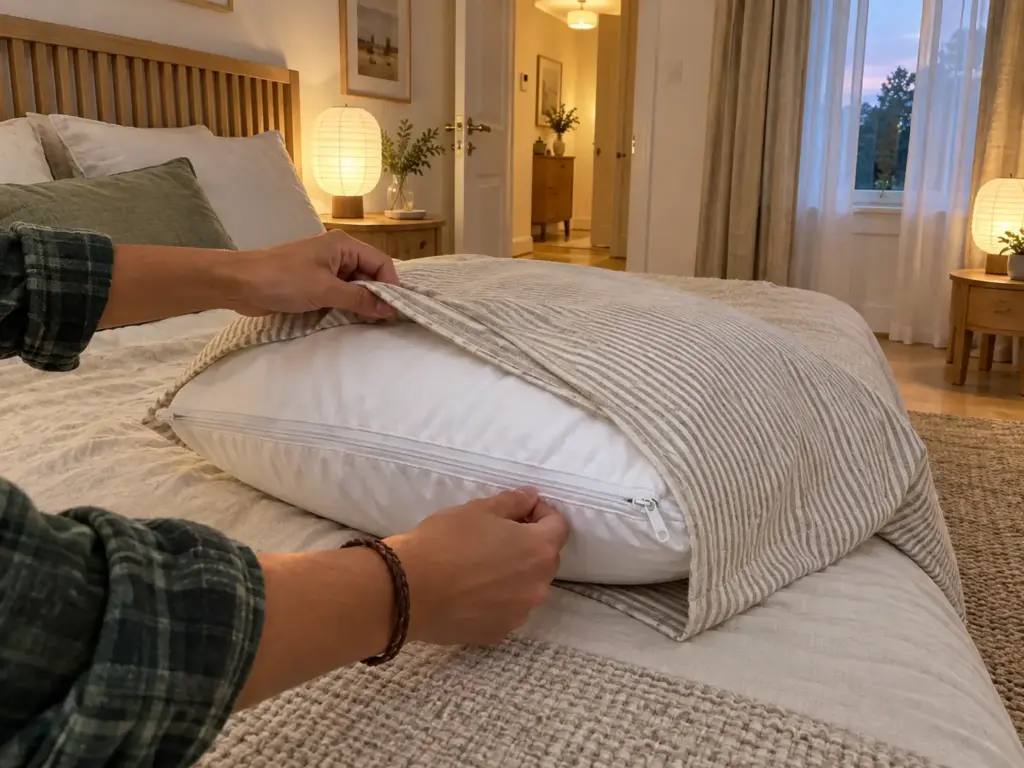
The Protector Has Its Own Size
A protector is sold in its own sizes, and they follow the same loose conventions as cases. The FAUNNA 600-thread-count cotton pillow protector comes in a four-pack at Standard 20 x 26 in, with a zipper. It is a close fit on a standard pillow and sits flat, which is what you want under a case. Each listing is one size, though, and a queen pillow will not go into it, so a mixed bed needs a separate pack for the longer pillows.
The protector is the first layer, so try the case over it, not over the bare pillow. The extra cotton and the zipper add a little thickness, and on a case that was already snug, a little is enough to turn a close fit into a tight one. For more on how a protector is built, the zipper and seam placement are covered there.
Try It Before You Wash or Cut Tags
The free routine is to try the full stack before anything becomes final. Put the protector on the pillow, then the new case over both, while the tags are still attached and before the first wash. If the seam pulls, the flap will not tuck, or the open end hangs empty, you have learned it while the case can still go back. After a wash, most of the time, it cannot.
When a case fits the bare pillow with only an inch to spare, assume it will be tight over a zippered protector. For a stacked pillow, aim for the top of the range, close to 2 inches of spare length, so the protector’s seams and zipper have somewhere to sit.
After the First Wash
Cases move in the wash, and cotton tends to move most.
Give a new case a pre-wash before you judge the fit, on the care label’s terms; a cold wash and air drying are the gentler route for any cotton case. One brand’s FAQ says to expect 3 to 5 percent shrinkage after the first wash; that figure comes from a single seller, and no readable standard sets a number for pillowcases. On a 30-inch case, 3 to 5 percent is roughly an inch to an inch and a half. Mellanni says its microfiber is shrink resistant, which is a claim from the manufacturer rather than a measurement anyone published.
So measure the case again after its first wash, flat and seam to seam, and hold it against the pillow. The case that fit over the bare pillow in the shop is sometimes the one that no longer closes over the protector after a hot cycle.
Body, Euro and Oxford Cases Follow Different Rules
The sizes above are the ones most people buy. Everything else lives in a corner where there is no real standard at all, and only a few of those shapes come up often enough to matter.

Body, Euro and the Shapes With No Standard
The odd sizes are conventions too, and each one is sold in a few variants:
- Body: 20 x 54 in
- Euro sham: 26 x 26 in, square
- Boudoir: 12 x 16 or 14 x 20 in
- Travel pillowcase: 12 x 16, 14 x 20 or 16.5 x 13.5 in
- Neckroll or bolster: about 6 in across and 16 to 20 in long
Orthopedic and contour pillows have no standard case at all, so the same advice holds for every one of them: measure the pillow, then read the inches. A body pillowcase that is too short is the common miss, and the fill ends up bunched toward one end. If you are choosing the pillow itself, the guide to body pillows by length and fill starts from the same length.
Oxford, Housewife and Sham
An Oxford case has a flat border of fabric around the edge, the flange, and that Oxford border adds to the outside only. The pocket the pillow goes into is the same size as a plain case; Soak & Sleep gives a UK standard as 50 x 75 cm inside, whether it is Oxford or housewife style. A sham is for show, usually for a pillow that sits against the headboard, and it is sized the same way as a case, by the pillow inside it. And a pillow that is getting old will change its own measurements over time, which is why it helps to know how often pillows need replacing before you measure for new cases.
Measure Once Tonight, and Once More After the Wash
Three things to carry out of this. The inches printed on the listing beat the word standard every time, because that word covers 20 x 26, 20 x 28 and about 20 x 30 depending on who uses it. The pillow decides the case; the bed only decides how many pillows fit across it. And measuring comes first, buying second, with 1 to 2 inches of spare length and no extra width as the target.
Once a new case has been through its first wash, lay it flat, measure it seam to seam again, and check it over the pillow and the protector together, because that is when a case that started snug shows whether it is staying that way.
Tonight, take the case off the pillow you sleep on, fluff the pillow, and measure it flat on the bed. Then measure the case that came off it, and notice whether its corners were full or empty. That number is your size, whatever the next package calls it.
Frequently Asked Questions
01What sizes do pillowcases come in?
The common US pillowcase sizes are standard 20×26, super standard 20×28, queen 20×30, king 20×36, body 20×54 and Euro 26×26 inches. Sellers drift from these by an inch or two, so read the printed inches on each listing rather than trusting the size name.
02Is 20×30 a queen size pillowcase?
Usually yes: 20×30 inches is the most common US queen pillowcase size, made for a 20×30 queen pillow. Some sellers sell that same 20×30 case as standard or standard/queen, and the UK standard is about the same length, so check the inches in the title.
03What size are pillow cases in the UK?
A UK standard pillowcase is 50 x 75 cm, about 20 x 29.5 inches, according to the retailer Soak & Sleep. That is close to a US queen length, so a UK standard case runs about 4 inches long on a US 20×26 standard pillow.
04How do I know what size my pillowcase is?
Lay the pillowcase flat on the bed and measure seam to seam, first the length along the middle and then the width. Compare it with the pillow measured the same way, fluffed: a good fit leaves about 1 to 2 inches of spare length.
05Can a queen pillow go in a standard pillowcase?
Sometimes, but a 20×30 queen pillow in a 20×26 standard case strains the seams and compresses the fill, so the pillow sleeps firmer. Down tolerates it better than shredded foam, according to one r/Bedding commenter; foam and adjustable fills tend to go lumpy.





Tried it on your own bed?
No comments yet. Tell us what you changed, and what the sheet did after a few washes.