







What’s in here8 sections
- What Combination Sleepers Ask of a Single Pillow
- What to Try Before You Buy Anything
- The Adjustable Pillow, Month One to Month Three
- The Shape Matters When You Roll
- Fill by Fill for Somebody Who Keeps Moving
- Two People in One Bed, and When It Isn’t the Pillow
- Set the Side Night First, Then Make the Other Two Reachable
- Frequently Asked Questions
You fell asleep on your side with the pillow set just right, and somewhere in the night you rolled onto your stomach and woke with that same pillow wedged under your chin like a ramp. For combination sleepers, who some shops call hybrid sleepers, that is the whole problem in one move: a pillow gets tried for ten seconds in one position, bought for a second, and slept on in a third that nobody tested. The box answers with “works for all positions,” a phrase that describes a zipper more than a height. A pillow set to the average of three heights is the wrong height in two of them, so the only pillow that can be right three times is one whose height you can change, by hand or by moving its fill.
What follows covers which position decides the height, what to try before you spend anything, what an adjustable pillow does between the first month and the third, the shape that survives a roll, each fill in turn, and two people in one bed (the measurement for each position on its own lives in the pillow-by-sleep-position guide).
Quick Answer
No single fixed height suits combination sleepers: the side position needs the tallest pillow and the stomach position the lowest. Set the pillow for your side nights, then make it lower by hand by folding it, taking fill out, or pushing away a flat second pillow. Try that for free before buying an adjustable one.
What Combination Sleepers Ask of a Single Pillow
The height a combination sleeper needs is not one number. It is three, one for each sleep position you pass through in a night, and a pillow with a fixed loft can only be set for one of them.

So the useful question is not which pillow is best for everybody who moves, but which of your three positions sets the limit. One of them asks for the most height, one for the least, and one sits in between, and the pillow has to reach the first without making the other two impossible. There is a catch in how most people choose, too. The shop test, lying on your back on a display pillow for a few seconds, judges the one position you are not in when you are asleep and rolling.
The side night sets the ceiling
On your side, the pillow fills the head-to-mattress gap, the space between your head and the mattress across the width of your shoulder. That gap is the tallest of the three, and two things size it: shoulder width, and how far the shoulder sinks into the mattress. Mattress firmness is the part people forget: on a firm mattress the shoulder stays near the surface and the gap stays tall. On a soft one, or under a thick topper, the shoulder sinks and the same gap shrinks, sometimes by enough to notice.
When Sleep Foundation’s testers set up two adjustable pillows for each position, the side setting was the full pillow on both: every bit of fill left in. That is the ceiling. Nothing the other two positions ask for comes close to it.
The reason it decides the purchase is mechanical, not a matter of taste. A pillow that is too tall can be made lower tonight, with nothing but your hands: fold it differently, pull out a handful of fill, push it toward the headboard. A pillow that is too short for your side cannot be made taller without adding something under it. So the height you buy for is the side height, and the other two get reached by taking height away.
The common advice runs the other way. “Mid loft” is sold as the safe middle for people who switch positions, and Sleep Foundation’s own bands for pillow loft put medium at roughly 3 to 5 inches, with low loft at 3 or less and high loft above 5.
A medium pillow, mid loft at medium firmness, is the average of the three needs. For a combination sleeper that average misses the side night by being too short and the stomach night by being too tall, and only the back gets roughly what it wanted. The better call is to start from the side height and build in a way down.
Judge any new pillow lying on your side, on your own mattress, with the topper and protector in place. If it is right there, every other adjustment is a matter of taking something away, which you can do half asleep. If it is short on the side, no amount of fluffing will fix it.
The back sits in the middle
On your back the head already rests close to the mattress, so the pillow only fills the gap behind the skull, which is smaller than the side gap and larger than nothing. The same testers took the fill down to about three-quarters for back sleeping on one pillow and to about half on the other. That spread on its own tells you something: two pillows, two different “right” amounts for the same position, because the fills compress differently under a head. The full measurement for this position, with the mattress counted in, is in the back-sleeper version of the measurement.
The back also matters more than its middle height suggests, because it is where most of the traffic is. A 2021 review of pillow-height research puts the number of posture changes in a night at about 24, mostly between the back and the side. One study it cites found that people’s own pillows were too high for the back and too low for the side. That is the averaged pillow, measured on real beds and failing in both directions at once.
And the review is candid about the limits of the research behind any chart: “there remain no firm conclusions about the optimal pillow height for the supine and lateral positions.” No formula is coming. The height has to be found on the bed it will be used on, which is why the free tests in the next section come before any purchase.
What this means for a combination sleeper is that the back is the adjustment you make most often, without noticing. You roll from side to back many times a night, and every time the pillow is suddenly a little too tall for where your head has landed. A fill that gives way under the back of the head a little more than under the side of it is doing you a favor there.
The stomach sets the floor
Face down, with the head turned to one side, almost any height lifts the head away from the line of the shoulders. The stomach position wants the least pillow of the three, sometimes close to none, and the detail of that case (compressed loft, the towel test, thin foam against adjustable) is in the stomach-sleeper version.
Sleep Foundation’s figures put the gap between ceiling and floor in plain numbers. On the Layla kapok pillow the testers went from full for the side, to about three-quarters for the back, to roughly half for the stomach. On the Coop Original they went from full, to about half, to about a quarter. On the Coop, then, the stomach setting holds a quarter of what the side setting holds: three-quarters of the stuffing separates the two positions on one pillow.
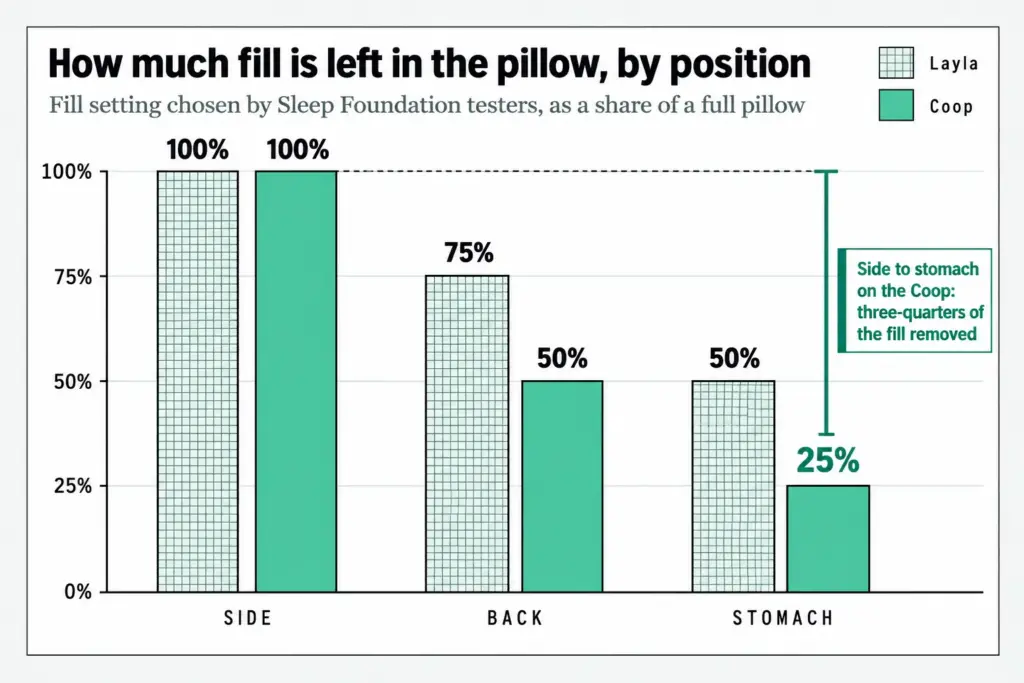
Now do the averaging on the Coop’s numbers. Full, half and a quarter come to a little under 60 percent of the fill. That averaged pillow carries more than double what the stomach night wanted and gives the side night only about 60 percent of its own height. The back gets a little more than its half, which is close enough to feel fine in the shop.
So the problem is the sum, not the average. Three needs, one pillow, and a gap of three-quarters of the fill between the highest and the lowest.
What to Try Before You Buy Anything
If the pillow you own is right on the side night and wrong on the other two, the cheapest change is to make it adjustable by hand before paying for one that is adjustable by design. Most pillows can be lowered without a zipper, and a second pillow you already own can do the rest.
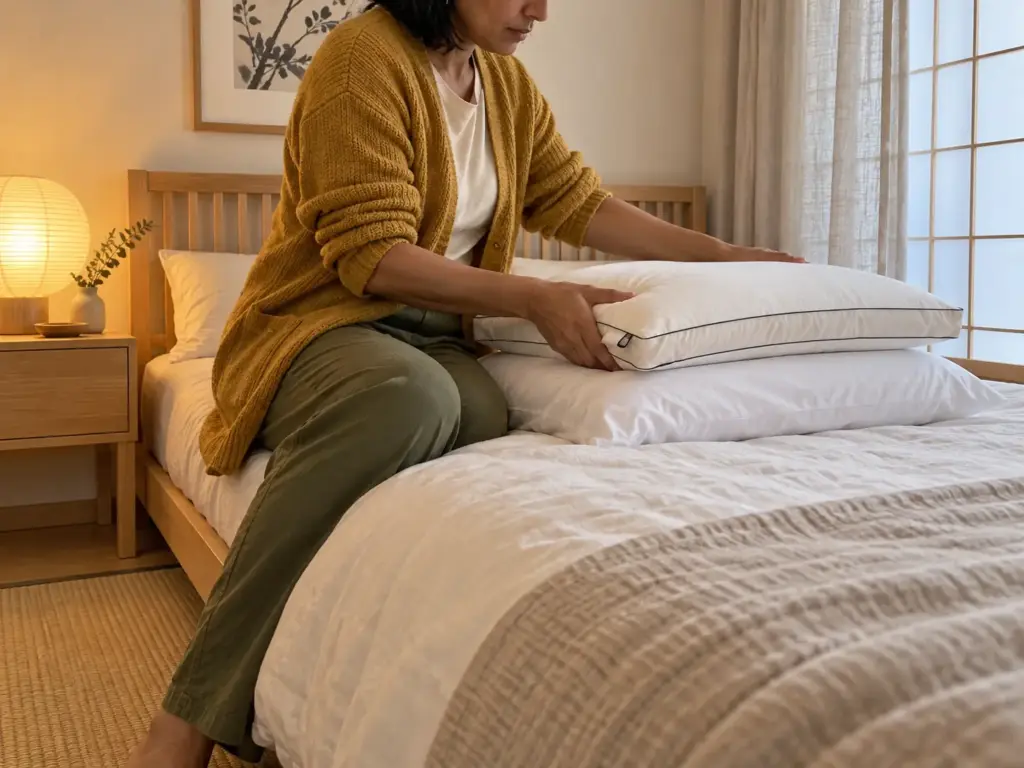
Work through the fixes in order, cheapest and quickest first, and try each for a couple of nights before moving on. Pay attention to which position complains first after the change; that tells you which way to go next, and anybody who will toss and turn through all three positions anyway needs a setup that survives it.
And before any of it, check under the pillow. In one r/Bedding thread where a poster asked for a pillow that would change everything, two commenters landed on the same question: “Are you sure it is the pillow and not a mattress past its working life?” A mattress that has dipped where your shoulder goes changes the side gap more than any pillow change can, so a sagging bed is worth ruling out first.
Fold, fluff, or take a handful out
A pillow filled with fiber, down alternative or loose shreds holds most of its height as air trapped between the pieces. A head pushes that air out over the night, and the pillow you set for your side at bedtime is lower by morning. Fluffing puts the air back. Mattress Clarity and Sleep Foundation both found that a cycle in the dryer restores loft to flattened fill, which is the free fix for a pillow that has gone flat rather than worn out (check the care label first, because some fills and shells cannot take heat).
One long-time Coop owner in the Amazon reviews fluffs the pillow before bed every night and gives it the dryer or a few hours of sun every couple of months to keep it up.
Folding is the other free lever, and it works in the opposite direction. A soft, flat pillow folded in half adds height under the side of your head, then unfolds for the back. It only works with a fill that moves (fiber, down, shreds), never a solid foam block, and the fold tends to spring open during the night, which is less of a problem than it sounds: by the time it opens you have often rolled to a position that wanted it lower anyway.
If the pillow already has a zipper, fill removal works best a handful at a time. Or rather, fluff it fully first and only then remove fill, because a flattened pillow will make you take out too much. The fill that comes out goes in a bag or a bowl by the bed, not in the trash, since you will want some of it back in a month.
A towel under the edge for side nights
A folded bath towel slid under one half of the pillow, lengthwise, turns one pillow into two heights. The half on the towel is your side height. The half without it is lower, for the back and the stomach.
When you roll onto your side, your head tends to slide toward the taller end; when you roll back, it slides off it. Nothing about this is sold in a box. It is just a pillow with a step built into it (a rolled towel along the edge does the same job), and a towel is easy to re-fold to the right thickness one layer at a time.
To size the towel, a commenter in an r/Bedding thread uses a height that is “roughly the distance between my ear and shoulder.” That is a reasonable first measurement, with one adjustment the tape measure misses. The number depends on the mattress: on a soft bed the shoulder sinks, and the gap you need is shorter than the ear-to-shoulder distance suggests, sometimes by a full towel fold. Start a fold below the tape-measure number on a soft mattress and add one if you wake with your head tipped down toward it.
Count the folds of the towel, not the inches. A bath towel folded in four and one folded in six are two different settings you can repeat exactly, and when you find the right one you can write down the number and later match it with a pillow you buy.
A flat second pillow you can push away
Two pillows stacked can make the side height, and when you roll onto your back or your stomach, the top one gets pushed off. That is the whole mechanism. A Talalay latex owner in r/Bedding puts the same idea the other way up: if you need more height, “you could always put a cheap pillow underneath.” Either way, the flat pillow is the part of the setup you can get rid of half asleep, without unzipping or folding anything.
By morning, that flat pillow is often on the floor. That is the feature, not the failure: it is the layer that leaves when the side night ends.
If you do not own a flat pillow to spare, the Canadian Down & Feather Co. Soft Support Microfiber Down Alternative Pillow is a low-cost one that prints what it is: microfiber down-alternative fill in a 260-thread-count, 100 percent cotton shell, sold as a flat style. The thickness is the thing to check when it arrives. One reviewer measured about 8 inches against the 2 the listing describes, and with only 24 ratings on the listing, there is no telling yet whether that was one odd pillow or a pattern.
A cheaper route, for two sleepers or for one spare, is the Amazon Basics Down Alternative Pillows for Stomach and Back Sleepers, a set of two polyester-fiber pillows sold for the low positions. The review summary on the listing is mixed in a way that matters here: “not soft, don’t fluff up, too thick for stomach sleeping.” As the top layer of a stack you push away, that thickness is useful. As the only pillow for your stomach nights, it is too much.
When the free fixes stop working (the fluffed pillow is flat again by midnight, the fold no longer springs back), the fill has usually reached the end of what it can do, and the fold test by fill tells you whether it is time to replace it.
The Adjustable Pillow, Month One to Month Three
An adjustable pillow earns its place on this page for one reason: it is the only kind with adjustable loft: its height can be moved between the three positions without a second pillow or a towel. The fill sits loose inside an inner zippered pouch, and you take some out or put some back.

The same adjustability is also why owners end up punching their pillows in the dark. The 3-star reviews of these pillows read like a night shift: unzip, take out a handful, zip, lie down, try again, until somewhere around the third night the height settles. And then the fill starts moving on its own. What follows is what the first month and the third actually look like, with the two adjustable pillows that show each stage most clearly.
The first month is the learning curve
An adjustable pillow arrives packed with more fill than most people want, usually set for the tallest sleeper the maker can imagine. Consumer Reports says it can take about a month to know what an adjustable pillow needs: “You may not get a full sense of what you need until you’ve slept on the pillow for about a month.” Its advice is to adjust every few days rather than every night, and to keep the removed fill in a bag instead of throwing it out.
The reviews agree on the slow start. One Layla owner needed “about 3 nights of adjusting” and warns others not to give up too soon. The original poster of one r/Bedding thread found the Coop “very comfy, but loft too high – needed to remove some stuffing.” Too tall out of the box is the normal first complaint, not a defect.
Two other costs show up in the first week. The first is smell, the off-gassing of new foam: Coop and Layla reviews both mention a chemical smell on arrival that fades, and one Coop reviewer left the pillow out for a week before sleeping on it. “Give it 24 hours” is the community’s own minimum, both for the smell and for the compressed fill to expand out of the box.
The second cost is heat. One Coop reviewer describes the foam as staying “the same exact temperature as your face” and flips the pillow about four times a night. The mechanism is the foam itself: viscoelastic foam softens as it warms, molds closely to the cheek, and under the weight of a head the shreds pack tightly enough that very little air moves between them.
For a combination sleeper there is one rule that matters more than any other in this month. Judge the pillow in the position you were just woken in, not the one you set it in. If you set it on your side and wake on your back with your chin pushed forward, the pillow has told you something about the back, and that is the information you need. Keep the removed fill in a bowl or a bag by the bed, so the change can be made before you are fully awake.
Take fill out one handful at a time and sleep on each setting for two or three nights before the next change. Count the handfuls on a note inside the bag of removed fill. When the pillow flattens later, you will know exactly how much to put back instead of starting over.
The Coop Home Goods Original Adjustable Pillow is the adjustable most people meet first, and for a combination sleeper it has one advantage over its rivals: a bag of extra fill comes in the box, so the add-it-back step of month three is already paid for. The fill is printed on the listing: 76 percent visco polyurethane foam and 24 percent polyester gel fiber, cut into shreds, in a queen size of 20 x 30 inches with a removable, machine-washable cover. Its weaknesses are the ones the first week brings out: the smell on arrival (odor is one of the most mentioned topics in its reviews, with thousands of mentions), foam that some owners say holds the heat of the face, and a 3-star review from July 2026 saying the current fill is lighter than the early version, closer to cubes than to shreds.

Where the fill goes by month three
Loose fill does not stay where you put it. A head presses down in the middle, the pieces are pushed outward, and each roll sends them a little further toward the ends and the corners. The middle thins, the edges rise, and the height you set in week two is no longer the height under your head. That slow drift is fill migration, and it is the main reason adjustable pillows lose their height.
How fast that happens depends on the fill. Mattress Clarity’s teardown of one shredded-foam pillow found it had “noticeably flattened out” after only three nights, with an indent where the head had been and the filling moved far enough to leave a gap. A quarter of an hour in the dryer brought the loft back, though drying took nearly two hours.
That was a worst case at night three. The more common pattern runs over months, and the reviews give it a vocabulary.
“Pancake” is the word for a pillow flattened under the head. A 1-star Layla reviewer writes, “Within ten minutes, it’s a pancake again,” and describes waking several times a night to “punch and shake the pillow back into shape.” A 4-star Layla owner flips the pillow every night because “the pieces of foam do shift” toward the top of their head.
Amazon’s summary of the Layla reviews says it does not keep its shape after six months and becomes very flat. On the Coop side, one owner in an r/Bedding thread says, “I’ve stuffed like 2 bags or more of extra fill and they still go flat.”
Not everyone ends there. A Layla owner in another thread took fill out until the height was right, and when the pillow began to flatten months later, added the spare filling back: “Good as new.” The difference between those two outcomes is mostly whether the removed fill was kept. A pillow that has lost height to compaction can be topped up; a pillow whose spare fill went in the trash cannot.
There is a judgment call in all this. The fill drifting is not always a defect. For a combination sleeper, a pillow that slowly thins in the middle and stays higher at the edges is, by accident, close to a shape that suits both back and side. The trouble is that it does not stay put: it keeps drifting past that point until the middle is too thin for anything.
The Layla Sleep Adjustable Fill Kapok Pillow shows the drift most clearly. Its fill is shredded memory foam mixed with kapok, a light plant fiber, which makes the pile easier to move around than an all-foam fill, and the cover is removable and washable. It carries 3.9 stars on 1,082 ratings, lower than the Coop. The reasons are in the reviews already quoted: flat by six months in the summary, the nightly flip, and one 2023 buyer who received a unit with about half the fill of an earlier one.
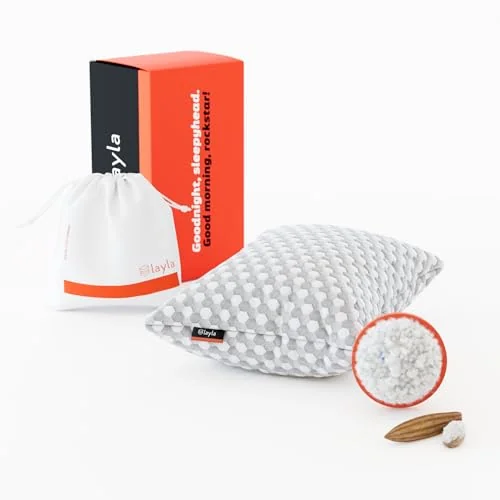
Keeping either pillow fresh through those months is a matter of separating the cover from the fill. The covers come off and go in the machine; the loose shreds you can only spot clean, because they clump when wet and take hours to dry, and what is inside decides how it is cleaned.
“Works for all positions,” taken apart
Both pillows above make the same promise. Layla’s listing says its pillow will “bend to the will of all – Side, back, stomach, and combo sleepers,” and Coop’s calls the Original “great for side, back, and stomach sleepers.” There is no test behind that phrase and no standard that a pillow has to meet to print it. It is in the same family as “cooling” on a sheet: a word on a box, not a measurement.
What the phrase actually describes is the zipper. In both cases the claim rests on the fill being removable, so the pillow can be made right for any one position by somebody willing to adjust it.
Sleep Foundation’s testers, adjusting these same two pillows, still set a different amount of fill for each position. On another adjustable pillow, members of the same team could not agree on which loft setting was most comfortable at all. “All positions” means the fill can be moved, and you are the one who moves it.
That matters because a combination sleeper is in all three positions on the same night, not on different nights. An adjustable pillow can be set for one of them at a time. Unless you are willing to unzip it in the dark, it spends the night at whatever height you chose at bedtime, which puts you back in the averaged pillow of the first section.
So the obvious pick stops being obvious for one kind of sleeper. If you know you will set the pillow once and never open it again, a pillow set for the side and a flat second one to push away does the same job with less fuss, and the adjustable pillow’s main advantage goes unused. One r/Bedding poster put the label problem better than any box: “there is no ‘best’ pillow that works for all side sleepers.” For three positions at once, that is truer still.
The Shape Matters When You Roll
A pillow can be the right height and the wrong shape for a sleeper who turns. Height is a single number at a single spot under the head; shape decides what that number becomes the moment your head leaves that spot.

At the moment of a roll, your head leaves one part of the pillow and lands on another, often one that was built for a different position. A flat rectangle is the same height everywhere, so the roll changes what you need and nothing about what you get. Other outlines try to put a different height under each position, and each one does something different when the fill inside starts to move.
Flat rectangle, crescent, cut-out
Consumer Reports, writing about combination sleepers, names shape rather than fill as the answer to rolling. Its suggestion is a pillow with softer and firmer sections, or one that is lower in the middle for lying on your back and higher at the sides for lying on your side, and it lists buckwheat and multi-material pillows as fits.
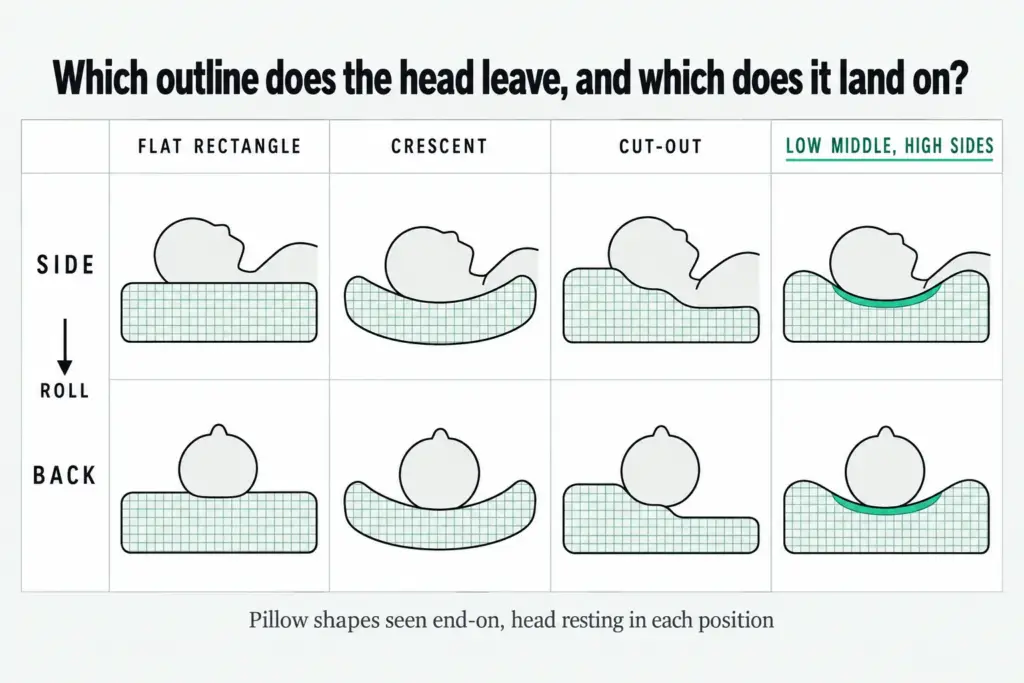
The flat rectangle is the default and the one most people own. Its virtue is that it does not care which way you face, and its limit is the same: one height, everywhere.
Coop sells its pillow in three outlines, according to the comparison table on its Amazon listing: rectangular, a crescent pillow of 18 x 28 inches, and a cut-out. The crescent and the cut-out are aimed at side sleepers who also rotate to their backs. A crescent curves around the shoulder on the side night, so the tall part sits where the gap is, and the cut-out leaves a notch so the shoulder can tuck in under the pillow’s edge.
Both of those shapes depend on the fill staying in its outline, and that is where they get into trouble. An r/Bedding commenter who bought a crescent side-sleeper pillow from another brand says the filling “tends to migrate away from the middle with that shape,” leaving the head “in a taco shell” that cannot be fluffed back blind in the dark. Another r/Bedding poster found the Coop crescent “compresses after a few hours” and “is also hot,” and woke to change position a lot because of it. A shaped pillow with loose fill is a shape on the first night and a suggestion by the second month.
Buckwheat hull is the fill people bring up when they want a shape that stays. Commenters in two r/Bedding threads say the filling “stays exactly where you put it,” and that you can flatten part of it for the back and leave the rest high for the side. The price is a week or so of getting used to a pillow that feels like a bag of grain, and it rustles every time you move, which matters more to a combination sleeper than to anyone else.
Lower in the middle, higher at the sides
The 2021 review describes two pillow designs from the studies it covered that were lower in the middle for the back and higher at the sides for the side: a U shape seen from the front. It makes no claim about what they did for anyone, and neither does this page. But the geometry is worth copying, because it matches the movement exactly. On your back your head sits in the center; when you roll to your side it lands toward one end.
You can build a rough version of this at home with any pillow whose fill moves. At bedtime, push the fill out toward both short ends with the side of your hand and press a shallow dip into the middle. The center becomes the back setting and the ends become the side setting. Whether the dip survives the night depends on the fill: shredded latex tends to hold it, shredded memory foam slowly drifts back, and fiber flattens everywhere at once.
The shape also tells you how the pillow will wear. The corner you roll toward is the corner that loses its fill first, because that is where the side of your head lands with the most weight and pushes the pieces away. A combination sleeper who always turns to the same side will find one end of the pillow thinner than the other within weeks.
Turn the pillow end over end every week, so the corner you roll toward changes. On a shredded pillow it spreads the drift across both ends instead of hollowing out one, and it shows you which end had thinned, which tells you which way you actually turn at night.
The cover is part of the pillow
Whatever the fill does, the cover is the layer your cheek touches, and a combination sleeper presses a different part of it into the face with each position. A cover can change the night in two ways that have nothing to do with height.
The first is grip. Owners of one knit-covered solid-foam pillow say the cover is so slippery that “no pillow case will remain in place.” On a pillow you roll across many times a night, a case that slides off the cover bunches under the head, and the roll that should have been smooth becomes a tug. A cover with some texture, or a case that fits snugly, keeps the two layers moving together.
The second is heat. A pillow sits under the side of your face for hours, and on the side night it is pressed against the cheek with the most weight. If the fill underneath packs tightly, like shredded memory foam under a head, and the cover is a dense polyester knit, there is very little airflow for warm, damp air to move away from the skin. A hot sleeper notices it first.
The case you put over it matters as much: a cotton percale case adds breathability by letting moisture pass through it, while a tight synthetic adds one more layer that holds it. And one warm layer at the face can cancel what the rest of the bed is doing, because one layer that holds heat can undo the rest of the bed.
A pillow protector between the pillow and the case keeps the cover cleaner between washes, which matters on pillows whose fill cannot go in the machine. It is one more layer at the cheek, though, so a thin cotton protector is the better match for a pillow that already runs warm.
Fill by Fill for Somebody Who Keeps Moving
Once the height is reachable and the outline is chosen, the material decides the rest. Each fill moves differently when you roll, ages differently, and complains differently by month three.

Consumer Reports names latex as the fill that holds its shape longest. It also puts the life of most pillows at about two years and gives the signal for replacing one: fold it in half, and if it does not spring back open, it is done. The method behind its numbers is worth knowing, because it tests what a pillow does after it has been slept on, not how it feels in the store. For its loft-retention test, Consumer Reports leaves an evenly spread 225-pound weight on each pillow for 96 hours at 98.6°F and 80 percent humidity, which is body heat plus sweat, compressed into four days.
The table sets the five fills side by side for somebody who rolls, from what each one does at the moment of a turn to the complaint its reviews repeat.
| Fill | What it does when you roll | How it ages | The cover and heat | The flaw the reviews repeat |
|---|---|---|---|---|
| Shredded memory foam | Moves where you push it, slowly; drifts to the ends | Thins in the middle; spare fill tops it up | Foam warms to the cheek and packs tight | Smell on arrival; runs warm |
| Shredded foam with kapok | Lighter pile, easy to reshape; drifts toward the top | Very flat by six months, per the review summary | Removable, washable cover | Flipped nightly; flattens |
| Shredded latex | Pieces push back and hold their place | Keeps its shape longest of the loose fills | Open-cell pieces leave room for air | Lumpy; latex smell for weeks |
| Down alternative | Compresses under the head, recovers slowly | Flattens; needs fluffing or the dryer | Cotton shell lets moisture through | Thickness not as listed |
| Solid foam block | Does not move; height fixed | Holds its form, but low under some heads | Slick knit cover; cases slide off | Cannot be adjusted at all |
Shredded memory foam and kapok: easy to move, slow to hold
Shredded memory foam is the default fill of adjustable pillows for a reason: chopped into pieces, a foam that would be rigid as a block becomes something moldable that you can push around with a hand. An r/Bedding commenter, answering a poster who sleeps “in all positions throughout the night, mostly on my side/stomach but occasionally on my back,” made the distinction plainly: memory foam “isn’t as malleable as particulate fill like feather, down, or even chopped foam.” Chopping is what makes it adjustable at all.
The same property works against it by month three. Viscoelastic foam is slow by design: it gives way under heat and pressure and recovers over seconds rather than instantly. Under a head the shreds settle into the shape of that head and stay there, and when you roll, the dent you leave does not refill on its own. Each roll moves some pieces outward and nothing moves them back, which is why owners of the Coop fluff, punch and flip.
Mixing in kapok lightens the pile. Kapok is a soft plant fiber, much lighter than foam, and a pillow that blends the two moves more easily under the hand and feels less dense under the cheek. The cost is that a lighter pile also moves more easily on its own, which is what the Layla owners who flip their pillows every night are describing. Easy to reshape and easy to lose shape are the same quality seen from two ends of the month.
Shredded latex: the one that keeps its shape longest
Latex is elastic in a way memory foam is not. Press a piece and it pushes straight back; let go and it is already back to its size, the springback that memory foam lacks. Shredded, that means the pieces hold their place against each other instead of settling into a mold, so a dip pressed into the middle of the pillow, or a high end set for your side, is still roughly there in the morning. That is the shape retention Consumer Reports points to when it names latex as the longest-lasting fill.
The cost is paid at the start, and the reviews are specific about it. One 3-star reviewer describes “foam pieces of many irregular sizes” that make the pillow “somewhat lumpy,” and says there is “no latex bounce back,” which is a fair warning: loose latex shreds do not give the springy, even feel of a solid latex pillow.
A 1-star reviewer still smelled latex after three weeks. It is lumpy before it is even, and it smells before it is neutral, and both improve with use rather than worsen. For somebody who rolls, that order is the right way round: the problems are front-loaded, and the shape is what lasts.
The Natural Latex Shredded Foam Pillow comes as a king set of two, filled with shredded natural latex in an open-cell form, inside a removable cover. Open-cell matters for the cheek: the pieces have gaps between them and through them, so more air can move than in a packed pile of viscoelastic shreds. The set of two is also the point for anyone sharing a bed, which the next section picks up.
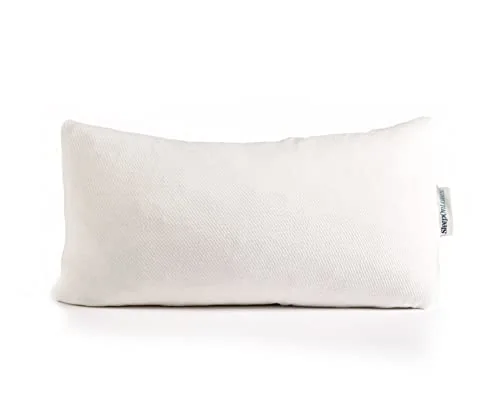
Solid foam and down alternative: why a block fails in two of three positions
A one-piece block of solid foam has its height fixed at whatever it left the factory with. You cannot open it, cannot take anything out, and cannot add anything in. For a sleeper who stays in one position, that can be exactly right, since a block that fits never drifts. For somebody who passes through three positions a night, it is right in at most one of them.
The Tempur-Pedic TEMPUR-Cloud Pillow shows the trade clearly. It is one piece of Tempur material, listed at 5 inches, in a removable 100 percent polyester knit cover. Under a head it settles lower than its listed loft. Reviewers say it “goes extremely flat,” one advises using it “on a medium firm mattress,” and the slick cover is the one whose owners say no pillowcase will stay on it.
Settled low and even, it can suit the back. On the side night that same height is short, and on the stomach night it is still more than the position wants. Wrong in two of three, as the block always is for this sleeper.
Down alternative fails the other way. Polyester fiberfill compresses under a head and recovers slowly, so it loses height through the night and has to be fluffed back every morning, which is why it works better as the flat second pillow you push away than as the only pillow on the bed.
That leaves an order of preference, and it is short. Shredded latex if you want the shape you set to stay. Shredded foam, with or without kapok, if you want the easiest pile to reshape and are willing to keep the spare fill. A block only if you are mostly in one position after all.
Whatever you pick, buy it with a sleep trial or an easy return policy, since a month is how long an adjustable pillow takes to judge.
Two People in One Bed, and When It Isn’t the Pillow
Everything so far has assumed one head on one pillow. The last case is the shared bed, where one sleeper rolls through all three positions and the other lies still on their back all night, plus the one question that is not about pillows at all.

In that bed, a single pillow height is wrong for both people, in opposite directions. The partner who stays on their back finds a pillow set for a side sleeper too tall. The one who rolls finds the still partner’s pillow too flat for their side nights. A height halfway between them is the averaged pillow again, now failing two people instead of two positions.
The sleeper who rolls beside the one who doesn’t
The two pillows in that bed age on different schedules, and not in the direction most people would guess. The rolling sleeper’s pillow gets punched, folded, fluffed and reshaped several times a night, because that sleeper is constantly asking it for a new height. The still partner’s pillow is never touched between bedtime and morning. By month three the still partner’s pillow is usually the flatter of the two, compacted into one dent that never got shaken out.
So the partner who thinks they do not need to adjust anything is often the one whose pillow has drifted furthest from where it started. If you share a bed, fluff both pillows when you make it, not just the one that obviously gets moved. A pillow is only one of several things in the bed wearing out at its own pace, and the whole set ages on four clocks.
One each, not a compromise
The structure that works is one pillow each, set for each sleeper, rather than a matched pair at the same height. For the rolling sleeper, that means a pillow set for the side night with a way to go lower; for the still back sleeper, a pillow set for the back and left alone. This is where the latex set of two from the fill section earns its packaging: two adjustable pillows of the same fill, each set to a different height by the person sleeping on it.
The reviews show couples arriving at the same answer from different directions. One Layla buyer wrote “buy 2 or don’t let your spouse try it,” adding that the second pillow was bought “so she stops stealing mine.” A Coop reviewer bought the crescent for herself and the Original rectangle for her husband: same brand, different shapes, one bed. Neither of them tried to find a single pillow that suited both.
If both pillows feel wrong in every position, for both of you, look under them before buying a third. The mattress counts in the gap, and a bed past its working life changes every height on top of it.
Put two different pillowcases on two pillows that look the same. Once each one has been set for its sleeper, a swap after laundry day undoes weeks of adjusting, and the only way to tell two identical shredded pillows apart is to lie on them.
When it stops being a pillow question
Pain in every position, pain that moves down an arm, or numbness, weakness or tingling is a clinician’s question, not a pillow’s: Harvard Health lists pain that travels down one arm among the reasons to call a clinician. Everything else on this page (the height, the fill, the shape, the second pillow) is the bed’s job, and that part you can change tonight.
Set the Side Night First, Then Make the Other Two Reachable
Three positions, one pillow, and one order of work that settles most of it:
- The side night sets the height ceiling and the stomach night the floor. Buy or set for the side, and reach the back and the stomach by taking height away.
- Try the free reshapes before paying for adjustability. Fluff, fold, a towel under one half, or a flat second pillow you push off when you roll.
- Judge the fill at month three, not night one. Keep every handful you remove, because a shredded pillow that has drifted can be topped up and one whose spare fill was thrown out cannot.
Months from now, fold the pillow in half and watch whether it springs back, then lay it flat and notice which end has thinned: the fill will have drifted away from the side you roll toward, and that is the end to rebuild or the sign it is time for the loft for each position on its own to be measured again from scratch.
Tonight, set the pillow you already own for your side, put a flat second pillow within reach, and go to sleep. In the morning, notice which of the other two positions you woke in, and whether that one complained or whether the flat pillow had already been pushed off without your remembering it.
Frequently Asked Questions
01What type of pillow is best for combination sleepers?
One whose height you can change, because the side, back and stomach positions each need a different height and no fixed pillow covers all three. For fill, shredded latex holds a shape longest. For shape, a pillow lower in the middle and higher at the ends follows the roll.
02What is the best pillow for both back and side sleepers?
A pillow tall enough for your side that can be pressed or reshaped lower in the middle for your back, such as an adjustable shredded pillow. Set it for the side first. The back height is measured in the back-sleeper guide.
03How much fill should I take out of an adjustable pillow?
Take out one handful at a time, sleeping two or three nights on each setting, and stop when the position you spend most of the night in feels right. Keep the removed fill in a bag. Consumer Reports says it can take about a month to know.
04Can two people share one adjustable pillow?
Not well, because a height set for a side sleeper is too tall for a partner who sleeps on their back, and a compromise is wrong for both. Use one pillow each, set separately; a set of two makes that simple.
05Why does my adjustable pillow go flat again?
The loose fill gets pushed toward the ends by your head and compacts over the months, so the middle thins. Fluff it, use the dryer if the label allows, and add back the fill you removed. If it no longer springs open when folded in half, replace it.




Tried it on your own bed?
No comments yet. Tell us what you changed, and what the sheet did after a few washes.