






What’s in here8 sections
- Bamboo Is a Fiber, Percale Is a Weave
- What the Weave Does: Percale’s Gaps Against Bamboo’s Float
- What “Bamboo” on the Label Actually Means
- Dry Hot or Waking Up Damp: Two Different Problems
- Wash Twenty: Which One Is Still Good Next Summer
- Two People, One Bed, Two Answers
- The Short Version
- Frequently Asked Questions
Somebody on r/Bedding put it about as honestly as it gets: “Cotton percale all the way. I have two sets from Brooklinen and two from DOZ bought on Amazon. Still can’t figure out which I like better.” Four sets in and still undecided, and that is a reader comparing two things that at least belong to the same category.
The bamboo vs percale question is harder than that, and not because the answer is subtle. It is because the two words do not describe the same kind of thing.
Bamboo names what the thread is made of; percale names how the threads cross. One thread over, one thread under, and that grid is why percale moves air, and it has nothing to do with what plant the thread came from. Below: what each word actually names, which fabric suits which kind of hot sleeper, and what both look like after a season of washes.
Quick Answer
Bamboo is a fiber and percale is a weave, so they are not two options on one axis. Nearly all bamboo bedding is woven sateen, which makes the real comparison bamboo-sateen against cotton-percale. Percale wins for most hot sleepers, because the weave decides airflow.
Bamboo Is a Fiber, Percale Is a Weave
Every piece of cloth answers two separate questions, and a sheet package almost always prints only one of them. The first question is what the thread is made of: cotton, flax, silk, polyester, or a cellulose fiber regenerated from wood or bamboo pulp. The second is how those threads cross each other on the loom: percale, sateen, twill, jersey.
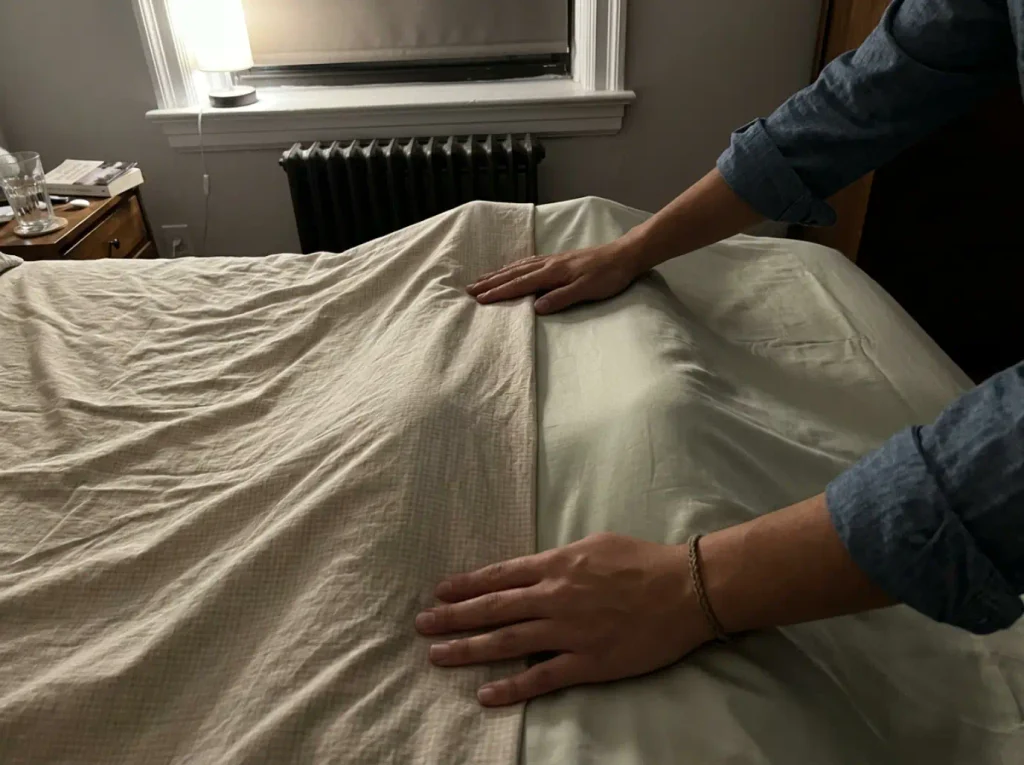
Bamboo answers the first question. Percale answers the second.
Comparing them is like being asked to choose between wool and knitted.
Both packages are hiding the other half. The bamboo bag tells you the plant and stays quiet about the weave. The percale bag tells you the weave and often stays quiet about the staple length of the cotton, which is the thing that decides how long it lasts. Neither is lying.
Each is answering a different question and letting you assume it answered yours.
So take the weave half first, since it is the half with a mechanism you can see. Percale is the plain weave: one thread over one thread under, all the way across, a balanced checkerboard. Sateen floats one thread over three or four before it dips back under. That float is the entire reason a sateen has a sheen and a percale has a matte face.
Light hits an unbroken run of thread and reflects; light hits a checkerboard and scatters.
Here is the hinge the whole article turns on. Nearly all bamboo bedding on the market is woven sateen-style, because the smooth, slippery character that gets marketed as “bamboo’s feel” is mostly the sateen float doing the work, sitting on top of an already smooth regenerated filament. Which means that when you put bamboo against percale, you are almost never comparing a fiber to a weave in practice. You are comparing bamboo-sateen to cotton-percale, and that is a fight about airflow.
If you want it laid out at full length, percale and sateen laid out side by side is where that argument lives.
And once you see it in this pair, you see it everywhere: the same thing happens when you put bamboo against cotton, where the fiber names on the two bags distract from the fact that one is nearly always sateen and the other is usually percale. The weave outranks the fiber more often than the packaging would suggest.
This is also why the two sets feel like opposites the moment you touch them in the store. One is smooth and cold and slides under your hand. One is crisp and dry and catches slightly. That difference your hand registers is almost entirely the weave.
Swap the fibers and keep the weaves and your hand would tell you roughly the same story.
Which is worth saying plainly, because the texture reaction is real and it is not a mistake. One bamboo sleeper on Reddit described being given a percale set and finding it “like sleeping on hot scratchy burlap.” That is a sincere reaction from somebody whose skin is calibrated to a float-heavy surface, and being told they are wrong about it helps nobody. It is a texture verdict, not an airflow verdict. Those come apart, and the rest of this article is largely about how.
There is one fast way to tell the two apart with the set already on the bed and the packaging long gone. Wash both and look at the creases. A percale comes out of the first wash still holding its fold lines, because a plain weave has nowhere to hide a crease: every crossing is locked.
A bamboo sateen comes out smooth, because the floats slide over one another and let the fold work its way out. Wrinkle resistance is not a virtue anybody wove into the percale; it is simply the price of a locked grid. If your sheets remember the shape of the bag, they are percale.
Pull the sheet taut on the mattress, switch off the overhead light and rake a bedside lamp across it almost edge-on. A percale breaks into thousands of tiny shadows and you can see the grid with your eyes. On a bamboo sateen the light slides across an unbroken surface. That is the whole mechanism, visible on your own bed in ten seconds, no tag required.
Here is that same comparison in one block, laid out by how these fabrics are actually sold rather than by what the front of the bag says.
| What the bag says | Weave underneath | Airflow | Moisture | At wash twenty |
|---|---|---|---|---|
| Cotton percale | One over, one under | Air moves through the grid | Dries fast, holds little | Softens, rarely pills |
| Bamboo viscose | Almost always sateen | Closed surface, heat sits | Absorbs well, releases slowly | Pills on the slept-on side |
| Bamboo lyocell | Also sateen | Same closed float | Absorbs well, wicking tested | Holds up better than viscose |
| Cotton sateen | Four over, one under | Warmest of the four | Middling | Sheen goes patchy where you lie |
What the Weave Does: Percale’s Gaps Against Bamboo’s Float
A balanced one-over-one grid crosses more often than any other weave, and every crossing is a small interruption in the surface. Those interruptions leave a fabric full of many small air pockets that connect to each other, which is another way of saying air can get through it. Sateen’s long floats lie over one another and close the surface, so the pockets get fewer, bigger and sealed.
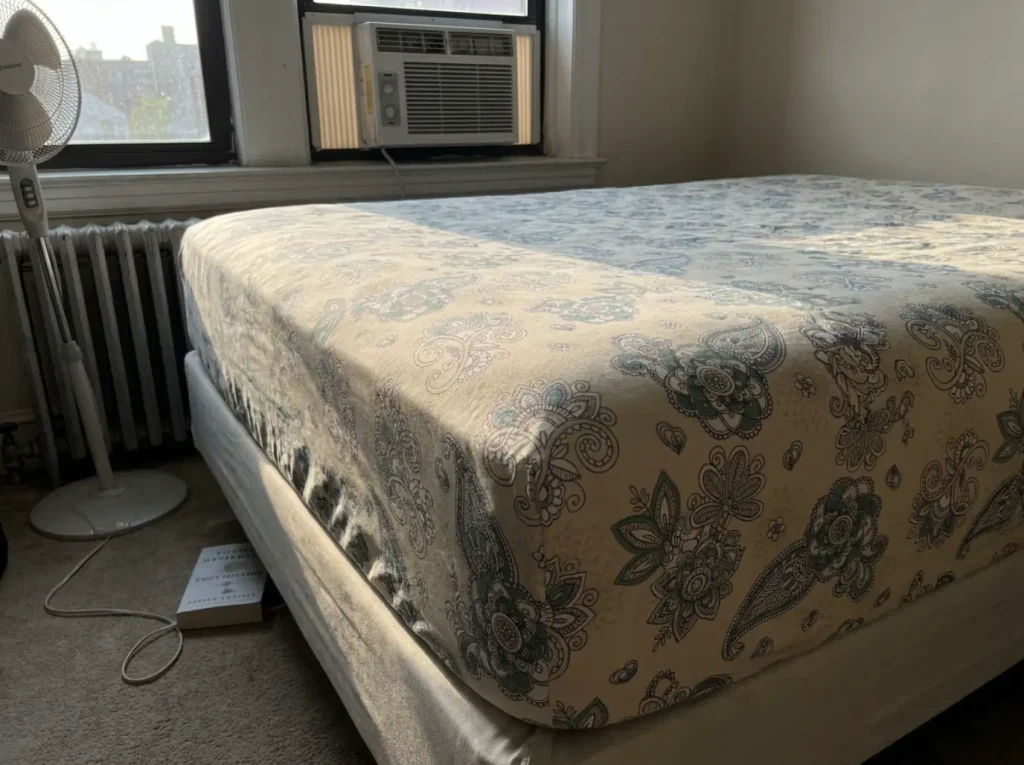
That is breathability with a mechanism behind it rather than a word on a bag. More crossings, more gaps, more air movement. That is the whole of it.
Which sets up the trap the store puts you in, because the hand test and the night test give opposite answers. Sateen’s smooth, dense face makes broad contact with your skin, and thermal conductivity does the rest: it pulls heat away fast at the moment you touch it. It genuinely feels colder in the shop.
Then that same closed surface has nowhere to send the warm, wet air you have been making for two hours, and it holds it against you. Hand feel and week one softness are being sold to you as though they predicted the night, and they do not. Percale feels drier and less dramatic in the first second and is still moving air at three in the morning.
Cool to the touch and cool to sleep in are two different properties, and the fabric that wins the first commonly loses the second. Almost everything sold on a shelf is optimized for the first, because the first is the one you can test standing up.
Thread count will not rescue you here either, because the number does not carry across weaves. Percale usually runs somewhere from 180 to 400, and by convention a fabric needs around 180 before it can be called percale at all. Sateen is usually sold at 300 to 600.
A 500-count sateen next to a 300-count percale is not a cooler sheet with a bigger number; it is a different weave sitting in its own normal range. Comparing the two numbers is comparing shoe sizes to hat sizes, and why the thread-count number stops meaning anything across two weaves goes further into how the count gets inflated in the first place.
Before any of this becomes a purchase, do the free version. Take the top sheet off and sleep under the flat sheet alone for a week. Then move the fan so it crosses the bed rather than pointing at your face, which changes the air over the whole mattress instead of one patch of skin.
The community treats these as one fix rather than either/or: one r/Bedding commenter reported “We switched to Brooklinen [percale]. We also put two Dyson fans in the room and got the circulation going,” and the fans are doing at least as much work in that sentence as the sheets are.
Free first. Fabric second.
If the free version gets you partway and you want the weave working with you rather than against you, this is where percale earns the default. The Feather & Stitch 100% Cotton Percale Sheet Set is 100% cotton at 300 threads with a 16-inch pocket, and its one-over-one weave is precisely the mechanism this section just described rather than an adjective printed over it. Its flaw is stated plainly: it will never have the ironed, silky hand of a sateen, and it feels crisp from the first night, which is exactly what a hot sleeper wants and exactly what somebody arriving from bamboo calls scratchy.
That is the airflow half of the story. The other half is what happens to moisture once it has left your skin, and that is a fiber question rather than a weave one. It is also the half where a real test method exists: wicking performance can be tested against AATCC’s own moisture-wicking method, not just claimed on the label, which turns out to matter a great deal for the next two sections.
What “Bamboo” on the Label Actually Means
The bamboo bedding you can buy is almost never bamboo fiber. It is bamboo rayon or viscose, occasionally lyocell: a manufactured fiber made by dissolving bamboo pulp in a chemical bath and rebuilding it as a filament. The plant is the raw material, not the product.
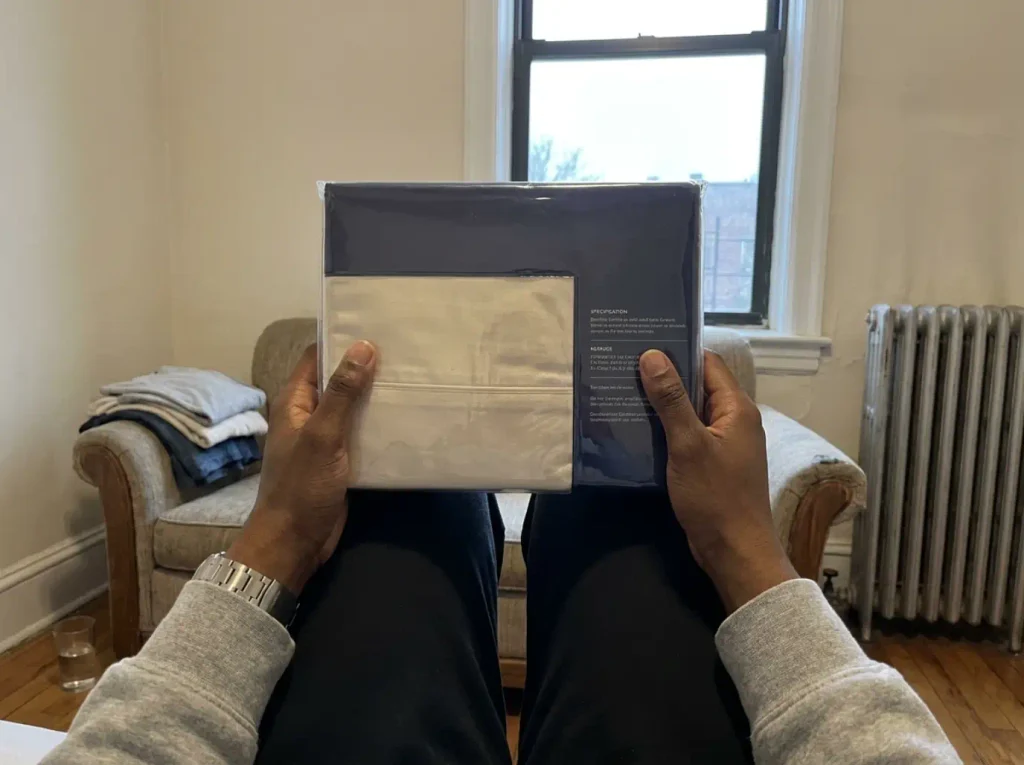
FTC bamboo labeling rules are blunt about this: the honest wording is rayon derived from bamboo, not bamboo. So the tag saying bamboo and the tag saying viscose are both telling the truth, about different stages of the same process, and the shopper reading the front of the bag is not being stupid. The label was written to be read the way they read it.
If you want the chemistry rather than the shopping consequence, what viscose actually is, and whether that matters for what you sleep on takes it apart properly.
This is not a pedantic distinction that only a mill cares about. It is a matter of federal record. In the FTC’s 2022 case against Kohl’s and Walmart over bamboo-labeled rayon, filed on April 8 2022 and settled on May 4 2022, Kohl’s paid $2.5 million and Walmart paid $3 million: $5.5 million between them, the largest civil penalty the agency had sought under that authority. Two of the largest retailers in the country, dozens of products, one word on a tag.
Worth sitting with the size of that for a second. This was not a small seller cutting corners on a listing. It tells you how far into the mainstream the mislabeling had spread before anybody with subpoena power made it stop.
So what does an honest bamboo listing look like? Three things separate a straight one from a vague one.
It names lyocell rather than the woolly phrase “bamboo viscose”. It states the closed-loop manufacturing process, meaning the solvent is recaptured and reused instead of released. And it carries a certification you can go and read, whether that is OEKO-TEX or, on the organic cotton side of the aisle, GOTS certified. That is what a spec looks like when a brand has decided not to hide behind the plant’s name.
There is a set in this category that does all three, which is why it is worth pointing at rather than describing a hypothetical. The ettitude 100% Lyocell from Organic Bamboo Sheet Set states lyocell, states the closed-loop non-toxic solvent process, carries OEKO-TEX Standard 100 Class 1 and gives a 17-inch pocket, and its own documentation cites AATCC 197 as the method behind its wicking claim rather than leaving it as an adjective. Its flaw is structural and worth knowing before you buy: it is a sateen, so it holds more heat than a percale, and those long floats are the first thing on it to pill. Stock on it also runs thin, so if it is sold out, the TOSMO Luxury Cooling Sheet Set is the everyday version of the same fabric family, 100% bamboo viscose, sateen, OEKO-TEX certified, with the honest caveat that it is viscose rather than lyocell, made by a less clean process, and it carries the same sateen heat and the same pilling.
About that certification, because it gets asked to do work it never promised. A OEKO-TEX Standard 100 label, which certifies the fabric was tested for harmful substances, covers every component of the textile: the threads, the dyes, the buttons. It tells you the sheet will not off-gas at you or irritate skin.
It says nothing whatsoever about whether the sheet sleeps cool. Two entirely different claims that happen to share a sticker, and plenty of listings are happy to let the sticker blur them.
Lyocell and viscose separate in the dryer long before they separate in your hand. Both feel more or less the same new. Pull them out after a dozen cycles and the lyocell still has its drape, hanging in soft folds off the edge of the bed, while the cheaper viscose comes out progressively limper and starts draping like a bedsheet-shaped rag. Same word on the front of the bag.
And then the turn back to the thesis, because settling the label question does not settle the night. Suppose every bamboo bag on the shelf were relabeled tomorrow, honestly and in full, with the fiber named and the process disclosed. You would still be buying a sateen.
The weave would still be closing the surface, still holding the heat, still floating the threads that pill first. The label argument is worth winning, and winning it changes less about how you sleep than the weave does.
Dry Hot or Waking Up Damp: Two Different Problems
Two people both say they sleep hot and mean completely different things. One throws the duvet off at midnight, runs warm all night, and their sheets in the morning are dry. The other wakes at four with the sheet stuck to their back.
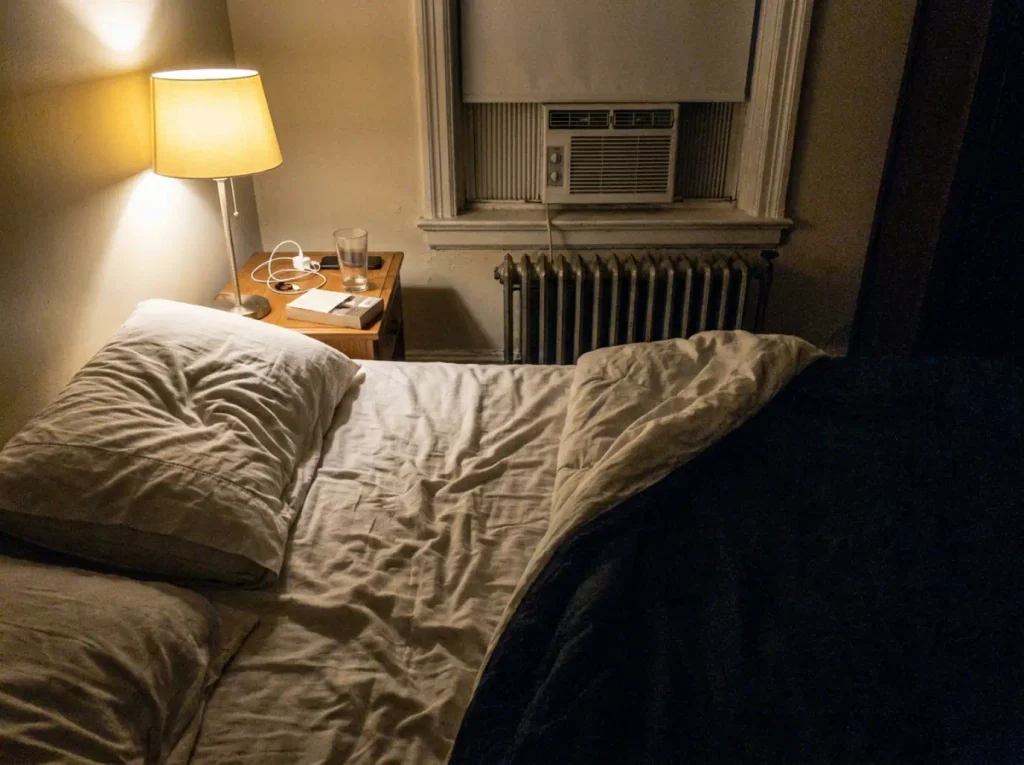
Same words, same shelf, and the same recommendation cannot possibly serve them both. Everything else on this page sits inside the four layers that decide how a bed sleeps, but this split is the one that decides which fabric you should be looking at.
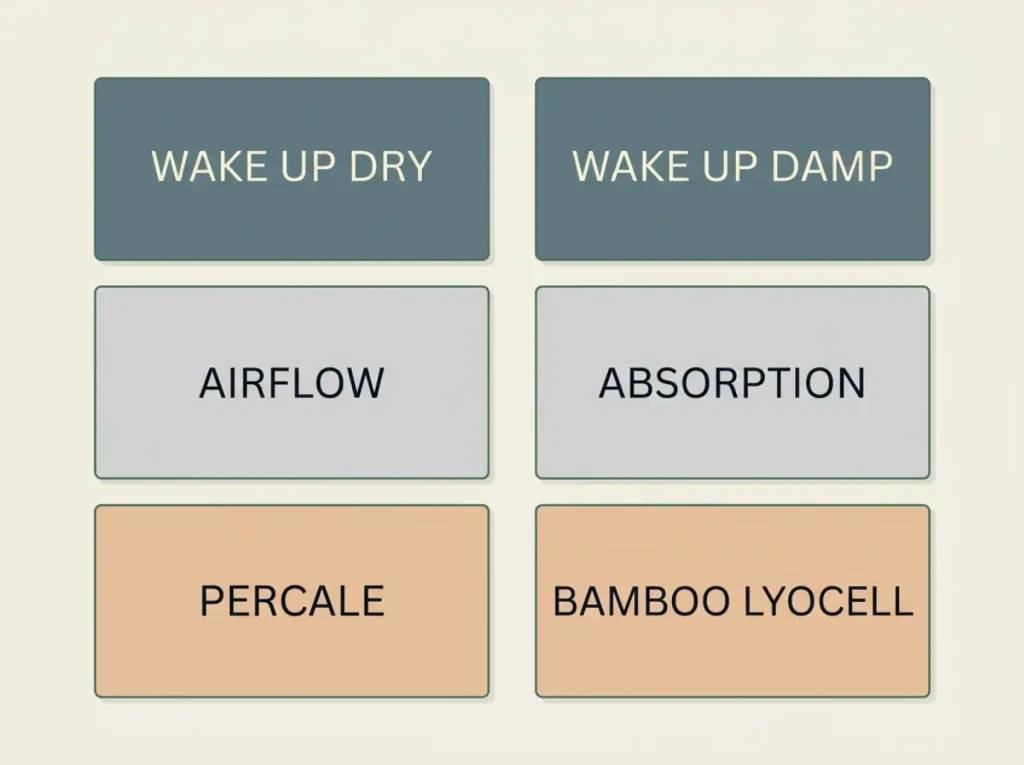
Dry hot is an air problem. You are producing heat and the air holding it has nowhere to go, so it sits in the layer between you and the sheet and slowly turns into a warm envelope. Nothing needs absorbing, because there is not much moisture to absorb. What needs to happen is that the warm air has to leave, which means the fabric over you needs holes in it. Percale’s open grid is not a clever solution to this problem; it is the same thing as the problem’s answer.
For that sleeper, the Brooklinen Percale 4-Pc Sheet Set for Hot Sleepers is the rare case where the box and the weave agree with each other: 100% cotton percale at 270 threads, OEKO-TEX certified, and marketed for hot sleepers by a listing whose fabric actually does the thing the marketing claims. Its flaw is that at 270 it sits lighter in the hand than the Feather & Stitch, which some people read as thin. If you want a percale with more weight and substance to it, that is the one to look at instead.
Waking up damp is a different physics problem wearing the same complaint. Here there is real moisture, and it is sitting against your skin where it cools unevenly and wakes you. Airflow alone does not fix this fast enough, because the water has to be pulled off you first. Bamboo lyocell’s fiber structure absorbs moisture into the filament and releases it slowly, and unlike most claims in this aisle that one has a named method behind it: AATCC 197, vertical wicking, cited on the listing itself rather than implied by a picture of a mountain.
But this is a trade rather than a free win, and any page that sells it as a free win is selling. Choosing bamboo for the damp case means accepting a closed sateen weave that holds more heat overall than the percale you did not buy. You are trading airflow for absorption because absorption is what your particular night needs.
That is a legitimate trade. It is not an upgrade, and by August you may well feel the part you gave up. Linen, incidentally, solves the damp case a third way, by being open enough to do both jobs badly and neither of them warmly.
Which is why the “hot scratchy burlap” reaction and the “cotton percale hands down” reaction can both be completely sincere, from people who are both right. They are two sleepers with two different problems and two correct answers. The comment threads read like an argument because everyone assumes there is one bed being discussed.
So before you buy anything, run the cheap diagnostic, because it costs nothing and it settles the whole question. Sleep a week under the flat sheet alone and pay attention to how you wake. Dry means airflow, which means percale. Damp means moisture, which means the trade is worth considering.
That is the entire decision, and no amount of reading replaces one week of noticing.
Check the pillowcase, not the sheet. If you are the damp case, the pillowcase is the first thing to go cold and clammy, usually around four in the morning, and it stays that way long after the sheet under your back has already dried out. It is the most sensitive instrument on the bed and you already own it.
Wash Twenty: Which One Is Still Good Next Summer
Week one lies. Almost every set of sheets ever sold feels good after the first wash, which is roughly when the reviews get written and exactly why the reviews are so cheerful. The question worth asking is what the set looks like at the end of a summer, and the two fabrics do not fail in the same way.
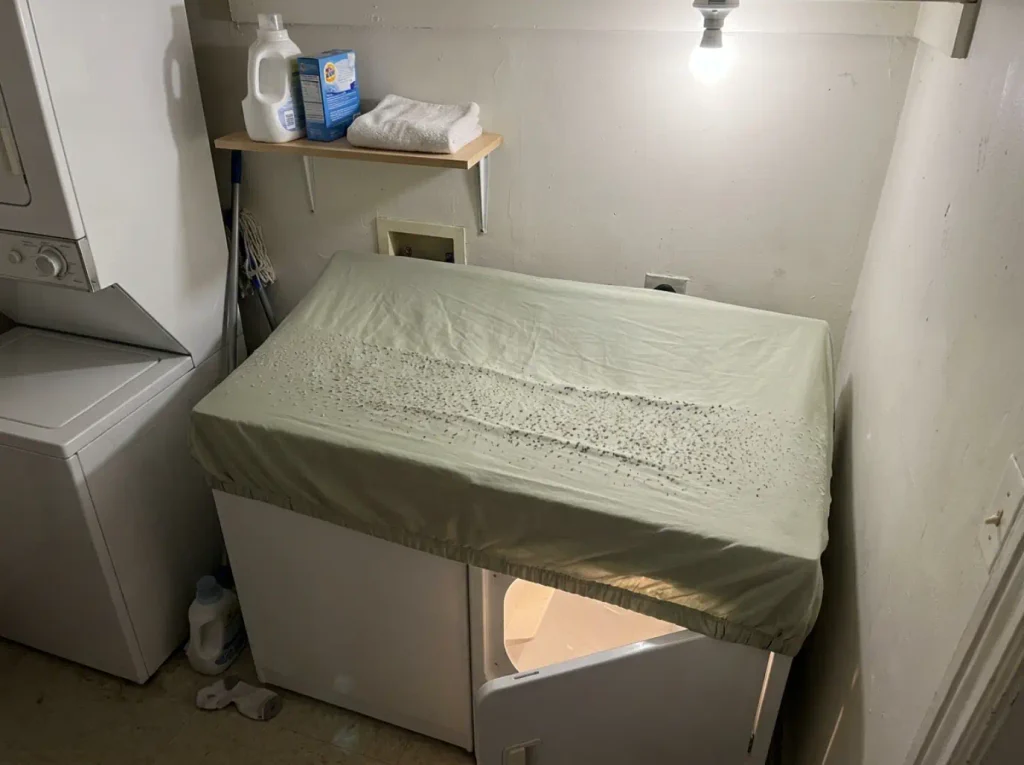
Percale is consistently reported as pilling less than sateen, and the reason is structural rather than a matter of quality. Pilling starts when a thread gets caught, works loose and rubs itself into a ball. Sateen offers long floating threads lying exposed on the surface with nothing crossing over to pin them, which is precisely what a snag needs. Percale locks every thread at every crossing, so there is nothing long enough to catch.
Sateen’s smoothness and sateen’s pilling are the same property, seen at month one and month six. The Feather & Stitch percale stays crisp for the unglamorous reason that it never had the float to lose.
Which means the two things people want most pull in opposite directions. Smoothest in month one and most durable at month twenty-four are not the same set, and most lists sell you the first while implying the second. If you want the version with the numbers in it, whether percale or sateen actually lasts longer is the dedicated version of this argument.
There is a second variable that decides more than the weave does, and virtually no listing prints it: staple length. Long-staple cotton has fewer loose fiber ends per inch of thread, and loose ends are what work their way out and turn a sheet fuzzy and then thin. This is the whole of the difference between a bargain percale woven from ordinary upland cotton and one woven from pima cotton or genuine Egyptian cotton, and it is the reason those names are worth more on a label than any number is. Two percale sets at identical thread counts, one long-staple and one short, will wear completely differently, which is a large part of why the number on the package predicts so little about year two.
The dated community reports land on both sides, and they are worth reading as a set rather than picking the one that agrees with you. On bamboo: “Quince bamboo sheets are surprisingly good for the price—cool, soft, and haven’t pilled after 4 months.” On long-staple cotton, going considerably further: “Boll and Branch… Haven’t pilled or ripped in the 7 years we’ve had them.” And bamboo brand against bamboo brand, which is the comparison the category rarely makes of itself: “I’ve used both Ettitude and Cozy Earth bamboo sheets in 2025—Ettitude holds up better after repeated washes.” Four months, seven years, and one direct head-to-head, all from people who were not being paid.
The usual advice is to pick the brand and trust it to stay the brand. The repeat-purchase complaints suggest otherwise.
How you wash decides a great deal of this, and it is the one variable entirely in your hands. Both fabrics keep their surface longest on a cold wash and a gentle cycle, because heat and agitation are what work the loose ends out of a thread.
Fabric softener is the specific enemy of a percale: it coats the fiber and lays down exactly the film the open weave was chosen to avoid, and it takes several washes to leave once it is in there. Skip it and the crispness comes back on its own.
Bleach is the other one to leave on the shelf, particularly on a regenerated fiber, where it attacks the filament rather than just the color; an oxygen whitener does the same job on the whites without the damage. Then a low heat dry pulled out slightly damp, or an air dry finish on a line, and the sheets stop cooking themselves twenty times a year. The care label on the set is the authority on the specifics, and it is worth actually reading once.
One Amazon buyer put the failure mode more precisely than any spec sheet manages: “I liked the bamboo ones, and after a year or two bought another set from the same seller. The quality had definitely decreased, unfortunately.” Same listing, same photographs, same reviews accumulated under it, different cloth. A listing is not a promise about the mill, and a set you loved three years ago is a recommendation about a set that no longer necessarily exists.
Pilling does not arrive evenly across a set. It shows up as a band across the middle third of the fitted sheet, where hips and elbows work against the weave night after night. Spread the sheet flat on the bed and rake a lamp across it edge-on: the band shows up under raking light weeks before your hand can feel any difference.
Two People, One Bed, Two Answers
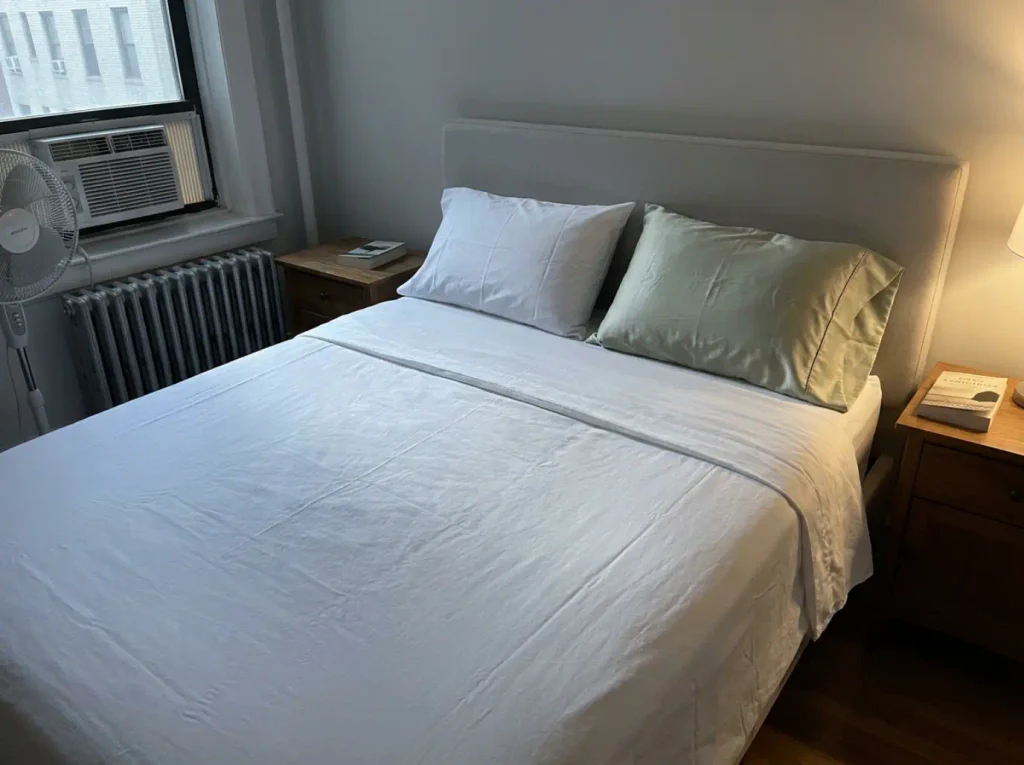
Here is the case the whole aisle skips. One of you is dry hot and one of you wakes damp, and there is a single fitted sheet under both of you. The advice everywhere assumes one person owns the bed and picks the fabric, and a flat sheet cannot be percale on one side and sateen on the other.
Worth being straight about where the following comes from, because this is the one part of the question with no community answer behind it. Nobody in the threads is discussing a two people one bed problem for this pair, and the shared bed temperature mismatch is real enough that somebody should be; the argument as it plays out online is always one sleeper deciding for themselves. So what follows is reasoned from what the two fabrics documentably do, not reported from anyone’s marriage.
What the mechanism suggests is that you should split the bed by which layers are shared and which are not. The fitted sheet and the flat sheet cover both sleepers and set the airflow for the whole mattress, so they go percale. That is the layer where the open weave helps the dry sleeper directly and does no harm at all to the damp one, because moving air is not a problem for somebody who sweats. Airflow is the shared good.
Absorption is the individual need.
And the pillowcase is the one layer each sleeper genuinely owns alone. Nobody shares a pillow. Which makes it the natural place to put the absorbent fabric for whichever of you needs it, on one side only, without touching the sheets underneath.
That turns into the cheapest experiment available in this entire category. Put one bamboo pillowcase on the damp sleeper’s side and leave everything else alone.
If they wake up noticeably better, the problem was moisture and a bamboo set is worth the trade. If nothing changes, the problem was heat, and a second full set would have been an expensive way to find that out. A TOSMO Luxury Cooling Sheet Set is the straightforward way to get that pillowcase from a fabric already discussed here, and the same sateen heat applies to the pillowcase as to the sheets, which is part of what the experiment measures.
The layer that genuinely can be split without any of this reasoning is the top one, because two people can simply have two of them. That is where the two-duvet answer belongs, and sizing it is a different job than this one. Once the fabric question is settled, building the whole set layer by layer once the fabric is settled takes over from here.
One last thing about a shared bed that only shows up with time. The two sides wear at different rates, and the damp sleeper’s side loses its finish first, because moisture and friction work on a fabric together rather than separately. By the second summer, the two halves of one fitted sheet do not feel like the same cloth, and it is not your imagination and not a manufacturing defect. It is a record of two different nights.
The Short Version
You were never choosing between two fabrics. You were choosing between two weaves, and one of them happens to be sold under the name of a plant. Once bamboo resolves to bamboo-sateen, the question becomes a question about airflow, and it gets much easier to answer.
Percale is the default for a hot sleeper who wakes up dry, because the open grid moves the air that is the actual problem. Bamboo lyocell earns its place for the sleeper who wakes up damp, and pays for it in heat and in pilling. Both of those are real answers to real and different problems.
Try the free version before any of it. Top sheet off, fan across the bed rather than at your face, and a week of noticing how you wake. At the end of the summer, spread the fitted sheet flat and rake a lamp across the middle third: the band where hips and elbows work is where either fabric tells you the truth first, months before the hand notices.
Sleep a week under the flat sheet alone and check the pillowcase at four in the morning. Dry or damp decides this for you. Then buy.
Frequently Asked Questions
01What is the downside to bamboo sheets?
They are almost always woven sateen, so they hold more heat than a percale and their long surface threads pill first. Most are viscose rather than lyocell, and the two wear very differently.
02What are the healthiest sheets to have on your bed?
Look for an OEKO-TEX Standard 100 label, which certifies the fabric was tested for harmful substances. It is a safety claim, not a cooling one, and the weave still decides how the bed sleeps.
03Which sheets do 5 star hotels use?
Percale, overwhelmingly: the crisp, matte, cool-feeling weave, laundered industrially hundreds of times. It is chosen because it survives the wash, which is the same reason it suits a home bed.
04Do bed bugs like bamboo sheets?
Fabric choice does not attract or repel them; they live in the mattress and the frame, not the sheets. No weave or fiber changes that, and no sheet is sold as a control measure.
05Is bamboo or percale better for hot sleepers?
Percale for most, because its open weave moves air. Bamboo lyocell suits the sleeper who wakes up damp rather than just warm, because the fiber absorbs moisture, at the cost of a warmer sateen weave.




Tried it on your own bed?
No comments yet. Tell us what you changed, and what the sheet did after a few washes.