







What’s in here8 sections
- Take the Duvet Off First, Not the Sheets
- The Number Nobody Prints: What “Lightweight” Means in GSM
- Whether the Top Sheet Stays, and Why That Is a Real Question
- What Fills the Gap the Duvet Left
- When One of You Is Hot and the Other Is Cold
- What the Set Looks Like After a Summer of Washes
- Conclusion
- Frequently Asked Questions
The first genuinely hot night arrives in May or June, you wake at two with the sheet stuck to your back, and by the following morning you are searching for summer bedding like it is a category you can buy your way into. It is not.
What made the bed wrong overnight is the total weight of fabric sitting on you and how much of it touches skin, and the fiber named on the package is only one of the four things that decide that. A linen sheet under a winter-weight duvet is still a hot bed, and no amount of flax fixes the layer above it. So this article does the swap the way it actually happens on a bed: top layer down, one move at a time, stopping at the exact point where nothing more needs to come off.
Quick Answer
Change the bed in this order, and stop when the night gets comfortable.
- Take the duvet off first, insert and cover together.
- Decide whether the top sheet stays or goes.
- Check the sheet weight: 100 to 150 GSM is summer-light.
- Refill the gap only if the room cools after 3 a.m.
- Pick nothing, a cotton thermal blanket, or a lighter insert.
Take the Duvet Off First, Not the Sheets
Everybody reaches for new sheets, because sheets are the thing that gets photographed and the thing a brand can sell you in one click. But the duvet weighs several times what everything else on the bed weighs put together, and it is the layer nobody thinks to pull first. The pillar article for this whole cluster makes the case in one line, that seasonal bedding is a weight problem before it is a fabric one, and summer is where that stops being an argument and becomes a chore you can do in four minutes.
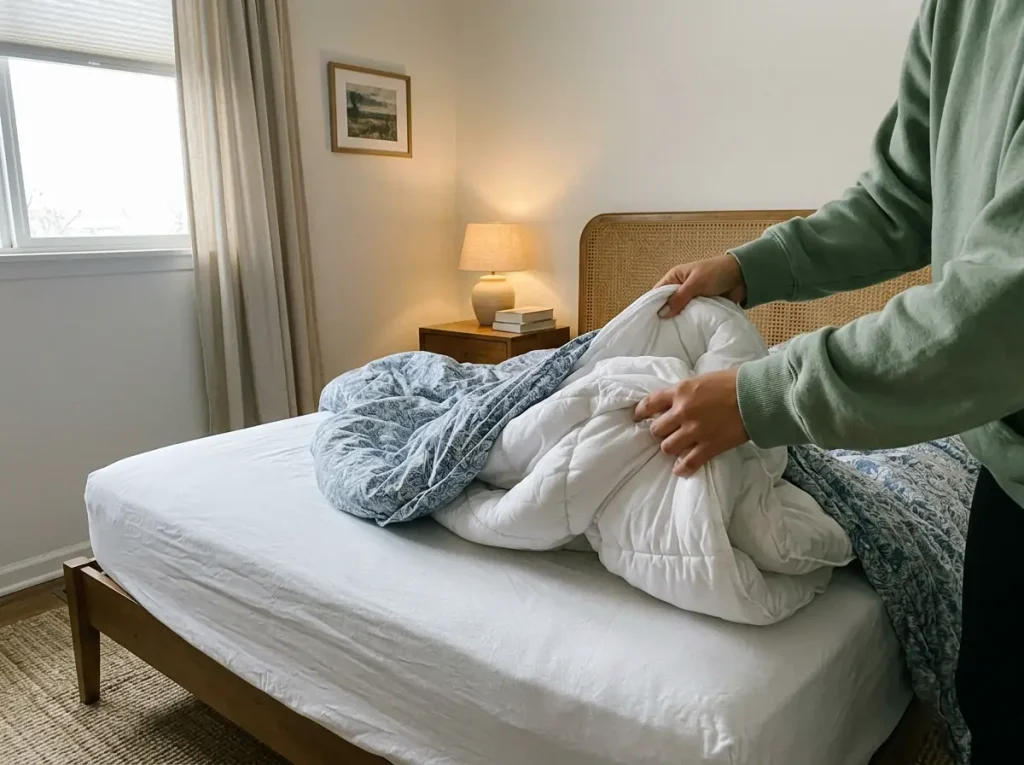
Here is the order that works: duvet, then top sheet, then sheet weight, then whatever refills the gap. Notice that everything before the last step is free, and that none of it depends on air conditioning, on a fan running all night, or on what the room temperature does after midnight. Most hot beds are fixed by step two, which is an inconvenient thing for a bedding site to say and true anyway.
What comes off goes somewhere, so the last move of the swap is storage: the duvet folded into the storage closet with the rest of the off-season bedding, not left in a heap on a chair where it will be back on the bed within a week. The pillowcases are the one thing that does not change, incidentally. They come off and go back on in the same weight all year, because your head does not run a different core body temperature in July than it does in January.
The reason the sheet swap fails on its own is arithmetic. A percale or linen fitted sheet under an all-season duvet still puts a filled comforter on top of you, and the sheet has no vote in what the layer above it does. The best sheet ever woven cannot outrun the wrong duvet.
Take the duvet cover off with the insert, not after it. Half the people who strip the bed pull the insert out, put the empty cover back on because the bed looks unfinished without it, and go to sleep under a full extra layer of cotton they meant to remove.
There is one more thing worth naming about this swap, and it is why the article exists in this shape at all. The change is late every single year, because it has no trigger. Nobody puts a seasonal rotation in a calendar.
You strip the cover off on the first hot night, lie down, and immediately wish you had done it two weeks earlier. And then you do the same thing next June. October has the same problem in reverse, which is why there is a companion piece on the order the pieces go back on in October.
The Number Nobody Prints: What “Lightweight” Means in GSM
“Lightweight” is a word on a box. It costs the seller nothing, it is not defined anywhere, and every page selling lightweight bedding uses it without ever attaching a figure to it. GSM, grams per square meter, is the figure it is supposed to mean, and once you have the bands the shopping decision takes about four seconds.
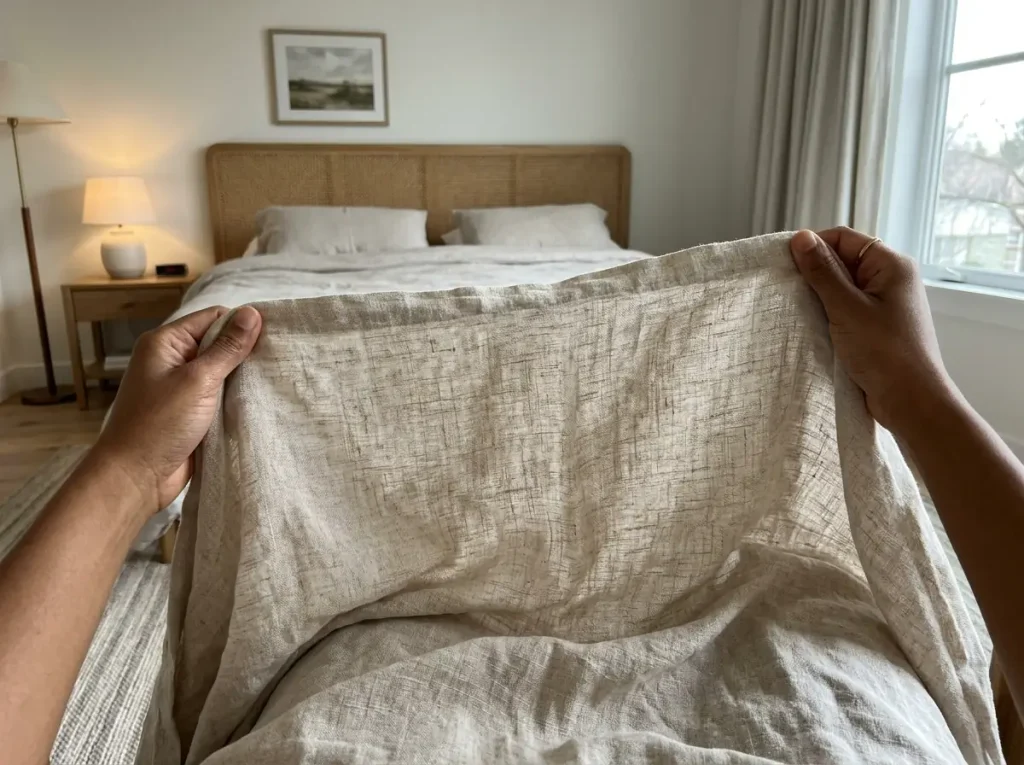
Roughly 100 to 150 GSM is genuinely summer-light cloth. 150 to 200 GSM is a middle weight that will work most of the year and disappoint you slightly in both directions at the extremes. 200 GSM and up is cold-weather cloth, and it does not become a summer sheet because a listing photograph shows it in a white room with the window open.
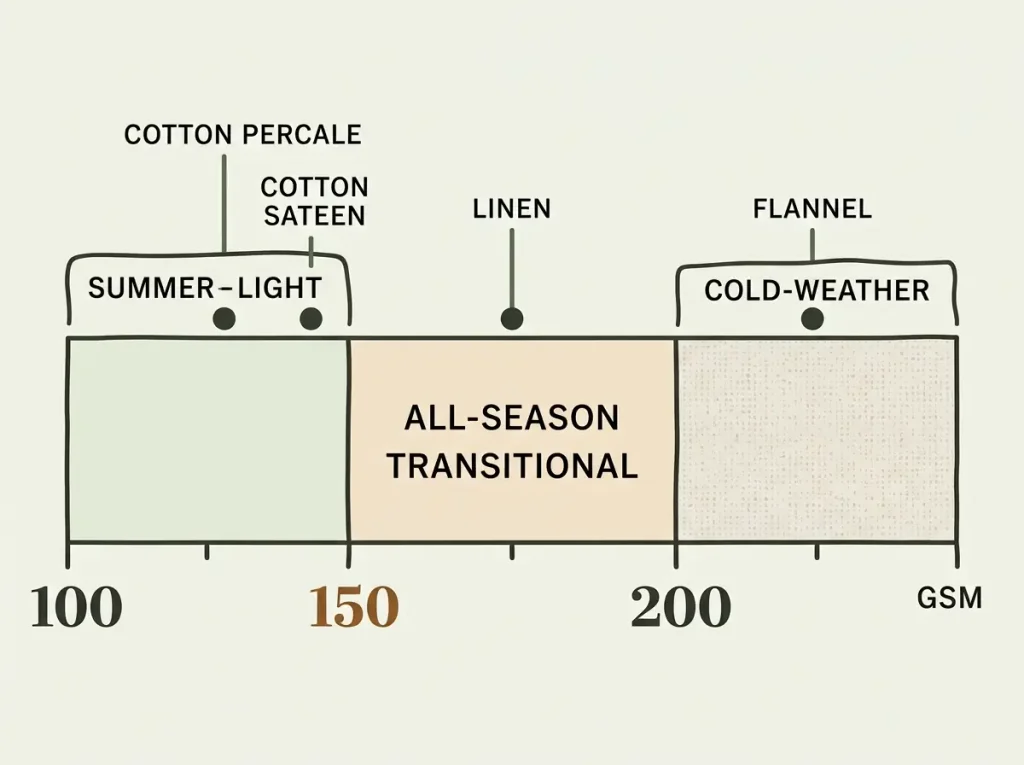
GSM and thread count measure two different things, and confusing them is how people end up with a hot expensive bed. GSM weighs the cloth. Thread count counts how many threads have been packed into a square inch, and packing more threads in makes the cloth denser, which is the opposite of what a hot sleeper wants. That is the mechanism behind an 800-count sateen sleeping warmer than a 250-count percale, and it is also most of what a cooling label actually adds on top of the weave: usually a surface treatment, sitting on cloth that was already the wrong weight.
Where the number goes missing is on cotton. Most cotton sheet listings do not print GSM at all; linen listings usually do, and that is one honest, unglamorous reason linen is easier to shop for than anything else in the aisle. It is not that flax is magic. It is that the people selling it print the number.
Worth being precise about one label while we are here. Moisture-wicking is not empty marketing the way “cooling” is: there is a moisture-transport test method textile labs actually use, AATCC 195, sitting behind it. A listing that names the test is telling you something checkable. A listing that just prints the word next to a photograph of a folded towel is not.
When the listing does not print GSM, read the fiber content and the weave name instead, in that order. A brand that tells you it is a 100% cotton percale has given you two checkable facts. A brand that only says “cooling” has given you none, and it chose not to.
One thing the number will not tell you, and it is the reason shoppers on r/Bedding keep asking the same question in their own words, “recommendations for a summer weight comforter,” over and over, month after month.
Two sheets at the same grammage can feel different in your hand in the shop and identical on your skin twenty minutes into a night. What your hand is reading is the finish. The finish washes out. The weight does not.
Whether the Top Sheet Stays, and Why That Is a Real Question
An entire generation quietly stopped using the top sheet, and the arguments they give are not the summer argument. The reported reasons behind the no top sheet habit are tangling at night and one more thing to fold, the same “fewer steps” logic that explains why an entire generation stopped using the top sheet at all, in January as much as in July. Heat barely comes into it.

The summer case for taking it off is real, though, and it is different: one fewer layer of fabric against skin, one fewer thing to kick free of at three in the morning, and a laundry load that has already doubled because of the heat getting slightly smaller.
The case for keeping it is the one nobody makes. The top sheet is the layer that takes the sweat. Leave it on and the duvet cover, the big slow annoying thing to wash and to get back on, stays clean two or three times longer. Take it off and you have not removed a wash from your week; you have moved it to a heavier item.
So the honest answer points both ways, and which way depends on what you do next. If the top sheet stays, it should be the lightest single item on the bed, full stop. If it goes, the fitted sheet becomes the only thing between you and the mattress all night, and its fiber and weave suddenly matter a great deal more than they did when there was another layer doing half the work.
In a shared bed there is a third option that costs nothing, and it is the one I would try before either of the other two: split it. One sleeper under the top sheet, the other on top of it, same bed, same night. It looks slightly ridiculous when the bed is made. It settles more summer arguments than any purchase on this page.
What Fills the Gap the Duvet Left
Most people take the duvet off in July and put it back on in September having slept under nothing in between, which is fine right up until the first cool night, when the only two options in the closet are a full winter duvet or bare sheets. That is the gap this section is about, and it has four answers.

Option one is nothing, and it is free. In a bedroom that stays warm all night, a top sheet alone is the correct answer and everything below this paragraph is a purchase you do not need. Try it for a week before reading on.
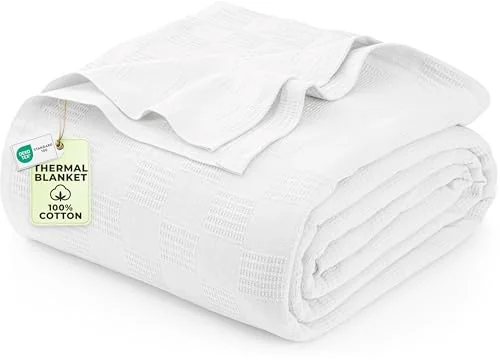
Option two is a cotton thermal blanket, the honeycomb-weave kind, the sort of thing hospitals use. The weave is the whole mechanism: an open cellular structure that holds pockets of air rather than adding loft or fill, which means it warms you a little without pressing much weight onto you, and it folds down to the foot of the bed in one motion when you stop wanting it at one in the morning. That last part matters more than the specification sheet suggests. A duvet you have thrown off is on the floor; a blanket you have pushed down is still where you need it at five.
Option three is a coverlet, and the word is worth pulling apart because shops use it loosely. A coverlet is one or two layers of fabric with no batting between them. A quilt has three, top cloth and batting and backing, stitched through. That single structural difference is the entire temperature story: a coverlet is essentially a decorative extra sheet and cannot trap the way anything with fill inside it does. If you want the construction in a real example, the EVERGRACEHOME Cotton Ribbed Matelassé Coverlet Set is BCI-sourced cotton in a ribbed matelassé with no batting and an OEKO-TEX Standard 100 certification printed on the listing. Its flaw is written into what it is, though, because the ribbed matelassé finish is more decorative than cooling, and on a hot night it is the layer for the made bed rather than the slept-in one.
And that is the thing to know about coverlets before buying one, because it does not show up until you have lived with it. A coverlet looks like the summer answer under shop lighting and behaves like a bedspread at three in the morning. It gets chosen for the daytime bed.
Option four is a lighter duvet insert, for the reader who wants some fill and just less of it. The community’s own move here is cleverer than the shopping one: instead of buying a dedicated summer duvet, size the existing arrangement down. A Utopia Bedding Twin Duvet Insert is 64 by 88 inches of down-alternative fill, and used on a Queen or King it simply covers less of you. The flaw is exactly that: it leaves the edges of a bigger bed uncovered and looks like what it is, a functional workaround rather than a finished bed cover.
If you would rather buy the thing the label describes, the Hotel Grand Tencel Lyocell Summer Cooling Comforter is a 300-thread-count Tencel and polyester blend built and sold as a summer weight, which is at least an honest attempt at the category. But read the word “summer” as relative rather than absolute, because it is still a filled comforter and heavier than the word suggests next to a thermal blanket. The same insert logic runs the other way in cold months, incidentally: the same insert under a linen cover in January is a different bed entirely.
Four options, one variable that actually separates them:
| Layer | What it adds | Weight on you | Best when |
|---|---|---|---|
| Nothing (top sheet only) | Nothing | None | The room stays warm all night |
| Cotton thermal blanket | Trapped air, no loft | Light | Warm evenings, cool early hours |
| Coverlet (no batting) | One or two flat layers | Light | You want the bed to look made |
| Lighter duvet insert | Loft and fill | Medium | The room drops after 3 a.m. |
When One of You Is Hot and the Other Is Cold
Every summer bedding guide on the internet is written as though one person sleeps in the bed. Two people one bed is a different problem: the swap has to be performed twice, at two different depths, and the argument is almost always about a layer neither of you chose, the one compromise duvet somebody bought in a shop that was warm for one of you and thin for the other from the first night.
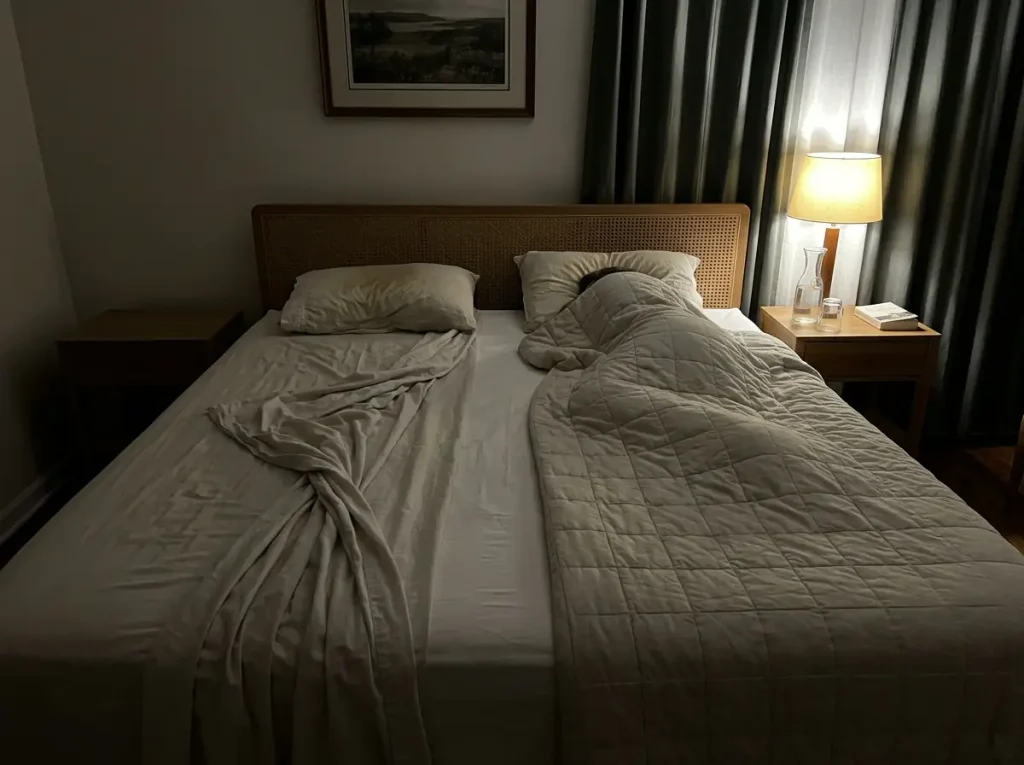
The sequence still runs. It just runs per side. The duvet comes off entirely for whoever is throwing it on the floor at two, and stays on, lighter, for whoever wants socks in July. In r/Bedding the recurring version of this is a thread called “hot and cold sleepers same bed,” where one wants the window open and the other wants it shut, and the comments arrive at the same place every time.
That place is two twin inserts on one bed. It is the structural fix, it is what half of Europe already does, and it is the same answer this site’s winter and night-sweats pieces reach coming from the opposite direction. Two inserts, two covers, one bed. Nobody wins the duvet at three in the morning because there is nothing left to win.
Before spending anything, though, run the split flat sheet. One of you under it, one over it. Free, immediate, and it resolves the most common version of the mismatch by itself.
And name what does not work, because people try it every year: a single middle-weight duvet as a compromise is not a compromise. It is too warm for one of you and too thin for the other, all night, every night, and it fails at both jobs rather than splitting the difference between them.
Buy the fitted sheet for whoever sleeps hottest. It is the one layer on the bed that cannot be split, and the direction of the compromise is not symmetrical: the cold sleeper can always add something on top, and the hot one can never take away the layer underneath.
Once you have run this swap a full time, off in June and back on in September, the next question tends to arrive on its own, which is how many sets a two-season rotation actually needs.
What the Set Looks Like After a Summer of Washes
Summer roughly doubles the laundry. Sheets that got washed every other week in February are going in weekly now, sometimes more, and that changes which specification matters most. Wash durability stops being a footnote at the bottom of a review and becomes the thing the recommendation rests on, because the set that survives a summer is not usually the set that felt best in week one.
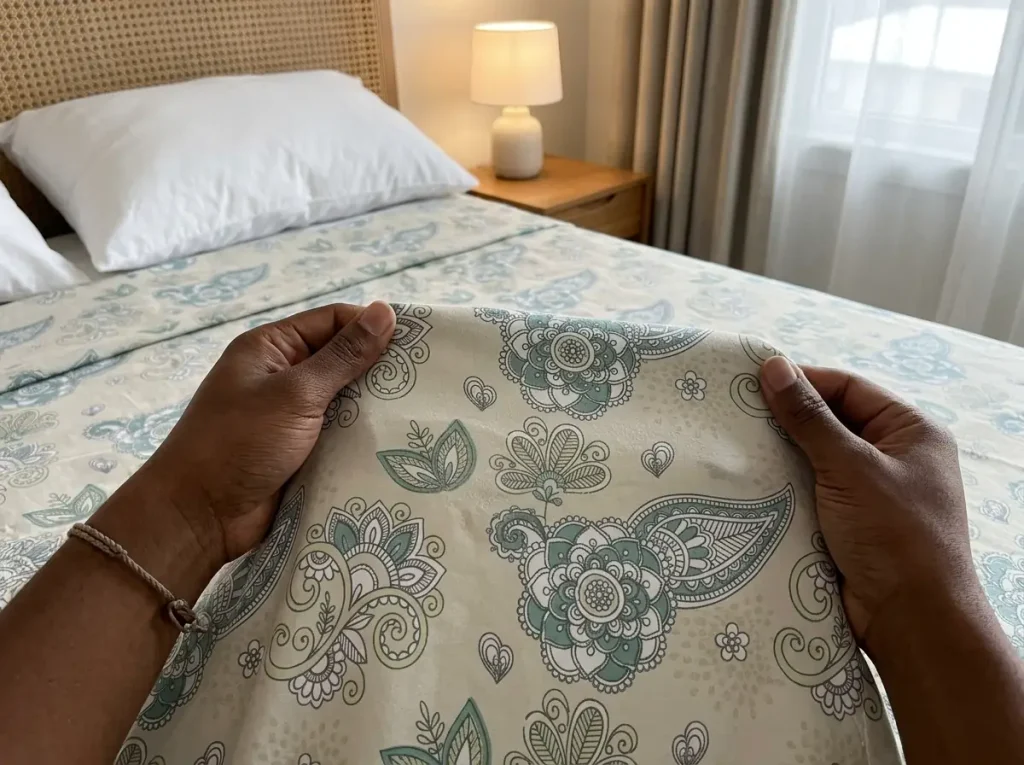
The mechanism is in the weave, and it is simple enough to check by eye. Percale is one thread over, one thread under, all the way across: no long floating threads sitting on the surface, so there is nothing for a fingernail, a zipper or a washing-machine drum to catch, drag and fuzz. That open structure is also where its breathability comes from, which is why fiber versus weave is the wrong argument to have: the weave decides both.
Sateen floats four threads over one to get its smoothness, and those exposed floats are precisely what pills. Sateen is not a badly made cloth. It is a cloth whose best quality, that flat closed surface, is the same feature that abrades. Put percale, sateen and linen side by side and the durability order falls out of the structure before anyone has washed anything.
A cooling finish belongs in this section too, because it is where its story ends. A finish is a treatment applied to the surface of finished cloth, and treatments leave. A few dozen wash cycles and it has largely gone down the drain, taking with it whatever the package was promising.
A weave does not leave. This is the whole difference between a set that is cool in June and a set that is still cool the following June, and it is the reason the repeating community complaint about cheap microfiber cooling sheets is always the same: they ran warm within a season, exactly as the label said they would not. Worth knowing that certification does not close this gap either: OEKO-TEX Standard 100 tests bed linens under its stricter direct-skin-contact class, which tells you what the chemistry does to skin, and nothing whatsoever about how the cloth handles heat.
Percale goes the other direction from a finish, which is the part that makes the crackly first week or two worth sitting through. It arrives stiff because of starch and finishing, loses that in three or four washes, and what is left underneath is the weave: softer in the hand, structurally unchanged. It gets better rather than worse, and washed percale is where soft and cool stop being a trade-off.
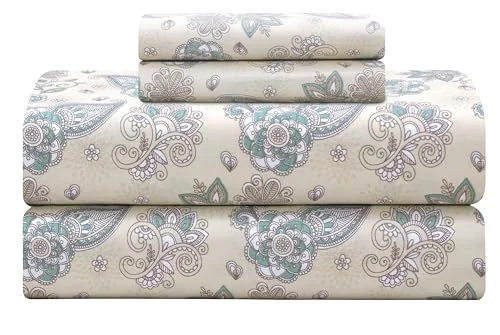
The other route is linen, and it passes this section’s own test for a reason that has nothing to do with how it feels: it is the fiber whose sellers print the number.

Check the sheet where a forearm rests, not in the middle. Pilling starts in the patch that gets leaned on and slept against, and it shows up there a season before it shows anywhere else — so that one square foot tells you what the whole set is going to become.
Conclusion
The duvet comes off first, and most hot beds are fixed before anything gets bought. “Lightweight” is a word; roughly 100 to 150 GSM is the thing the word is supposed to mean, and you can check it against a listing in seconds. And in a shared bed the swap runs twice at two different depths: one duvet split into two, not one duvet in the middle trying to serve both of you and failing at each.
At the end of the season, look at that patch of sheet where a forearm rests. If it has fuzzed, the weave was doing less of the work than the finish was, and the set will sleep warmer next June than it did this one.
So: take the duvet off tonight and leave the sheets exactly where they are. Sleep on it a week. Then decide whether anything on this page needs buying at all.
Frequently Asked Questions
01How do I make my bed cool in summer?
Take the duvet off first, then decide about the top sheet, then look at the weight of the sheets themselves. The first two steps are free and fix most hot beds without anything being bought.
02What is the coolest bedding material for summer?
Linen and cotton percale, and the weave matters as much as the fiber does. A one-over-one percale leaves gaps for air to move through; a sateen in the same cotton at the same thread count sleeps warmer because the threads lie flat.
03Why does Gen Z not use top sheets?
Mostly convenience: one fewer layer to tangle in and one fewer thing to fold. The summer reason is a different one — the top sheet is what takes the sweat, so removing it means washing the duvet cover more often instead.
04What type of bedding is best for summer?
The lightest set the room allows, roughly 100 to 150 GSM, with as few layers on top as the night actually needs. Summer bedding is a subtraction before it is a purchase.
05Do I need a separate summer duvet?
Usually not. A top sheet alone, a cotton thermal blanket, or the insert you already own one size down covers most rooms. A dedicated summer duvet is the last option on the list, not the first.





Tried it on your own bed?
No comments yet. Tell us what you changed, and what the sheet did after a few washes.