



What’s in here5 sections
You wake up and the towel you rolled last night is wedged against your hip, the knee pillow has wandered to the far side of the bed, and the small of your back has noticed. Pillow position for back pain is really two questions: where to put a pillow, and whether the placement is still there when morning comes. A pillow does its work in the space your frame leaves open, and the space almost nobody measures sits between the ribs and the hips, which one flat hand can find in a few seconds.
This article covers that gap, why pillow drift happens overnight, and what the sheet and the layer under it decide. A question worth asking about pillows: are you sure it is the pillow, and not a mattress past its working life?
Quick Answer
A pillow belongs in the gap it fills, and the gap at the waist is the one to check first, before you buy anything.
- Slide one flat hand under your lower back while lying on your bed.
- On your back, put a pillow under your knees.
- Fill any open waist gap with a small folded towel.
- On your side, place a small pillow between your knees.
- On your stomach, slide a thin pillow under your pelvis.
- Photograph the arrangement next morning before you change anything.
The Waist Gap Most Pillow Advice Leaves Open
Knees and head get all the attention in advice about lower back pain. The place a back sleeper’s frame leaves open is somewhere else: between the ribs and the hips, where the lumbar curve lifts away from the mattress. How much room sits under that curve depends on the mattress, the person, and the way they lie, which is why a number copied from a chart is the wrong tool and a hand is the right one.

Find the Gap with One Flat Hand
Lie on your back on the bed you actually sleep on, in the sleeping position you use, with a pillow under your knees if that is your habit. Slide one flat hand, palm down, under the small of your back. If it passes through with room to spare, there is a waist gap and something can fill it. If the hand is snug, there is nothing to fill, and a roll would only push you off the mattress.
This is the article’s own method, not a clinic’s measurement, and it deliberately gives no number of inches. The right height is the one that matches your hand’s gap (or, more exactly, the space under your curve), and that differs from one person and one mattress to the next.
The surface changes the answer, which is why the sofa gives a false reading. A softer top tends to let the hips and shoulders sink and closes part of the gap, while a firm one leaves it wide open. Do the test twice, once on your back and once on your side with the same hand slid under the waist, because the open space on your side is a different shape and may call for a different fill.
Run the hand test on the made bed you sleep on, lying the way you sleep, never on the sofa. A soft base changes the gap, and a test on the wrong surface gives you a number for a bed you do not own.
Fill It with a Folded Towel Before You Buy Anything
Mayo Clinic’s sleeping-positions guide puts a pillow under the knees first for back sleepers, to help keep the curve of the lower back, and then adds the second step: “If you need additional support, try a small, rolled towel under your waist.” Columbia Doctors words the same gap differently, as a small rolled towel under the curve of your back. Waist or curve, it is the space your hand just found. The knee pillow comes first and the towel fills whatever is left.
Fold a bath towel lengthwise, roll it, and set it where the hand passed through. Then repeat the test lying on it. If your hand still slides under the roll with room, the roll is too thin and is doing nothing.
But if your lower back lifts off the mattress, the roll is taller than the gap and pushes the back up instead of filling it. You can tell by feel within a minute, and a bath towel is easy to re-fold twice a night until it is right.
Only after that does a purchase make sense, and only for a gap a towel cannot fill. The Cozyhealth Soft Lumbar Pillow is a lumbar support pillow of memory foam, 3.15 inches high and 23.6 inches long, with a removable zip cover, and the listing says the foam retains its shape (that is the maker’s claim, not something anyone here has measured).
Its catch is thickness. Amazon’s own summary of the reviews on that listing reports mixed feedback on firmness, and several reviewers mention it is not very thick.
A fixed-height foam roll that is too thin does what a thin towel does, which is nothing, and one that is too thick does the opposite. A towel can be adjusted by the fold. A foam roll has the height it came with.
Where the Knee, Between-the-Knees and Pelvis Placements Already Stand
The other placements are written out elsewhere on this site, so each gets one line here. The full argument for pillow loft and the gap by position lives in the pillow-for-back-pain pillar, and how the pillow reaches the back depends on how you lie is covered in its sibling on whether a pillow can cause pain.
On your back, a pillow under the knees is the base placement. On your side, a small pillow between the knees stops the top leg from dropping forward and twisting the back, and the National Institute of Arthritis and Musculoskeletal and Skin Diseases gives the same base placement for side sleepers. On your stomach, the pillow under the pelvis is the placement, a thin one under the hips and lower stomach, and the buy-side of that is in pillows for stomach sleepers. The head pillow, whose loft decides a different set of questions, belongs to a back sleeper’s pillow that holds its height.
Why the Pillow and the Towel Move by Morning
A pillow placement that worked at bedtime is a snapshot, and snapshots move. Things slide, and every pillow and every roll will. But a bed with no way of telling what moved gives you nothing to fix. Reading the morning is the part that turns a guess into an adjustment.

What a Soft Base and a Slick Surface Do to a Roll
None of the pillow drift described below is measured in a lab. It is how a bed reads when you look at it in daylight, and it should be taken as method, not as a finding.
The one cited fact in the neighborhood comes from Columbia Doctors: “If you have a very soft mattress, you may find that switching to a firmer one is more comfortable for your back.” The mechanism fits what the hand test showed. A soft base lets the hips sink, so the gap shrinks as you settle and a roll set for the open gap ends up sitting high.
The surface on top matters as much as the one below. A rolled towel is light and has nothing keeping the roll closed, so it unrolls a turn at a time under a restless sleeper. A crescent-shaped pillow with loose filling can migrate away from the middle until the head ends up in a taco shell that cannot be fluffed back in the dark. That was a head pillow, so it counts only as the picture of filling that travels, but a roll’s filling can behave the same way.
A silk pillowcase can make the head keep slipping off, which is the same story on a smooth surface: a slick cover moves whatever rests on it. Heavy buckwheat-hull pillows, by contrast, are often said to stay exactly where you put them, the opposite of a light roll on a soft base.
The Morning Check, Before You Move Anything
Before you fix anything, look and note three things. Where did the towel end up relative to your waist: still there, at the hip, or on the floor? Is the knee pillow still between or under the knees, or did it travel? Where is the edge of the head pillow compared with where your shoulders were?
Write the answers down or say them out loud, because each one points at a different cause, and a morning in which all three moved points somewhere else than a morning in which only the towel did.
If the towel is at your hip and you woke fine, that tells you the placement was not holding, not whether the placement helped. If the towel is exactly where you left it and you still woke sore, the placement held, so look at the rest of the bed instead of at where things moved. Either way you have information. And it comes from comparing the bed with itself rather than from a feeling about the night.
Take one photo from the side of the bed before the day starts. An arrangement is easier to read in a picture than in memory, and a week of morning photos shows the pattern: always the same corner, always the same pillow.
The Second Night Is the Real Test
One night proves very little. Columbia Doctors says many people find the published positions work for them, but they may not work for you, and that is the reason to treat the first night as a draft. Change one thing, then sleep on it again before judging. This is also why a return window gives less than it seems to: the days a return window gives you are spent on a bed that keeps changing under you, and the check above is the part a return cannot test.
In a shared bed, the other sleeper’s weight and turns move a pillow as well, and pillows for combination sleepers covers the case where one person passes through three positions in a night.
What the Sheet and the Layer Under It Decide
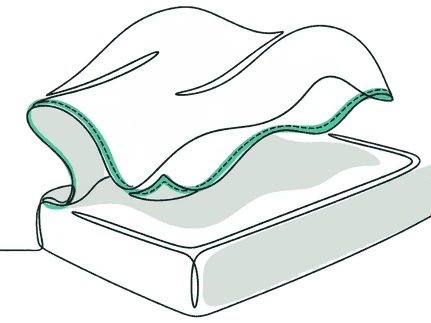
If the roll and the pillow always finish where the sheet let them slide, the fix is in the bed’s own layers, and that is the free fix that comes before any product. The sheet and the protector under it are the surface everything else rests on.
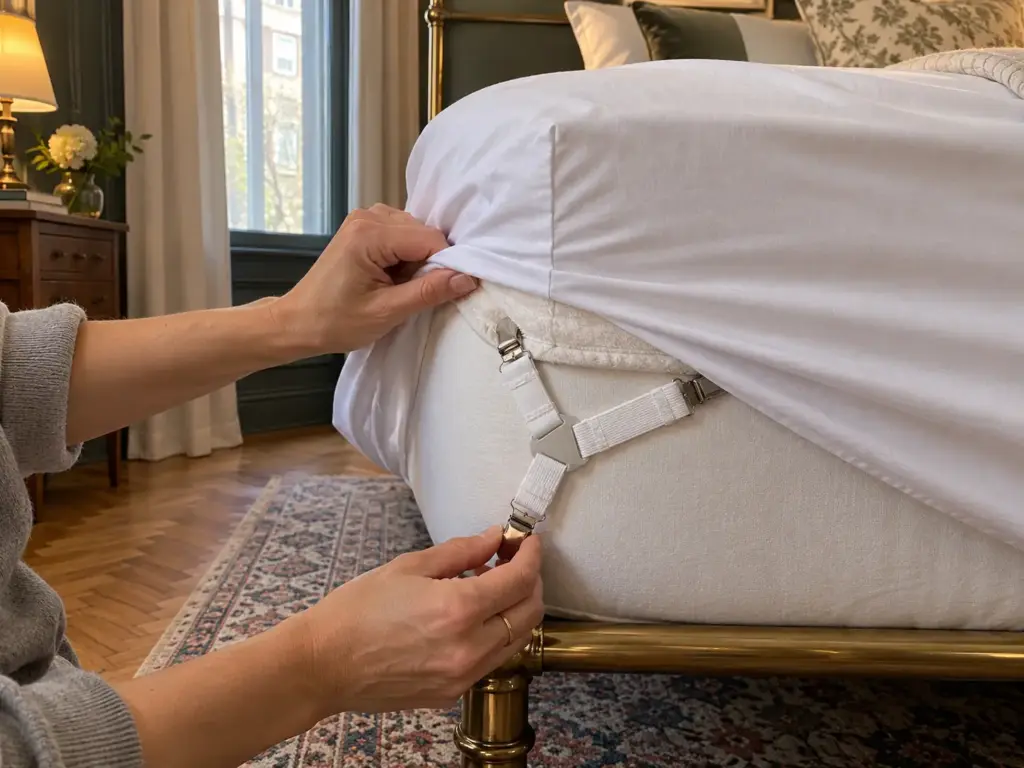
Take the Slip Out of the Surface First
Start with what costs nothing. A fitted sheet pulled taut over a protector that sits tight holds a roll better than a loose one, because a loose layer wrinkles and a roll will sit in the wrinkle, then travel along it. Re-tuck the corners, smooth the protector flat before the sheet goes on, and make the bed the same way every time so the surface is the same every night. The mechanism of pocket depth belongs to its own article, so nothing is re-argued here.
There is a catch to the free fix, and it is the old advice with a constraint: pulling a sheet tight helps only as long as the pocket is deep enough for the mattress and any mattress topper. On a bed that is too thick for the sheet, tightening one corner pops another, and no amount of smoothing changes that. (A tight sheet on a too-shallow pocket is a corner waiting to let go.)
Make the bed, lie down on it, and press a hand flat on the roll before you leave it. A roll that moves under a hand at bedtime will not hold through the night.
A Corner That Pops Off and a Cotton Face
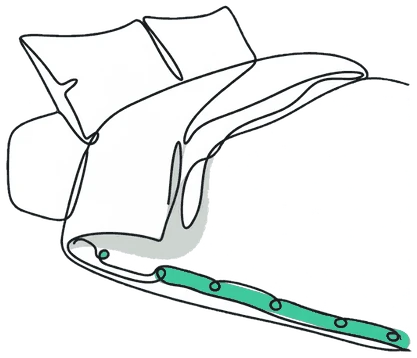
A fitted sheet that lets go of one corner rides up under the hips, and it takes the roll with it. That is one way an arrangement ends up at the hip: the sheet moved, and the towel went along. The question of pocket depth is covered in sheets that stay on a deep mattress, and a deeper pocket is the real answer when the sheet is the wrong size.
For the sheet that is the right size but still lets a corner escape, a clip is a cheaper step than a new set. The GORILLA GRIP Fitted Bed Sheet Holders, a four-pack of metal-clip corner holders with elastic straps that stretch to 25 inches and sizes from Twin to California King, hold a corner in place while the pillow and the roll move on top of the sheet. Their limit is what a clip is: it holds a corner, and it cannot fix a pocket that is too shallow for the mattress and its topper. The listing shows no repeated complaint, though the reviews themselves were not opened.
The layer under the sheet is a separate job. A protector’s face fabric decides how slick that layer is, and the Nestl Premium Cotton Terry Mattress Protector has a cotton terry face, 80 percent cotton and 20 percent polyester, with a 24-inch pocket, so it adds no slick surface under the sheet. What the listing does not state is the backing. The backing decides breathability, and what a protector’s backing does is the thing to read before ordering, then check the label when it arrives, because a face you like on a backing you do not is still the wrong layer.
When Moving Things Changes Nothing
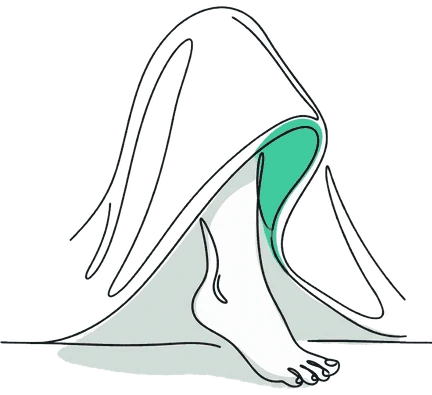
Sometimes every arrangement slides the same way, or none of them changes the morning. That is where the base becomes a candidate. When a pillow, a towel, a clean sheet and a snug protector all end up in the same place with the same result, the bed under them is the question to ask next, since it may be the mattress rather than the pillow.
The bed has one limit. If the pain travels down a leg, comes with numbness or weakness, or stays the same whatever you move in the bed, that is a conversation with a doctor, not a better arrangement.
A Towel, a Photo and the Second Morning
Three things carry the article, and none of them costs anything to try.
- The pillow goes into the gap it fills, and the gap the rest of the advice skips is at the waist.
- A rolled towel is a free test before it is a purchase, and the hand tells you whether it is the right height.
- The morning after shows which part moved: the bed, the sheet or the placement.
Once the sheets have been through a run of washes and the arrangement has had many nights, look again at the fitted sheet’s corners and the protector’s face. Elastic that has relaxed can let a corner ride up first, and a face that has gone smooth may stop gripping the sheet. The roll will tell you before the label does.
Tonight, fold a towel and set it at your waist. In the morning take one photo from the side of the bed and notice whether the towel is still where it started.
Frequently Asked Questions
01Where should a pillow be placed for back pain?
Put it where your frame leaves a gap: under the knees when you lie on your back, between them on your side, and under the pelvis on your stomach. Add a rolled towel at the waist if a flat hand slides under your lower back with room to spare.
02Should I put a pillow or a rolled towel under my lower back when I sleep on my back?
Try a small rolled towel under the waist first, as Mayo Clinic’s sleeping-positions guide suggests for extra support; it is free and you can adjust its thickness. A lumbar pillow comes next, only for a gap the towel cannot fill.
03Why does my pillow end up somewhere else every morning?
A soft base, a slick surface and the other sleeper’s turns all move a pillow overnight, and the morning check shows which one did it. Note where the towel, the knee pillow and the pillow edge ended up before you change anything.
04Does a softer mattress change where the pillow should go?
It can, because a soft base lets your hips sink and a roll sit higher than the hand test suggested. Columbia Doctors notes that people on a very soft mattress may find a firmer one more comfortable for the back. Repeat the hand test on your own bed.
05Is a lumbar pillow better than a folded towel?
Not shown to be: the towel is free and adjustable by the fold, while a lumbar pillow keeps the height it came with. Use the pillow for a gap the towel cannot fill, and know that its listing reports mixed feedback on thickness.





Tried it on your own bed?
No comments yet. Tell us what you changed, and what the sheet did after a few washes.